
See a Demo
You're just one step away from seeing Call Loop in action.
Enter your information below to watch a demo right now.

You're just one step away from seeing Call Loop in action.
Enter your information below to watch a demo right now.

You're ready to launch a campaign. The copy is approved, the list is loaded, and the offer is solid. Then someone asks the question that slows everything down: do we have the right consent to send these texts, voicemail drops, and voice broadcasts?
That question matters because TCPA mistakes get expensive fast. Marketing SMS requires prior express written consent, and violations can lead to fines of $500 to $1,500 per message, according to Verse's SMS compliance checklist. For any team sending at scale, that's not a minor operational issue. It's legal exposure that can turn a good campaign into a serious problem.
A real sms compliance checklist has to do more than remind you to add “Reply STOP.” It has to connect legal requirements to the way your platform operates: how consent is collected, how opt-outs are enforced, how records are stored, and how message types are separated so a transactional reminder doesn't inadvertently become a promotional violation. That gets even more important when your program includes ringless voicemail, voice broadcasting, appointment reminders, webinar follow-ups, or multi-step drip campaigns.
The practical standard is simple. If you can't prove consent, classify the message correctly, identify the sender, and stop when the recipient says stop, your process isn't finished.
The checklist below is built for operators, not theorists. It focuses on what holds up under audits, what keeps deliverability healthy, and what features in a platform like Call Loop can reduce manual risk before a campaign goes live.
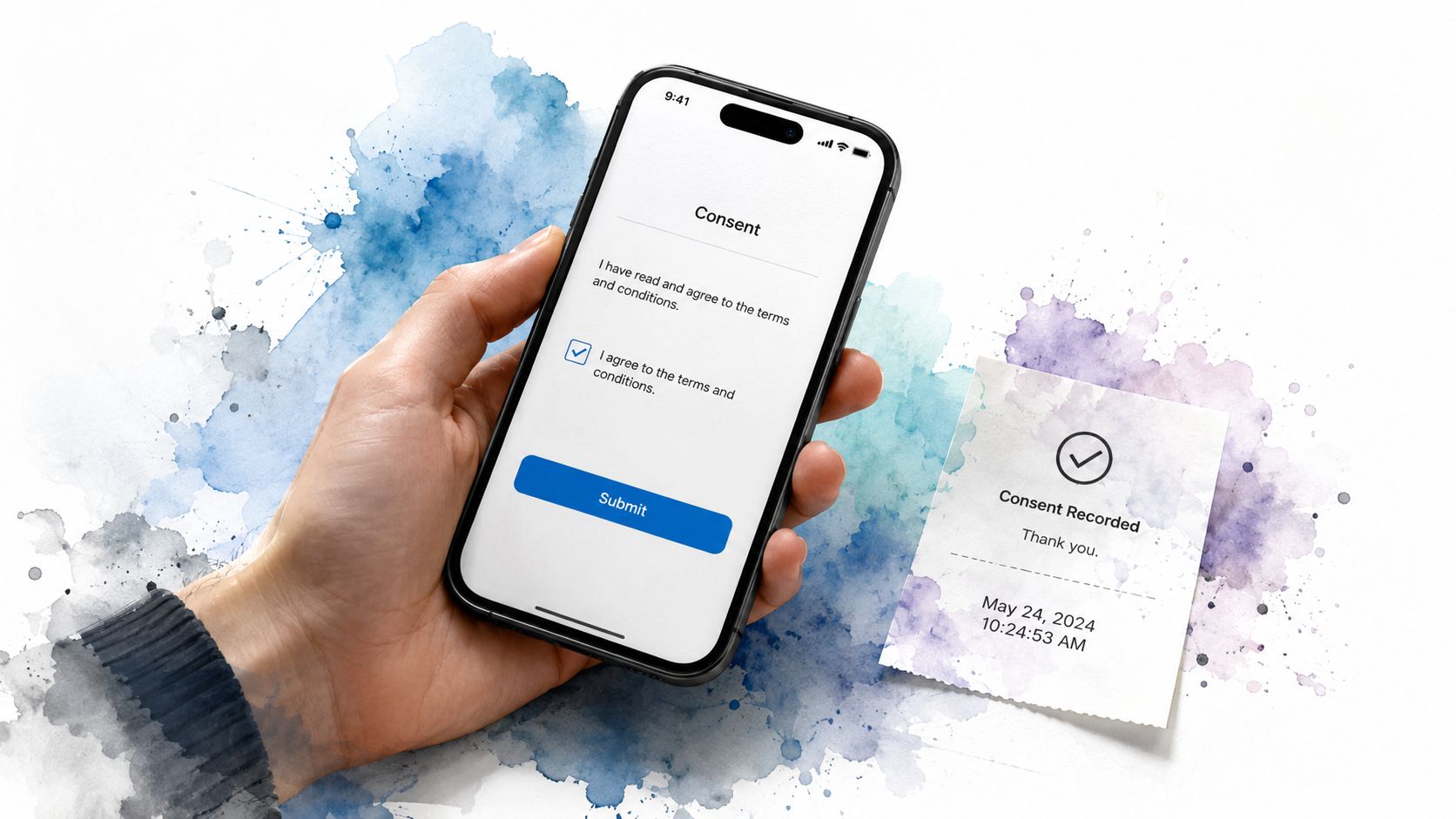
A customer fills out a form for a coupon, then gets a promo text, a ringless voicemail, and a follow-up voice broadcast they never expected. That is how consent problems start. The issue usually is not sending volume. It is using broad, vague permission where written consent for marketing was required.
For promotional SMS, businesses need prior express written consent. The same standard should shape how you approach ringless voicemail and voice broadcasts, especially when those channels are part of one campaign flow. Your form, keyword opt-in, or intake process needs to match the outreach you plan to send, and the consent record needs to hold up later. This breakdown of express written consent covers the legal baseline.
The weak spot I see most often is bundling permission into a purchase flow, lead form, or general terms acceptance. That creates risk because the subscriber did not clearly agree to receive marketing texts or prerecorded promotional outreach. Consent also cannot sit in fine print, rely on a pre-checked box, or leave the message type open to interpretation. ActiveProspect's summary of the FCC update explains why clear and conspicuous disclosure matters.
A defensible opt-in tells the person who is contacting them, what they will receive, and how often. It also separates marketing consent from other permissions, such as account updates, appointment reminders, or customer service messages. If you plan to use more than one channel, say so. SMS consent language should not subtly expand into ringless voicemail or voice broadcasting later.
That is where platform setup matters. In Call Loop, the safest approach is to build separate entry points and lists by communication type, then map automations to the consent collected for each one. A checkout form for promotional texts should feed an SMS marketing list. A reminder intake form should feed a transactional list. A ringless voicemail campaign should only pull from contacts who agreed to that kind of outreach. Good compliance operations are built in the workflow, not patched on after launch.
Use opt-in language that includes:
The examples matter. An ecommerce brand can collect SMS promo consent at checkout with an unchecked box that names the brand and states the customer is agreeing to receive recurring marketing texts. A healthcare clinic can collect written permission for appointment reminders in a dedicated intake workflow, while keeping promotional offers separate. A local service business running SMS and ringless voicemail should use distinct checkboxes or disclosures for each channel so the contact record reflects what the person approved.
Practical rule: If the subscriber could reasonably say, “I agreed to updates, not marketing,” your opt-in language needs work.
Double opt-in is often worth the extra step. It creates a cleaner record, catches bad numbers early, and gives you one more checkpoint before a contact enters an automated sequence. That helps more when campaigns branch across SMS, voicemail drops, and voice broadcasts, because one bad assumption at signup can spread across every channel you use.

A complaint comes in six months after launch. The contact says they never agreed to marketing texts, your team has changed vendors twice, and no one can pull the original signup language. That is how a routine campaign turns into a compliance problem.
Recordkeeping is the proof layer for SMS, ringless voicemail, and voice broadcasts. You need a clear history of what the person agreed to, which channel that consent covered, when they opted out, and whether your platform stopped future sends fast enough. If that record is scattered across forms, inboxes, and spreadsheets, enforcement breaks down.
Store enough detail to answer four questions without guesswork: who consented, how consent was captured, what disclosures were shown, and what happened after any opt-out request.
For each contact, keep:
That level of detail matters in real disputes. If a recipient opted into appointment reminders but never approved promotions, your logs need to show that difference. If they revoked consent by replying STOP after an SMS, your system should suppress later text campaigns and flag the number for related voice workflows based on your policy.
Saving logs is not enough. Teams need to retrieve them quickly by phone number, campaign, list, keyword, or account owner.
That is where platform design matters. In a tool like Call Loop, the practical goal is simple: every opt-in, send, reply, voicemail drop, and suppression event should be attached to the contact record automatically. The best setups also preserve form language versions, record reply keywords in real time, and prevent staff from re-adding opted-out numbers without an admin review step.
I recommend treating suppression data as operational data, not archive data. If someone opts out in one workflow and another campaign can still reach them because lists do not sync, the problem is not legal theory. It is system configuration.
Use automated logging for the events that create the most risk:
Good records do two jobs. They support your position if a complaint reaches counsel or a carrier. They also expose weak spots early, such as a form collecting SMS consent without matching suppression rules for ringless voicemail or broadcast calls.
If you cannot produce the consent record and opt-out history in a few minutes, the process needs work.
Ringless voicemail looks simple from the outside. Record a message, drop it into voicemail, track responses. In practice, it creates the same compliance pressure points as SMS and voice broadcasting, plus a few of its own.
The baseline rule is straightforward. Don't treat ringless voicemail as a loophole. If you're using it for promotional outreach, the safe operating posture is the same one disciplined teams use for SMS marketing: explicit consent, accurate records, clear identification, and immediate respect for opt-out requests.
A compliant ringless voicemail should identify the business, provide a valid callback number, and make it obvious that the recipient is hearing a voicemail from your company. That matters because vague intros and anonymous caller identity create complaints fast. The message should also avoid drifting into misleading urgency or hidden sales language.
A few common examples:
The trade-off is reach versus scrutiny. Ringless voicemail can feel less intrusive than a live call, but the moment a voicemail includes a sales pitch the consent standard gets tighter and the classification matters more. That's where teams get in trouble. They start with operational reminders, then tack on an offer at the end.
A practical setup in Call Loop is to separate ringless voicemail campaigns by purpose, keep recordings specific to that purpose, use custom caller ID that matches the business, and log each successful drop for tracking and billing. Since Call Loop supports ringless voicemail delivery to mobile and landline inboxes, along with scheduling and unlimited recordings, the operational side is there. Your compliance process still has to define who can receive what and why.
If a voicemail starts as a reminder and ends as a promotion, regulators and carriers may treat it like a promotion.

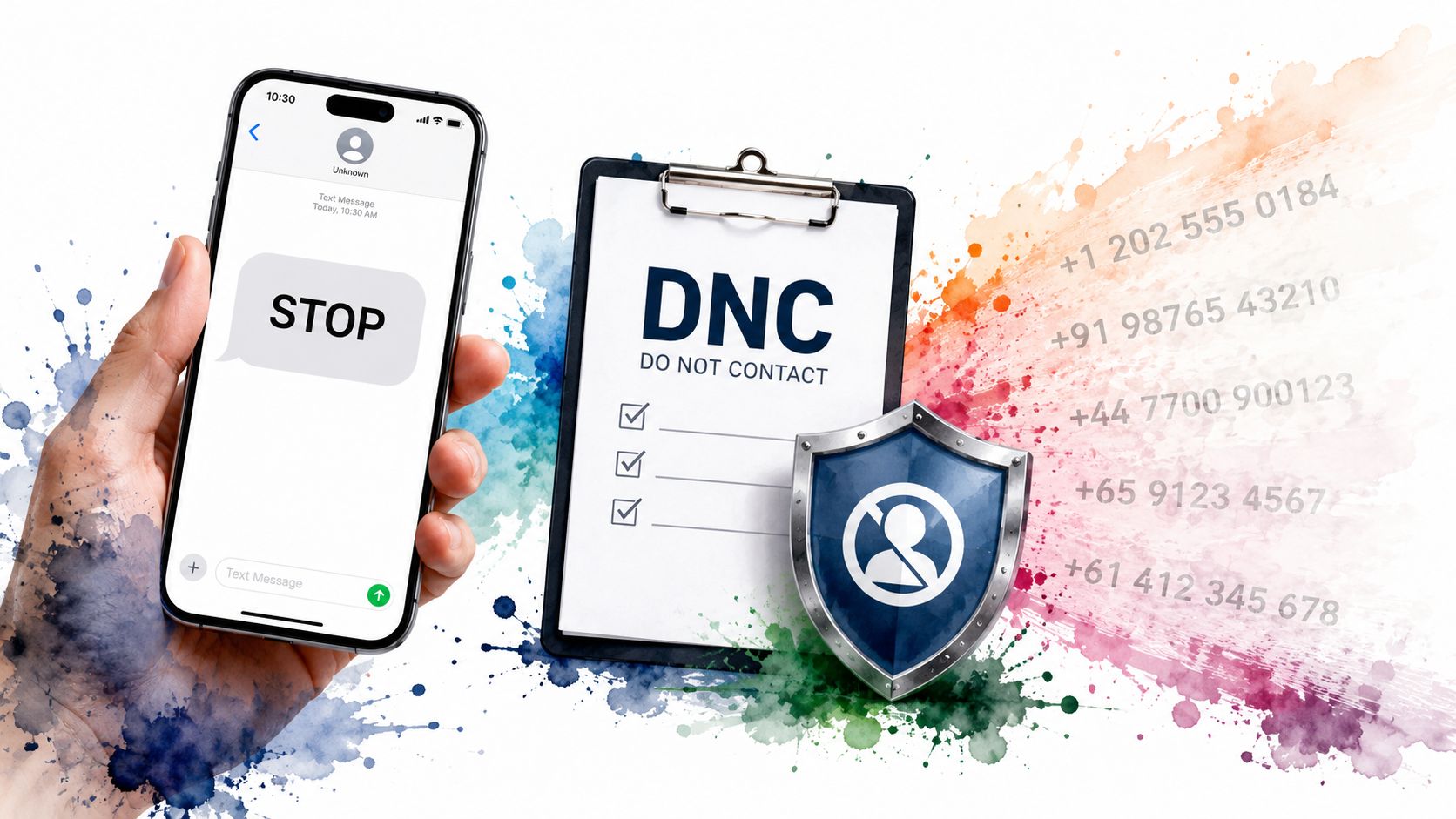
A familiar failure looks like this. A customer texts STOP after a promotion, gets removed from SMS, then still receives a ringless voicemail offer two days later because the voice list came from an older export. That single gap can trigger complaints fast.
DNC compliance has to work across channels, not inside separate tools. For SMS, voice broadcasting, and ringless voicemail, use two suppression controls every time. Keep an internal do-not-contact list and scrub outbound lists against the National DNC Registry and any other applicable lists before launch. Then make sure opt-outs update the contact record that every campaign uses.
Speed matters here. If someone revokes permission, the safe move is to stop promotional outreach immediately in practice, even if a vendor workflow allows a processing window. Waiting for manual cleanup creates avoidable risk, especially when sales, marketing, and operations each run their own campaigns.
The strongest setup is one contact record, one permission model, and one suppression rule set applied to SMS, ringless voicemail, and voice broadcasts.
Use controls like these:
Platform controls save teams from their own process gaps. In a tool like Call Loop, the practical benefit is not just sending messages. It is centralizing contact data, automating opt-out handling, and applying suppression rules before an SMS blast, voicemail drop, or voice broadcast goes out. The software can enforce the rule, but your team still has to define the rule correctly.
One more trade-off matters. Aggressive list growth can increase reach, but older imported data usually creates more DNC matches, more opt-outs, and more complaints. Clean lists often outperform larger lists because they reduce waste and keep your sending program stable.
Anonymous outreach gets filtered, ignored, or reported. In compliant messaging, every text, voice broadcast, and ringless voicemail should tell the recipient who is contacting them and how to respond.
For SMS, that means including your business name and a clear opt-out instruction. CTIA-related guidance also requires brands to avoid SHAFT content categories, and businesses should use registered 10DLC or short code sender IDs for recognizable identification and spoofing prevention, according to Text My Main Number's compliance overview.
Teams sometimes try to save characters in SMS by removing the company name or replacing it with a vague abbreviation. That usually backfires. If the recipient doesn't immediately recognize the sender, trust drops and complaints go up.
A few practical examples:
This is one place where consistency matters more than creativity. Use the same sender identity across campaign types when possible. If your SMS comes from one name, your ringless voicemail from another, and your voice broadcast caller ID from a third, recipients treat that as suspicious even before they hear the offer.
“Recognizable beats optimized.” A slightly longer message from a known sender usually outperforms a shorter message from an unknown one.
Healthcare teams have an extra layer of risk. It's not just about consent and opt-outs. It's also about what patient information appears in the message, where that information is stored, and whether your vendor can support healthcare obligations.
Call Loop positions healthcare messaging around secure workflows and supports HIPAA-ready communications, including features relevant to patient outreach in its overview of HIPAA-compliant patient communication. That matters when you're sending appointment reminders, refill notifications, post-discharge follow-ups, or ringless voicemail reminders to verified patient numbers.
The safest healthcare messages are usually the least detailed ones. A dental office can send an appointment reminder with the practice name, date, and callback number. A therapy clinic can confirm the time of a session without including sensitive treatment details. A medical equipment provider can remind a patient about service timing without listing protected clinical context.
Healthcare teams should also pay attention to adjacent compliance exposure, especially when communication workflows connect with billing or collections processes. That's one reason it helps to review broader healthcare risk issues such as avoiding medical billing violations when designing patient outreach operations.
Use this operating standard:
In multi-location practices, the practical win comes from standard templates. If each office writes its own reminders, someone eventually includes more patient information than they should. Centralized templates and approval controls reduce that risk.
A compliance problem often shows up in campaign metrics before it shows up in a complaint email. That's why list quality, opt-out behavior, and deliverability aren't just marketing concerns. They're compliance signals.
For compliant SMS programs in 2026, MessageFlow reports delivery rates of 96.8% after widespread 10DLC adoption, unsubscribe rates below 3.5% per send for well-managed programs, top-tier compliance at 0 to 1.5%, open rates between 90% and 98%, and click-through rates averaging 19% to 36% depending on segmentation and list quality, according to its 2026 SMS marketing benchmarks. Those figures are useful not as vanity metrics, but as warning thresholds.
If unsubscribe rates jump, don't just tweak copy. Check whether the audience expected that message type. If delivery slips, verify registration, sender setup, and list source. If clicks collapse but opens stay high, your offer may be weak. If both opt-outs and complaints rise together, your consent quality may be the problem.
Call Loop's analytics, click tracking, number validation, and segmentation tools are useful here because they let operators trace issues to a list, segment, message, or workflow rather than guessing. For voice broadcasting and ringless voicemail, monitor response patterns and suppression activity the same way. A bad voicemail script can trigger the same trust breakdown as a bad text campaign.
Watch for these patterns:
Don't wait for legal trouble to start auditing. The dashboard usually tells you first.
Compliance rules don't stand still. Carrier standards shift, CTIA guidance changes, 10DLC enforcement evolves, and state-level rules can create extra requirements for the same campaign.
That's especially important in mixed-channel programs. A team might have clean SMS consent language, but weak ringless voicemail disclosures. Or they may treat transactional and promotional traffic as interchangeable across automation steps, which is where many avoidable violations start.
One of the most overlooked issues in a modern sms compliance checklist is the line between transactional and promotional messaging. TextUs notes a gap in many checklists: they focus heavily on strict marketing consent while doing less to help teams separate implied-consent transactional messages from prior express written consent promotional ones in multi-channel workflows. It also points to CTIA guidance clarifying that transactional messages must not include promotional content, with many SMBs reportedly making mistakes by adding sales language to reminders, as covered in TextUs's discussion of message classification and compliance gaps.
That problem gets worse when automations combine SMS, voice broadcasting, and ringless voicemail in one sequence. A shipping update is transactional. Add a discount teaser, and you've changed the legal profile of the message.
A platform can help if it enforces structure. Call Loop's campaign controls, drip sequencing, segmentation, and registration support are useful when they're paired with policy. Accordingly, Call Loop's 10DLC compliance guidance becomes operationally important. Register the brand and use case correctly, separate campaign types, and don't let convenience blur consent categories.
Regulatory updates rarely break compliant systems overnight. They expose weak workflows that were already too loose.
Set a recurring review cadence with legal or compliance owners, especially if you operate across states, run healthcare communications, or manage agency accounts. The teams that stay clean aren't the ones with the longest policy manuals. They're the ones that update workflows before bad habits harden.
| Item | Implementation complexity | Resource requirements | Expected outcomes | Ideal use cases | Key advantages |
|---|---|---|---|---|---|
| Obtain Prior Express Written Consent Before Sending SMS Messages | Medium–High: process design and verification (double opt-in) | Consent capture tools (forms/keywords), audit trails, staff training | Lower TCPA risk; higher deliverability and defensibility | Promotional SMS, appointment reminders, events | Defensible documentation; increased trust and deliverability |
| Maintain Detailed Records of All Consent and Opt-Out Requests | High: robust logging, retention and export capabilities | Secure storage, automated logging, encryption, compliance reports | Audit-ready records; faster dispute resolution | Regulated sectors and large-scale campaigns | Legal defensibility; quick opt-out enforcement |
| Implement Ringless Voicemail Compliance and Disclosure Requirements | Medium–High: technical delivery + evolving legal requirements | Ringless platform, consent records, callback numbers, delivery tracking | Improved reach and engagement but higher regulatory scrutiny | Reminders, webinar follow-ups, scalable outreach | Cost-effective reach; trackable delivery metrics |
| Comply with National DNC Registry Requirements and Provide Clear Opt-Out Mechanisms | Medium: integration and routine scrubbing | DNC access/integration, automated scrubbing, opt-out processing systems | Reduced TCPA/DNC violations; cleaner contact lists | Large marketing and voice campaigns, multi-state outreach | Eliminates DNC risk; preserves brand reputation |
| Clearly Disclose Sender Identity and Include Valid Callback/Contact Information | Low–Medium: template and caller ID configuration | Branded numbers/short codes, caller ID auth, message templates | Fewer complaints; higher engagement and response rates | All outbound messaging (SMS, voice, voicemail) | Builds trust; reduces spam reports and abuse |
| Ensure HIPAA Compliance for Healthcare Communications and Patient Data | High: strict security and BAA management | End-to-end encryption, secure storage, BAAs, staff training | Protected PHI; compliance with HIPAA; reduced penalties | Healthcare providers, clinical messaging, patient notifications | Strong privacy protections; legal and regulatory compliance |
| Monitor Campaign Performance Metrics and Complaint Rates to Identify Compliance Issues | Medium: dashboards, alerts and review processes | Analytics platform, alerting, staff/analyst time | Early detection of compliance risks; improved campaign performance | Ongoing campaigns, marketing agencies, operations | Proactive risk management; data-driven remediation |
| Stay Updated on Evolving State and Federal SMS/Voice Regulations and Regulatory Guidance | Medium: continuous monitoring and policy updates | Legal counsel/subscriptions, compliance team time, training | Timely adaptation to new rules; reduced surprise liability | Multi-state operations and regulated industries | Proactive compliance; avoids unintended violations |
Many teams approach compliance like a braking system. They assume it slows campaigns down, limits creativity, and creates extra admin work. In practice, the opposite is usually true. A clean messaging program reaches better contacts, gets fewer complaints, and gives your team more confidence to scale SMS, voice broadcasting, and ringless voicemail without crossing lines they can't defend later.
That's why a real sms compliance checklist needs to be operational, not theoretical. Consent collection has to be tied to specific forms, keywords, and disclosures. Opt-outs have to suppress every relevant channel, not just one list in one tool. Message classification has to stay clean so reminders don't inadvertently become promotions. Recordkeeping has to be strong enough that if someone challenges a campaign months later, your team can pull the logs and show exactly what happened.
The businesses that do this well usually share the same habits. They separate transactional and promotional workflows. They keep sender identity consistent. They use double opt-in when list quality matters. They centralize suppression logic. They treat ringless voicemail with the same seriousness they give SMS marketing, instead of treating it like a workaround. And they review metrics for warning signs before a complaint turns into a legal problem.
Call Loop is useful here because it connects compliance work to execution. Double opt-in, DNC management, number validation, segmentation, click tracking, scheduling, voice and ringless voicemail controls, and HIPAA-ready support give teams the pieces they need to build compliant outreach into the workflow itself. That matters more than having a policy document nobody checks. If the platform can automate safer defaults, your team makes fewer mistakes under pressure.
There's also a brand upside. Recipients respond better when they know who's contacting them, why they're being contacted, and how to stop it if they want. Carriers also reward that discipline through stronger deliverability and less filtering pressure. Compliance, in other words, isn't separate from performance. It supports it.
The practical goal isn't perfection. It's defensible consistency. Build a system where consent is captured clearly, disclosures are visible, sender identity is obvious, healthcare data is protected when relevant, and every stop request is honored fast across SMS, voice, and ringless voicemail. That's how you reduce exposure and keep outreach productive over the long term.
If you want a platform that makes compliant outreach easier to run day to day, Call Loop gives you the tools to manage SMS, voice broadcasting, and ringless voicemail from one place. You can automate double opt-in, manage DNC suppression, segment audiences, schedule campaigns, track clicks and responses, and support HIPAA-ready communications without piecing together separate systems. For teams that need scalable outreach with fewer compliance gaps, Call Loop is a practical place to start.
Chris Brisson
Chris is the co-founder and CEO at Call Loop. He is focused on marketing automation, growth hacker strategies, and creating duplicatable systems for growing a remote and bootstrapped company. Chat with him on X at @chrisbrisson


Trusted by over 45,000 people, organizations, and businesses like


