
See a Demo
You're just one step away from seeing Call Loop in action.
Enter your information below to watch a demo right now.

You're just one step away from seeing Call Loop in action.
Enter your information below to watch a demo right now.


Travel advertising is getting more expensive, not less. In 2024, ad spending in the travel and tourism industry reached nearly $8 billion, up 14.3% from 2023, and projections point to $8.77 billion by 2025 according to travel and tourism marketing statistics compiled here. That means generic ads for travel agency growth won't cut it.
Most agencies still lean too hard on email blasts, boosted posts, and broad search campaigns. Those channels matter, but they don't solve the follow-up problem. People ask for a quote, get distracted, forget a payment deadline, or mean to call back and never do. That's where direct channels win. SMS gets seen fast. Voice adds urgency. Ringless voicemail keeps your agency present without forcing a live conversation.
The agencies that grow steadily usually don't rely on a single campaign type. They build systems. A paid ad captures interest. A text captures the lead. A voice broadcast qualifies intent. A ringless voicemail reminds the traveler to finish what they started. That combination is more practical than chasing every shiny ad trend.
If you want broader channel mix ideas, this roundup on TV advertising strategies for travel agencies is useful at the brand level. But for day-to-day booking volume, direct response campaigns tend to do the heavy lifting.
Travel is also a mobile business now. People browse on their phones, compare options on their phones, and often book on their phones. Your ads for travel agency offers need to respect that behavior from the first click to the final reminder. Short copy. fast response paths. tap-to-book links. callback options. no dead ends.
Below are eight high-impact campaigns that work well for small and mid-sized agencies. They're built for real operations, not pitch decks.
The fastest way to waste ad spend is sending paid traffic to a form nobody wants to fill out.
A text-to-join campaign fixes that. Instead of asking a prospect to engage with a landing page, create an account, and wait for an email, you ask for one simple action. Text a keyword. That is the simple action.

A local agency might run Facebook and Google ads with messages like:
That structure does two things at once. It captures the lead, and it tags intent at the moment of signup.
Use destination or category keywords, not generic ones. "TRAVEL" is broad and forgettable. "ALASKA," "CRUISE," or "HONEYMOON" tells you what the subscriber wants before an agent ever gets involved.
Then answer immediately. If someone texts EUROPE and gets silence for ten minutes, you've already lost momentum. A good automated reply confirms signup, sets expectations, and gives the next step.
A simple sequence could look like this:
Practical rule: Every keyword should map to a specific sales path. Don't dump every subscriber into one general promo list.
One reason this works so well for travel is that search already carries strong intent. Paid search contributes 19.6% of website traffic and supports a 4.7% average conversion rate industry-wide, with top performers reaching 18.2% to 23%, according to this travel agency services market analysis. If your ad catches someone in planning mode, text capture gives you a fast handoff into follow-up.
Too many agencies promise "exclusive deals" and send random blasts. That trains subscribers to ignore future messages.
Better approach:
This is one of the simplest ads for travel agency growth because it creates an owned audience you can keep using long after the original ad budget is spent.
Voice broadcasting still works when the offer has urgency.
Last-minute cabins. A group departure with a few remaining spots. A seasonal package that needs fast response. Those are bad fits for a static social ad and good fits for a short, well-scripted call.
The mistake is sounding like a robocall. The best campaigns sound like a calm travel advisor giving a relevant update.
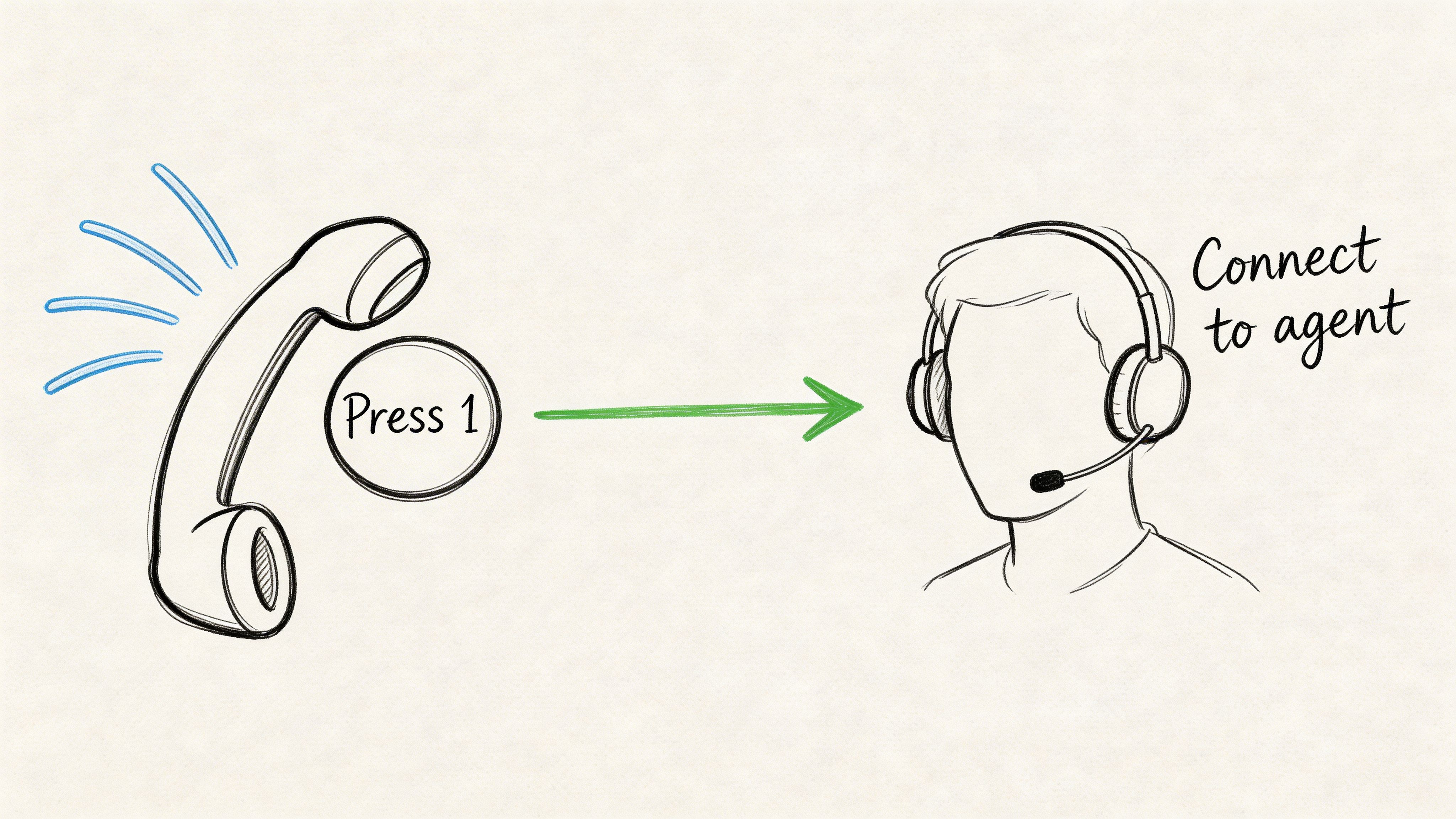
A strong script is short. It names the offer, names the traveler type, and gives one clear action.
Example:
“Hi, this is Horizon Travel with an update for past cruise guests. We have new availability on a Caribbean sailing departing soon. If you'd like details or pricing, press 1 now to speak with an advisor.”
That beats a long message listing ships, ports, and cabin classes.
Press-1 transfers are useful because they filter intent before your team spends time on the lead. If a person presses 1, they are raising their hand. That matters in agencies where advisor time is the bottleneck.
Use this for:
Keep the menu tight. One transfer option is usually enough. More options create confusion and lower response.
A voice campaign should sound like outreach from a travel desk, not a phone tree.
They call cold lists. They overload the script. They send everyone to the same booking line. They forget that relevance matters more than reach.
Travel advertising can support this channel because people do act on promotional messaging. Nearly one in five travelers, 19%, said advertising influenced their booking decisions in Expedia's 2023 survey, cited in the same travel marketing statistics roundup. The key is not shouting louder. It's giving the right traveler a timely reason to engage.
A practical setup looks like this:
For agencies selling high-consideration trips, voice remains one of the few ad formats that can create immediate conversation without waiting for the prospect to schedule themselves.
Ringless voicemail is underrated in travel because it sits in the sweet spot between visibility and interruption.
A traveler doesn't need a full call every time you need to nudge them. They often just need a clear, human reminder. Final payment is due. Passport documents are missing. A pre-departure briefing is scheduled. An itinerary changed. A ringless voicemail handles that well.
If you're new to the format, Call Loop explains the basics in its guide to what ringless voicemail is.
This works especially well when the message matters but doesn't require a live conversation right away.
Examples:
The tone matters. You aren't trying to sound clever. You're trying to sound competent.
A good message usually includes four parts:
Keep it concise. A minute is already long. Most travel reminders can be handled in less.
Example:
“Hi Maria, this is Jenna from Seaside Travel. I'm calling with a quick reminder that your final payment for the June group tour is coming up. If you'd like us to review your balance or payment options, give us a call at the office. Again, this is Jenna at Seaside Travel. We look forward to helping you get everything set.”
That does the job. No hype. No clutter.
Operator note: Ringless voicemail is excellent for reminders and updates. It's weaker for complex first-touch sales offers.
Some agencies try to use ringless voicemail like a replacement for every outbound channel. That's where it falls apart. It won't carry the full weight of top-of-funnel prospecting on its own. It works better as part of a sequence, especially after a quote request, a consultation booking, or a pending payment.
Travel buyers are increasingly mobile in how they book and manage trips. In 2023, 75% of all travel agency bookings were conducted via mobile devices, according to these travel agency industry statistics. That makes voicemail reminders more practical than many agencies realize. Travelers are already managing trip details from their phones. Meeting them in the inbox of that same device is a natural extension of service.
For ads for travel agency retention and operational follow-through, ringless voicemail is one of the cleanest tools available.
Single-message campaigns are easy to launch and easy to overvalue.
Most travel bookings don't happen because of one text or one ad. They happen because the agency stays present at the right moments. That's why drip sequences outperform one-off blasts in so many travel workflows.
The winning mindset is simple. Build around behavior, not calendar dates alone.
Someone requests a quote. Someone starts a booking and drops off. Someone returns from a trip and is open to another one. Those are sequence triggers.
If you need a tactical framework, Call Loop's guide to drip campaign best practices is a solid starting point.
For a quote request, a practical flow might be:
For abandoned bookings:
For post-trip retention:
The best sequences feel like service, not pressure. Customer journey mapping becomes important here. If you need help structuring handoffs between awareness, consideration, and booking, these customer journey mapping tools can help clarify where messages should land.
Automation saves time, but bad automation scales annoyance.
An agency that sends the same five-message sequence to every lead will get worse results than an agency with a shorter but better-targeted sequence. Personalization doesn't need to be fancy. It needs to be relevant. Destination interest, travel month, budget band, and lead source are often enough.
One market reality reinforces why this matters. Online sales are projected to account for over 70% of global travel and tourism revenue in 2025, as noted in the same market analysis above. That means more buyer journeys begin digitally, and more agencies need structured follow-up to convert that digital intent into booked business.
A few sequence rules I trust:
Done well, drip campaigns turn ads for travel agency lead generation into a full-funnel system instead of a pile of disconnected promotions.
Generic SMS offers feel cheap. Personalized ones feel useful.
That difference matters in travel, where the product is emotional, visual, and usually considered over more than one session. If your agency knows a customer likes beach resorts, family itineraries, escorted Europe trips, or premium stays, the message should reflect that.
Rich media helps. So does link tracking. But relevance comes first.
A strong travel SMS usually combines three things:
Examples:
If you include media, make it support the message. One clean resort image or short destination clip is enough. Too many visuals and the SMS starts feeling like noise.
Link tracking isn't just about clicks. It tells you what kind of travel interest is live right now.
If a prospect consistently taps cruise offers but ignores all-inclusive packages, your follow-up should change. If honeymoon links outperform family packages on one list segment, that tells you something about audience fit and seasonality.
Travel search ads already show unusually strong engagement. In 2023, the average click-through rate for Google Ads in travel reached 10.03%, versus 6.11% overall, according to this travel marketing data summary. That doesn't mean every SMS will perform like search. It does mean travel audiences often respond when the message lines up with real planning intent.
Send fewer offers with tighter fit. Travel buyers don't need more inspiration. They need fewer, better options.
A few hard-earned lessons:
For ads for travel agency conversion work, personalized SMS often performs best after someone has already shown intent elsewhere, such as a paid ad click, a website visit, or a consultation request.
A messy list will hurt you faster than a small list.
Travel agencies sometimes get impatient and import old contacts, event signups, inquiry forms, and partner lists into one promotional database. That's how complaint rates rise and deliverability gets shaky. It's also how trust erodes.
Double opt-in slows list growth a little. It improves list quality a lot.
Call Loop breaks down the process in its article on what double opt-in means.
Travel is personal. You're handling names, dates, destinations, payment timing, and often family information. A consent-first process fits the category.
A clean double opt-in flow might work like this:
That process keeps your list cleaner and gives your team better records if consent is ever questioned.
Practical steps worth implementing:
They hide the consent language. They bundle service texts and promotional texts together. They assume a quote request equals ongoing marketing permission. It doesn't.
This matters even more as travel agencies expand digital outreach. In the US, there are 59,673 travel agencies projected in 2026, growing at a 6.9% CAGR since 2021, according to the travel agency market report cited earlier. More agencies competing for attention means more pressure on shared channels like SMS. The agencies with disciplined compliance practices tend to maintain better long-term performance.
One more operational point. Double opt-in doesn't have to feel bureaucratic. You can make the confirmation useful.
For example:
“Reply YES to get member-only tour alerts, booking reminders, and destination offers from Alpine Travel. Reply STOP to opt out.”
That's clear. It tells the prospect why joining is worth it.
When people talk about ads for travel agency growth, they often skip this part because compliance sounds boring. It isn't boring when poor list practices start undermining your campaigns. Consent is infrastructure.
Geo-targeting works best when it reflects real context, not just a zip code.
An agency selling warm-weather escapes should not send the same February message to Minneapolis and Miami. A group travel agency promoting conference packages should not text every contact in the database when only certain metro areas are relevant. Geography changes urgency, interest, and timing.

Start with what you already know from the CRM:
Then connect location to actual travel logic.
Examples:
This approach is especially useful in mobile-driven booking behavior. Mobile devices are projected to drive 63.5% of OTA bookings in 2025, with continued growth projected through 2031, according to this OTA market coverage. If a traveler is likely to act on a phone, localized relevance and clean timing matter even more.
Good geo-targeted SMS doesn't announce that you know where someone lives. It uses context subtly.
Bad:
“We see you're in Chicago, book a trip now.”
Better:
“Cold weather escape options from O'Hare just opened for March departures.”
That feels like service.
For agencies handling diverse audiences, geo-targeting can also support more culturally aware campaigns. Travel marketers often miss authentic multicultural representation and nuanced segmentation, even though underserved travelers are more likely to plan trips when they see themselves reflected in campaigns, as discussed in this piece on why multicultural travel marketing is often broken. Regional and cultural context should inform copy, offers, and creative choices, not just audience filters.
A few practical rules:
Geo-targeted ads for travel agency campaigns usually outperform generic mass sends because they reduce mental work for the buyer. The traveler doesn't have to translate the offer into their own situation. You've already done it.
Many agencies treat reminders as admin. The better ones treat them as conversion protection.
A consultation reminder isn't just a courtesy. It's how you reduce no-shows. A booking confirmation isn't just a receipt. It's how you reinforce trust, reduce inbound support questions, and keep the client moving toward departure.
For consultations, I like a layered cadence. Not aggressive. Just reliable.
A simple pattern:
For booked travel:
The channel mix matters. SMS is best for speed. Voice works when the traveler needs reassurance or there are several details. Ringless voicemail is excellent for deadline reminders that shouldn't require a live pickup.
This is still part of advertising in the practical sense. You're protecting the return on every lead you paid to generate.
The broader travel market supports that investment. The online travel agency market is valued at USD 561.30 billion in 2026 and projected to reach USD 761.33 billion by 2031, growing at a 6.29% CAGR, according to this OTA market report. As digital trip planning expands, agencies need cleaner post-inquiry and post-booking systems to keep demand from leaking out through missed calls, forgotten meetings, and avoidable confusion.
There is also room to tailor these reminders for niche audiences. Digital nomads and solo travelers are often under-served in mainstream travel campaigns, even though those segments have distinct needs around flexibility, safety, work compatibility, and community, as outlined in this article on travel audience segments brands should target. Reminder flows can reflect that. A solo traveler may need reassurance and itinerary clarity. A digital nomad may care more about logistics and workspace details.
The reminder isn't the end of the campaign. It's the moment that keeps the booking from slipping.
For ads for travel agency operations, this is one of the most impactful systems you can build because it improves experience after the lead is already won.
| Campaign Type | Implementation Complexity | Resource Requirements | Expected Outcomes | Ideal Use Cases | Key Advantages |
|---|---|---|---|---|---|
| SMS Text-to-Join Campaign with Keyword Triggers | Low–Medium: keyword setup, opt-in flow | SMS platform, promotional channels, basic creative | Rapid list growth, immediate opt-ins, measurable responses | Flash sales, seasonal lists, multi-destination promos | Very high open rates, cost-effective lead gen, fast testing |
| Voice Broadcasting Campaign with Press-1 Transfers | Medium–High: call scripting, routing, detection | Voice platform, live agents for transfers, compliance documentation | Immediate lead qualification, higher conversions for complex offers | High-value packages, last-minute deals, reactivation | Personal touch, instant agent connects, efficient agent time use |
| Ringless Voicemail Campaign for Travel Notifications | Low–Medium: recording and scheduling | Ringless VM platform, valid phone numbers, audio assets | Non-intrusive delivery, persistent inbox presence, reliable reminders | Pre-trip reminders, itinerary updates, payment deadlines | Less intrusive than calls, lower cost than live calls, strong for compliance |
| Drip Campaign Sequences for Multi-Stage Journey | High: multi-channel logic, conditional branching, CRM integration | Automation platform, CRM integration, content library, analytics | Improved conversions across funnel, reduced abandonment, higher LTV | Onboarding, abandoned booking recovery, seasonal launches, reengagement | Orchestrated touchpoints, automation at scale, performance insights |
| Personalized SMS Offers with Rich Media and Link Tracking | Medium–High: data-driven personalization, media delivery, tracking | Clean customer data, media assets, link-shortening/tracking, CRM | Higher engagement and CTRs, clearer ROI, better preference insights | Repeat-customer offers, destination-specific promos, A/B testing | Strong personalization, visual impact, measurable click attribution |
| Compliance-Focused Double Opt-In SMS Acquisition | Medium: multi-step consent flows and validation | Opt-in systems, number validation, audit logs, preference center | Higher-quality lists, lower complaints, stronger regulatory protection | New list building, international (GDPR) audiences, enterprise accounts | Legal protection, improved deliverability, trusted subscriber base |
| Geo-Targeted SMS Campaign with Location-Based Triggers | Medium: geographic segmentation, time-zone and trigger setup | Location data, CRM integration, weather/event data feeds | Higher relevance and regional conversion, better timing | Seasonal/location-based offers, event-driven packages, national agencies | Contextual relevance, time-zone optimization, reduced irrelevant messaging |
| Appointment Reminder & Booking Confirmation Sequence | Medium: scheduling rules, booking system integration | Booking/CRM integration, templates, multichannel delivery | Fewer no-shows, reduced support queries, improved satisfaction | Consultations, group bookings, pre-departure checklists, payment reminders | Reduces no-shows, operational efficiency, clearer customer communication |
Effective ads for travel agency growth aren't about being everywhere. They're about showing up in the right channel at the right time with the right next step.
That is the primary advantage of a multi-channel setup. Search and social can create demand. But SMS, voice, and ringless voicemail help you capture, qualify, and convert that demand before it fades. They also help you protect booked revenue after the sale starts moving.
The travel industry is large, competitive, and still expanding. It's also crowded with lookalike campaigns. Agencies that rely only on display ads, email newsletters, and generic retargeting usually end up fighting on price or shouting into the same busy channels as everyone else. Direct messaging changes that dynamic. It gives you a way to speak to travelers in a more immediate and operationally useful way.
The strongest pattern in everything above is simple. Relevance beats volume.
A keyword campaign works because the subscriber tells you what they want. A voice broadcast works because the offer is timely and the Press-1 path is clear. Ringless voicemail works because the traveler can absorb the message without interruption. Drip sequences work because they follow behavior instead of guessing. Personalized SMS works because it narrows the offer. Double opt-in works because it protects list quality. Geo-targeting works because context matters. Reminder sequences work because friction doesn't disappear after the click.
There are trade-offs, of course.
If you over-message, people tune out. If you automate poorly, you scale irritation. If you skip consent, you create risk. If you send broad promotions to mixed audiences, your results get muddy and your team loses confidence in the channel. None of these tools are magic on their own. They work when the campaign architecture is sound.
A good rollout usually starts smaller than agencies expect.
Pick one problem first.
If your agency struggles to build owned audiences, launch a text-to-join keyword campaign tied to one destination or trip category. If quotes go cold, build a short drip sequence with SMS and a follow-up call. If your team spends too much time chasing final payments or pre-trip paperwork, implement ringless voicemail reminders. If no-shows are costing you consultations, automate appointment confirmation and rescheduling prompts.
Then measure what happens in real operations. Which keyword produces the best inquiries. Which reminder timing gets replies. Which destination links generate clicks. Which voice script produces actual transfer conversations. That kind of learning is more valuable than copying generic “best practices” from broad travel marketing articles.
What makes Call Loop especially useful in this context is that it brings these channels together instead of forcing agencies to juggle separate tools. SMS, voice broadcasting, ringless voicemail, drip campaigns, segmentation, tracking, and compliance controls work better when they live in one system. That makes it easier to build actual customer journeys instead of disconnected campaigns.
Start with one workflow. Tighten it. Then add the next one.
That's how ads for travel agency marketing stop being a collection of promotions and start becoming a repeatable growth engine.
If you're ready to turn inquiry follow-up, booking reminders, and promotional outreach into one coordinated system, Call Loop gives you the tools to do it with SMS, voice broadcasting, and ringless voicemail in one platform. Use it to launch keyword campaigns, automate drip sequences, route Press-1 calls, send compliant opt-ins, and keep travelers moving from first interest to confirmed booking.
Chris Brisson
Chris is the co-founder and CEO at Call Loop. He is focused on marketing automation, growth hacker strategies, and creating duplicatable systems for growing a remote and bootstrapped company. Chat with him on X at @chrisbrisson


Trusted by over 45,000 people, organizations, and businesses like


