
See a Demo
You're just one step away from seeing Call Loop in action.
Enter your information below to watch a demo right now.

You're just one step away from seeing Call Loop in action.
Enter your information below to watch a demo right now.


You're probably already spending money in the right places and still struggling to prove it.
Google Ads sends traffic. Facebook generates interest. Your website gets visits. Maybe a postcard campaign or a billboard pushes a few people to call. The phone rings, your team answers some of those calls, misses others, and at the end of the month someone asks the question every marketer hates: which campaign drove revenue?
If phone calls matter to your business, that question gets expensive fast. Web analytics can tell you who clicked. They usually can't tell you which ad made someone stop comparing options and pick up the phone. That gap is where budget leaks, reporting gets fuzzy, and teams start defending channels with opinions instead of evidence.
Call tracking numbers fix that gap. They connect the call to the source, so you can stop treating phone leads like a black box and start measuring them the same way you measure form fills, purchases, and booked demos.
A lot of businesses don't have a lead problem. They have a visibility problem.
A roofing company runs search ads for emergency repair, local service pages for SEO, direct mail to past neighborhoods, and seasonal promotions on social. Calls come in all week. The office staff asks, “How did you hear about us?” Some callers answer. Some guess. Some say “Google,” which could mean paid search, organic search, Google Business Profile, or a review site they found five minutes earlier.
That's the black hole. Money goes in. Calls come out. Attribution disappears in the middle.
When businesses don't use call tracking numbers, they usually make decisions with partial data:
Practical rule: If a lead can call before filling out a form, your reporting is incomplete without call tracking.
The issue isn't just measurement. It's decision-making. If you can't see which campaigns generate real conversations, you can't confidently raise bids, cut weak channels, staff the phones properly, or build the right follow-up process.
Phone calls often signal higher intent than a casual site visit. When someone calls, they usually want an answer, an appointment, a quote, or immediate help. If you can tie that call back to the campaign that generated it, ROI stops being a guess.
That's why call tracking numbers matter. They turn phone leads from anecdotal evidence into attributable marketing outcomes.
A prospect clicks a Google ad at lunch, gets pulled into a meeting, then calls your business two hours later from the number still open on your site. If that call lands in your CRM as just “phone lead,” you know a lead came in, but you still do not know what created it or how to follow up if nobody answered.
Call tracking numbers fix that gap. They are unique phone numbers assigned to a campaign, traffic source, ad, landing page, or channel. When someone dials that number, the platform records the attribution details and forwards the call to your real business line.
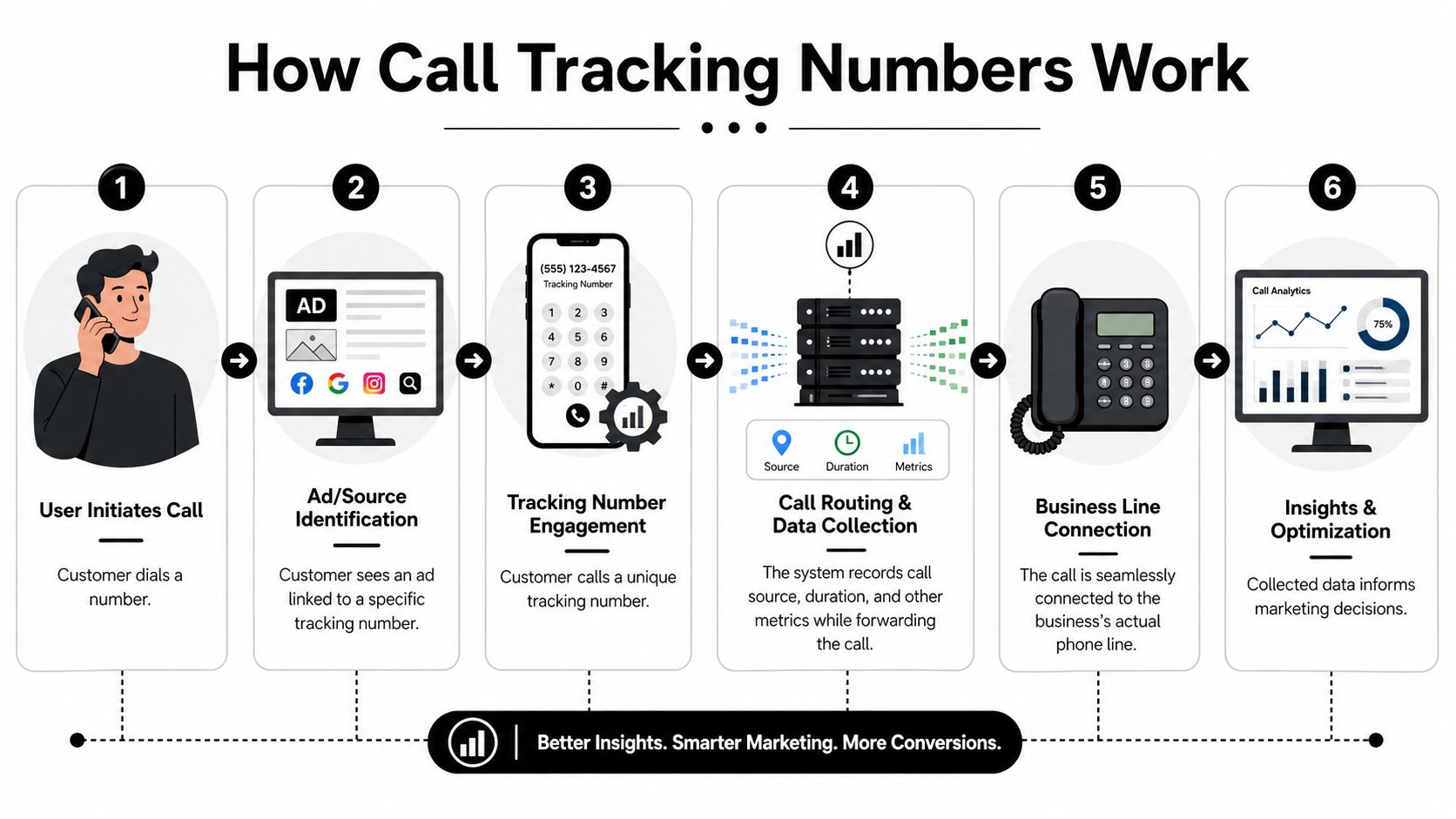
At the telecom level, these are usually direct inward dial numbers, or DIDs. If you want the phone-system version of that concept, this guide on what a DID number is gives the right foundation. In marketing use, each DID becomes a label attached to a source before the call ever reaches your team.
The process is straightforward:
For the caller, nothing feels different. They dial a number and talk to your business. For marketing and sales, the call stops being a black box.
A simple analogy helps here. The number works like a return address on a package. The conversation still arrives at the same place, but now you can see where it came from.
The obvious benefit is attribution, but that is only half the job. Good call tracking also creates operational data you can act on.
If calls from one campaign go unanswered after 5 p.m., that is not just a reporting note. It is a follow-up problem. If a high-intent caller hangs up after 20 seconds, that should trigger an SMS, a callback task, or a ringless voicemail drop based on your consent and compliance rules. That is where call tracking starts to affect revenue, not just dashboards.
Many businesses erroneously treat phone calls and follow-up channels as separate systems, when they ought to be integrated. A tracked call should feed the same funnel logic as a form fill. If the call connects, sales owns the next step. If the call is missed, automation should close the gap fast.
Years ago, setting up tracking numbers felt like a telecom project. Now the software side does the heavy lifting. Providers can provision local or toll-free numbers quickly and tie them to campaigns, pages, and channels, as explained by Revenue.io's overview of call tracking.
That shift is why call tracking now belongs in regular campaign operations, not in a side folder that only analysts review once a month.
The first mistake is assuming call tracking means changing your phone system. Usually, it does not. You are adding a measurement layer in front of the line you already use.
The second mistake is stopping at “which ad drove the call.” Useful, but incomplete. The stronger setup connects call records to the rest of outreach so your team can recover missed opportunities with SMS and ringless voicemail, qualify leads faster, and report revenue by source instead of just call volume.
The third mistake is assuming every tracked number works the same way. It does not. A number printed on a truck wrap solves a different problem than a number that changes on your website based on traffic source. That setup choice determines how precise your attribution can get.
A home services company runs radio ads, Google Ads, local SEO, and direct mail. The phones ring. Revenue comes in. Then the owner asks a fair question: which channels are producing booked jobs, and which ones are just making the dashboard look busy?
That answer depends on choosing the right tracking method.
Static call tracking assigns one number to one fixed source or campaign. It fits places where the number stays the same, such as a billboard, postcard, truck wrap, directory listing, or a landing page tied to one offer.
Dynamic call tracking, often called DNI or Dynamic Number Insertion, changes the number shown on your website based on how a visitor arrived. A paid search click can see one number. Organic traffic can see another. In tighter setups, different campaigns or keywords get their own attribution path.
| Feature | Static Call Tracking | Dynamic Call Tracking (DNI) |
|---|---|---|
| Best fit | Offline campaigns and fixed placements | Websites with multiple traffic sources |
| How it works | One number is assigned to one campaign or channel | Numbers swap on the site based on visitor source |
| Attribution depth | Broad source or campaign level | Session-level or source-level web attribution |
| Operational complexity | Low | Higher |
| Reporting value | Clear for offline media | Stronger for digital optimization |
| Common mistake | Reusing one number across too many campaigns | Using too small a number pool for traffic volume |
Static works best when the question is simple: which offline source made the phone ring?
If a prospect sees the same number every time, static tracking usually does the job. That includes print, signage, sponsorships, mail, and Google Business Profile listings. It is also useful for location pages or single-purpose landing pages where attribution does not need to go down to the visitor session.
The upside is control. Setup is easy, reporting is easy to explain, and there is less room for implementation mistakes.
The downside is visibility. Static numbers will not tell you much about the path someone took on the site before calling, and that matters if your team wants to optimize landing pages, campaigns, and follow-up flows.
DNI is the better choice when your website gets traffic from several sources and you need to know what drove the call.
It answers questions static tracking cannot answer cleanly:
For many implementations, the routing layer uses direct inward dial numbers. If you want the telecom side explained in plain English, this guide to what a DID number is and how it works is a useful reference.
The trade-off is not just simplicity versus detail. It is also what you plan to do after the call.
If your process ends at attribution, static may look good enough. If your process includes missed-call text back, ringless voicemail follow-up, lead qualification, and source-based reporting in the CRM, dynamic tracking creates much better raw material. You can tie the original source to the follow-up sequence instead of treating every missed call the same way.
That changes decisions. A missed call from a high-intent Google Ads visitor should not enter the same recovery workflow as a low-intent directory call. One may deserve an immediate SMS and a fast call-back from sales. The other may fit a lighter touch. Good attribution makes those choices possible.
Use static tracking for fixed placements and offline media. Use dynamic tracking on the website if you care about campaign optimization, page performance, and tying call outcomes to later outreach.
Many businesses need both.
That hybrid model is usually the most honest one. Static numbers give clean attribution for channels that never change. DNI fills in the digital side where buyer journeys are messy, multi-touch, and easy to misread if every visitor sees the same number.
A poor setup creates two problems at once. Marketing loses attribution, and operations inherits misrouted calls, missed follow-up, and messy reporting.
Build the system around three decisions: which numbers to use, where calls should go, and what data needs to travel with each call after it ends. If you get those right early, call tracking stops being a reporting tool and starts feeding the rest of your outreach process.
Choose numbers based on buyer behavior and team workflow, not personal preference.
Local numbers usually work better for businesses that sell into a defined service area. A homeowner calling a plumber or roofing company often responds better to a familiar area code than a generic national number. Toll-free numbers can make sense for multi-location brands, centralized sales teams, or campaigns where a single national identity matters more than local presence. Vanity numbers help recall, but they can also create tracking complications if every campaign points to the same memorable line.
If you still need to sort out the basics of sourcing numbers, this guide on how to buy a business phone number for marketing and sales use covers the setup options.
Forwarding is the infrastructure. If it fails, the attribution does not matter.
Each tracking number should route to the right destination without adding friction for the caller. Sales calls should reach sales. Service calls should reach service. Location-based campaigns should route to the branch that can handle the inquiry. Keep the experience identical to your normal call flow, because the prospect should never feel the tracking layer.
A few setup details matter more than they look:
This is also the point where missed-call handling should be defined. If a call goes unanswered, decide what happens in the next few minutes. A text-back workflow, a callback task, or a ringless voicemail follow-up can recover leads that would otherwise disappear. Waiting until the CRM stage to figure that out is too late.
Dynamic number insertion belongs on pages where source-level attribution changes decisions.
For many teams, that means the main website, paid landing pages, and high-intent pages such as pricing, booking, or consultation forms. You do not need it on every microsite or low-value page. Extra complexity only pays off if the source data will change budget, routing, or follow-up.
Treat DNI like putting different labels on the same pipeline. The call still reaches your team, but now you know whether it came from paid search, organic traffic, a local directory, or a specific campaign. That matters later when an unanswered call triggers SMS or voicemail outreach. A high-intent paid search lead should not get the same recovery sequence as a casual directory caller.
The cleanest rollout is usually phased:
That last step is where setup quality starts showing up in revenue. If your system captures source, call status, and caller details cleanly, you can follow up based on intent instead of sending every missed caller into the same generic sequence.
Teams that get value from call tracking fastest usually keep the first version simple. They set up clean routing, clear naming, and usable outcomes. Then they expand into smarter follow-up once the data is reliable.
Collecting call data is easy compared with using it well.
A lot of teams stop at call counts. That's useful, but shallow. Significant value appears when you connect source data to outcomes. Which campaigns produced calls? Which calls lasted long enough to indicate serious intent? Which calls turned into appointments, sales conversations, or qualified opportunities? Which ones were missed, abandoned, or routed badly?

A ten-minute sales conversation and a thirty-second wrong number shouldn't carry the same weight in your reporting. Good call tracking lets you sort calls by signals that matter operationally:
Once you have that, you can make better budget decisions. You're no longer asking which channels generated the most calls. You're asking which channels generated the right calls.
Many teams leave money on the table when missed calls often get treated as a front-desk problem instead of a marketing signal.
Numa's roundup reports that businesses miss about 22% of inbound calls on average, and some SMB samples show missed-call rates as high as 62% in certain cases, based on its business phone statistics summary. If a paid campaign is generating calls your team isn't answering, the ad problem and the staffing problem are connected.
A missed call from a high-intent campaign isn't just an operations miss. It's wasted media spend.
That changes what ROI means. Campaign performance isn't only about lead generation. It's also about lead capture.
The most useful call tracking setups feed downstream systems, not just a dashboard that marketing checks once a week.
A strong workflow usually pushes call data into:
If you're building a broader reporting model, this guide to measuring marketing campaign effectiveness fits well with a call-attribution approach.
A simple operating model works better than a complicated attribution philosophy.
Review call data in three buckets:
| Bucket | What to look for | What to do |
|---|---|---|
| Campaign winners | Sources that produce strong conversations | Protect budget and improve conversion paths |
| False positives | Channels that create short or low-value calls | Tighten targeting and messaging |
| Operational leaks | High-intent calls that were missed or mishandled | Fix routing, staffing, and follow-up |
The companies that prove ROI with call tracking don't just count calls. They connect the campaign, the conversation, and the business outcome into one line of sight.
A paid search lead calls at 12:17. No one picks up. By 12:25, the prospect has already called a competitor.
That gap is where call tracking starts to matter beyond attribution. The missed call should trigger action, not sit in a report until someone reviews it later. Teams that prove ROI use call tracking as the switchboard for follow-up across SMS, callbacks, and ringless voicemail, so inbound interest does not die at the first missed touch.
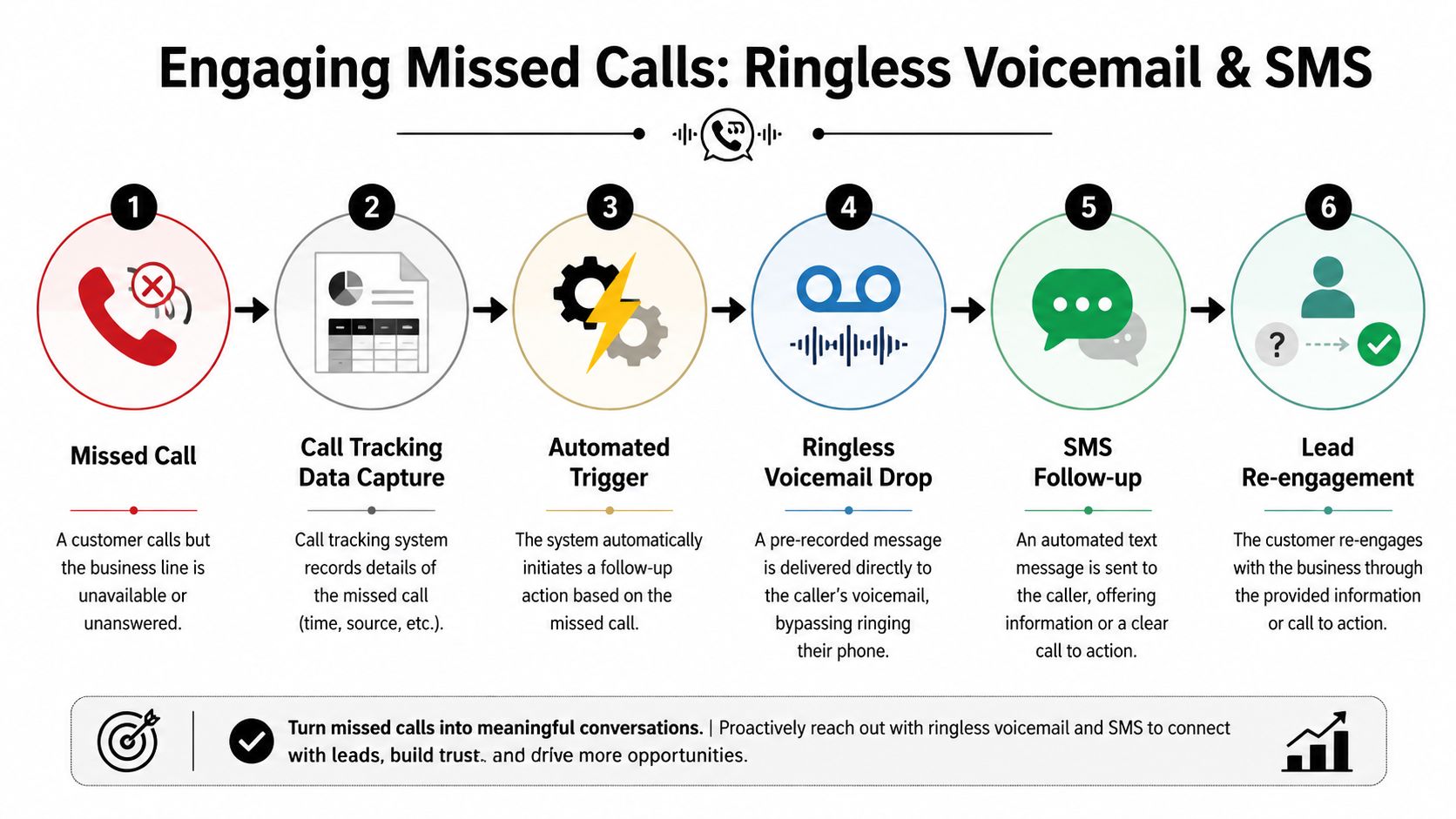
The basic sequence is simple:
The important part is step four. A generic “sorry we missed you” text is better than silence, but it still leaves money on the table. Stronger teams tie the message to intent. If the call came from a roofing ad after a storm, the SMS should offer a fast inspection slot. If it came from a property lead form tied to investor outreach, the follow-up may work better as a text plus a voicemail drop with a direct line. For operators working that market, this real estate dialers guide is a useful reference for building speed into outbound response.
SMS handles speed. Ringless voicemail adds context and tone.
Used together, they cover two common follow-up problems. Some prospects will text back immediately but never answer an unknown number. Others will ignore texts yet listen to a short voicemail from a local business that sounds credible and specific. A missed-call workflow should account for both behaviors.
That is the bigger strategic point. Call tracking should feed outreach logic, not just reporting. If the source, landing page, keyword theme, and call outcome are already captured, use that information to shape the next touch. The handoff from inbound call tracking to outbound follow-up is what closes the loop.
One option in this category is Call Loop, which supports outbound follow-up across SMS, voice, and ringless voicemail and can fit into missed-call recovery workflows.
Teams often obsess over attribution and ignore presentation. That is a mistake.
The outbound number influences whether the prospect answers, replies, or deletes the message. A local service business usually gets better trust with a familiar area code. A national brand may prefer a consistent toll-free identity for scale and recognition. Neither choice is universally right. The right choice depends on whether geography or brand consistency does more work in the sale.
A tracked number works like a return address on direct mail. It helps reporting, but it also shapes how the recipient judges the message.
If the follow-up feels generic or comes from a number that looks unrelated to the original inquiry, response rates usually drop even when the lead was qualified.
Teams get better results when they use a few simple rules:
What hurts performance:
The practical win is straightforward. Call tracking shows where demand came from. SMS and ringless voicemail help recover the demand your team failed to catch live. Put together, they turn missed calls from a reporting problem into a workable follow-up system.
The tracking part is only half the job. The other half is handling call data and follow-up outreach responsibly.
That starts with a simple rule. If you record calls, store transcripts, or use call events to trigger messaging, your process needs legal review and clear internal rules. This is especially important when teams move from inbound attribution into automated SMS or ringless voicemail follow-up.
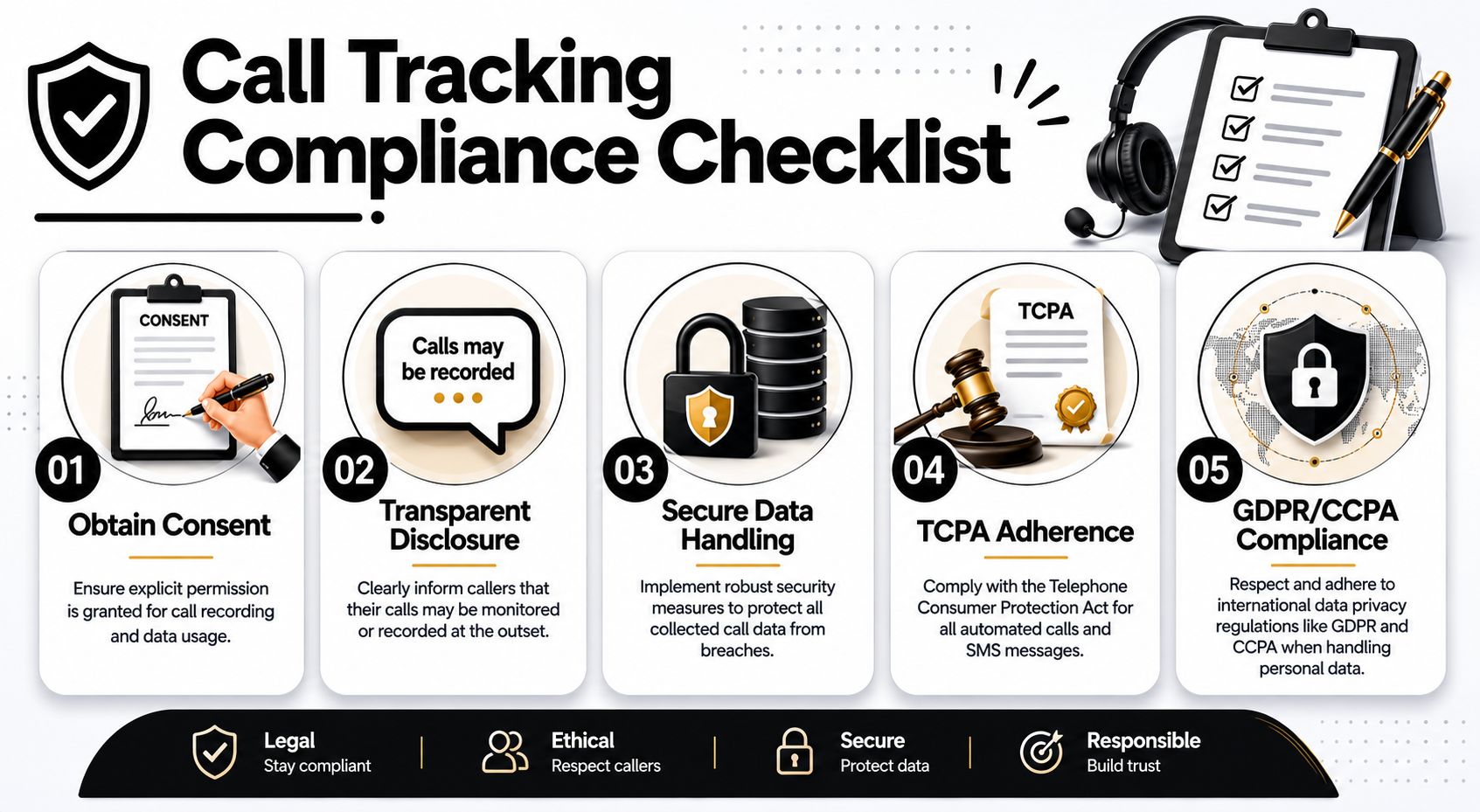
A practical compliance baseline includes:
If your business handles protected health information or similarly sensitive data, ordinary marketing convenience can create real risk. In healthcare, that means confirming your communication workflows, storage practices, and vendor agreements align with HIPAA requirements before you turn on recording, transcription, or automated follow-up.
For teams that rely heavily on outbound calling in property investing and acquisition, this real estate dialers guide is a useful example of how operational efficiency and compliance need to be considered together.
Compliance isn't a disclaimer you bolt on later. It shapes how you configure the system from day one.
The safest setups are rarely the flashiest. They're documented, permission-based, and reviewed before launch. Marketing, sales, operations, and legal should all understand who can access call data, what follow-up automations are allowed, and how consent is captured.
If call tracking proves ROI, compliance protects it.
If you want to turn missed calls and attributed phone leads into coordinated outreach, Call Loop is worth evaluating for SMS, voice broadcasting, and ringless voicemail workflows. It's a practical fit for teams that need to follow up fast, automate responsibly, and connect call activity to the rest of the customer journey.
Chris Brisson
Chris is the co-founder and CEO at Call Loop. He is focused on marketing automation, growth hacker strategies, and creating duplicatable systems for growing a remote and bootstrapped company. Chat with him on X at @chrisbrisson


Trusted by over 45,000 people, organizations, and businesses like


