
See a Demo
You're just one step away from seeing Call Loop in action.
Enter your information below to watch a demo right now.

You're just one step away from seeing Call Loop in action.
Enter your information below to watch a demo right now.

You send what you call a “text” to your customer list. It includes a promo image, a short video, and a long message. A few customers reply right away. Others never see it. Your costs jump. Then someone on your team asks whether that was SMS, MMS, or just “texting.”
That confusion causes real business problems.
The difference between SMS and text isn’t academic. It affects deliverability, compliance, cost, and customer experience. If you use mobile messaging for promotions, reminders, follow-up, healthcare communication, event attendance, or sales outreach, you need to know which channel you’re using and what happens when your message changes from plain text to media-rich delivery.
A lot of business owners run into the same problem. They think “text” means one thing. In practice, it can mean several different technologies.
A common example is a simple campaign that starts as a short promotional message, then grows. Someone adds a logo. Someone else drops in a product image. The copywriter goes past the usual text length. The team still calls it a text blast, but the delivery behavior has changed.
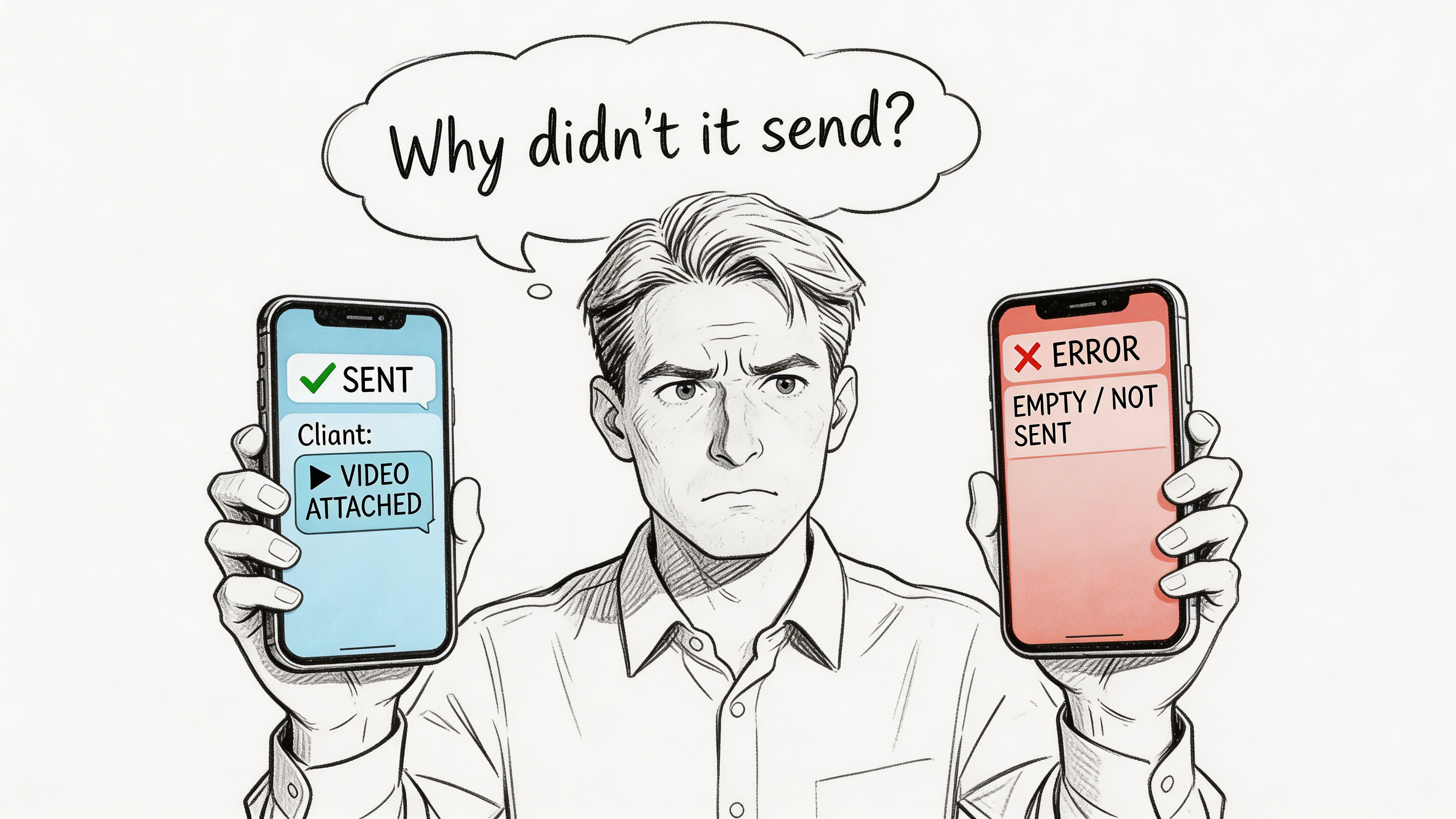
That’s where things break.
A plain SMS is not the same as an MMS with media attached. It also isn’t the same as an app message sent through iMessage or WhatsApp. Businesses often lump all of them together because customers say “text me.” Carriers, compliance rules, and billing systems don’t treat them the same way.
The mistakes usually show up in four places:
Practical rule: If the message is time-sensitive, start by asking whether plain SMS can do the job. That question prevents a lot of expensive mistakes.
The term “text” sounds simple. For a business, it isn’t. If you understand the difference between sms and text at the channel level, you make better decisions about what to send, when to send it, and how to keep it compliant.
Businesses often use the word “text” casually. That’s fine in conversation. It’s not enough when you’re choosing a business messaging channel.
SMS stands for Short Message Service. It’s the basic, text-only format sent over the cellular network. It doesn’t need a data connection or Wi-Fi.
In everyday language, many people call SMS a text message. That’s why businesses often search for the difference between sms and text and assume there must be a major technical split. In many cases, “text” is just the casual label for SMS.
If you want a plain-language overview of the standard itself, this explainer on SMS messaging is useful: https://www.callloop.com/blog/what-is-sms-messaging
MMS stands for Multimedia Messaging Service. It adds support for images, video, and longer content. It’s still part of the carrier messaging world, but it’s not the same operationally as SMS.
That matters because many businesses say “we sent a text,” when what they really sent was MMS. Once you attach media, your campaign has different cost, deliverability, and device-handling considerations.
Customers may also use “text” to mean messages sent through apps like iMessage or WhatsApp. Those are not SMS. They rely on internet connectivity, app ecosystems, and richer feature sets.
That’s why one person on your team may say “text campaign” and mean carrier messaging, while another means app-based messaging.
Terminology gets even messier across markets.
A source discussing business messaging terminology notes that US and UK usage often treats “text message” and “SMS” as the same thing, while parts of continental Europe commonly use SMS explicitly in day-to-day language, which can create confusion in multilingual campaigns and consent flows (TextUs discussion of SMS terminology).
If your opt-in language says “text” in one market and “SMS” in another, don’t assume customers hear those words the same way.
That’s one reason teams pairing SMS with an email marketing platform need clear channel labels in forms, automations, and compliance records. “Subscribe for updates” is weaker than “agree to receive SMS messages” when you need clean consent language.
A customer replies "I never got it," and your team swears the message was sent. Before anyone blames the platform, check the channel. SMS, MMS, and app-based messaging may all look like "a text" on the phone, but they behave differently in delivery, cost, recordkeeping, and customer experience.
For a business, those differences matter more than the label.
| Feature | SMS (Short Message Service) | MMS (Multimedia Messaging Service) | OTT Apps (iMessage, WhatsApp) |
|---|---|---|---|
| Network path | Cellular network via carrier control channels | Carrier messaging with multimedia support | Internet-based via data or Wi-Fi |
| Internet required | No | May rely on data or Wi-Fi gateways | Yes |
| Core content type | Text only | Text plus images, video, audio, files | Rich messaging, app features, media |
| Character handling | Strict 160-character limit per message segment | Longer text support, with carrier and device limits | Varies by app |
| Media support | No | Yes | Yes |
| Device dependence | Broad, near-universal phone support | Broad, but media handling varies by carrier and device | Limited to app users and compatible ecosystems |
| Auditability for regulated use | Predictable carrier routing and audit trails | More variables than SMS | Depends on app environment and workflow controls |
SMS runs through the carrier network and is built for short, direct communication. It does not depend on the recipient having the right app, staying logged in, or using mobile data at the moment your message goes out. That is a practical advantage for reminders, alerts, confirmations, and follow-up messages that need broad reach across mixed devices.
The 160-character segment limit still matters. Longer messages are split into multiple segments, which can affect both readability and cost. If you write SMS like email, your bill goes up fast and the message gets harder to scan. Good SMS copy is short because it performs better and because it is cheaper to send cleanly.
SMS also tends to fit regulated workflows better because teams can document consent, sending history, and message content more consistently. If your team handles protected health information or sensitive account updates, the security limits matter too. This overview of whether SMS is encrypted is worth reviewing before you use carrier messaging for anything confidential.
MMS gives you more room and lets you include images, audio, or video. That can improve response when the visual is the point, such as a product photo, event graphic, or coupon barcode. It also adds more variables, including file size limits, carrier handling differences, and higher per-message cost.
That trade-off is where many businesses make the wrong call.
If the message only needs to confirm an appointment, collect a reply, or send a link, SMS is usually the cleaner option. If the image helps the customer act faster or understand the offer better, MMS can earn its extra cost. The right question is not "Can we add media?" It is "Does the media improve the result enough to justify higher spend and more delivery variation?"
As noted earlier, carrier handling for MMS is less uniform than plain SMS, especially across devices and networks. That means more testing before launch if the campaign matters.
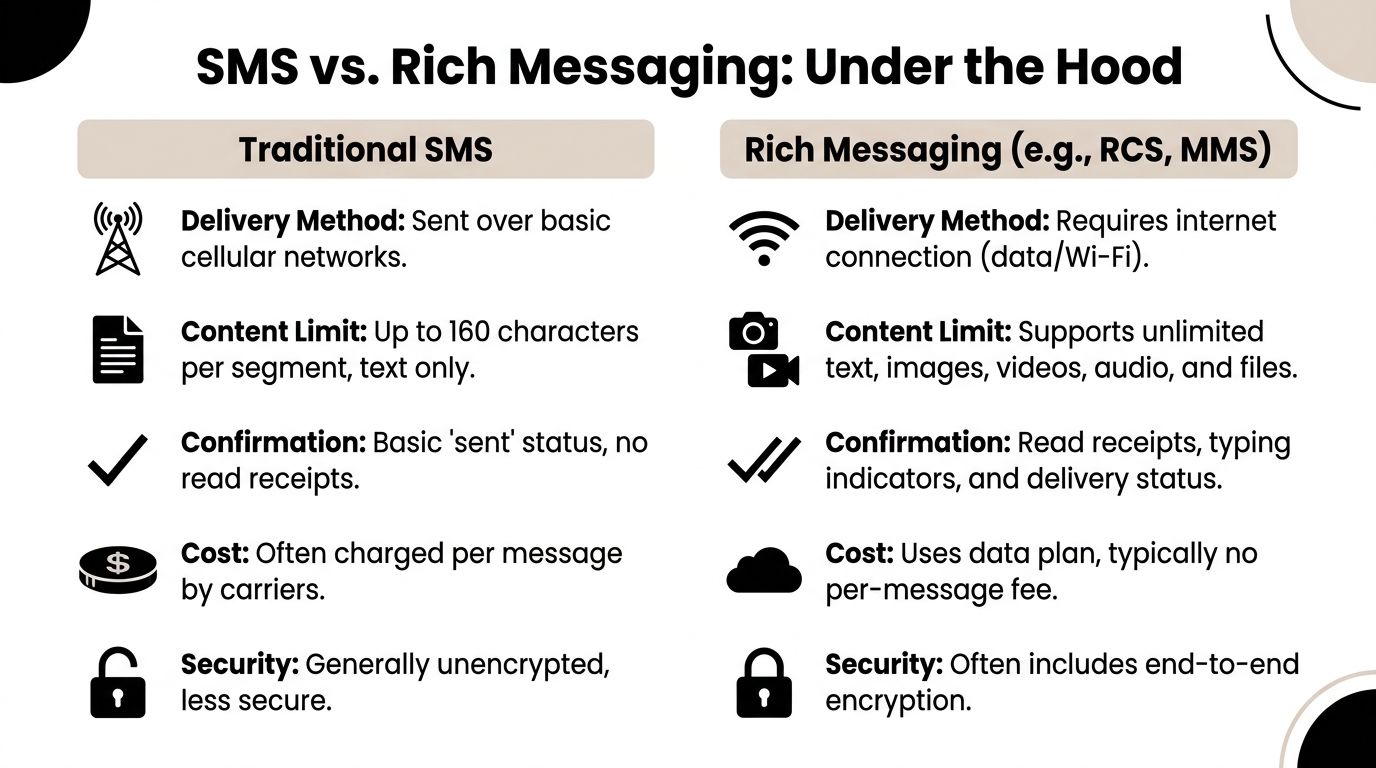
App-based channels like iMessage and WhatsApp support richer interactions, but they depend on internet access, app adoption, and the customer's device setup. That is fine if your audience already uses that app and expects to hear from you there. It is a weaker fit for broad business outreach where consistency matters more than features.
From an operations standpoint, OTT messaging also changes your compliance and documentation process. Consent language, message retention, and workflow controls may differ from your SMS program. A team that already has TCPA-safe SMS processes should not assume those controls automatically carry over to app messaging.
For Call Loop users, the practical split is simple. Use SMS for fast, trackable outreach that needs high reach. Use MMS when the image or media improves the response enough to cover the extra cost. Use ringless voicemail when the message needs more tone, context, or urgency than a short text can carry, especially for reminders, local follow-up, and missed-call recovery. Each channel has a job. Results improve when you match the channel to the action you want the customer to take.
Technical differences only matter if they change business outcomes. In mobile messaging, they do.
If you need fast attention, SMS is hard to beat. Notifyre reports that SMS has a 98% open rate, with 82% of consumers reading messages within five minutes, while email open rates are about 37%. The same source says SMS generates a 45% response rate versus 6% for email, and 74% of people maintain zero unread text messages (Notifyre SMS marketing statistics).
Those numbers explain why plain-text carrier messaging works so well for:
This is especially relevant for smaller teams. Notifyre also notes that 63% of texting businesses are SMBs. That tracks with what works in practice. Smaller organizations often need one channel that gets seen quickly without a complicated app rollout or heavy design process.
Cost problems usually show up when teams treat every mobile message like a branding asset.
A plain SMS is lean. It’s built for short, immediate communication. MMS adds visual content, but that comes with higher cost and more operational friction. One verified benchmark says MMS can cost 2-5x more per message than SMS in bulk US pricing, and it can see 20-40% lower deliverability than SMS because of size throttling and spam filtering (EZ Texting comparison of SMS and text).
That doesn’t mean MMS is a bad choice. It means you should use it deliberately.
A logo attached to every campaign is not a messaging strategy. It’s often just a more expensive habit.
Compliance is where businesses get hurt by sloppy terminology.
If you’re operating under TCPA, your consent, opt-out handling, and number registration process need to match the type of outreach you’re doing. If you’re in healthcare, HIPAA raises the bar even further around workflow control and recordkeeping.
Carrier-based messaging gives businesses a more straightforward operational path for documentation and audit trails than internet-based consumer apps. If you’re handling large-scale application-to-person messaging, proper registration matters. This overview of 10DLC compliance is worth reviewing for anyone sending business texts in the US: https://www.callloop.com/blog/10-dlc-compliance
The practical takeaway is simple. Compliance gets easier when your team uses precise language, documented consent, and the right channel for the message.
The best messaging strategy isn’t “use SMS for everything.” It’s matching the channel to the job.
SMS is the default choice for short, urgent, high-clarity communication.
Good fits include:
Keep the copy concise. Ask for one action. Don’t force media into a message that works better as plain text.
MMS earns its place when the asset does real work.
That can include:
If the image is just decorative, skip it. Decorative media increases complexity without improving the outcome.
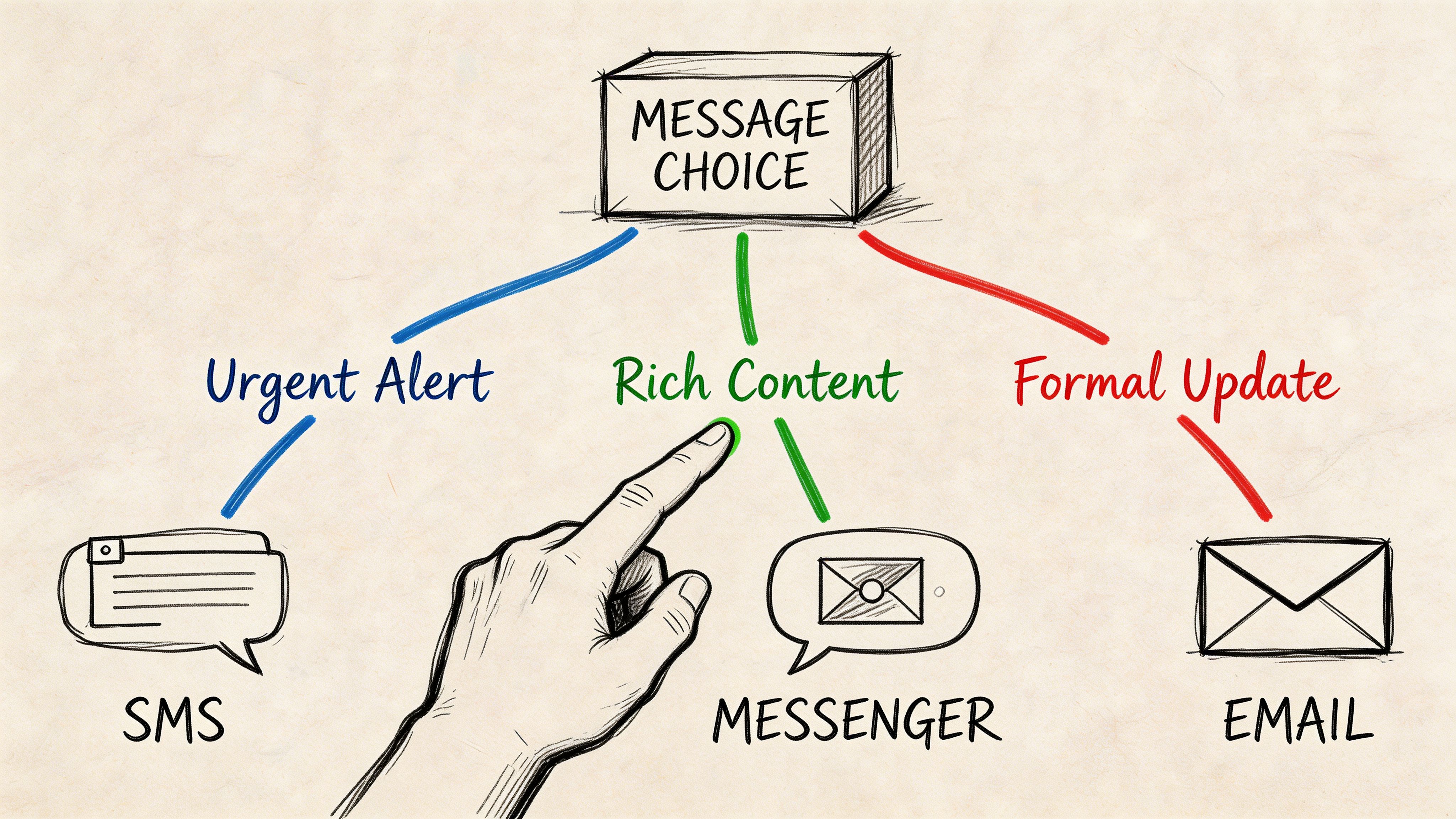
For customer communities, support conversations, or international audiences who already prefer a specific app, OTT messaging can be useful. But it works best when the audience has already chosen that environment.
It’s not the best universal fallback for mixed-device outreach.
Ringless voicemail isn’t a replacement for SMS. It solves a different problem.
Use it when the message needs more tone, more context, or a more personal touch without forcing a live call. That makes it useful for:
Ringless voicemail also works well in a sequence. Send a short SMS first. If there’s no action, follow with a ringless voicemail that adds context. Then send a final text with a clear CTA.
SMS is best for short decisions. Ringless voicemail is better when the customer needs to hear tone, reassurance, or explanation.
A smart setup starts before the first message goes out. The strongest campaigns come from clear consent, tight segmentation, and disciplined channel selection.
Use Text-to-Join keywords or other documented opt-in methods so subscribers know they’re agreeing to receive SMS communication. Keep the wording explicit. Don’t hide consent inside vague promotional language.
After that, segment your audience by intent. Buyers, leads, patients, members, attendees, and past customers shouldn’t all get the same message sequence.
SMS works best when it’s short and direct. Use merge tags and custom fields to personalize messages without turning every send into a media message.
A simple first name, appointment date, order detail, or event name often improves clarity more than an image would.
If you send internationally, checking international communication rates before launch helps avoid budget surprises and keeps planning grounded in the actual destination mix.
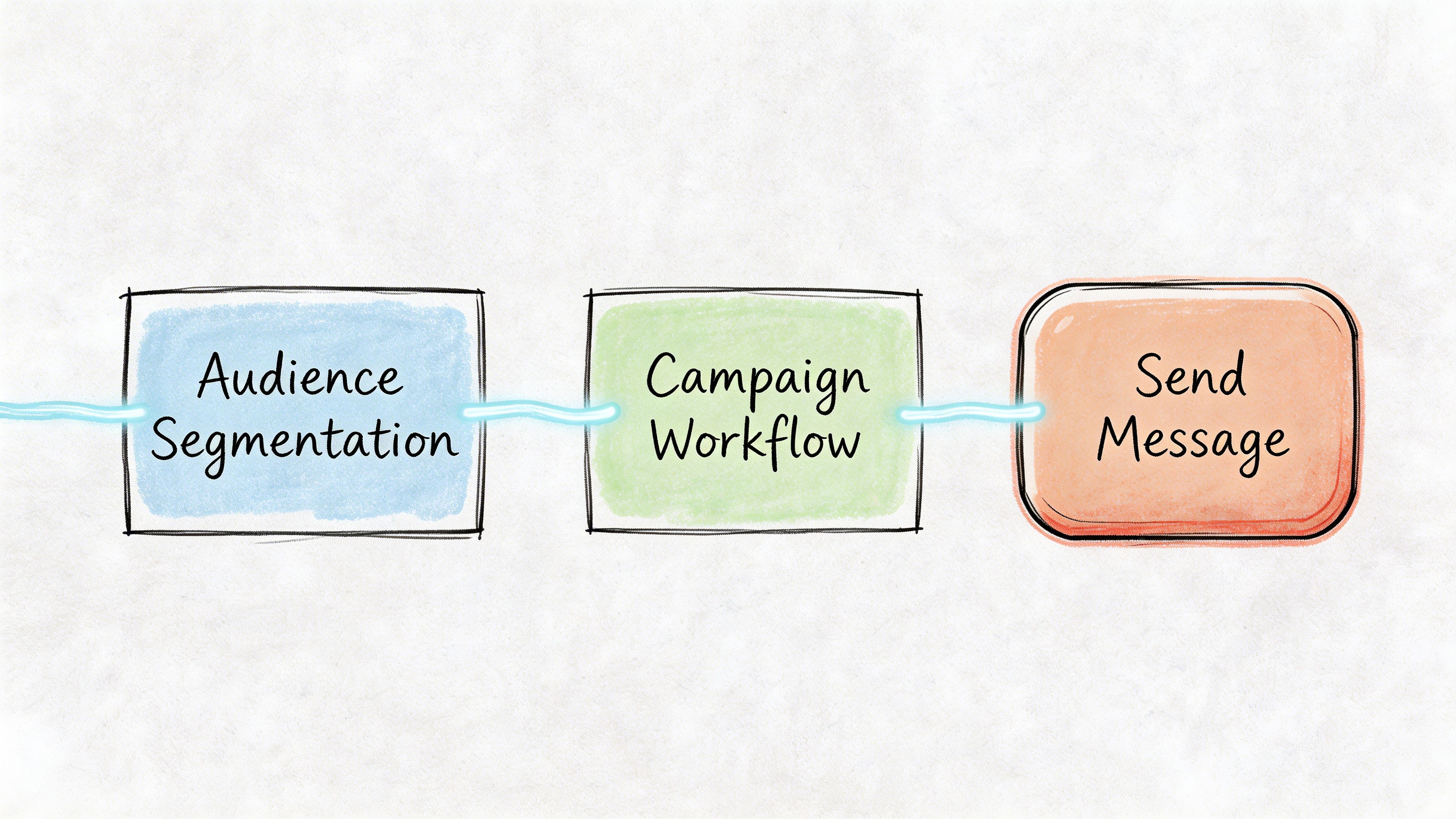
The best use of a multichannel platform is orchestration.
A practical framework looks like this:
This matters for agencies, ecommerce teams, healthcare practices, event organizers, and service businesses because each campaign objective is different. A flash sale, a patient reminder, and a webinar attendance push shouldn’t share the same message format.
Number strategy affects trust and compliance. Toll-free messaging, local numbers, and registered business texting each have different strengths depending on volume, geography, and use case.
What works is matching the number setup to your workflow, then keeping message content aligned with what the recipient consented to receive.
No. Rich messaging is growing, but SMS still matters because it’s the broad fallback and the simplest carrier-based option for short, time-sensitive communication.
Not as plain SMS. Once you attach video or similar media, you’re no longer sending a standard text-only SMS. You’re moving into MMS behavior, with the extra cost and delivery considerations that come with it.
In casual conversation, people often mean the same thing. In business operations, “text” is broader. It can refer to SMS, MMS, or app-based messaging. That’s why the difference between sms and text matters more inside a campaign workflow than it does in everyday speech.
Neither is universally better. SMS is stronger for short prompts, fast replies, and direct action. Ringless voicemail is stronger when your message needs voice, nuance, or a more personal delivery without interrupting the recipient with a live call.
If you want to put this into practice, Call Loop gives you the tools to run SMS, MMS, voice broadcasting, and ringless voicemail from one platform, with opt-in workflows, segmentation, personalization, automation, and analytics built for real business outreach.
Chris Brisson
Chris is the co-founder and CEO at Call Loop. He is focused on marketing automation, growth hacker strategies, and creating duplicatable systems for growing a remote and bootstrapped company. Chat with him on X at @chrisbrisson


Trusted by over 45,000 people, organizations, and businesses like


