
See a Demo
You're just one step away from seeing Call Loop in action.
Enter your information below to watch a demo right now.

You're just one step away from seeing Call Loop in action.
Enter your information below to watch a demo right now.

You already know the frustrating version of this story. You paid for ads, published content, collected form fills, maybe even got inbound calls, and then the leads just sat there. Some got one email. A few got a call nobody answered. Most drifted into the CRM with a status like “new,” “attempted,” or the classic graveyard label, “follow up later.”
That's usually not a lead quality problem. It's a follow-up problem.
If you want to learn how to follow up with leads in a way that creates conversations, you need a system that handles three realities at once. Buyers respond fast when intent is fresh. Many of them won't answer on the first touch. And one channel alone rarely carries the whole sequence. Email matters. Calls matter. SMS matters. Ringless voicemail can matter a lot when used at the right moment.
Teams often don't fail because they're lazy. They fail because follow-up is treated like an individual rep habit instead of an operating system. One rep calls immediately. Another waits until the afternoon. A third sends one email and assumes silence means disinterest.
That creates a leak between lead generation and revenue. Marketing hands over the lead. Sales makes a partial attempt. Nobody owns the cadence after that.
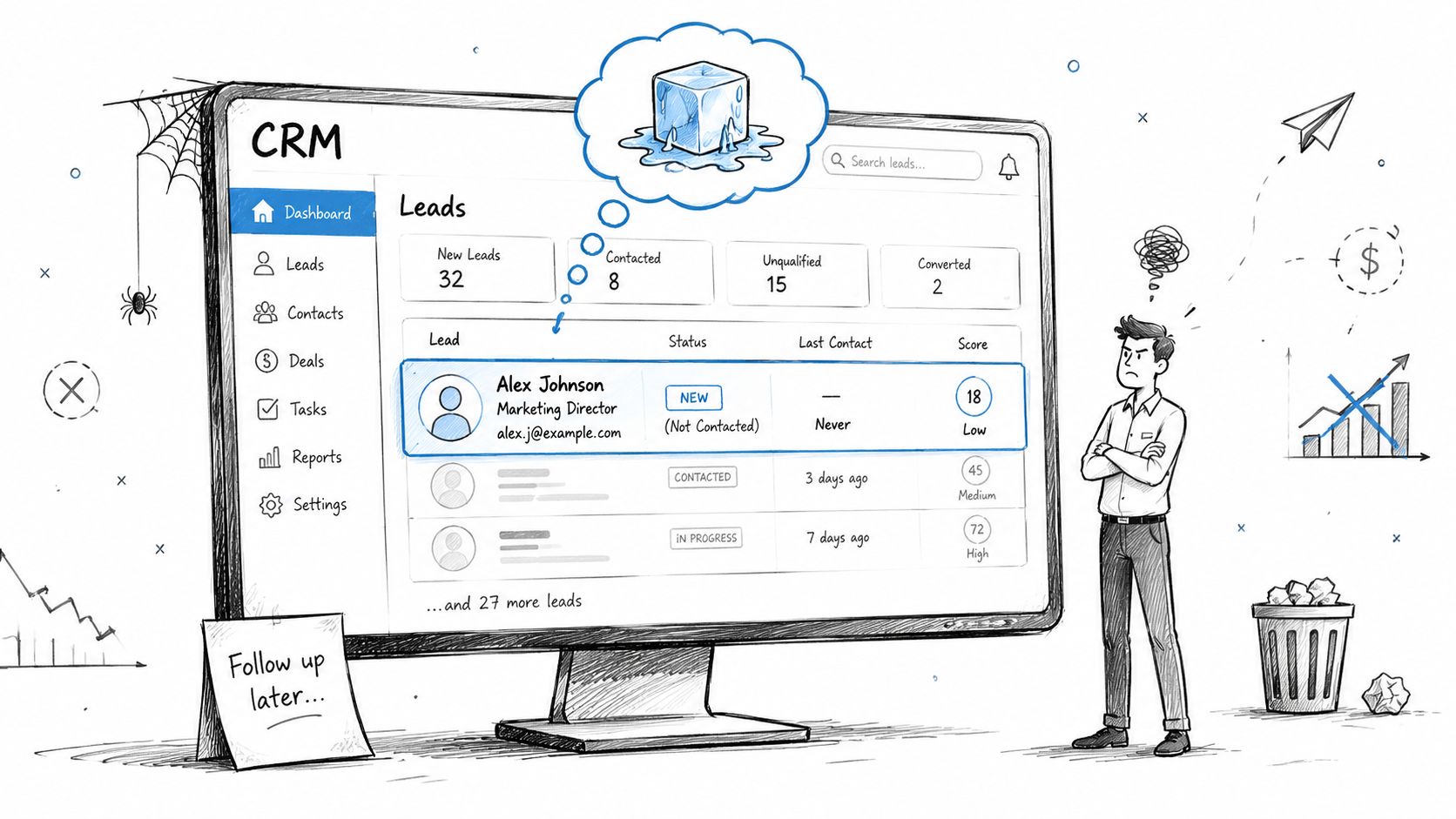
A lot of businesses still act as if one good message should be enough. It usually isn't. A widely cited benchmark says 80% of sales require at least five follow-up attempts, yet 44% of salespeople give up after just one attempt, which means missed opportunities are often self-inflicted, not market-driven, according to this sales follow-up benchmark.
That gap shows up in plain ways:
If your database is messy, fix that before you add more automation. A simple process for managing contact lists prevents the classic problem of sending the right message to the wrong person, or the same lead through overlapping sequences.
Practical rule: Follow-up fails when nobody can answer three questions clearly. Who responds first, on which channels, and for how long?
Email alone gets buried. Calls alone get ignored. SMS alone can feel abrupt if there's no context. Ringless voicemail alone can't carry a whole buying conversation. Each channel has a job, but many teams use them randomly instead of in sequence.
That's why “be persistent” is incomplete advice. Persistence without structure feels sloppy. Structure without persistence dies after one or two touches. You need both.
The teams that convert more leads usually do one thing better than everyone else. They remove rep discretion from the basics. The playbook decides the first move, the spacing, the fallback channel, and when a lead gets recycled instead of chased forever.
Speed matters first. Cadence matters second. Get either one wrong and the rest of your follow-up sequence works harder than it should.
The first mistake is waiting too long to respond. If someone just filled out a form, requested pricing, or asked for a demo, their interest is strongest right then. A lead contacted within the first 5 minutes is reported to be 21x more likely to convert, according to Demand Local's lead response timing summary.

That first touch should do one of two things. Either connect the lead to a human fast, or confirm instantly that a human response is coming. Don't leave the buyer wondering whether their request went anywhere.
A solid first-response setup usually includes:
If you run outbound or handle inbound demo requests, your email timing also needs thought. For teams refining outreach beyond the immediate response, this B2B cold email strategy for 2026 is useful because it frames send timing as part of a larger sequence, not a standalone trick.
A common mistake is over-contacting in the first day, then disappearing. The buyer experiences a flood followed by silence. That doesn't feel professional. It feels unmanaged.
What works better is a staged cadence with channel variety. Here's a practical example for an inbound lead:
| Timing | Channel | Purpose |
|---|---|---|
| Immediate | SMS or email | Confirm receipt and set expectation |
| Same day | Call | Try for live connection |
| Same day if missed | Add context, resources, next step | |
| Day 2 | SMS | Short nudge with one clear action |
| Day 3 or 4 | Ringless voicemail | Personal follow-up without interrupting |
| Day 5 or 6 | Call | Reconnect attempt with different angle |
| Week 2 | Useful insight, case fit, or answer to common objection | |
| Later re-entry | Mixed channels | Restart based on behavior or new trigger |
The goal isn't to hit the lead everywhere at once. The goal is to stay present long enough for timing, attention, and interest to line up.
High-intent leads deserve tighter spacing and faster human follow-up. Lower-intent leads can move into a longer nurture track. That's where the typical approach often falters. They apply the same rhythm to every source, every form, and every buyer stage.
When you're thinking through how to follow up with leads, set cadence rules by segment. A pricing request should not get the same treatment as a newsletter signup. A referral lead should not sit in the same queue as a broad top-of-funnel inquiry.
A strong follow-up playbook doesn't ask which channel is best. It asks what each channel is supposed to do.
Some analyses suggest it can take 5 to 8 follow-ups to generate a conversion, which is why a mixed-channel approach matters, as explained in these sales follow-up statistics. Multiple touches work better when each touch feels different and useful.
Here's the simplest way to think about it.
| Channel | Best use | Weak spot |
|---|---|---|
| Detail, links, summaries, proof | Easy to ignore | |
| SMS | Fast visibility, reminders, quick replies | Limited space, needs restraint |
| Voice call | Discovery, rapport, objection handling | Harder to connect live |
| Ringless voicemail | Personal follow-up without forcing an interruption | Not ideal for long or complex explanations |
Email is your documentation layer. Use it when you need to send details, recap a call, answer a question thoroughly, or point a prospect to a page, resource, or proposal.
SMS is your attention layer. Use it for short acknowledgments, reminders, scheduling nudges, and simple yes-or-no questions. If you're deciding between these two for a specific sequence, this breakdown of SMS vs email marketing helps clarify when immediacy beats depth and when it doesn't.
Ringless voicemail works best when the prospect knows your name or recognizes the context. It's not a replacement for a conversation. It's a clean middle ground between a call and an email.
Used well, it gives you a way to sound human without demanding the prospect pick up. That's especially useful after a missed call, after a form fill that included a phone number, or in a re-engagement sequence where email has gone quiet.
Good use cases for ringless voicemail include:
What doesn't work is using ringless voicemail as a blunt broadcast with generic copy. If the message sounds mass-produced, the channel loses its advantage.
The question isn't “Should I use SMS or ringless voicemail?” The question is “What should the lead receive next, based on what already happened?”
For example, if a prospect filled out a form after hours, an instant text acknowledgment followed by an email and then a call the next business morning makes sense. If they opened the email but didn't reply, a call or ringless voicemail may be a better next move than another email.
That's the practical side of learning how to follow up with leads. Don't collect channels like trophies. Assign each one a role.
Most follow-up messages fail because they ask for too much too soon, or they sound like every other follow-up message in the inbox. “Just checking in” is weak. “Wanted to bump this” is weaker. Prospects don't ignore those because they're rude. They ignore them because there's nothing to respond to.
The messaging problem gets worse after the first attempt. The average salesperson makes only 1.3 call attempts, yet making up to 10 attempts can nearly double qualified leads, according to Advantage Performance's summary of web lead follow-up research. Reps often stop not because the lead is dead, but because they've run out of useful language.
Don't repeat the same ask across channels. Change the reason for reaching out.
Try this approach:
A good follow-up message reduces effort for the buyer. It doesn't add another chore to their day.
Initial email
Subject: Quick follow-up on your request
Hi [First Name],
Thanks for reaching out. I saw your request about [topic/service]. If it helps, I can send the most relevant details based on what you're trying to solve. If you want, reply with your main priority and I'll point you in the right direction.
Initial SMS
Hi [First Name], this is [Rep Name] from [Company]. Got your request and wanted to confirm it came through. If you want to talk today, reply here with a good time.
Missed-call ringless voicemail script
Hi [First Name], this is [Rep Name] with [Company]. I'm following up on your inquiry about [topic]. No need to call right this second. If it's easier, reply to my email or text with what you're evaluating, and I'll send the most useful next step.
Re-engagement email after silence
Subject: Still relevant or should I close this out?
Hi [First Name],
I haven't heard back, so I don't want to keep chasing this if the timing changed. If this is still on your list, reply with where things stand and I'll keep it focused. If not, I can close the loop for now.
If your team sends a lot of nurture email, this guide to better email engagement for makers is worth reviewing for subject line and copy discipline.
A few habits consistently hurt response rates:
A ringless voicemail should sound like a real person leaving a useful note. An SMS should read like a short conversation, not a squeezed-down email. A follow-up email should earn attention with relevance, not volume.
Manual follow-up breaks the moment volume rises. Leads come in at odd hours. Reps forget tasks. Good intentions lose to busy calendars. That's why your process needs automation, especially if you're working across SMS, voice, email, and ringless voicemail.
Modern follow-up works better when the sequence is coordinated, such as a text acknowledgment followed by an email and then a call, as noted in Kixie's guidance on digital lead follow-up. The value isn't just “more channels.” It's the order.
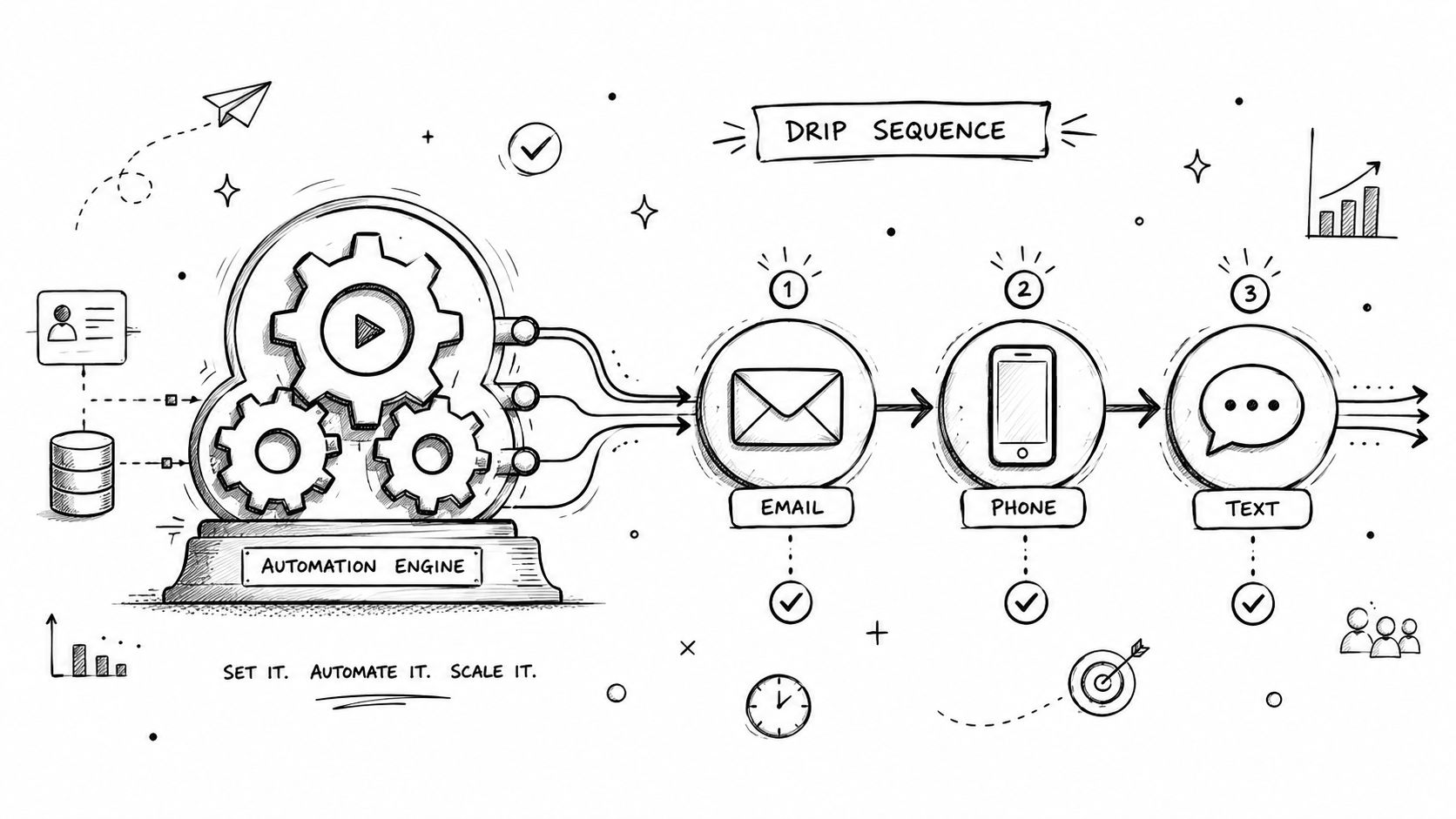
A drip sequence should react to events, not just dates. Start with the trigger, then define the branch.
Common triggers include:
For teams relying on a CRM to keep sales and marketing aligned, this Constructo Marketing guide on CRM is a practical reminder that the CRM isn't just storage. It's the source of truth for routing, ownership, and sequence logic.
A basic automated workflow might look like this:
That's where tools matter. A platform such as Call Loop can orchestrate SMS, voice, and ringless voicemail in one drip workflow, while the CRM handles lead ownership and status changes. If you're setting these up, these drip campaign best practices are useful for timing, suppression rules, and handoff logic.
Operator note: Automation should handle consistency. Humans should handle judgment, replies, and real buying signals.
Automation goes wrong when every lead gets the same script forever. The sequence should pause on meaningful activity. It should suppress contacts who opted out. It should stop once a rep is in a live conversation. It should also route by consent, source, and urgency.
The best automated follow-up feels organized, not robotic. If the lead replies to your SMS, they shouldn't keep receiving “just checking in” ringless voicemails and generic email drips for the next week.
If you don't measure follow-up by channel and stage, you'll keep debating opinions instead of fixing the system. The numbers you watch should tell you where the sequence is breaking. Is nobody opening the email? Are people reading but not replying? Are calls connecting but not advancing? Is ringless voicemail producing callbacks from one segment but not another?
That's the level where optimization starts to matter.
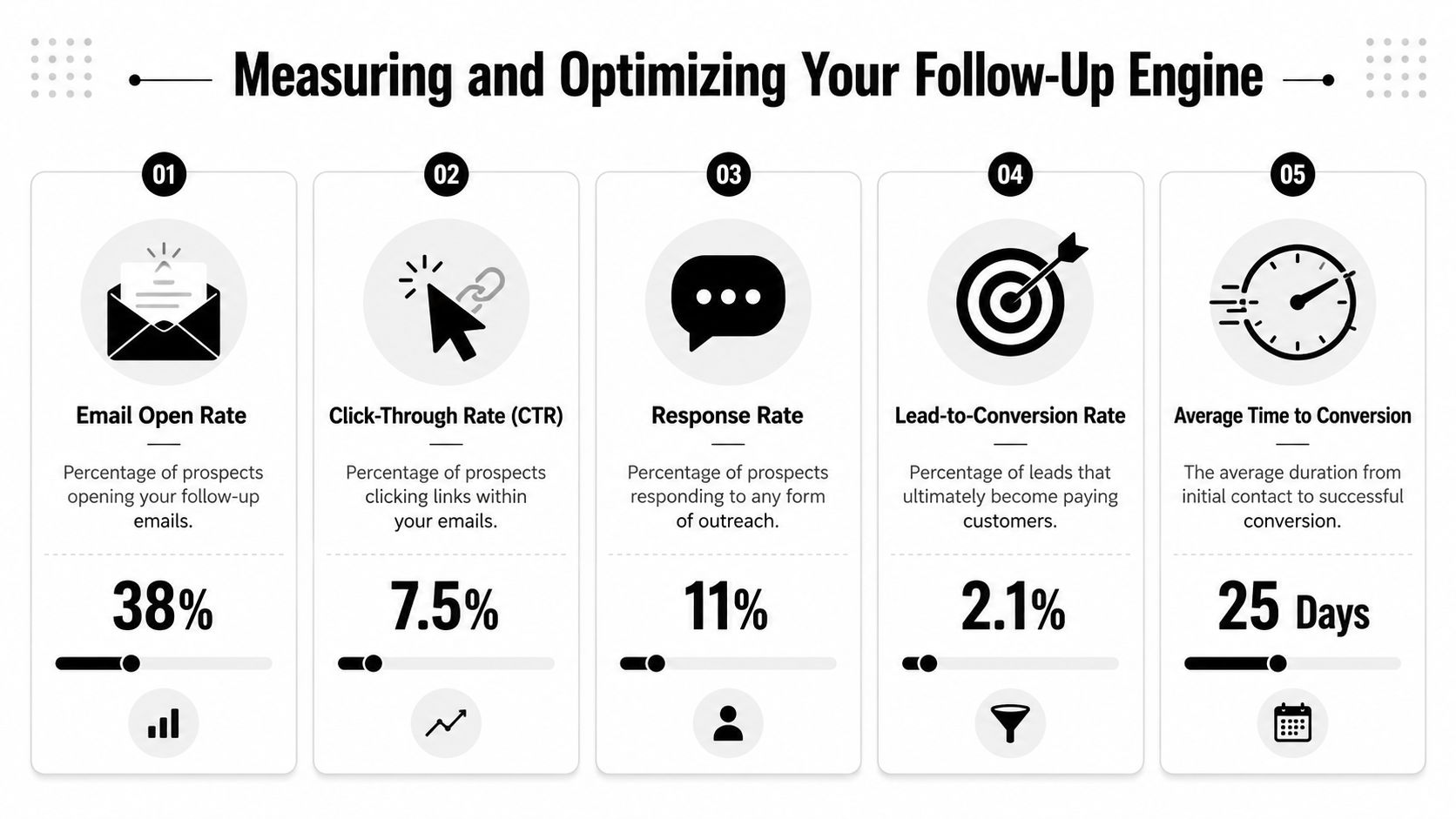
Track the basics, but don't stop there.
You also need channel-level context. A low email response rate might be fine if SMS is driving the handoff. A ringless voicemail step might justify its place if it consistently prompts callbacks from warm leads that ignored email.
Don't tweak copy in isolation. Review the whole sequence.
Ask questions like these:
Respect compliance as part of performance. Clean opt-in records, suppression handling, and DNC discipline protect both deliverability and brand trust.
The strongest follow-up engines improve because somebody reviews them regularly. Not once a year. Not only when pipeline is weak. Ongoing review is what turns a decent sequence into a reliable one.
If you want a simpler way to run multi-channel lead follow-up, Call Loop gives teams a way to automate SMS, voice, and ringless voicemail sequences, manage timing, and keep outreach consistent without relying on manual reminders. It's a practical fit for businesses that need structured follow-up after form fills, missed calls, appointments, and inbound inquiries.
Chris Brisson
Chris is the co-founder and CEO at Call Loop. He is focused on marketing automation, growth hacker strategies, and creating duplicatable systems for growing a remote and bootstrapped company. Chat with him on X at @chrisbrisson


Trusted by over 45,000 people, organizations, and businesses like


