
See a Demo
You're just one step away from seeing Call Loop in action.
Enter your information below to watch a demo right now.

You're just one step away from seeing Call Loop in action.
Enter your information below to watch a demo right now.


It's easy to get tunnel vision on acquiring new customers. The thrill of the chase, right? But the real, sustainable growth comes from shifting that focus inward—to the customers you already have.
We're talking about creating an experience so good that it builds fierce loyalty. That loyalty is what drives higher profits and stable growth, way more efficiently than pouring money into a constant hunt for new leads.
So many businesses fall into the "acquisition trap." They throw endless resources at finding new customers while completely ignoring the goldmine they're sitting on.
Of course, growth is important. But the secret to long-term profitability? It's keeping the customers you’ve already worked so hard to win. Focusing on how to improve customer retention isn't just a feel-good metric; it's a powerful financial strategy.

This isn't just a hunch—the numbers back it up. A small 5% bump in customer retention can boost your profits by a massive 25% to 95%. Think about that. It's a crazy multiplier effect that happens because your existing customers keep spending without you having to pay to acquire them all over again.
With U.S. companies losing a mind-boggling $168 billion every year to customer churn, the stakes couldn't be higher.
We've put together a quick table to show just how much retention impacts your bottom line.
A quick look at key statistics that highlight why focusing on customer retention provides a much higher ROI than acquisition alone.
As you can see, the data tells a clear story: your existing customers are your most valuable asset.
The financial argument gets even stronger when you dig into spending habits. Loyal customers aren't just one-and-done buyers; they evolve into a reliable, growing revenue stream.
Here's a breakdown of why they're so incredibly valuable:
The big idea here is simple but profound: Every dollar you spend keeping a current customer happy is an investment. It pays you back over and over through higher lifetime value, lower marketing spend, and organic growth. You're turning a leaky bucket into a self-sustaining ecosystem.
As more businesses catch on, they're investing in tools like dedicated customer retention management software to track, manage, and nurture these critical relationships.
At its core, improving customer retention demands a shift in mindset. You have to stop seeing each sale as the finish line and start seeing it as the beginning of a long-term relationship.
This relational approach is where the real work begins. It’s where personalized communication, proactive support, and valuable follow-ups make all the difference. When you consistently show your customers that you bring value long after the initial purchase, you give them every reason to stay, spend more, and tell their friends about you.
That’s the foundation you build sustainable, profitable growth on.
If you're serious about improving customer retention, you have to start by knowing exactly where you stand. Guesswork just won't cut it. You need to move beyond gut feelings and get your hands on hard data to find the real leaks in your customer lifecycle. This means digging into the numbers that show the true health of your customer base—not just vanity metrics that look good in a report.
A common mistake is tracking everything, which creates more noise than clarity. The trick is to zero in on a few core metrics that tell a compelling story about customer loyalty and the stability of your business. Think of these numbers as your diagnostic tools; they help you spot symptoms long before they turn into critical problems.
Your Customer Lifetime Value (CLV) is arguably one of the most powerful metrics you can track. It’s the total revenue you can realistically expect from a single customer over the entire time they do business with you. It’s a forward-looking number that pulls the focus away from a single sale and toward the long-term health of your customer relationships.
When your CLV is on the rise, it’s a fantastic sign. It means customers are sticking with you longer and spending more money. On the flip side, a declining CLV is an early warning siren. It might mean you're attracting low-value customers, or that your existing ones are losing interest much faster than they used to.
While CLV is all about value, Churn Rate is all about loss. This is the percentage of customers who walk away from your business over a given period. It's the ultimate report card on customer satisfaction—or dissatisfaction.
A high churn rate is like trying to fill a bucket that has a giant hole in it. You can keep pouring new customers in, but you’ll be constantly losing ground.
For most subscription businesses, a monthly churn rate creeping over 2% is a serious red flag. It’s a strong signal that something in your product, onboarding, or overall customer experience is pushing people away faster than you can replace them.
Keeping a close eye on this metric helps you react fast. Did you see a sudden spike in churn right after a price change or a major product update? That’s immediate, actionable feedback. Ignoring it is one of the quickest ways to torpedo your growth.
CLV and churn are your financial indicators, but Net Promoter Score (NPS) gets right to the heart of customer sentiment. It’s all based on one simple but powerful question: "On a scale of 0-10, how likely are you to recommend our company to a friend or colleague?"
This one survey question neatly buckets your customers into three groups:
Your final NPS score is calculated by subtracting the percentage of Detractors from the percentage of Promoters. It gives you a clear, concise pulse on customer loyalty at any given time. Tracking it helps you see if your retention efforts are actually moving the needle and helps you spot issues before they start showing up in your churn rate.
Understanding these metrics is the first step, but connecting them to your broader marketing efforts is what really matters. If you want to go deeper, you can learn more about measuring marketing campaign effectiveness in our detailed guide.
The first 90 days with a new customer are incredibly fragile. Get it right, and you’ve got a raving fan for life. Get it wrong, and you’re basically asking them to leave.
A powerful start doesn’t just happen by accident. It’s designed with a thoughtful, multi-channel onboarding sequence that makes every single customer feel seen and valued from the moment they sign up. This is your chance to prove they made the right choice, show them how to win quickly, and start building a real connection.
Your onboarding period is the single best predictor of long-term retention. Period.
It’s shocking, but acquiring a new customer costs 5 times more than keeping an existing one, yet 82% of business leaders still pour most of their budget into acquisition. That's a huge, costly mistake. SaaS companies that absolutely nail automated onboarding often hit 90-95% annual retention. It just proves that a strong start builds lasting habits.
Whether you're a healthcare clinic navigating HIPAA or a local karate studio, that initial welcome has to be seamless. Using tools like double opt-in for SMS, voice detection for calls, and perfectly timed drip sequences creates a smooth, compliant, and impactful experience. You can find more insights on retention rates at monday.com.
The metrics below are what you’re directly impacting with a solid onboarding game.
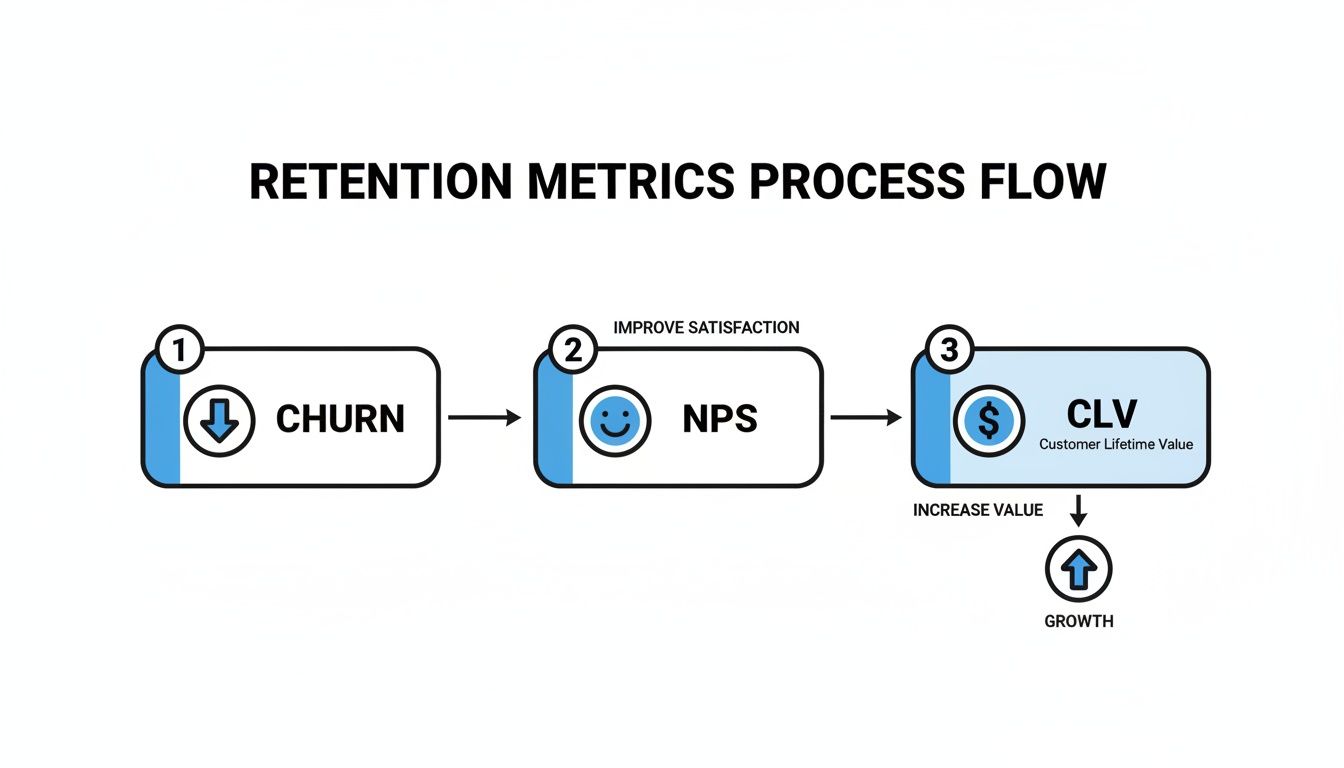
This flow shows it plain and simple: cut down churn and boost your Net Promoter Score (NPS), and you’ll see your Customer Lifetime Value (CLV) climb. That’s the real goal here.
A modern onboarding experience can't be stuck in one channel. The best strategies blend different communication methods to create a rich, engaging journey that meets customers wherever they are.
Here’s a practical look at how you can blend channels:
The key is to orchestrate these touchpoints so they feel helpful, not harassing. Each message should build on the last, guiding the customer toward success and reinforcing the value of what you offer.
To give you a clearer picture, I've mapped out what the first 30 days could look like. This isn't a rigid formula, but a template to adapt for your own business. The goal is to provide the right information at the right time, preventing customers from feeling either overwhelmed or forgotten.
This multi-channel approach transforms onboarding from a boring checklist into a memorable experience. By combining SMS, ringless voicemail, and voice, you create a dynamic journey that helps customers feel supported, which is the secret to keeping them around for the long haul.
Let's be honest: generic, one-size-fits-all messages are the fastest way to get ignored.
If you want to keep your customers around, you have to make them feel seen and understood—not like another number in your database. True loyalty is built on a foundation of communication that proves you’re actually paying attention.
This is where you graduate from basic outreach to creating personalized experiences at scale. By tapping into the customer data you already have in your CRM, you can tailor every single message, whether it’s an SMS, a voice broadcast, or a ringless voicemail.
Your CRM is a goldmine just waiting to be tapped. It's packed with purchase history, engagement levels, and personal details that can turn a bland, generic message into a meaningful touchpoint. The goal is to be proactive and relevant, not just loud.
Think about the difference between these two messages:
The second one just hits different, right? It uses the customer's name and references their past behavior, which makes the offer feel exclusive and thoughtful. That's the kind of detail that separates messages that get deleted from messages that drive sales.
Personalization isn't just a nice-to-have; it's a retention powerhouse. In fact, 77% of business leaders believe deeper personalization is what drives customer loyalty. When you also consider that 62% of consumers prefer personalized recommendations, the business case is crystal clear.
For a local karate studio, this could be as simple as using merge tags in a bulk SMS to send, "Hey [Name], just a reminder your next class is on Tuesday. We've got a special offer waiting for you!" It's that personal touch that sticks.
Personalized communication isn't just for sales promotions. It's incredibly effective for proactive, value-driven outreach that makes a customer feel good about their decision to do business with you.
These kinds of messages build trust and reduce friction, making the customer experience smoother. They show you’re invested in their success, not just their wallet.
Here are a few practical examples:
The core idea here is to shift from reactive to proactive communication. Instead of waiting for a customer to have a problem, you anticipate their needs and provide helpful information before they even have to ask.
As you're thinking about different loyalty methods, don't forget the classics. A simple stamp card loyalty program can be a highly effective way to encourage repeat business and keep track of customer engagement.
Look, sending a unique message to every single customer is impossible. That’s where segmentation comes into play. By grouping your audience based on shared characteristics, you can personalize your outreach without losing your mind.
You can start by creating segments based on:
Once you have these segments, you can craft messages that resonate deeply with each group's specific needs and interests. This targeted approach is essential for building the kind of loyalty that lasts. If you need some inspiration, you can check out our guide on customer segmentation examples for more ideas.
Let's be honest, in a world flooded with emails and texts, the human voice really stands out. SMS is fantastic for quick, transactional messages, but nothing beats voice for adding a personal, high-impact touch to your retention strategy. It’s a powerful way to show customers there’s a real person behind the business.
This is where tools like ringless voicemail and voice broadcasting come into their own. They let you scale that personal outreach without your team spending all day on the phone or interrupting your customers' day. It's a game-changer for keeping customers around.
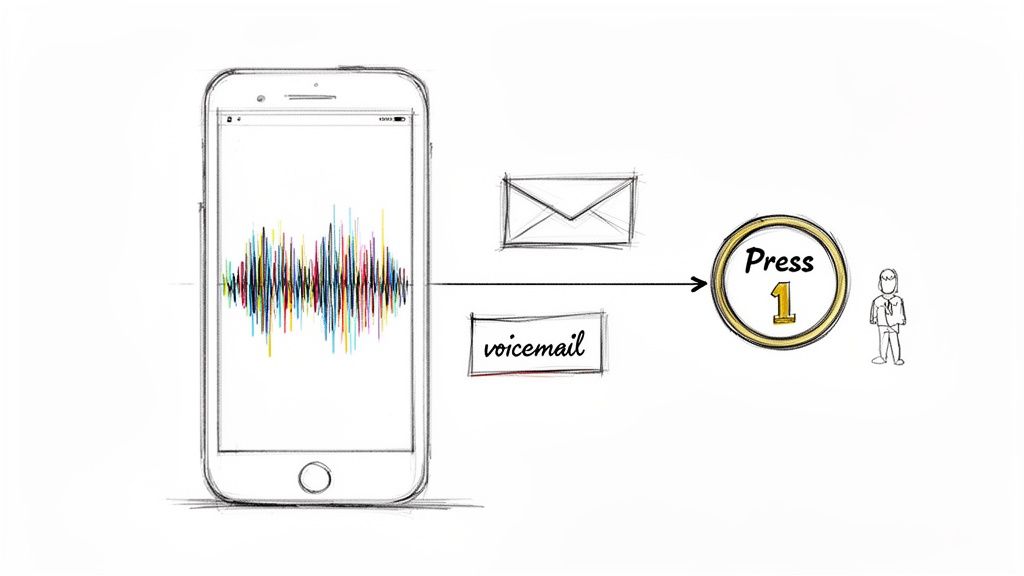
Picture this: you deliver a warm, personal message straight to a customer’s voicemail inbox, but their phone never actually rings. That's the magic of ringless voicemail. It's a non-intrusive way to get important messages heard that might otherwise get buried in a text thread.
Since it doesn't interrupt what they're doing, a ringless voicemail feels more like a thoughtful check-in than a sales call. This makes it perfect for all sorts of retention plays.
A gym, for instance, could drop a pre-recorded message from a trainer congratulating a member on hitting their three-month anniversary. Or a software company could use it for a friendly heads-up that a subscription is about to renew, maybe even teasing some new features they're about to get.
The impact of a voice message lives or dies by its quality and delivery. A robotic, generic script will get you nowhere. To make your audio messages count, keep a few things in mind:
A well-crafted ringless voicemail can feel incredibly personal. It’s a chance to build an emotional connection that text alone often can't achieve, making customers feel genuinely valued and appreciated.
While ringless voicemail is great for one-way messages, voice broadcasting creates a two-way street for instant engagement. With this tech, you can send a pre-recorded call to a whole list of contacts and give them options, like pressing a key to connect with a live agent.
That "press-1" feature is a powerhouse for getting quick feedback or providing immediate support. A healthcare clinic could use a voice broadcast to confirm appointments, asking patients to "press 1 to confirm or press 2 to reschedule with our staff." A simple interaction like that can drastically cut down on no-shows.
If you want to dig deeper into the possibilities, you can find more info on how voice broadcast software can be used to engage customers directly.
By adding voice and voicemail to your communication mix, you create a much richer customer experience. These tactics add that human touch at scale, reinforcing relationships and giving customers more reasons to stick around.
Long-term customer relationships are all built on one thing: trust. Every single message you send is a chance to build that trust up or tear it all down in an instant. If you're serious about customer retention, you have to respect their privacy and play by the rules. It shows you see them as more than just a number on a sales report.
This isn't just about dodging fines, either. It’s about proving your commitment to your customers, which is what turns them into loyal fans. When people know you respect their boundaries, they’re far more likely to listen to what you have to say.
Diving into the world of communication rules can feel a bit overwhelming, but a few key principles cover most of what you need to know. Getting these right is non-negotiable if you’re using SMS, voice calls, or ringless voicemail for retention.
I like to think of compliance as the ultimate customer filter. The people who explicitly opt-in are your best audience—they've literally raised their hand and said, "Yes, talk to me!" Focusing your energy on this group naturally skyrockets your retention and campaign ROI.
If you're in healthcare, the stakes are even higher. Protecting patient data isn't just a good idea; it's the law. HIPAA-compliant communication demands ironclad security measures to protect any and all Protected Health Information (PHI).
This means any platform you use must have end-to-end encryption and secure data protocols. It doesn't matter if you're sending a simple appointment reminder via SMS or a follow-up ringless voicemail—every single touchpoint has to put patient confidentiality first. Showcasing this level of care is how you build the deep, lasting trust that's essential for patient relationships.
Jumping into a full-fledged retention strategy can bring up a few questions. I get it. Let's walk through some of the most common ones I hear so you can get started with confidence.
There’s no magic number here. The right frequency really depends on your industry and, more importantly, where that customer is in their journey with you.
A good rule of thumb is to only communicate when you have something valuable to add. For example, onboarding a new customer naturally requires more frequent touchpoints to get them comfortable. After that, you can dial it back to transactional messages, monthly offers, or re-engagement campaigns for people who have gone quiet. The goal is always to be helpful, not a pest. Keep a close eye on your engagement rates and unsubscribes—they'll tell you if you're hitting the sweet spot or overdoing it.
The key difference is all about the customer's experience. A voice broadcast actually makes their phone ring. They have to pick it up to hear your message live. It's an immediate, direct approach when you need to get their attention right now.
On the other hand, a ringless voicemail sneaks your pre-recorded message directly into their voicemail box without their phone ever making a peep. This makes it a much less intrusive way to send non-urgent updates, personalized thank-you messages, or special announcements. Your message gets heard, but on their time, without interrupting their day.
Think of ringless voicemail as your secret weapon for adding a personal, human touch at scale. It's perfect for those moments where the warmth of your voice matters more than an immediate conversation, strengthening that connection without being disruptive.
Absolutely. Modern communication platforms are built to play nice with the tools you already rely on. Most will offer direct, native integrations with popular CRMs like HubSpot, Keap, and ActiveCampaign, which makes syncing your data a breeze.
For pretty much everything else, there's usually a Zapier integration available, connecting you to thousands of other apps. This unlocks some seriously powerful automation. Imagine triggering a welcome SMS the second a new contact hits your CRM. This is how you weave your retention efforts seamlessly into your daily workflow.
Ready to put these strategies into play? Call Loop gives you the powerful SMS, voice, and ringless voicemail tools you need to build relationships that last. Start your free trial today and see the difference for yourself.
Chris Brisson
Chris is the co-founder and CEO at Call Loop. He is focused on marketing automation, growth hacker strategies, and creating duplicatable systems for growing a remote and bootstrapped company. Chat with him on X at @chrisbrisson


Trusted by over 45,000 people, organizations, and businesses like


