
See a Demo
You're just one step away from seeing Call Loop in action.
Enter your information below to watch a demo right now.

You're just one step away from seeing Call Loop in action.
Enter your information below to watch a demo right now.

If you want to improve your sales conversion rate, you first need to figure out where your leads are dropping off. This means taking a good, hard look at your sales funnel to find the friction points. You have to move past generic benchmarks and establish a realistic baseline for your business.
You can't fix a problem until you truly understand it.
When it comes to sales, too many businesses get hung up on a single conversion rate without digging into what that number actually means. The first real step to improving your sales is diagnosing where your current approach is falling short. For example, knowing how to improve website conversion rates is often the ground floor for boosting overall sales performance.
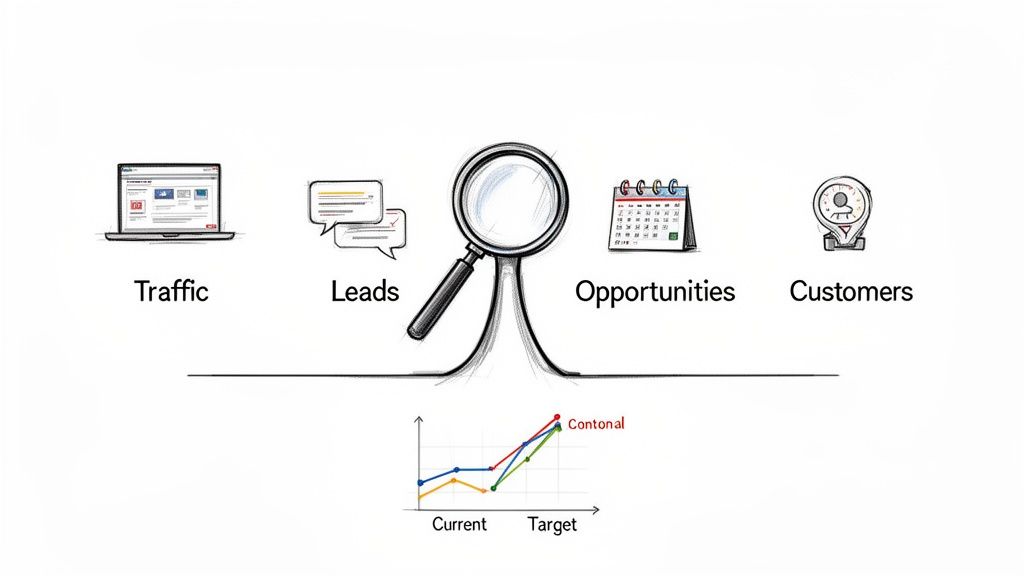
This diagnostic process isn't just about staring at a single percentage. It’s about mapping out every single touchpoint a potential customer has with your business. By analyzing the conversion rate between each specific stage—from the moment someone becomes a lead to when a deal is closed—you can pinpoint exactly where your funnel is "leaking" prospects.
The goal isn't just to measure a percentage; it's to understand the story behind the number. Where are prospects disengaging, and more importantly, why?
Let's be clear: a "good" conversion rate is completely relative.
The global e-commerce average might hover between 2.5% and 3%, but that figure hides massive variations from one industry to the next.
Before you set any goals, you need to understand where you stand. To give you some context, here's a look at average conversion rates across a few different sectors.
This table offers a snapshot of average conversion rates across different industries, helping you set more realistic goals for your own business.
As you can see, industries with lower price points and more frequent purchases, like food and beverage, naturally have higher conversion rates. On the other hand, high-ticket items like luxury goods see much lower numbers. Your first task is to find a relevant benchmark for your specific sector to avoid chasing unrealistic targets.
Once you have your bearings, start your diagnosis by digging into these common problem areas. Each one is a potential friction point that could be costing you sales. A systematic review helps you prioritize where to focus your efforts for the biggest wins.
By breaking down your sales process into these micro-stages, you shift from a vague goal like "improve conversions" to a specific, actionable plan. For instance, instead of a broad objective, you can set a targeted goal to improve your lead-to-opportunity rate by 15% by implementing a faster, multi-channel follow-up sequence.
This targeted approach is the key to making real, measurable progress.
If you're still relying on a single communication channel, you're fishing with one line in a massive ocean. You might get a bite here and there, but you’re leaving a ton of opportunity on the table. To genuinely improve your sales conversion rate, you have to meet customers where they live, using a smart, coordinated outreach that gets their attention without annoying them.
This is where a multi-channel engine built on SMS, voice, and ringless voicemail becomes your secret weapon.
It’s all about sending the right message through the right channel at precisely the right time. Imagine using a quick text to see if a lead is interested, following up with a discreet ringless voicemail for your hottest prospects, and then using a voice broadcast for an urgent, can't-miss promotion. This isn't just theory—it's a practical way to build a system where each touchpoint makes the next one more effective.
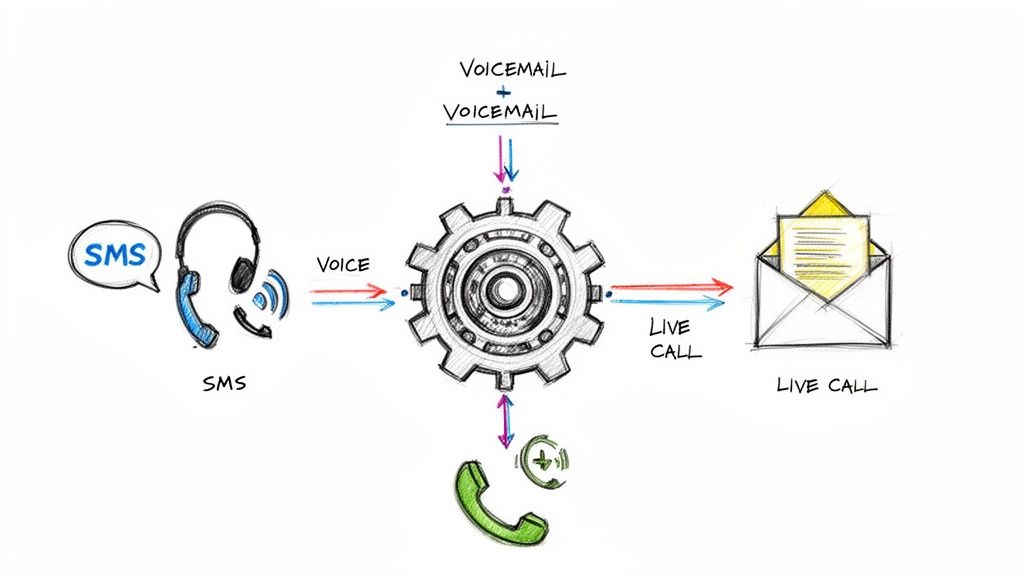
The magic of a multi-channel strategy is that it reflects how people actually communicate. Some people prefer a quick text, others respond better to hearing a voice, and some won't act until you call them directly. If you're just blasting emails or SMS, you're completely missing entire segments of your audience who just don't engage that way.
When you get the orchestration right, these channels work in harmony. A text message can prime a lead for a follow-up call. A ringless voicemail can point them back to an SMS with a link they can click. That synergy is how you cut through all the noise.
A study found that companies with strong multi-channel customer engagement retain an average of 89% of their customers, compared to just 33% for companies with weak multi-channel strategies.
Creating a powerful outreach sequence is about using each tool for what it does best. Think of it like a relay race: each runner smoothly passes the baton to the next, moving the prospect closer to the finish line without a single dropped handoff.
Here’s a breakdown of how to layer these channels strategically:
By blending these methods, you create a dynamic conversation that keeps leads engaged. This is miles more effective than just hammering the same message on one channel. For a deeper dive, you can learn more about building a cohesive outreach plan in our guide to building a multi-channel communication strategy.
Let's put this into action. Here are a couple of real-world scenarios showing how you can combine SMS, ringless voicemail, and voice to fix common problems and drive more conversions.
Scenario 1: The Abandoned Cart Rescue
An e-commerce store is bleeding money from abandoned carts. Instead of just another "you forgot something" email that gets buried, they deploy a multi-channel sequence.
Scenario 2: The High-Value B2B Lead Follow-Up
A sales team just sent a proposal to a huge prospect. They need to stay top-of-mind without being pests.
This coordinated approach makes sure your message gets through and gives prospects multiple, easy ways to re-engage—directly helping you turn more leads into paying customers.
Your customers are glued to their phones. It's the new main street for just about everything, especially commerce. But here's the thing: just having a mobile-friendly website isn't enough to grab their attention—or their wallet. If you really want to improve your sales conversion rate, you need a direct line to your audience. You need a channel that cuts through all the noise and practically demands to be opened.
That channel is SMS.
Texting isn't just another marketing play; it's a completely different way to connect with leads. Email inboxes are a disaster zone and social media feeds are a chaotic mess. SMS, on the other hand, is still a personal, high-priority space. Messages almost always get opened, usually within minutes. This gives you an incredible tool to drive action right now and close the gap between someone being interested and actually buying.
There’s a strange thing happening in e-commerce right now. While mobile commerce is on track to hit an insane $3.4 trillion in 2025, the average conversion rate on phones is still stuck around a measly 2.8%. That’s barely keeping up with desktop.
All that traffic with such a flat conversion rate screams one thing: huge opportunity. People are browsing on their phones, but they're hitting a wall before they complete the purchase.
So, what's causing this disconnect?
This is exactly where SMS marketing comes in. It’s the perfect tool to re-engage those distracted shoppers, give them a direct link back to their cart, and create a quick, one-on-one conversation that builds the confidence they need to finally click "buy."
Great SMS marketing shouldn't feel like a marketing blast. It should feel like a personal, helpful conversation. Your goal is to be timely, concise, and genuinely useful. Ditch the generic messages and focus on delivering real value every single time.
The best marketing text doesn't feel like marketing at all. It feels like a helpful nudge from a brand that understands exactly what you need, right when you need it.
This is where segmentation and merge tags are your best friends. A text that says, "Hi [FirstName], still thinking about the [ProductName]?" is a world away from a generic "You left items in your cart!" This personal touch shows you're paying attention and makes the customer feel seen, not just marketed to.
For a deeper dive into crafting messages that hit the mark, check out our detailed guide on SMS marketing best practices.
Measuring the ROI of your SMS campaigns is surprisingly straightforward—and absolutely essential. Most modern platforms have built-in click tracking, which tells you in plain numbers which messages are driving traffic and which ones are just taking up space.
By tracking how many people click the links in your texts and go on to buy something, you can calculate a precise conversion rate for every single campaign. This data is gold. It lets you A/B test different copy, offers, and send times to constantly sharpen your approach. You're no longer guessing what works; you're making data-driven decisions that directly pump up your bottom line.
Real-World Example: An E-commerce Win
Let's look at an online clothing brand that was getting hammered by high cart abandonment rates. They decided to set up a simple two-step SMS strategy:
This one-two punch of a timely reminder and a visual cue creates a compelling, low-pressure follow-up. It's a perfect way to convert those on-the-fence browsers into actual buyers, directly tackling that mobile conversion gap head-on.
While SMS is king for quick, direct contact, sometimes you need a more personal approach to really move the needle on your sales conversion rate.
In a world drowning in digital text, the sound of a human voice cuts through the noise. It builds trust and can give a high-value prospect the gentle nudge they need to make a decision. This is exactly where voice broadcasts and ringless voicemail become indispensable tools in your sales arsenal.
The trick is knowing when and how to use each. A voice broadcast is your go-to for grabbing immediate attention. A ringless voicemail drop, on the other hand, is a more subtle, considerate way to follow up. By getting good at both, you add a layer of human connection that text just can't match.
A voice broadcast is simply an automated call that plays your pre-recorded message. The real power comes from giving the listener an immediate action to take, like pressing a key to connect with a live sales agent. This is incredibly effective for time-sensitive offers or critical announcements where you want to create a sense of urgency.
Think about it in these real-world scenarios:
The strength of a voice broadcast lies in its ability to command attention and drive an immediate response. It’s a direct and powerful tactic for moments when being subtle isn't the goal.
Now, let's shift gears to its quieter, more strategic cousin: ringless voicemail. This tech is brilliant—it delivers a pre-recorded audio message straight to someone's voicemail without their phone ever ringing. It's the ultimate non-disruptive follow-up. You get to deliver a personal, nuanced message that your lead can listen to whenever it's convenient for them.
A ringless voicemail feels less like a sales pitch and more like a personal note. It respects the recipient's time while still delivering the warmth of your voice, making it perfect for nurturing high-value leads.
Because it's so unobtrusive, ringless voicemail shines in situations where an out-of-the-blue phone call might feel too aggressive or pushy. Using voicemail drops for sales is a modern tactic that respects the prospect's time while ensuring your message is heard.
Real-World Example: Nurturing High-Value Leads
In both examples, the message is delivered without interrupting the person’s day. It adds that human element, provides value, and perfectly sets the stage for the next step in the conversation.
Look, both of these tactics live or die by the quality of your recording. A flat, robotic message will be deleted in seconds.
Here are a few tips I've learned along the way:
When you strategically use voice and ringless voicemail, you add a powerful dimension to your outreach. It helps you build stronger connections and, ultimately, improve your sales conversion rate.
Manually following up with every single lead is a recipe for burnout and inconsistency. One day your team is on fire, hitting the phones and sending texts. The next? They’re swamped with other tasks, and those once-promising leads are left to go cold. This is where so many sales funnels spring a leak.
The secret to boosting your sales conversion rate isn't about working harder—it's about working smarter. It's about building an automated machine that nurtures leads for you, around the clock.
A smart drip campaign is basically your 24/7 sales assistant. It's a pre-built sequence of messages sent automatically across different channels like SMS, ringless voicemail, and voice broadcasts. By setting up simple timers and triggers, you can create the perfect follow-up flow that makes sure every lead gets the right touchpoint at exactly the right time, with zero manual effort.
The real power of a drip campaign is how it layers communication. Instead of just hammering leads with the same message repeatedly, you create a dynamic conversation that builds real momentum. You can combine the instant-read nature of a text with the personal feel of a ringless voicemail drop.
Let’s walk through a real-world scenario. Imagine a new lead signs up for your email list. Instead of only getting a generic welcome email that will likely sit unread, they’re dropped into an automated sequence built to convert:
This sequence expertly guides the lead from simple awareness to decisive action, playing to the unique strengths of each channel. This visual shows how different voice tools fit into this kind of outreach flow.
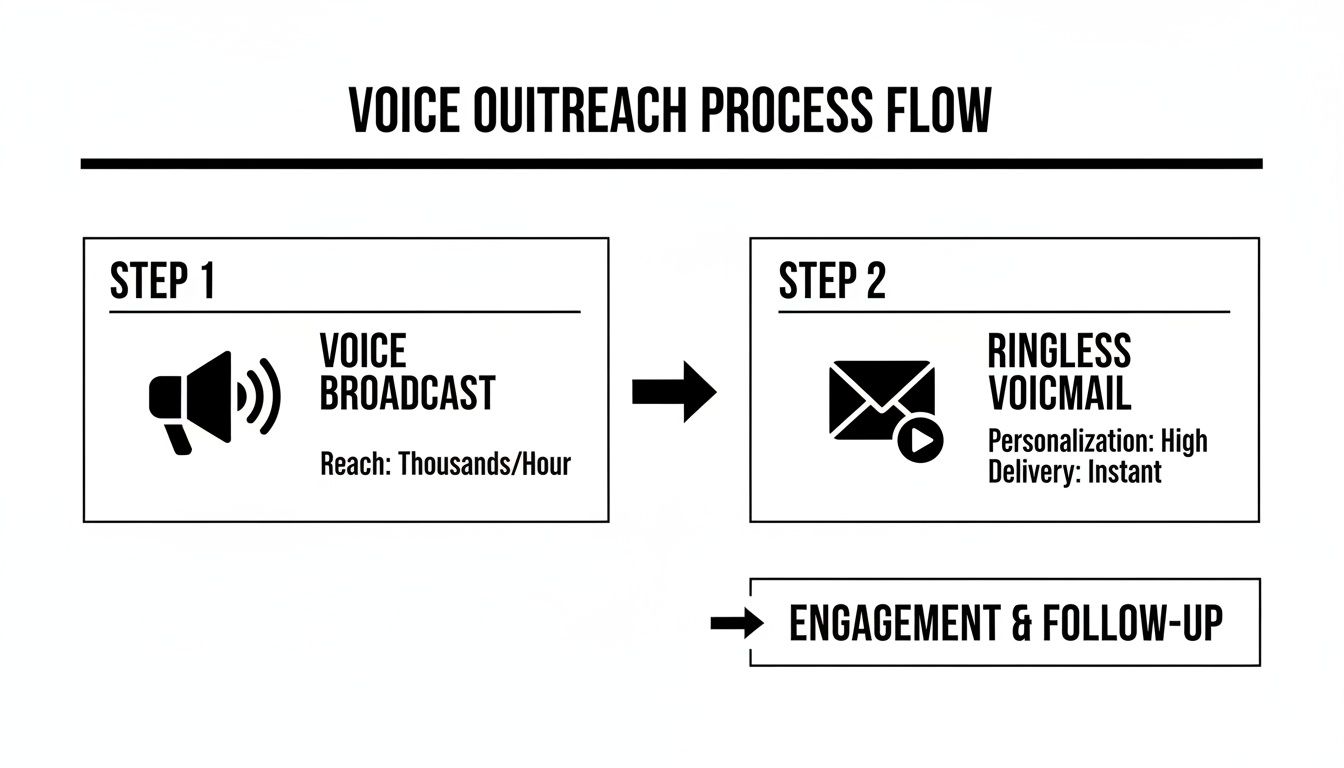
As you can see, a broad voice broadcast can grab initial attention, with a more personal ringless voicemail then used to nurture those leads who showed interest.
The "smart" in a smart drip campaign comes from its use of triggers. These are just the rules that tell your system when to send the next message, making sure your communication is always relevant to what the customer is actually doing.
A well-timed message based on a specific action a lead just took is exponentially more powerful than a generic blast. It shows you're listening and makes the lead feel understood.
Here are a few common triggers you can use to build out a responsive campaign:
By mixing and matching these triggers, you can create a truly intelligent system. For instance, you could set up a rule where if a lead clicks the link in your welcome SMS, they’re immediately moved to a more sales-focused sequence. If they don't click, they simply continue along the standard nurturing path.
For more ideas on how to structure these sequences, check out our article on drip campaign best practices. This level of automation ensures every interaction is contextual, helping you dramatically improve your sales conversion rate by delivering the perfect message every single time.
Launching your outreach campaign is just the starting line. The real secret to boosting your sales conversion rate over the long haul comes down to one thing: a serious commitment to testing and optimizing. You can’t fix what you don’t measure, so this last piece of the puzzle is all about turning guesswork into a clear-cut process for growth.
This isn’t about blowing everything up and starting from scratch. Instead, it’s about making small, smart tweaks based on what the data is telling you. By creating a feedback loop—test, measure, learn, and repeat—you can dial in every single part of your outreach and turn so-so results into something truly impressive.
A/B testing (or split testing) is simply comparing two versions of one thing to see which one gets better results. When it comes to your outreach, this means changing only one element at a time. If you try to test a new headline, a new offer, and a new delivery time all at once, you’ll have no idea what actually made the difference.
So, what should you be testing? Here are a few real-world examples to get you started:
The point of A/B testing isn't to find some magic bullet that works forever. It's about building a process of constant refinement that keeps your strategy sharp and in sync with what your customers want.
To make smart decisions, you need the right data. Think of your analytics dashboard as your mission control—it’s where you see what’s actually happening. Don't get distracted by vanity metrics; zero in on the numbers that directly impact your bottom line.
Here are the must-have metrics to keep your eyes on for each channel:
SMS Campaigns:
Voice and Ringless Voicemail Campaigns:
By watching these numbers like a hawk, you'll start to see trends, spot what's working, and know exactly where you need to make improvements. As you keep testing, look for other proven ways to increase sales and performance to keep the momentum going. This cycle of learning and improving is what will drive your conversion rates higher and higher.
Ready to turn these strategies into action? Call Loop gives you the powerful, compliant tools you need to build, test, and optimize multi-channel outreach campaigns using SMS, voice, and ringless voicemail. See how over 45,000 users are driving real results. https://www.callloop.com
Chris Brisson
Chris is the co-founder and CEO at Call Loop. He is focused on marketing automation, growth hacker strategies, and creating duplicatable systems for growing a remote and bootstrapped company. Chat with him on X at @chrisbrisson


Trusted by over 45,000 people, organizations, and businesses like


