
See a Demo
You're just one step away from seeing Call Loop in action.
Enter your information below to watch a demo right now.

You're just one step away from seeing Call Loop in action.
Enter your information below to watch a demo right now.

SMS marketing can reach roughly 5 billion people worldwide, about 65% of the global population, without asking them to download an app or create a social account. Its speed is just as important. Industry benchmarks commonly place SMS open rates between 90% and 98%, with many messages read within minutes, while a 2026 benchmark reports that 72% of people have purchased after receiving a brand text, including 74% in Europe and 69% in APAC. See the SMS adoption and engagement benchmarks for the underlying context.
That reach doesn't make every text effective. The right marketing SMS message depends on permission, relevance, timing, and one clear next action. Sending more texts can increase noise, fatigue, and opt-outs. Sending a useful message at the customer moment that matters can move someone from browsing to buying, uncertainty to confirmation, or frustration to resolution.
The eight templates below cover flash offers, appointments, ringless voicemail, keyword acquisition, personalized promotions, events, feedback, and payment reminders. Adapt every example to your industry, audience segment, consent record, and customer relationship. For each message, the practical framework stays consistent: start with the template, explain what it accomplishes, identify the segmentation logic, place it in a sequence, and check the compliance and deliverability details before launch.
A coordinated multi-channel drip can combine SMS, voice broadcasting, and ringless voicemail without repeating the same copy everywhere. SMS can deliver the short action prompt, while a later voice or voicemail touch adds context for people who didn't click or reply. Teams that need broader campaign planning can also evaluate outsourced marketing options from Boocoo when internal resources are limited.
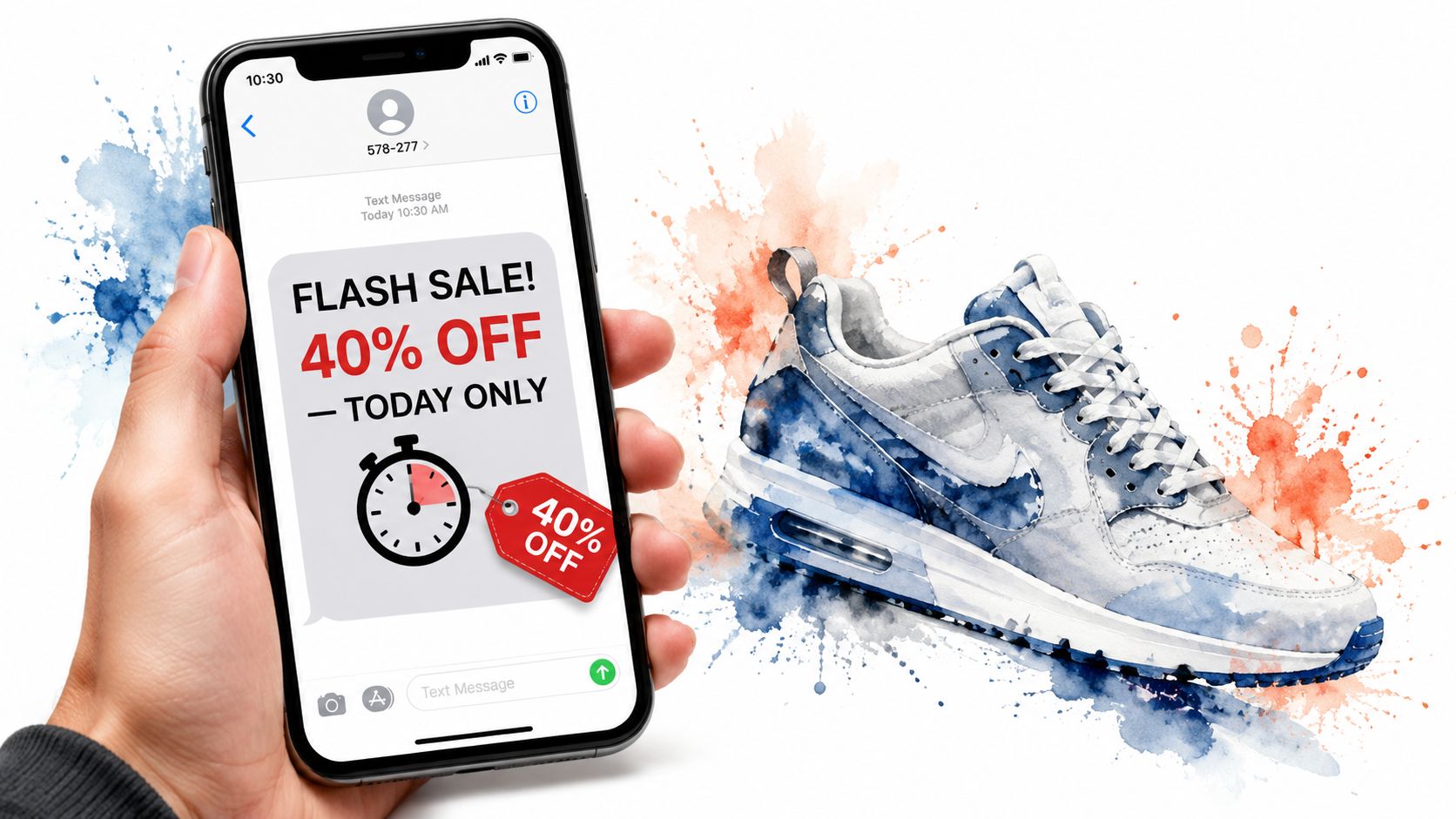
A flash sale text has one job, create immediate action without making the offer confusing. The strongest version names the benefit, gives a real deadline, and sends the recipient to one friction-free destination.
Ecommerce example
FLASH SALE. 40% off winter items today only. Shop now: [link] Reply STOP to opt out.
Service business example
Limited appointment slots open. Book this week at 50% off. Offer expires tonight at midnight: [link]
Karate studio example
New Year Special. Join this month for $99, regularly $199. 48 hours only: [link]
These marketing SMS messages work best for subscribers who have shown relevant intent. Segment recent product viewers for ecommerce, lapsed clients for a service business, and trial visitors for a karate studio. Don't send a winter promotion to customers who purchased the same category yesterday unless the offer is designed as an upgrade or replenishment opportunity.
Schedule the first send far enough before the deadline for the recipient to act. A second message should go only to non-clickers or non-purchasers, and it should clarify the remaining window rather than repeat the full broadcast. For example, “Your winter offer ends tonight at midnight” is more useful than sending the original message again.
Test the link and landing page with a small segment first. Check mobile loading, discount application, inventory visibility, and analytics parameters before expanding the audience. Personalize with a first name only when the field is accurate. A wrong name can damage trust faster than a generic greeting.
Practical rule: Urgency should describe a real business constraint. Don't manufacture scarcity that your landing page can't support.
A ringless voicemail follow-up may suit recipients who didn't engage with the SMS, especially when the offer needs a human explanation. In the United States, ringless voicemail to wireless phones still requires consumer consent because the FCC treats it as a covered call using an artificial or prerecorded voice under TCPA section 227(b)(1)(A)(iii), as explained in the FCC ringless voicemail ruling. Treat the voicemail as a separate permissioned channel, not a compliance shortcut.
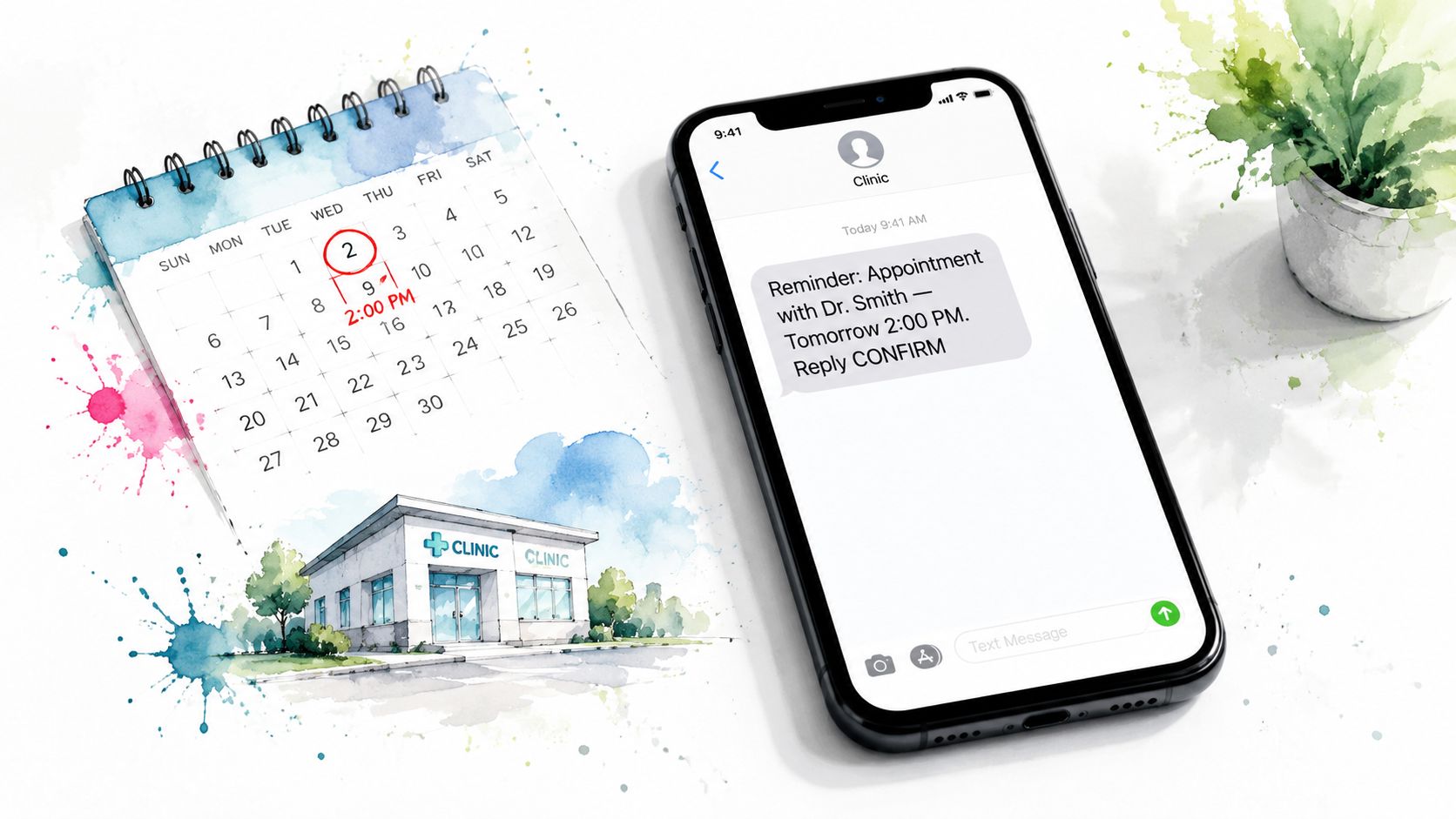
A well-timed appointment SMS does more than reduce no-shows. It gives the customer the details needed to attend, while giving staff a clear confirmation or rescheduling signal.
A healthcare reminder might read:
Appointment reminder. Your visit with Dr. Smith is tomorrow at 2:00 PM at Main Medical Center. Reply CONFIRM or call [number] to reschedule.
A karate studio can use a lighter version:
Reminder. Your class with Sensei Mike is today at 5:30 PM. See you soon. Reply CANCEL to reschedule.
For a dental practice:
Hi Sarah, your cleaning is tomorrow at 10:00 AM with our hygienist. Reply C to confirm or call [number].
Pull each field from the scheduling system rather than a manually maintained spreadsheet. Include the first name, appointment type, date, local time, location, and direct phone number only when those records are accurate. If a field is missing or unreliable, remove it instead of guessing. Healthcare teams should also limit content to what the patient consented to receive and avoid sensitive details that could appear on a lock screen.
Start with a reminder the day before, followed by a shorter prompt closer to the appointment. A confirmed customer should leave the reminder sequence. A reply such as “NO” should trigger rescheduling support, not another confirmation request. An unresponsive customer may receive a backup voice or ringless voicemail message when consent covers that channel and the appointment's sensitivity permits it.
Use appointment confirmation text workflows to map the event trigger, reply handling, and staff follow-up. Test integrations with tools such as HubSpot or ActiveCampaign, then verify that a cancellation changes the source calendar before another reminder is sent.
Practical rule: A reminder is incomplete until the customer knows how to confirm, cancel, or reschedule.
Track confirmations, cancellations, reschedules, and nonresponses separately. These outcomes reveal inaccurate contact records, show whether timing needs adjustment, and identify appointments that warrant a human call. Add the cancellation policy when it affects the customer, using clear, professional wording rather than a threat.
Ringless voicemail adds a spoken touch without making the phone ring. Use it after an SMS when a customer needs context, prefers listening, or has not clicked or replied. It can support real estate follow-up, appointment communication, event promotion, and payment reminders, provided the recipient has consented to this channel.
A healthcare message could say:
Hi John, this is Dr. Smith's office confirming your appointment tomorrow at 2 PM. Please call [number] if you need to reschedule.
A real estate message might read:
Hi Maria, we have a new property matching your search criteria. Call [number] to schedule a showing.
For an event:
You're invited to our sales automation webinar this Thursday at 3 PM. Register at [link].
For a payment reminder:
This is a courtesy reminder that invoice [number] is due today. Call [number] with questions or visit [link] to pay online.
Each script should have one job. Send the SMS first when the customer needs a link, then use voicemail to explain the reason for the follow-up or offer a direct callback. A healthcare sequence might identify the office and provide a rescheduling number. A B2B sales message could summarize the prospect's request and invite a response. Avoid repeating the SMS word for word.
Wireless ringless voicemail delivery is subject to the consent requirements discussed in the FCC ringless voicemail ruling cited above. Maintain channel-specific consent records, honor do-not-contact requests, and schedule drops during appropriate local hours. Consent should cover the voice channel, not only SMS.
Use professional audio with a clear opening, simple wording, and one call to action. Recorded or text-to-speech audio can suit routine updates. A human recording may fit sensitive healthcare messages, collections, or relationship-based sales better. Validate phone records, monitor failed deliveries, and remove stale numbers instead of retrying them repeatedly.
The ringless voicemail marketing workflow guide can help structure branches based on SMS delivery, clicks, replies, or call outcomes. Test whether the voice touch improves the complete sequence, not just delivery. Track callbacks, downstream conversions, opt-outs, and the response difference between SMS-only and SMS-plus-voicemail groups.
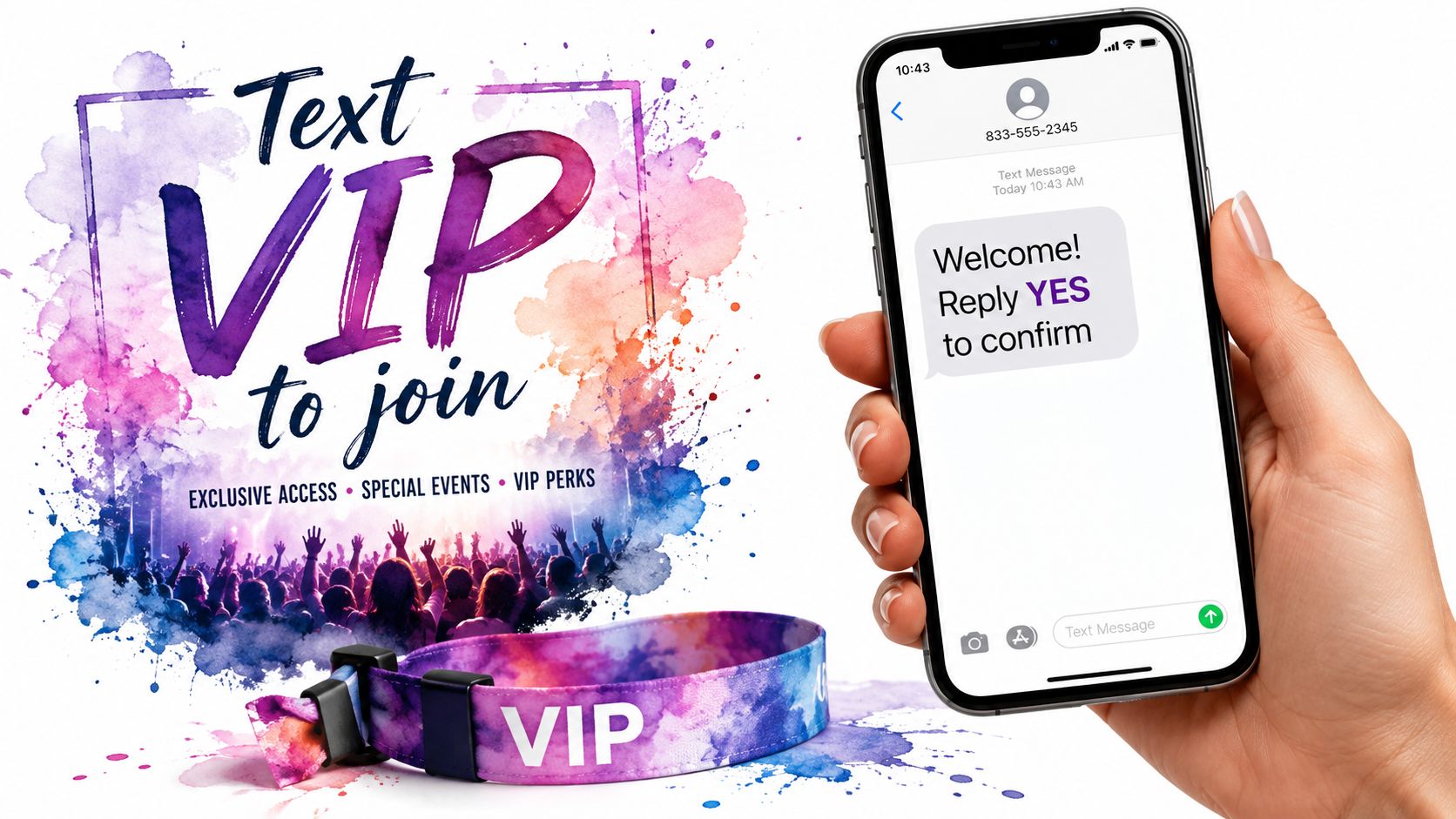
A keyword campaign converts an offline or cross-channel prompt into a permissioned subscriber action. The customer texts a word, receives an automated reply, and enters a list connected to the reason for joining.
Retail promotion
Text SALE to 12345 for exclusive winter clearance offers.
Event registration
Text WEBINAR to 12345 to reserve your place for Thursday's automation masterclass.
Karate studio
Text KICKOFF to 12345 for class schedules and studio specials.
Loyalty program
Text VIP to 12345 to join our rewards program and receive an offer on your first order.
Choose a keyword that is easy to spell, pronounce, and remember. State the benefit and message category clearly. “Text APPT for appointment reminders” sets a more useful expectation than “Text INFO for updates,” because subscribers know what they will receive before opting in.
The automated response should name the sender, describe the message type and expected frequency, and provide a clear opt-out. A confirmation could read:
Welcome to [Brand]. You'll receive appointment reminders and service updates. Reply STOP to opt out.
For regulated or promotional programs, add a confirmation step that asks the subscriber to reply YES before ongoing messages begin. Store the keyword, acquisition source, timestamp, confirmation response, and disclosure shown at signup. GDPR consent must be freely given, specific, informed, and unambiguous. Silence, a pre-checked box, or a phone number entered during checkout does not establish consent, as explained in this GDPR SMS consent guide.
Connect each keyword to a separate CRM segment. A WEBINAR subscriber needs event logistics, while a VIP subscriber needs loyalty offers. Before promotion, test carrier compatibility, keyword availability, auto-replies, STOP handling, and the destination list. Then compare results by signage, paid ads, email, and social media source.
The Keyword text messaging campaigns guide highlights the value of keeping acquisition source data attached to each subscriber. That record supports lead-quality comparisons, not only list-growth reporting.
A discount code performs better when it reflects the customer's current relationship with the brand. “VIP20” suits a repeat customer, “COMEBACK30” targets an inactive buyer, and “REF15” identifies a referral offer. Separate codes also make redemption and revenue easier to attribute.
VIP offer
Exclusive offer for our best customers. Use VIP20 for 20% off your next order. Valid until Friday: [link]
Win-back offer
We miss you. Return with 30% off using COMEBACK30. One week only: [link]
Referral offer
Refer a friend and you both get $15. Share REF15 with them: [link]
Bundle offer
Buy any two items and get 15% off with BUNDLE15 today: [link]
Choose the segment before setting the incentive. Purchase recency, order frequency, product category, and customer status can each change the message. A blanket discount can reduce margin for customers who were already ready to purchase, while an inactive buyer may need a stronger reason to return.
Create a distinct code for every segment and add campaign parameters to the destination URL. Keep the code easy to enter, state its expiration date, and clarify whether it works online, in-store, or both. Repeat the terms on the landing page so the customer can confirm the conditions without searching.
Send reminders only to people who have not redeemed:
Your COMEBACK30 offer expires tomorrow. Use it before it's gone: [link]
Suppress customers who already used the code. Invalid-phone records should move to an email or customer-service path instead of receiving repeated SMS attempts. If the campaign also uses email, social ads, or ringless voicemail, keep the same code and segment label across channels, then measure which sequence produces the redemption.
Test different offers across comparable segments. Judge redemptions, margin, repeat-purchase behavior, and opt-outs alongside clicks. Traffic can look strong while low-value orders weaken campaign economics.
Exclusivity comes from relevance, not from adding more capital letters.
Record the segment definition, code, offer terms, and redemption status in the CRM. That record lets the next campaign distinguish a VIP response from a lapsed-customer response and supports a more precise follow-up sequence.
Event SMS should match the attendee's stage. Before registration, it should make joining simple. After registration, it should remove the practical reasons someone might miss the event.
An invitation can be direct:
You're invited to our free Sales Automation webinar on Thursday at 3 PM. Register: [link]
After signup, confirm the booking and set expectations:
You're registered for the Marketing Summit. We'll see you in Chicago. Confirm details: [link]
As the event approaches, prioritize access:
Join tomorrow at 2 PM for our live SMS marketing Q&A. Your meeting link: [link]
In-person events need usable logistics:
Workshop starts in 2 hours at 123 Main St, Room 301. Bring a notebook. Questions? Call [number].
Send invitations to prospects, confirmations to registrants, access details to confirmed attendees, and a different follow-up to no-shows. A registrant should leave the acquisition path as soon as registration is complete.
A practical sequence includes the invitation, registration confirmation, reminders as the event date approaches, and a final access or arrival message. Request RSVP confirmation when the headcount affects seating, staffing, or materials. Add parking information, entry instructions, dress expectations, calendar details, or a support number when those details remove friction.
Segment by event choice, registration status, attendance confirmation, and response history. Use the same status across email, SMS, and any ringless voicemail sequence so one channel does not continue selling after another has secured the RSVP.
Personalize the registrant's name and selected event, but validate venue fields and access links before sending. Open every registration and meeting URL on a phone. A broken link creates immediate support work because recipients expect event instructions to function on arrival.
Use ringless voicemail for opted-in contacts who have not responded to SMS and need a last-minute prompt. Keep it to one action, such as calling the event desk or checking the access page. After the event, thank attendees and request feedback. Send no-shows a replay or next-event invitation, rather than placing them back into the same acquisition sequence.
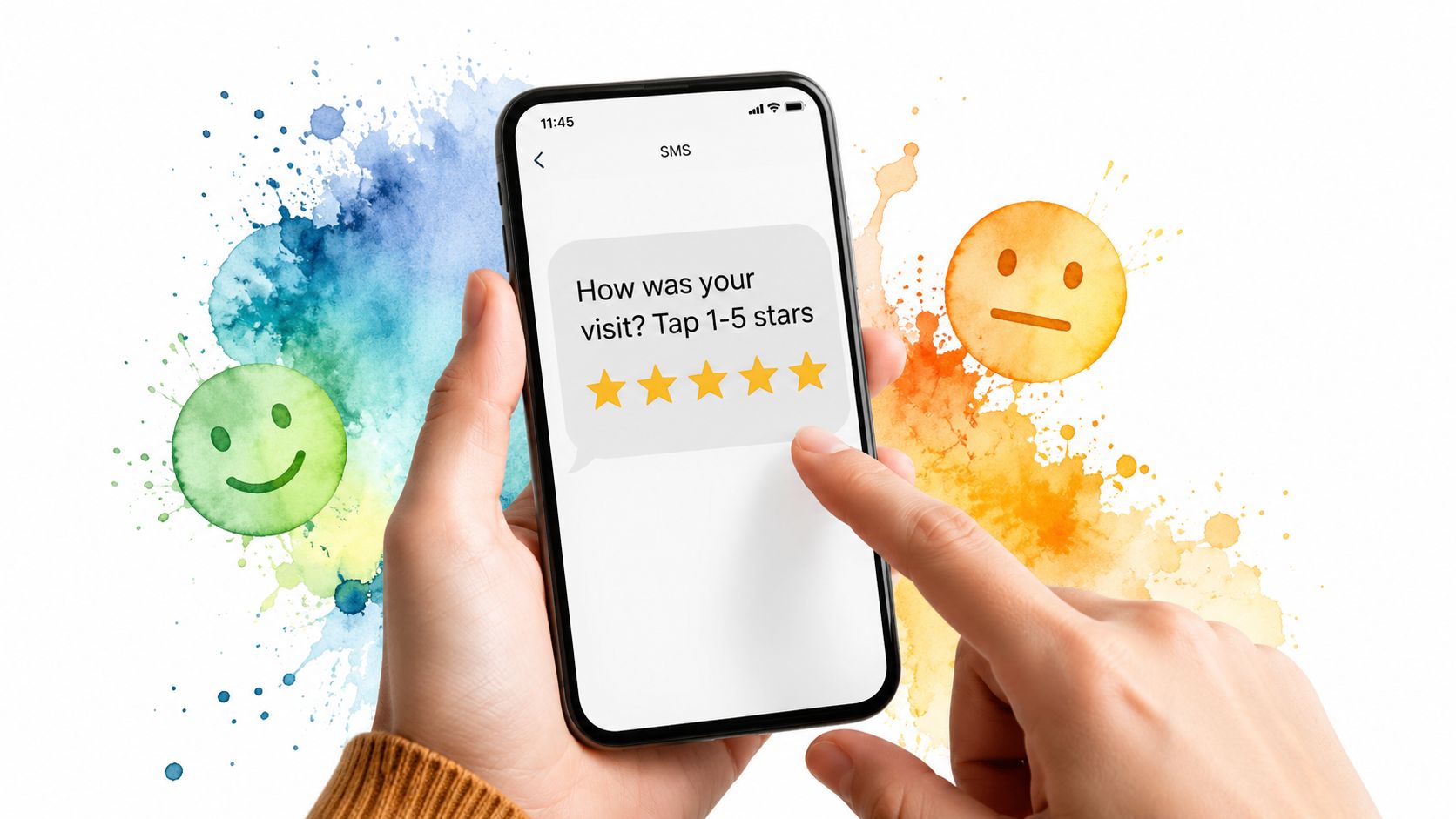
Feedback SMS works best at the customer moment when the experience is still fresh. Send it after an appointment, delivery, class, webinar, or other completed interaction. Ask for one small action, then route the response to the right follow-up.
Post-appointment example
How was your visit with Dr. Smith today? Share quick feedback: [link] Thank you.
Delivery example
Did your order arrive as expected? Rate your experience: [link]
Karate class example
How was class today? Tell us what you thought: [link]
Event example
Thanks for attending our webinar. Was it valuable? Share your feedback: [link]
Keep the survey short and easy to complete on a phone. Start with a recommendation question, then show follow-up questions based on the answer. A dissatisfied customer needs a clear way to explain the issue or contact support. A satisfied customer can receive a review or referral request, but avoid turning the thank-you into another sales message.
Send the survey soon after the interaction and connect each response to the correct customer record. A low rating should create a service task with a named owner and response deadline. A positive rating can trigger a review request, loyalty offer, or referral prompt.
Customer-service signal: A feedback SMS becomes useful only when someone acts on the response.
Track clicks, completions, rating distribution, comments, and follow-up outcomes. Many clicks with few completions can indicate a poor mobile layout, excessive questions, or an unnecessary login. Use a concise URL with click tracking, test the survey on a phone, and make the first screen easy to finish.
Segment follow-up by experience type, rating, customer status, and response history. Keep that status aligned across SMS, email, and any ringless voicemail sequence. Use ringless voicemail for opted-in customers who have not responded and need a personal-service prompt, such as a call to support. Suppress the voicemail when a survey response or service ticket already exists.
An incentive may be appropriate, but state its terms clearly and never imply that positive feedback is required. Share recurring themes with the service team, assign patterns to an owner, and change the process behind repeated complaints. The value lies in the operational improvement, not the dashboard total.
Payment reminders need precision and restraint. The customer should see who is contacting them, which invoice is involved, when payment is due, how to pay securely, and whom to contact if the record is wrong or a payment plan is needed.
Courtesy reminder
Reminder from [Business]. Invoice [number] is due on Friday. Pay securely: [link] Questions? Call [number].
Overdue reminder
Invoice [number] remains unpaid. Please review your balance and pay securely: [link]. Call [number] with questions.
Payment-plan option
Need help resolving your balance? Call [number] to discuss payment options. Pay securely here: [link]
Healthcare example
Your co-pay for your recent visit is due. Pay securely: [link]. Call [number] with questions.
Avoid placing unnecessary sensitive information in the message. Use a secure, PCI-compliant payment destination, validate that the invoice field matches the recipient, and give the customer a direct way to challenge an error. The SMS should support accounting and service teams, not replace them.
Start with a courteous notice before the due date, then send a due-date reminder if the account remains unpaid. Later messages can become firmer, but they should stay factual and professional. Space the sequence around actual payment-processing delays and suppress all future reminders as soon as the payment posts.
Coordinate SMS with email and ringless voicemail, but give each channel a distinct role. Email can carry the full invoice detail, SMS can provide the immediate payment prompt, and a consented voicemail can explain how to reach the billing team. Don't use ringless voicemail to bypass consent or imply that a debt is exempt from communication rules.
Document every message, payment status change, opt-out, and customer-service contact. For consumer debt collection, review the applicable FDCPA requirements and local rules before launch. Never threaten, reveal private information, or suggest consequences that the business can't lawfully enforce.
Compliance boundary: Opting out of reminders doesn't erase an amount that is actually due, but it does require a different compliant communication path.
| Template | Implementation Complexity | Resource Requirements | Expected Outcomes | Ideal Use Cases | Key Advantages |
|---|---|---|---|---|---|
| Flash Sale & Limited-Time Offer SMS | Medium, precise timing, inventory sync, tracking | Marketing copy, link/landing pages, analytics, inventory coordination | Rapid spikes in conversions and short-term revenue | Ecommerce, retail, limited-time promotions | Drives urgency and immediate purchases |
| Appointment Reminder & Confirmation SMS | Low–Medium, scheduling integration and timing rules | Scheduling software integration, calendar attachments, compliance (HIPAA where needed) | Fewer no-shows; higher appointment completion rates | Healthcare, salons, fitness studios, service providers | Reduces no-shows and administrative workload |
| Ringless Voicemail Marketing Campaign | Medium–High, telephony integration and strict compliance | Voicemail delivery platform, audio production or TTS, compliance checks (TCPA/DNC) | Silent delivery with good reach; lower live-response rates | Healthcare reminders, real estate, B2B follow-ups, payment notices | Non-intrusive, cost-effective voicemail delivery |
| Text-to-Join & Keyword Sign-Up SMS | Low, simple keyword workflows but requires compliance | Shortcode/keyword setup, CRM tagging, double opt-in workflow | Fast subscriber growth and engaged opt-ins | Events, broadcasts, on-site activations, media promotions | Builds compliant, opt-in subscriber lists quickly |
| Promotional Code & Exclusive Deal SMS | Medium, code generation, segmentation, tracking | Promo code system, ecommerce integration, segmentation data | Targeted conversions and increased repeat purchases | VIP offers, win-backs, segmented campaigns | Highly trackable, personalized offers boost LTV |
| Event Registration & RSVP Confirmation SMS | Medium, multi-touch drip and calendar integration | Event platform integration, iCal files, reminder sequencing | Higher registration and attendance rates | Webinars, conferences, workshops, in-person events | Improves attendance and simplifies capacity planning |
| Customer Feedback & Survey SMS | Low, simple survey links and analytics | Survey tool integration, short mobile forms, response tracking | Timely feedback and CSAT/NPS data | Post-service follow-up, purchases, events | Quick insights with high response rates when timely |
| Payment Reminder & Invoice Collection SMS | Medium–High, legal, PCI and escalation workflows | Secure payment links, accounting integration, compliance (FDCPA/TCPA/PCI) | Faster collections; improved cash flow and DSO | Healthcare billing, B2B invoices, subscriptions | Automates collections with documented communication |
The templates are starting points, not permanent copy. A flash-sale message and an appointment reminder may both use a short link, but they need different timing, segmentation, response handling, and suppression logic. Treat each customer moment as its own workflow, then connect the workflows to a shared contact record.
Begin with permission. Separate promotional consent from service notifications where local rules require it, record the source and timestamp, and preserve the disclosure shown during signup. Under GDPR, consent must be freely given, specific, informed, and unambiguous, and a phone number collected at checkout doesn't automatically authorize marketing SMS. In the United States, ringless voicemail to wireless numbers requires consent under the FCC's interpretation of TCPA coverage, so don't position it as a loophole.
Next, map each audience segment to one primary use case. Recent product viewers may qualify for a flash offer. Registered attendees need event logistics. Customers with upcoming appointments need confirmation. An inactive buyer may qualify for a win-back code, but shouldn't receive every general promotion at the same time. Suppression rules matter as much as inclusion rules. Remove purchasers from a sale reminder, confirmed attendees from registration prompts, and paid invoices from collection sequences.
SMS open rates are commonly reported between 90% and 98%, but open rate alone doesn't show whether the message created value. Practical SMS benchmarks place a “good” CTR around 8.9% to 14.5%, while top-tier programs exceed 14.6%, and one benchmark compilation reports a median CTR of 8.7%, as detailed in this SMS CTR benchmark analysis. Use those figures as directional context, then compare your own segments and message types consistently.
Track delivered messages, clicks, replies, confirmations, conversions, revenue per recipient, failed deliveries, and opt-outs. A 2026 analysis of 10 billion text messages found 95% were read within 3 minutes and reported 98% overall open rates, while also emphasizing click rate, conversion rate, revenue per recipient, and unsubscribe rate as more useful operating metrics than opens alone. Review the SMS benchmark methodology and metric guidance when designing your dashboard.
Automation deserves special attention. Recent 2025 data reports that automated SMS campaigns generated 5 times more revenue per send than broadcast campaigns, according to this automation and broadcast SMS comparison. The implication isn't to eliminate broadcasts. Use broadcasts for timely announcements when the entire segment has a legitimate reason to receive them, and use automated flows when the customer event supplies stronger intent.
Before launch, validate every link, merge field, phone number, keyword, reply branch, and opt-out path with a small audience. Check that landing-page images span the content area rather than leaving excessive white space. Guidance for landing-page imagery recommends a full-width image around 940 to 960 pixels, with a 16:9 ratio for full-screen hero images, while mobile layouts should adapt to a safe width around 320 pixels, as explained in this landing-page imagery guidance.
Call Loop fits campaigns that need bulk SMS and MMS, segmentation, merge tags, scheduling, link shortening, click tracking, number validation, double opt-in, and compliance controls. It also supports coordinated SMS, voice, and ringless voicemail drips, with calendar or custom-date triggers for reminders and follow-up. Integrations with ActiveCampaign, HubSpot, Keap, and Zapier can connect those workflows to existing customer records, while HIPAA-compliant capabilities support secure healthcare communications.
The strongest marketing SMS messages are timely, expected, concise, and connected to a useful next action. Start with one customer moment, prove that the data and consent path work, then expand the sequence only when the added message earns its place.
Call Loop offers bulk SMS and MMS, text-to-join keywords, segmentation, merge tags, scheduling, tracking, and coordinated SMS, voice, and ringless voicemail drips. Visit Call Loop to connect these marketing SMS messages to practical, permission-based customer workflows.
Chris Brisson
Chris is the co-founder and CEO at Call Loop. He is focused on marketing automation, growth hacker strategies, and creating duplicatable systems for growing a remote and bootstrapped company. Chat with him on X at @chrisbrisson


Trusted by over 45,000 people, organizations, and businesses like


