
See a Demo
You're just one step away from seeing Call Loop in action.
Enter your information below to watch a demo right now.

You're just one step away from seeing Call Loop in action.
Enter your information below to watch a demo right now.


In a world drowning in digital noise, MMS medical marketing is your way to cut through. It’s about delivering visually rich, engaging content straight to your patients' phones. Plain text gets the job done, but MMS (Multimedia Messaging Service) lets you send images, short videos, and audio clips. This transforms routine communication into something far more personal and impactful.
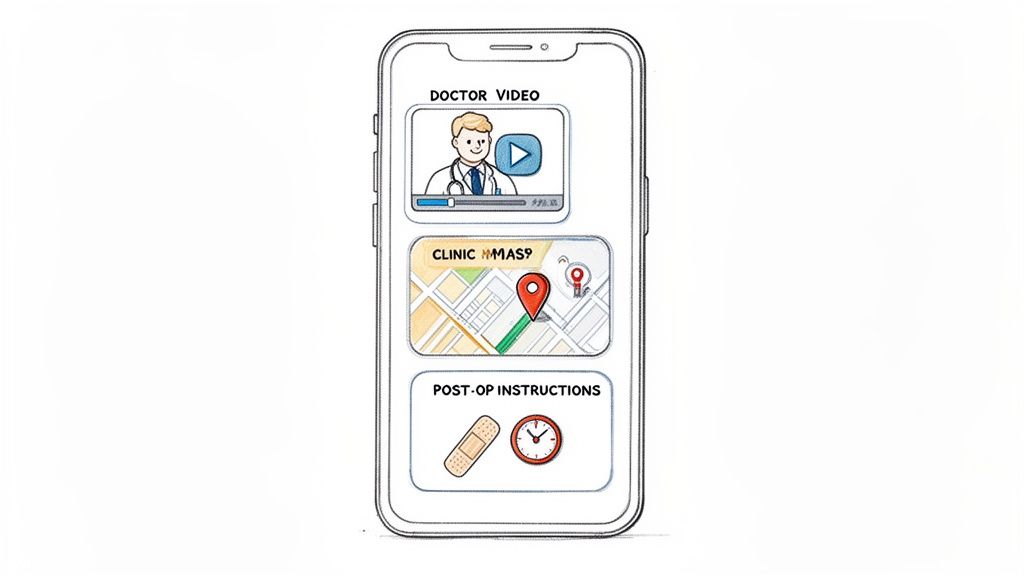
Standard text messages are functional, sure, but they're also completely forgettable. They deliver basic information but do very little to build a real connection or make sure the patient truly understands. MMS completely changes this dynamic by adding a powerful visual layer to your outreach.
Think about it. Instead of a sterile appointment reminder, imagine sending a new patient a short welcome video from their actual doctor. That simple, human gesture immediately builds trust and calms a lot of nerves. Visuals make complex or abstract information feel tangible and easy to grasp, which is absolutely critical in healthcare.
The real power of MMS is its ability to grab and hold attention in a way that simple SMS just can't. Here’s how that plays out in the real world:
By moving beyond the 160-character limit of SMS, healthcare providers can deliver compassionate, clear, and compelling messages that patients not only read but also appreciate and act upon.
Let's be honest, the healthcare field is getting more competitive by the day. As the global market grows—it's forecast to hit a staggering $665.37 billion by 2028—providers have to find better ways to connect with patients. We're seeing studies that show healthcare marketers with mature digital communication tools (including MMS) generate nearly double the revenue growth of their peers. The financial benefit is clear.
This is where visual messaging gives you a serious leg up. While SMS is great for basic alerts, understanding the difference between SMS and MMS messages is crucial for building a modern communication strategy. When you combine MMS with other non-intrusive methods, like a follow-up ringless voicemail, you create a supportive, multi-touch patient journey that helps your practice stand out from the crowd.
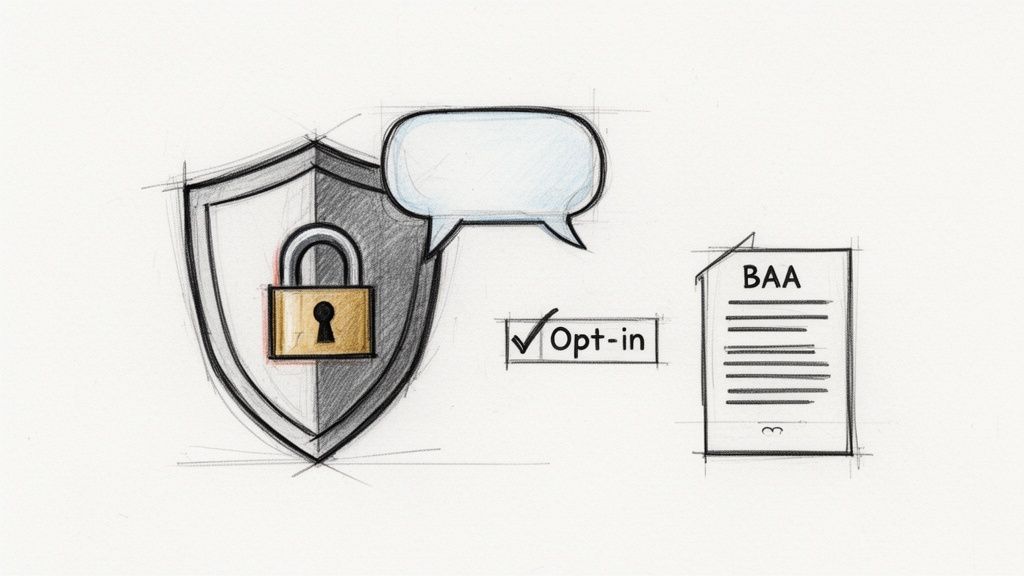
Before you can even think about the cool visuals and engaging content of an MMS campaign, you have to build a rock-solid foundation of trust and regulatory compliance. The Health Insurance Portability and Accountability Act (HIPAA) isn't just a rulebook to glance over; it's a direct promise to your patients that their privacy is your top priority.
Getting this wrong isn't just about risking massive fines—it's about shattering the trust you've worked so hard to build with your community.
The absolute first move is securing explicit patient opt-in. You can't just pull numbers from your patient database and start texting. Every single patient must give you clear, documented consent to receive electronic messages, and they need to know exactly what kind of messages they’re signing up for. This isn't a box-ticking exercise; it's a legal necessity that respects your patients' right to privacy.
Picking a messaging platform isn't just a technical decision; it's a major compliance one. You have to find a provider who gets the unique challenges of healthcare and, most importantly, is willing to sign a Business Associate Agreement (BAA).
This is a non-negotiable, legally binding contract. It holds your vendor to the same HIPAA standards you are, ensuring they’ll protect any patient data that passes through their system. No BAA? Walk away. It’s that simple.
The BAA confirms your partner has the right safeguards in place, like end-to-end data encryption and strict access controls. It's a critical piece of your compliance puzzle. If you want to dig deeper into what to look for, check out our guide on HIPAA-compliant texting apps to see which security features really count.
When you’re sending an MMS, you need to be crystal clear on what qualifies as Protected Health Information (PHI). A generic reminder about flu season might be perfectly fine. But an image showing a patient's specific skin condition or a video discussing their treatment plan? That's completely off-limits for standard messaging.
Quick reminder: Any piece of information that can identify a patient and is related to their health, treatment, or payment is PHI. That includes names, dates, photos, and even details that seem minor on their own.
When in doubt, always play it safe. Keep your MMS content focused on general wellness tips, logistical info like a map to your clinic, or educational content that’s not tied to any individual. This lets you leverage the power of visuals without stepping over a major compliance line. It’s this disciplined approach to mms medical marketing that keeps your campaigns both effective and secure.
To help keep everything straight, use this checklist before you hit "send."
This table is a quick go-to for making sure your MMS campaigns are on the right side of HIPAA regulations before they ever reach a patient's phone.
Think of this checklist as your pre-flight inspection. A quick run-through can save you from major headaches down the road and ensure your campaigns are built on a trustworthy foundation.
When you're running a healthcare practice, MMS marketing isn't just about sending a picture; it's a powerful way to make every step of the patient journey better. Once you've got the compliance side handled, you can start building campaigns that feel genuinely supportive, not like another piece of marketing.
Think about a new patient who might be a little nervous about their first visit. Instead of a plain text reminder, what if they got an MMS with a short, friendly video tour of your office? That simple message can ease anxiety, create a welcoming vibe, and make that person feel cared for before they even step through the door.
The secret is matching your visual content to what a patient needs at a specific moment. A one-size-fits-all approach just doesn't connect. You have to think about the distinct phases of care and create MMS content that serves a clear purpose for each one.
When you tailor your content this way, basic communication becomes a high-value patient support tool. The whole point is to give them the right information, in the right format, exactly when they need it most.
Let's get practical. A dental office could send an MMS with a GIF that shows the proper way to floss after a cleaning. A pediatric clinic could text a colorful infographic on vaccination schedules to new parents.
These little visual nudges make complex information much easier to digest and remember. If you're looking for more ideas on how to structure your messages, browsing through different text message examples for businesses can really get the creative juices flowing for your own campaigns.
A great MMS message should answer a patient's question before they even think to ask it. Anticipate their needs—whether it's finding your office or understanding their care plan—and deliver the solution visually.
To see what compelling visual messages look like in action, you can look for powerful marketing campaigns online. The core principles of clear, concise, and visually appealing communication are directly transferable to MMS.
Don't just send one MMS and call it a day. For really important messages, creating a multi-touch experience can dramatically increase its impact without feeling like you're spamming the patient. This is where combining different channels really pays off.
For example, you might send an MMS with a video about a new wellness program. A day later, you could follow up with a ringless voicemail from a nurse practitioner personally inviting them to learn more. This layered approach feels incredibly personal and supportive. The patient gets a non-intrusive voicemail they can listen to whenever they want, reinforcing the helpful visual they already saw. It's a coordinated strategy that makes sure your message isn't just sent—it's received and appreciated.
Let's be honest, personalized communication at scale used to sound like an impossible dream. Not anymore. With the right automation in place, your practice can send out timely, relevant messages through MMS, SMS, and even ringless voicemail without your staff having to lift a finger. This isn't just about saving time; it's the core of a smart mms medical marketing strategy.
The magic starts when you connect your messaging platform to your existing Electronic Health Record (EHR) or CRM. From there, you can set up simple "triggers" based on patient actions—like booking an appointment or completing a form. This creates a responsive communication flow that feels incredibly personal and supportive, making sure every patient gets exactly what they need, right when they need it.
For practices trying to get a handle on their outreach, looking into marketing automation for small businesses can open up a world of possibilities for more effective patient communication.
Think of these automated sequences as your digital patient navigators, guiding people through their care journey.
For example, the moment a new appointment is booked in your EHR, it could trigger an MMS confirmation. This isn't just a boring text; it could include a welcoming picture of your clinic and a direct link for them to add the appointment to their calendar. Easy.
But it doesn't have to stop there. The sequence can keep rolling:
This flow shows how a simple automated journey can support a patient through every key stage of their care.
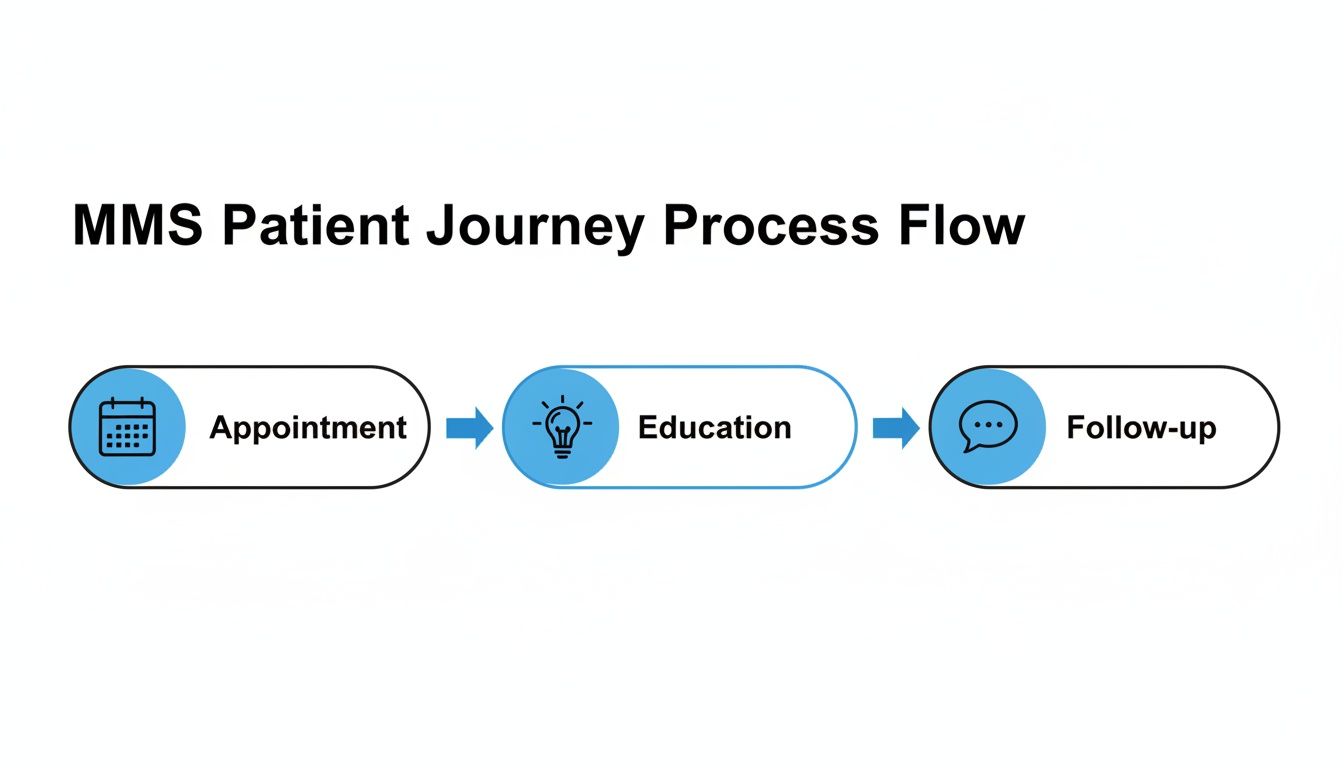
As you can see, the patient's journey is a continuous cycle. Well-timed, automated messages provide that consistent support from the first appointment all the way through to follow-up care.
The possibilities for automation in a medical practice are huge. Every sequence you build is designed to take tasks off your staff's plate while making the patient's experience smoother and more supportive.
Automation isn't about replacing the human touch. It’s about reliably handling the routine communication so your staff can focus on the patients who need that direct, personal attention.
A classic example is post-discharge follow-up. After a patient leaves the hospital, you can have a pre-scheduled series of MMS messages go out. These could deliver daily wellness tips, visual guides for taking medication correctly, and reminders for their upcoming follow-up appointments.
Another powerful use case is for chronic care management. Automated messages can prompt patients to track their vitals, or you can send them educational videos and articles related to their condition. This kind of consistent, high-touch approach saves your team countless hours and, more importantly, ensures no one slips through the cracks. The result? Better adherence and better health outcomes.
So, you’ve got your MMS campaigns running. But how do you actually know if your mms medical marketing strategy is working? To prove its value and find ways to get even better results, you need to look past basic stats like delivery rates. The real story is in the data that connects your efforts to what's happening in your practice and with your patients.
Effective measurement isn't just about sending messages; it’s about inspiring action. This means you need to dig into the deeper engagement signals. We're talking about click-through rates on educational links you send, appointment confirmation rates, and even how many patients are replying directly to your texts.
To get a clear picture of how your campaigns are doing, you’ll want to zero in on the data points that show real patient interaction and follow-through.
Don't just set your campaigns and forget about them. The real magic happens with continuous optimization. A/B testing is your best friend here. It’s as simple as sending two different versions of a message to small, separate groups of your audience to see which one performs better.
You could test something simple, like a friendly, smiling photo of a provider against a clean, branded infographic. Or, you could compare a direct call-to-action like "Confirm Your Visit" with a softer "We Look Forward to Seeing You." You’d be surprised how small tweaks can lead to big improvements in engagement over time.
The goal isn't just to find what works, but to understand why it works. Every test provides a valuable insight into your patients' preferences and communication styles, allowing you to fine-tune your strategy for maximum impact.
This data-driven approach is quickly becoming the new standard. In fact, biopharma and medtech promotional budgets recently jumped 19.7% in a single year, with much of that spending shifting toward measured, multi-channel programs like this. Companies that tightly integrate mobile messaging with analytics are seeing double the revenue growth of their competitors. If you want to dive deeper, you can discover more about these healthcare marketing trends and see just how much data is shaping the industry.
At the end of the day, the metrics that truly matter are the ones that affect patient care. When you can link your MMS campaign data to real-world outcomes—like fewer appointment no-shows and higher patient satisfaction scores—you’re demonstrating a clear and powerful return on your investment that goes far beyond just marketing.
When you're talking about powerful communication tools in healthcare, a lot of questions pop up. It's only natural. Getting the specifics of mms medical marketing ironed out is the key to launching your campaigns with confidence.
Let's walk through some of the most common questions we hear from medical practices just like yours.
Yes, it can be—but you absolutely have to do it the right way. There's no room for error here.
MMS is fully HIPAA compliant only if you're working with a secure messaging platform that will sign a Business Associate Agreement (BAA). This is the first, non-negotiable step.
Next, you must get explicit consent (an opt-in) from your patients before a single message goes out. And critically, you should never, ever include sensitive Protected Health Information (PHI) in a standard MMS message. Stick to appointment logistics, general health education, or wellness tips. Leave the specific diagnostic and treatment talk for secure patient portals.
Think of ringless voicemail and MMS as the perfect one-two punch for patient outreach. They work together beautifully to create a powerful, non-intrusive experience. You can reinforce your message without ever interrupting a patient's day with a call they weren't expecting.
This multi-channel approach really drives the point home.
For instance, imagine sending an MMS with a short, friendly video explaining a new health screening service your practice offers. A day later, a ringless voicemail from one of your providers can follow up with a warm, personal invitation to learn more. The combination feels modern and genuinely helpful, not invasive.
This layered tactic makes sure your message is both seen and heard, which makes it far more likely a patient will take action.
Practices that make the switch to MMS almost always report much higher engagement than they ever saw with email or even SMS alone. It makes sense when you think about it. The visual nature of MMS makes complex information way easier for patients to digest and act on.
That translates directly into results you can actually measure.
Success typically shows up in a few key areas:
Absolutely. This is where the real magic happens. Modern messaging platforms are built to play nicely with the systems you already use.
By connecting your Electronic Health Record (EHR) or CRM, often through a service like Zapier, you can set up all sorts of automated MMS messages. These can be triggered by specific patient actions or events logged in your system.
For example, the moment a patient books an appointment in your EHR, the system can automatically fire off a confirmation MMS. This message could include a photo of the clinic entrance so they know what to look for and a convenient link to add the appointment to their phone's calendar.
This kind of automation streamlines your front-desk workflow, cuts down on manual tasks, and ensures every single patient gets consistent, timely communication.
Ready to see how a multi-channel messaging platform can transform your patient outreach? Call Loop provides HIPAA-compliant MMS, SMS, and ringless voicemail solutions designed for healthcare providers. Start connecting with your patients more effectively today.
Chris Brisson
Chris is the co-founder and CEO at Call Loop. He is focused on marketing automation, growth hacker strategies, and creating duplicatable systems for growing a remote and bootstrapped company. Chat with him on X at @chrisbrisson


Trusted by over 45,000 people, organizations, and businesses like


