
See a Demo
You're just one step away from seeing Call Loop in action.
Enter your information below to watch a demo right now.

You're just one step away from seeing Call Loop in action.
Enter your information below to watch a demo right now.

A multi-channel marketing strategy simply means you're talking to your customers on more than one platform. The goal is to maximize your reach by showing up where your audience already spends their time—whether that's SMS, ringless voicemail, email, or social media. It ensures your message is always within reach.
Relying on a single channel to reach your audience today is like trying to catch rain in a thimble. You’re going to miss most of the opportunity. Your customers expect to connect with you on their terms, and they bounce between devices and platforms all day long. A modern multi-channel marketing strategy is all about meeting them where they are.
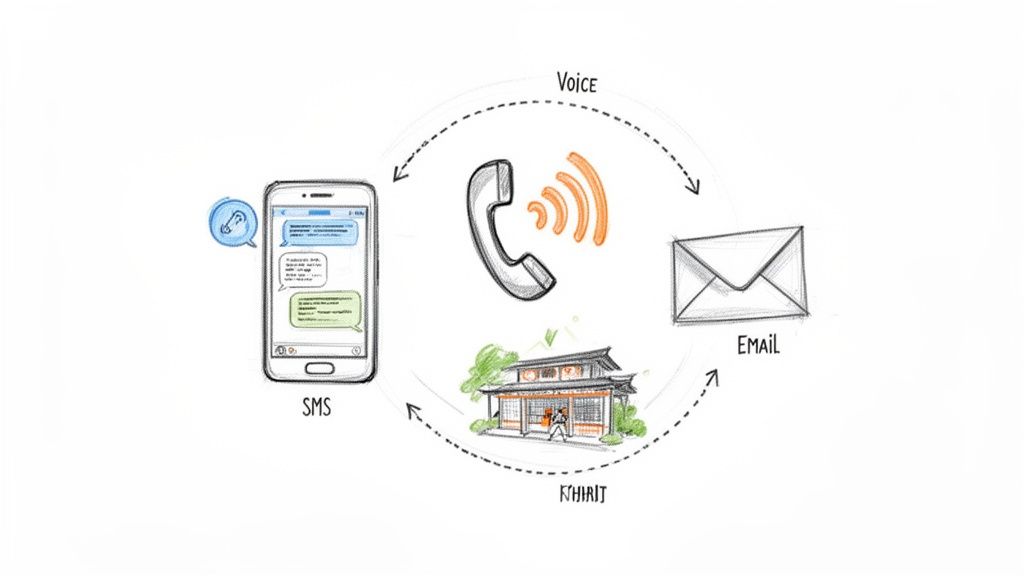
This isn’t just about being present; it’s about respecting their preferences. Some people live by their text message alerts, while others actually read and respond to a well-crafted email. If you ignore these preferences, you're leaving money and engagement on the table. It’s that simple.
To put it in perspective, let's look at how a single-channel approach stacks up against a multi-channel one.
The difference is clear. A multi-channel strategy isn't just about sending more messages; it's about creating a more robust, reliable, and effective communication system that actually gets results.
When your communication is coordinated across channels, you build trust and reinforce your brand. A customer who gets consistent, relevant messages on multiple fronts sees you as reliable and professional. This is a game-changer for small businesses, healthcare clinics, and sales teams trying to cut through the digital noise.
In fact, the data backs this up: 86% of marketers say their multi-channel efforts are getting more effective every single year. This isn't a fleeting trend; it's how modern business gets done. You can read more about the growing effectiveness of channel marketing.
Let's make this real. Think about a local karate studio. Instead of just a weekly email that gets buried in a crowded inbox, they could set up a simple multi-channel flow:
This mix ensures critical info gets seen immediately while building a stronger sense of community. Each channel has a job, and they all work together.
The whole point is to create conversations, not just broadcast announcements. A smart strategy ensures each channel supports the others.
Imagine a healthcare clinic using this for patient communication. An appointment confirmation email goes out right after booking. Three days before, an SMS reminder pops up. On the day of, a helpful ringless voicemail gives them last-minute instructions. This sequence doesn't just remind them; it adds value, cuts down on admin work, and improves patient care.
The real power of multi-channel marketing is in creating a layered communication experience. It respects customer preferences and delivers the right message, on the right medium, at the right time. That’s how you turn a monologue into a real dialogue.
In the end, this isn't about being everywhere all the time. It's about being in the right places with a clear purpose. For small and mid-sized businesses, this focused approach is the key to competing, building loyalty, and driving real growth.
Before you send a single text or drop one voicemail, you need a roadmap. A successful multi-channel marketing strategy can't be built on guesswork. Without specific goals, you're just making noise, and vague objectives like "increase engagement" are a waste of time. You need concrete, measurable targets that tie directly back to your business's bottom line.
This is about turning those broad ambitions into real numbers. A healthcare clinic, for instance, might set a goal to reduce appointment no-shows by 25% in the next quarter. An e-commerce business could aim to boost webinar attendance by 40% for a new product launch. See the difference? These are clear targets that define what success actually looks like and guide every single decision you make from here on out.
A well-defined goal is your filter. It helps you decide which channels to use, what to say, and how to know if any of it is actually working. Without it, you're just throwing things at the wall and hoping something sticks.
When you start with a specific outcome, you can build your strategy backward. You'll know exactly which key performance indicators (KPIs) matter, making it a whole lot easier to prove the ROI of your efforts.
Once your goals are locked in, you have to get crystal clear on who you're talking to. Blasting the same generic message to everyone on your list just doesn't work anymore. True personalization goes way beyond basic demographics like age or city. You have to dig into your audience's behaviors, their preferences, and their history with you.
This is where audience segmentation becomes your secret weapon. The whole idea is to group your contacts into smaller, more specific lists based on meaningful criteria. This lets you tailor every message—whether it's an SMS, a voice broadcast, or a ringless voicemail—so it feels like it was written just for them.
Here are a few ways we see smart businesses segmenting their lists:
To make your segmentation really sing, you need to collect and use the right data. That's what custom fields are for. Instead of just storing a name and a phone number, you can track all sorts of information that gives you crucial context for your multi-channel marketing strategy.
For example, a sales team could track the last contact date, the specific product a lead is interested in, or where they are in the sales funnel. A healthcare provider might use custom fields to note appointment types or even a patient's preferred way to be contacted. This data turns your contact list from a simple spreadsheet into a dynamic tool for laser-focused targeting.
Think about the possibilities. You could send a ringless voicemail drop only to leads who sat through your entire webinar last week. Or, you could send an SMS reminder exclusively to patients with a routine dental cleaning scheduled, completely separate from those coming in for a root canal. This is the level of detail that ensures every message you send isn't just delivered, but is timely, relevant, and genuinely valuable to the person on the other end.
Okay, so you’ve got your goals locked in and your audience segments are crystal clear. Now for the fun part: picking the right tools for the job. Not all channels are created equal, and from my experience, the secret sauce is knowing when to use SMS, when to pick up the phone with voice broadcasting, and when to slide in quietly with a ringless voicemail.
Think of it like this: you wouldn't use a sledgehammer to hang a picture frame. Each channel has its own unique strength, but they really sing when you use them together.
When a message absolutely, positively has to be seen right now, nothing on the planet beats SMS. We're talking about a mind-boggling 98% open rate. It cuts through the digital clutter in a way that email just dreams of. This makes it your go-to for anything time-sensitive.
SMS is a killer app for things like:
Picture this: a local boutique sends a text about a 2-hour flash sale. It's short, direct, and has a link straight to their site. That immediacy ensures the maximum number of people see it while the clock is ticking, driving a quick, powerful burst of sales.
SMS is fast, but sometimes you need that human touch. That’s where voice broadcasting really shines. Actually hearing a person's voice can forge a much stronger connection, and it’s incredibly effective for messages that need a little more explanation or a direct response.
One of the slickest features here is the press-1 transfer. This little bit of magic lets someone on the line instantly connect to a live person just by tapping a key on their phone. It's a game-changer for sales teams who want to route hot leads straight to a rep who can answer questions and close the deal on the spot. It's also fantastic for scheduling appointments where a quick back-and-forth is needed.
So what about those messages that are important, but not "drop everything and answer the phone" urgent? This is the sweet spot for ringless voicemail. It's a clever piece of tech that delivers an audio message right to someone's voicemail box without their phone ever making a peep. It’s the perfect middle ground—personal and direct, but totally non-intrusive. The terms ringless voicemail drop and voicemail broadcast are often used to describe this effective, modern communication method.
I love ringless voicemail because it lets you deliver a personal-sounding message at scale without blowing up your customer's day. It respects their time, ensures your message gets heard, and is hands-down one of the best tools for follow-ups and gentle nudges.
This channel works wonders for:
By taking advantage of ringless voicemail for business, you're creating positive touchpoints that build relationships, not annoyance. It's a subtle but ridiculously effective part of a modern marketing playbook.
While these channels are powerful on their own, remember they're part of a bigger picture. B2C marketers are looking ahead to 2025, and they see their top channels as a balanced mix of email (82.4%), social media (66.7%), and mobile web (58%). This just proves the need for a blended strategy where SMS, voice, and voicemail work alongside these other platforms.
Having the right channels is one thing. Making them work together seamlessly is where the magic really happens. This is where we shift from theory to action, designing automated sequences that engage your audience 24/7—without you having to lift a finger. An effective multi-channel marketing strategy isn't about grinding it out with manual effort; it's about building smart, automated workflows that deliver the right message at exactly the right time.
The whole process starts with a trigger. Think of this as the starting gun for your automated sequence. It could be anything from a new contact subscribing via a text-to-join keyword to someone filling out a form on your website. Once that trigger fires, the automation takes over, guiding your contact through a pre-designed journey of perfectly timed touchpoints.
Before you build anything, you need a blueprint. I always tell people to map out the entire sequence visually. Think of it like a flowchart for your customer communications. This simple exercise forces you to define the timing, logic, and content for each step, which is critical for creating a cohesive experience.
This visual map will dictate the flow, moving a contact from an initial SMS, to a voice message, and maybe finally to a ringless voicemail.
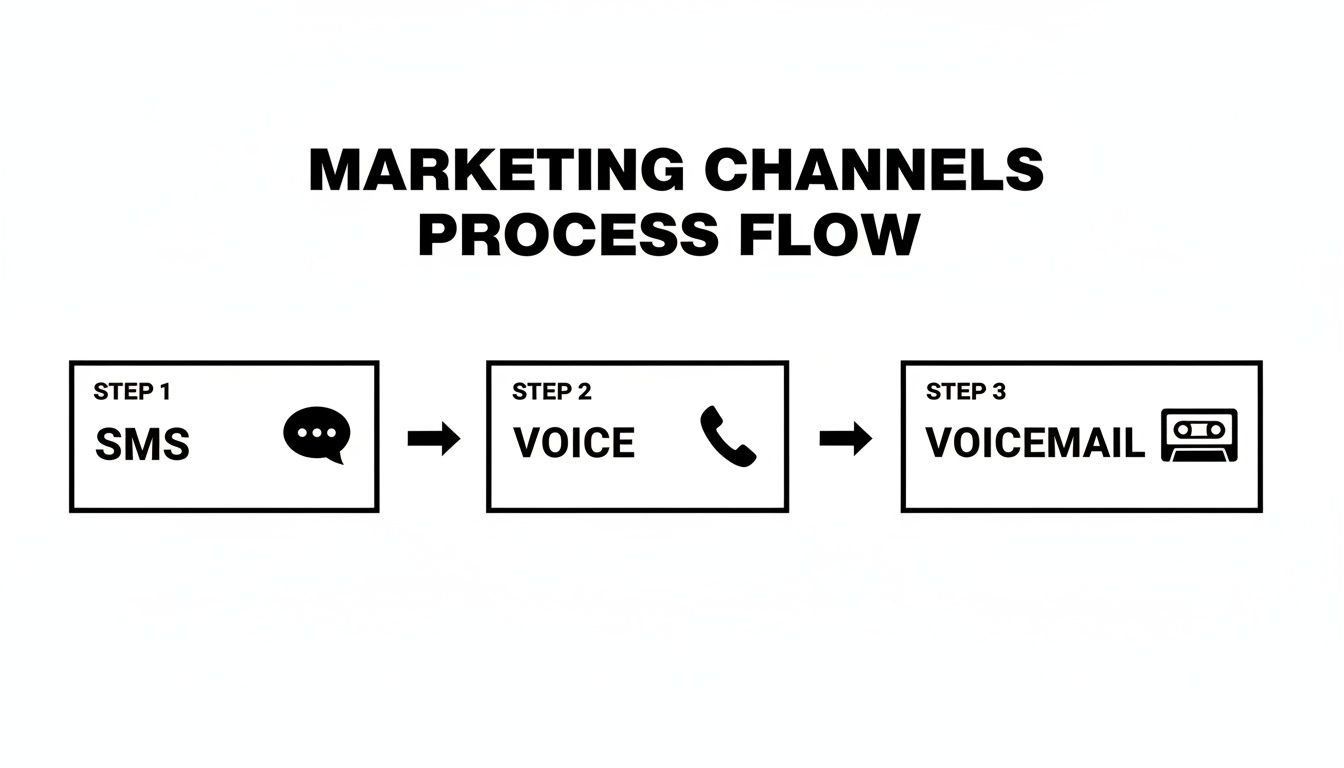
A great workflow feels natural and helpful, not robotic or pushy. It’s all about anticipating your customer’s needs and providing real value at each stage. For a deeper look into creating these sequences, check out our guide on building powerful marketing automation workflows.
The goal of an automated workflow is to create a series of interactions that feel personal and timely, even though they're completely automated. This frees up your team to focus on high-value tasks while the system handles the consistent follow-up.
Let's make this practical. Picture a healthcare clinic struggling with a high rate of appointment no-shows—a common and expensive problem. A simple yet powerful automated workflow can make a huge difference here.
Here’s how they could structure their sequence:
This sequence plays to the strengths of each channel. SMS is perfect for quick, scannable confirmations, while the ringless voicemail drop adds a human touch without interrupting the patient's day. It's a simple, set-it-and-forget-it workflow that directly boosts the clinic's bottom line.
Now, let's switch gears to a sales scenario. A sales team needs to nurture new leads who download a whitepaper from their website. The goal is to qualify them and book a demo without coming on too strong.
Their multi-channel workflow might look something like this:
This workflow feels personal and gently escalates the call-to-action. By using tools that integrate with CRMs like HubSpot or ActiveCampaign, every interaction is tracked, giving the sales team full context when they finally connect with the lead. This is the kind of automation that’s absolutely essential for any modern multi-channel marketing strategy.
A slick, multi-channel marketing strategy is more than just clever sequences and high engagement. It's really about building trust and proving your value. To pull that off, your campaigns have to be both compliant and measurable. Let's be clear: navigating the rules of customer outreach is non-negotiable, and tracking your performance is the only way you’ll know if any of this is actually working.
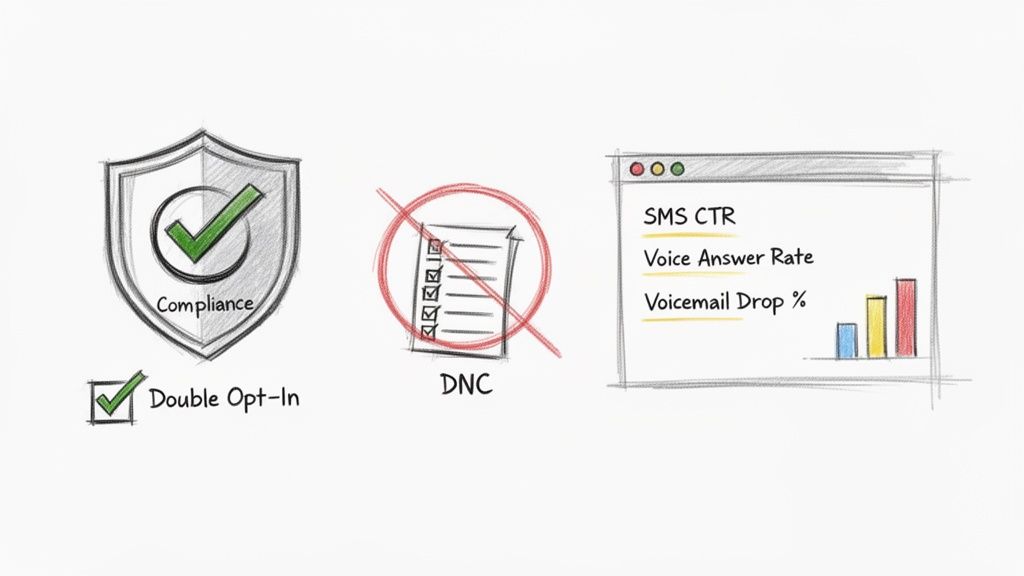
Before you can even think about success, you have to make sure your campaigns are set up legally and ethically. Compliance isn’t a suggestion; it’s a hard requirement that protects your business and your audience. Skipping these rules can lead to some seriously hefty fines and wreck your brand’s reputation.
First up, SMS marketing. The gold standard here is the double opt-in. After someone subscribes, you need to fire off an immediate confirmation text asking them to reply (like with "YES") to confirm. It’s a simple step, but it creates a concrete record of consent and gets you a much higher-quality, more engaged list.
Respecting customer preferences is the foundation of a successful multi-channel strategy. It’s not just about what you send, but how you get permission to send it. A compliant approach builds trust and ensures your messages are welcomed, not ignored.
Next, you have to be meticulous about managing your Do-Not-Call (DNC) lists, especially for any voice or ringless voicemail campaigns. When someone opts out, their number has to be added to your internal DNC list immediately and permanently. While platforms like Call Loop can automate this, it's ultimately your responsibility to honor every opt-out request without delay.
For those in healthcare, the rules get even tighter. Any communication that includes Protected Health Information (PHI) must follow HIPAA guidelines. This means you absolutely have to use a secure, HIPAA-compliant platform for things like appointment reminders to keep patient data private and secure.
Once you've got your compliance locked down, you can shift your focus to performance. A great analytics dashboard is your mission control, but you need to know which numbers truly show the health of your multi-channel marketing strategy. Don't get distracted by vanity metrics; zero in on the data that ties directly to your goals.
For each channel, you should be tracking these essential Key Performance Indicators (KPIs):
When you start combining the insights from all your channels, you can finally see the bigger picture and calculate the real return on your investment (ROI). To get a handle on the true impact of your efforts, it's vital to learn how to measure marketing performance effectively.
Use your analytics to A/B test everything—different message copy, send times, calls-to-action—to see what really connects with your audience. This cycle of testing and measuring is what turns a good strategy into a great one. For a deeper dive, check out our detailed guide on measuring marketing campaign effectiveness to really sharpen your approach.
At the end of the day, the goal is to tie your marketing activities to real business results. The data backs this up, too. Brands using three or more channels in their campaigns see a whopping 287% higher purchase rate compared to those sticking to just one. A well-measured, compliant strategy is a total game-changer for driving revenue and growth.
When you start digging into multi-channel marketing, a few questions always seem to pop up. It's totally normal. Here are some of the most common ones we hear, along with some straight-up, actionable answers based on our experience.
Nobody signs up for anything unless they know what’s in it for them. The trick is making the benefit obvious and the sign-up process dead simple.
For SMS, text-to-join keywords are your best friend. Plaster them everywhere: at live events, on your website, or on in-store signs. Always pair the call-to-action with a juicy, immediate incentive. A discount code, a free guide, early access—it's a simple trade that just works.
For voice and ringless voicemail, you have to be upfront on your sign-up forms. A healthcare clinic's intake form, for example, could clearly state, "By providing your number, you agree to receive SMS and voice reminders about your appointments." It sets the expectation from day one. And for SMS, always, always use a double opt-in where they have to reply 'YES'. This builds a high-quality list of people who actually want to hear from you.
Think of ringless voicemail as a secret weapon. It’s a slick piece of tech that drops a pre-recorded audio message straight into someone's voicemail box without their phone ever ringing. It's incredibly non-intrusive, which is why people don't hate it.
Because you aren't interrupting their dinner or a meeting, the message is received way more positively than a cold call. This makes it perfect for those strategic follow-ups where you want to add a personal touch without being a pest.
Ringless voicemail is the perfect blend of personalization and respect for your customer's time. It ensures your message is heard on their terms, making it highly effective for building relationships, not creating annoyances.
I’ve seen it work wonders in a few specific scenarios:
Absolutely. Let's bust this myth right now: you don't need a massive marketing department to pull this off. The idea that a sophisticated multi-channel marketing strategy is only for the big players is completely outdated. Modern automation platforms are built for small businesses, giving you all the power without the soul-crushing complexity.
The key is to start small. Don't try to launch ten intricate workflows on day one. Pick one high-impact sequence and nail it. A great starting point is an appointment reminder flow that uses both SMS and ringless voicemail. Use templates and connect the tools you’re already using.
That's the beauty of automation. You put in the work upfront to get it set up, and then it just runs in the background, saving you a ridiculous amount of time. With a unified platform that puts SMS, voice, and ringless voicemail in one spot, a one-person show can execute like a pro.
It all comes down to two things: relevance and consent. Get these right, and you'll have an audience that actually looks forward to your messages.
First and foremost, get explicit permission. This is non-negotiable. It’s the foundation of ethical, effective marketing. Second, use the segmentation tactics we talked about earlier to send the right message to the right person. Blasting your entire list with the same generic message is the fastest way to get ignored or blocked.
Third, don't be annoying. Bombarding people with messages every single day is a surefire way to get them to opt out. A smart sequence has strategic delays built right in, so you're being helpful, not harassing. And finally, make it painfully easy to leave. Every text needs that "Reply STOP to unsubscribe" language. When you focus on delivering real value and respecting people's inboxes, you build trust—and your messages get welcomed, not deleted.
Ready to build a multi-channel marketing strategy that drives real results? Call Loop combines SMS, voice broadcasting, and ringless voicemail into one powerful, easy-to-use platform. Start your free trial today and see how easy it is to automate and scale your customer outreach.
Chris Brisson
Chris is the co-founder and CEO at Call Loop. He is focused on marketing automation, growth hacker strategies, and creating duplicatable systems for growing a remote and bootstrapped company. Chat with him on X at @chrisbrisson


Trusted by over 45,000 people, organizations, and businesses like


