
See a Demo
You're just one step away from seeing Call Loop in action.
Enter your information below to watch a demo right now.

You're just one step away from seeing Call Loop in action.
Enter your information below to watch a demo right now.


In today's value-based care landscape, the gap between clinic visits is where health outcomes are won or lost. Simply providing excellent care within your facility is no longer enough; success now depends on maintaining a continuous, supportive dialogue with patients throughout their entire health journey. This shift requires a strategic approach that turns passive recipients of care into active partners in their own well-being.
Effective patient engagement strategies healthcare providers can implement are the key to closing care gaps, improving medication adherence, and reducing costly no-shows. To truly transform the patient experience and establish a compelling 'new front door to care', understanding how effective customer relationship management in hospitals can foster loyalty and satisfaction is key. Building on these principles, proactive communication ensures patients feel seen, heard, and supported long after they leave the office.
This guide moves beyond theory to provide a tactical roundup of the top 10 patient engagement strategies that successful healthcare organizations are using right now. We'll explore specific, multi-channel communication tactics, including automated SMS, voice broadcasts, and the strategic use of ringless voicemail, to create a proactive and responsive care experience. Each strategy is presented with actionable steps, key performance indicators (KPIs) for measurement, and HIPAA compliance considerations. You will learn how to build automated workflows that not only improve patient outcomes but also streamline your team's administrative workload, freeing them to focus on what matters most: delivering exceptional care.
Missed appointments are a significant drain on resources, leading to lost revenue and disrupted clinical workflows. Automated SMS and multi-channel appointment reminders are foundational patient engagement strategies for healthcare providers aiming to combat no-shows. This approach involves sending scheduled notifications via SMS, voice calls, and even discreet ringless voicemails to confirm upcoming visits.
By automating this communication, practices can free up administrative staff from manual calling, allowing them to focus on higher-value patient interactions. The system sends timely alerts based on preset schedules, providing patients with the essential details they need and simple options to confirm, cancel, or request to reschedule directly from their phones.
This strategy directly addresses the primary reason for no-shows: patients simply forgetting. It meets patients on the channels they use most frequently, making it a highly effective and low-friction method of communication. For instance, a dental practice can drastically cut its no-show rate from 15% to 5% by implementing simple SMS reminders. Similarly, primary care clinics can use interactive voice response (IVR) reminders that prompt patients to "press 1 to confirm," providing immediate feedback for scheduling staff.
To maximize the impact of your automated reminders, consider these best practices:
Implementing a robust reminder system is one of the most direct ways to improve clinic efficiency and patient adherence. By automating this crucial touchpoint, you ensure schedules remain full and patients stay on track with their care plans. For a deeper dive into optimizing your reminder system, you can learn more about how to reduce no-show appointments with automated messaging.
Beyond appointment scheduling, ongoing communication is essential for empowering patients to manage their health proactively. Educational SMS and voice campaigns are powerful patient engagement strategies for healthcare that deliver vital health information, preventive care guidance, and wellness tips directly to patients’ devices. This approach keeps patients engaged between visits and equips them with the knowledge needed for better long-term outcomes.
Using this strategy, providers can send multi-part drip campaigns to educate patients sequentially on topics like chronic disease management or post-procedure care. This consistent, automated outreach ensures patients receive timely and relevant information without overburdening administrative staff, fostering a stronger patient-provider relationship built on support and education.
This strategy transforms the patient's role from passive recipient to active participant in their own care. It directly addresses knowledge gaps that can lead to poor medication adherence, lifestyle choices, or recovery outcomes. For example, a diabetes management program can send daily medication and blood sugar tracking reminders via SMS. A post-surgical care center can deliver a sequence of recovery instructions, helping patients navigate each stage of healing confidently at home.
A critical aspect of health literacy campaigns is empowering patients to understand their own health data, including practical guides on how to interpret their blood work results. This level of education helps demystify complex medical information, leading to more informed questions and better adherence to care plans.
To create effective educational campaigns, focus on clarity, relevance, and timing:
By investing in patient education, you not only improve health outcomes but also build lasting patient loyalty and trust.
Beyond simple reminders, interactive two-way SMS communication opens a direct and convenient channel between patients and providers. This is one of the more dynamic patient engagement strategies for healthcare because it facilitates real-time dialogue for non-urgent needs. Patients can ask questions, report symptoms for triage, or request prescription refills via text, creating a continuous and accessible line of communication.

This bidirectional engagement empowers patients to participate more actively in their own care while helping providers manage inquiries efficiently. Instead of clogging phone lines, common requests can be handled quickly and asynchronously, improving both patient satisfaction and administrative workflow. It transforms communication from a one-way broadcast into a meaningful conversation.
This strategy is effective because it meets patients where they are: on their mobile devices. It lowers the barrier to seeking care or information, which can lead to earlier intervention and better outcomes. For example, an urgent care center can use an automated keyword-based system to screen a patient's symptoms via text and direct them to the appropriate level of care, reducing unnecessary emergency room visits. Similarly, a mental health provider can offer text-based check-ins between sessions, providing crucial support and monitoring patient well-being without a full appointment.
To successfully implement two-way SMS communication, consider these key steps:
By creating a structured and secure texting system, you build a stronger, more accessible relationship with your patients. You can explore how to set up an auto SMS reply system to manage these interactions effectively.
Medication non-adherence is a pervasive and costly challenge, contributing to poor patient outcomes and an estimated $290 billion in avoidable costs annually. Automated medication adherence and refill reminder programs are powerful patient engagement strategies for healthcare providers designed to tackle this issue directly. These systems send timely, targeted SMS messages, voice calls, and ringless voicemails to remind patients when to take their medication or when a prescription is due for a refill.
By automating these crucial prompts, healthcare organizations can significantly improve compliance for chronic disease management and post-acute care. The system helps close the loop between prescribing a medication and ensuring the patient follows the treatment plan, a critical factor in achieving positive health outcomes.
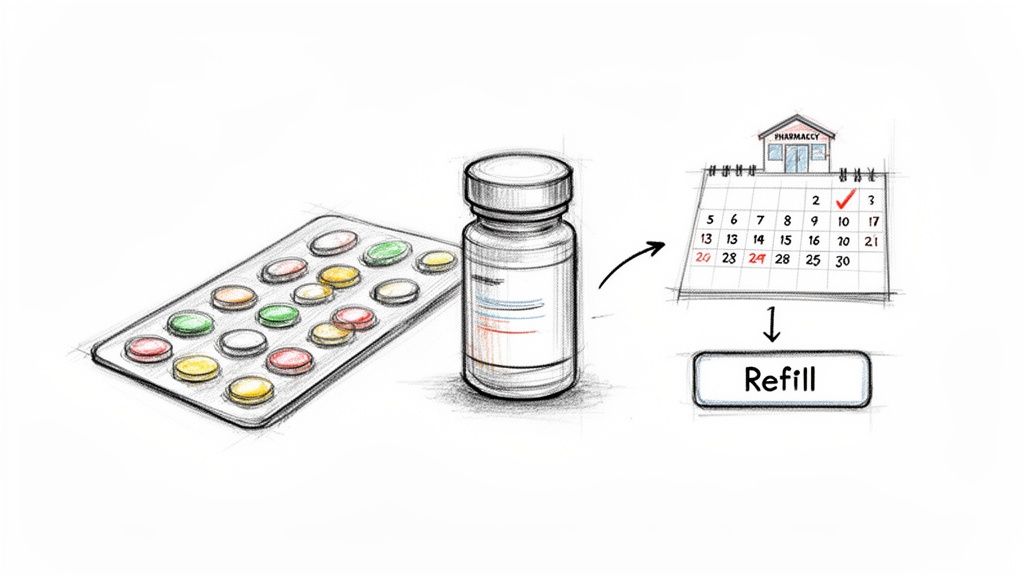
This strategy works because it provides a consistent, gentle nudge that integrates into a patient's daily routine. It directly counters common reasons for non-adherence, such as forgetfulness or a lack of understanding about refill timelines. For example, a hypertension management program can use daily SMS reminders to reduce missed doses by over 40%. Similarly, mental health practices often leverage discreet messaging to improve compliance with psychiatric medications, which is vital for long-term stability.
These reminders can also be interactive, allowing patients to confirm they've taken a dose or request a refill with a simple response, providing valuable data back to the care team.
To effectively launch a medication reminder program, follow these best practices:
Understanding the patient experience is crucial for quality improvement and retention. Post-visit or post-procedure SMS and voice surveys are powerful patient engagement strategies for healthcare providers to collect real-time feedback on satisfaction, care quality, and the overall patient journey. These automated campaigns can measure key metrics like Net Promoter Score (NPS), gather actionable data, and quickly identify service recovery opportunities.
By sending a survey shortly after an interaction, providers capture insights while the experience is still fresh in the patient's mind. This automated process gathers valuable data without burdening administrative staff, allowing for continuous monitoring of patient sentiment and immediate identification of areas needing attention.
This strategy provides a direct line to the patient's perspective, offering unvarnished insights that annual or quarterly surveys often miss. It demonstrates that you value their opinion, which builds trust and loyalty. For example, a hospital emergency department can use an automated post-visit SMS survey to ask for an NPS rating. If a patient responds with a low score, the system can instantly alert a patient advocate for follow-up, turning a negative experience into a positive one. Likewise, a specialty surgical center can collect feedback on procedure satisfaction to refine its pre- and post-operative care protocols.
To get the most out of your feedback campaigns, follow these best practices:
Proactive outreach for preventive care is a cornerstone of modern patient engagement strategies for healthcare. Instead of waiting for patients to schedule critical screenings, these campaigns actively prompt them to take action. This approach involves sending targeted SMS messages and voice broadcasts to encourage patients to book mammograms, colonoscopies, vaccinations, and other essential check-ups based on their age, health history, and established clinical guidelines.
By systematically identifying and closing gaps in preventive care, healthcare organizations can significantly improve population health outcomes, reduce long-term treatment costs, and excel in value-based care models. The goal is to make preventive care an easy and obvious next step for every eligible patient.
This strategy shifts the healthcare paradigm from reactive to proactive, empowering patients to manage their health before a serious issue arises. It directly addresses patient inertia and lack of awareness about recommended screenings. For example, a primary care network can boost mammography rates by 18% using a targeted SMS campaign, while a large health system can use automated outreach to meet its colorectal cancer screening targets. This proactive communication demonstrates a provider’s commitment to a patient's long-term well-being, strengthening the patient-provider relationship.
To deploy effective preventive care campaigns, focus on targeted and helpful communication:
By automating these crucial nudges, you can transform patient behavior at scale, ensuring more individuals receive the timely, preventive care they need to stay healthy.
The period immediately following hospital discharge is one of the most vulnerable times for a patient. Effective post-discharge follow-up is a critical component of modern patient engagement strategies for healthcare, designed to reduce preventable hospital readmissions and ensure a smooth transition back home. This strategy involves using automated SMS and voice campaigns to provide recovery guidance, medication instructions, and education on warning signs.
By maintaining communication during this crucial period, healthcare providers can bridge the gap between inpatient and outpatient care. Structured, automated outreach ensures patients feel supported and have the information they need to manage their recovery, preventing minor issues from escalating into major complications that require rehospitalization.

This strategy directly addresses common causes of readmission, such as medication errors, lack of follow-up, and confusion about recovery instructions. It provides a safety net for patients, offering timely information and a clear line of communication. For example, a heart failure program can use a sequence of SMS messages to check on symptoms like weight gain or shortness of breath, prompting early intervention. Similarly, orthopedic surgery centers can send daily tips on incision care and rehabilitation exercises, improving post-operative outcomes and patient satisfaction.
To create an effective post-discharge communication plan, consider these steps:
Implementing an automated follow-up system helps ensure continuity of care, reduces costly readmissions, and empowers patients to take an active role in their recovery journey.
Managing chronic conditions like diabetes, heart disease, or COPD requires continuous patient involvement beyond the clinic walls. Automated chronic disease management programs use SMS and voice messaging to provide ongoing support, education, and monitoring. These programs are powerful patient engagement strategies for healthcare that empower individuals to take an active role in their own health.
Through a structured communication plan, providers can send regular check-ins, medication reminders, lifestyle tips, and educational content. This consistent, personalized outreach helps patients track symptoms, adhere to care plans, and make healthier choices, ultimately improving clinical outcomes and reducing costly emergency room visits and hospital readmissions.
This strategy transforms chronic care from an episodic, reactive process into a proactive, continuous partnership. It keeps patients connected to their care team between appointments, fostering a sense of support and accountability. For example, a diabetes management program can send weekly messages asking for blood sugar readings, improving HbA1c levels through consistent monitoring. Similarly, a heart failure program can use daily automated calls to check for weight gain or shortness of breath, allowing for early intervention before a crisis occurs.
To create an effective chronic disease management program, focus on personalization and clear protocols:
By implementing an automated monitoring program, healthcare organizations can scale their ability to manage large patient populations effectively, ensuring those with chronic conditions receive the consistent support they need to stay healthy.
Patient portals are powerful hubs for care coordination, but their effectiveness hinges on one critical factor: patient adoption. Proactive SMS and voice campaigns are essential patient engagement strategies for healthcare providers looking to drive portal registration and active use. This strategy involves sending targeted messages to encourage patients to sign up, access records, view test results, and use features like secure messaging and bill pay.
By using automated outreach, practices can overcome common adoption barriers like lack of awareness or technical uncertainty. A simple SMS can provide a direct link to the registration page, while a follow-up voice message can highlight the convenience of accessing lab results from home, transforming the portal from an abstract tool into a tangible, valuable resource.
This strategy works because it meets patients where they are and provides a direct, low-effort path to engagement. Instead of waiting for patients to discover the portal on their own, you actively guide them to it and demonstrate its value. For example, a primary care practice can boost portal adoption from 30% to over 65% by sending a series of automated SMS prompts after new patient appointments. Health systems can also send SMS alerts notifying patients that new lab results are available, driving immediate portal logins and reinforcing its utility.
To effectively promote your patient portal and encourage sustained use, consider these tactics:
By actively promoting your patient portal, you not only improve care coordination and patient autonomy but also significantly reduce the administrative burden of phone calls for routine inquiries like test results and appointment scheduling.
Effective patient engagement extends beyond the clinic walls into the community itself. Population-level SMS and voice campaigns are powerful patient engagement strategies for healthcare organizations aiming to address social determinants of health, boost health literacy, and reduce health disparities in underserved areas. This approach uses culturally tailored messaging in multiple languages to connect diverse populations with vital health information, preventive care reminders, and local resources.
By leveraging automated communication, public health departments, FQHCs, and community health centers can efficiently reach thousands of individuals. These campaigns deliver crucial information about vaccination clinics, food assistance programs, or chronic disease management workshops directly to community members' phones, breaking down access and information barriers to support broader health equity goals.
This strategy is effective because it meets people where they are, using technology they already have to overcome systemic barriers to care. It acknowledges that health outcomes are deeply influenced by social and economic factors. For example, a community health center can use multi-language SMS broadcasts to inform immigrant populations about a free vaccination drive, resulting in higher turnout. Similarly, a safety-net hospital could launch a voice broadcast campaign to improve maternal health outcomes in low-income neighborhoods by sharing tips on prenatal nutrition and connecting expectant mothers with local support services.
To deploy community outreach campaigns that resonate and drive action, consider these best practices:
By proactively engaging entire communities, healthcare organizations can foster trust, improve population health outcomes, and take meaningful steps toward achieving health equity.
Navigating the landscape of modern healthcare demands more than just clinical excellence; it requires a deep, ongoing connection with the people you serve. Throughout this guide, we have explored a comprehensive suite of patient engagement strategies healthcare providers can implement to foster stronger relationships and drive superior outcomes. From tackling no-show rates with automated SMS reminders to supporting chronic disease management with consistent, empathetic outreach, the common thread is clear: proactive, personalized communication is paramount.
We’ve moved beyond theory to provide actionable blueprints for success. You’ve seen how multi-channel approaches that integrate SMS, voice calls, and even innovative tools like ringless voicemail can meet patients where they are, on the channels they prefer. This isn't about sending more messages; it's about sending the right messages at the right time to make a meaningful impact on appointment adherence, medication compliance, and preventive care participation.
The journey from a passive patient population to an actively engaged one begins with a single, focused step. Don't feel overwhelmed by the need to implement all ten strategies at once. Instead, identify the most pressing challenge your practice faces today and choose the strategy that directly addresses it.
Ultimately, mastering these patient engagement strategies in healthcare translates into tangible benefits that ripple across your entire organization. Engaged patients are more likely to adhere to their care plans, leading to better clinical outcomes and a healthier community. They are more likely to provide valuable feedback, helping you continuously improve your services. Furthermore, a seamless and supportive communication experience builds trust and loyalty, turning patients into lifelong advocates for your practice.
By leveraging technology to automate and scale these critical touchpoints, you free up your staff to focus on what they do best: providing high-quality, in-person care. This creates a virtuous cycle where technology enhances the human element of healthcare, rather than replacing it. The goal is to build a scalable engagement engine that works tirelessly in the background, ensuring no patient falls through the cracks and every individual feels seen, heard, and supported throughout their care journey. The time to move from strategy to action is now.
Ready to transform your patient communication from a manual chore into an automated, HIPAA-compliant engine for growth? Call Loop provides the powerful SMS, voice, and ringless voicemail tools you need to implement these engagement strategies efficiently and effectively. Start your free trial today and see how easy it is to build a better patient experience with Call Loop.
Chris Brisson
Chris is the co-founder and CEO at Call Loop. He is focused on marketing automation, growth hacker strategies, and creating duplicatable systems for growing a remote and bootstrapped company. Chat with him on X at @chrisbrisson


Trusted by over 45,000 people, organizations, and businesses like


