
See a Demo
You're just one step away from seeing Call Loop in action.
Enter your information below to watch a demo right now.

You're just one step away from seeing Call Loop in action.
Enter your information below to watch a demo right now.

Are no-shows and poor patient compliance costing your practice time and money because your reminders are too generic to prompt action? Most clinics don't have a reminder problem. They have a messaging strategy problem. Sending more texts won't fix that. Sending the right text, at the right moment, with a clear next step usually does.
Patient reminder text messages work best when they do one job well. Confirm attendance, reinforce care instructions, prompt a refill, or move a patient to the next step without making them call the office just to figure out what to do. Systematic review evidence shows SMS reminders substantially increase the likelihood of attending clinic appointments by about 50 percent compared with no reminder, with a summary odds ratio of 1.48 and a strong evidence base across clinic types, age groups, and timing windows in this review of randomized trials.
That doesn't mean every text should look the same. A confirmation message should be short. A follow-up care text should be sequenced. A telehealth reminder should remove technical friction. Administrative reminders should feel helpful, not punitive. The practices that get this right don't treat SMS as a template library. They treat it as a communication system.
Here are 8 patient reminder text messages that consistently earn their place in a modern workflow, plus compliance notes, A/B testing ideas, and places where ringless voicemail can strengthen the sequence when SMS alone isn't enough.
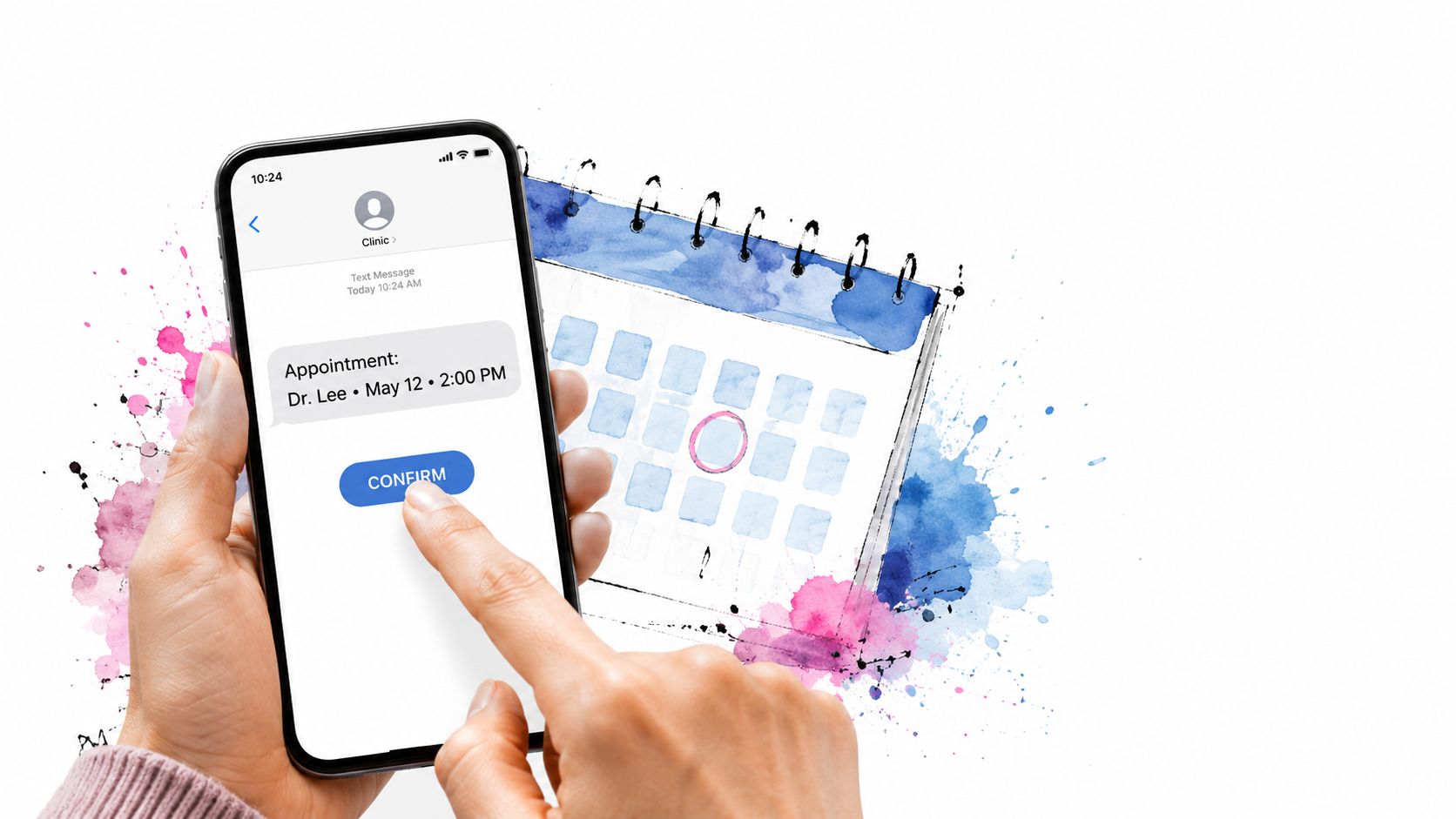
The simplest reminder is still one of the most valuable. A clean confirmation text gives patients the essentials fast: who, when, where, and what to do next. If they can confirm or reschedule in one reply, your front desk avoids a lot of preventable phone tag.
Try language like this:
The best confirmation texts reduce thinking. Patients shouldn't need to hunt through email for the address or wonder whether this is the right office. New patients especially benefit from location details, parking notes, or a prompt to arrive early for forms.
If you want a compliance-safe starting point, keep the content limited to appointment logistics and response options. Detailed diagnosis language doesn't belong here. A HIPAA-compliant appointment reminder workflow should separate operational reminders from protected clinical detail.
Practical rule: If a patient can read the text in under 10 seconds and know exactly what to do, the message is probably tight enough.
For testing, change one variable at a time. Test “Reply CONFIRM” against “Reply C.” Test provider name included versus omitted. Test whether adding “call to reschedule” outperforms a booking link for your patient base. A/B testing falls apart when teams change timing, wording, and CTA all at once.
One more issue gets ignored too often. Contact data decays. The AAFP has highlighted that sending texts to the wrong patient because of outdated contact information creates confidentiality problems in its guidance on text messaging and patient communication. Before an appointment reminder fires, prompt patients to verify mobile numbers in the portal or at check-in.
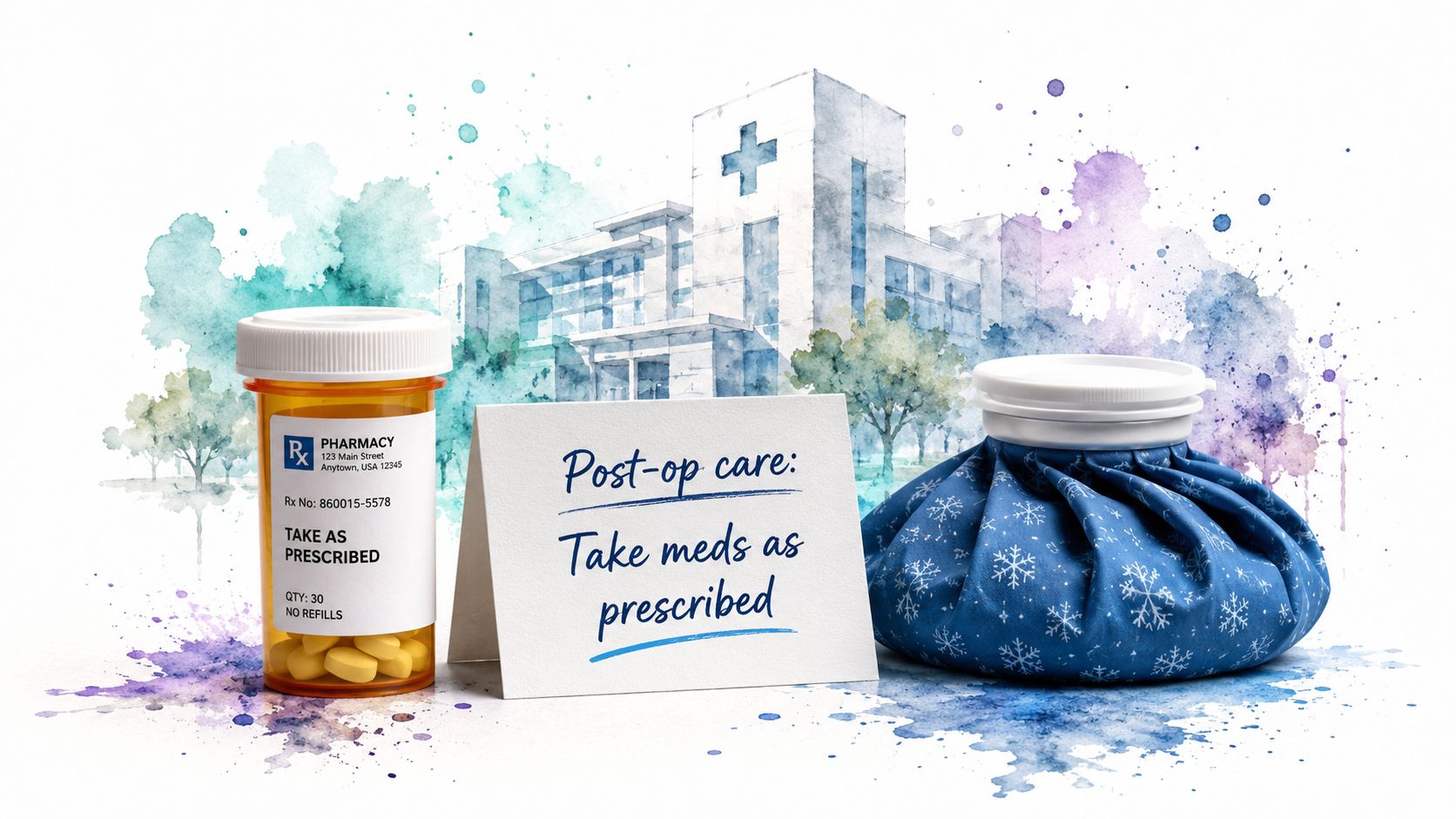
A patient leaves your office with verbal instructions, a printed sheet, and good intentions. By evening, half of that is forgotten. That's where a short post-visit text earns its keep. It reinforces the action the patient needs to take while the visit is still fresh.
Examples:
SMS is strong for reinforcement, not for delivering a full discharge packet. If the care plan is detailed, split it into two or three short messages sent close together. Put the highest-risk instruction first. Then send a secure portal prompt for the full written plan.
For some specialties, ringless voicemail is the better companion channel. A surgeon, nurse, or care coordinator can leave a calm, detailed voice message with aftercare nuance that would feel cramped in text. That's especially useful when the patient may be groggy, older, or relying on a caregiver who listens later.
Use escalation logic instead of one-size-fits-all messaging:
Keep SMS for the instruction that can't be missed first. Put everything else in the portal or a voice channel.
Compliance matters more here than in generic appointment reminders. If you're including sensitive details, route the patient to a secure portal rather than packing the text with clinical specifics. Some teams also test a “reply with questions” option against a direct callback number. The right choice depends on staffing. If no one can monitor replies promptly, don't invite open-ended texting.
Refill reminders work best when they remove friction. Patients don't need a lecture about adherence in the text itself. They need a nudge before they run out, plus the fastest path to request, pick up, or arrange delivery.
Common formats include:
Refill messaging often fails because the text says the medication is due but doesn't resolve the next obstacle. Patients then have to call, log in, or wait until office hours. Better systems include a reply keyword, a direct portal route, or a pharmacy support number in the first message.
In one randomized controlled trial at a Ryan White-funded HIV clinic, an inexpensive text reminder system increased clinic adherence by 7.15% compared with pre-intervention results, supporting the value of SMS for diverse populations including low-income and uninsured patients in this clinic study. That result doesn't mean every refill workflow should look identical, but it does reinforce a broader operational truth: simple reminders can move behavior when access is already in place.
A few practical distinctions matter:
For A/B testing, compare a convenience-first message against a clinical-first one. “Reply REFILL” usually feels lighter than “Your medication adherence matters.” It also gives the patient a one-step action instead of a vague instruction. If you support voice channels, ringless voicemail can work for patients who repeatedly miss refill texts or prefer spoken reminders, especially in older populations or caregiver-managed households.
Patients hate uncertainty more than bad news. If results are ready and your office stays silent, people start calling, worrying, or assuming the worst. A lab notification text should close that gap quickly and point to the right next step without exposing more health information than necessary.
A few usable models:
The core decision is whether the text should reassure, redirect, or escalate. If results are normal, a brief reassuring note with a portal link usually works well. If results need review, the message should move the patient toward scheduling or a direct callback. Avoid vague language like “please contact our office” unless there is no better next step.
For urgent abnormal results, ringless voicemail can add value because tone matters. A physician or nurse can leave a direct, calm message that tells the patient what to do next and how quickly to do it. That's not a replacement for proper clinical follow-up. It's a useful layer when timing matters and a text alone feels too thin.
This is one of the easiest places to drift into avoidable HIPAA risk. Many teams overshare in the notification itself. A safer pattern is to say the results are available, indicate whether follow-up is needed, and route the patient to the portal or the office for detail. If you do include result context, make sure your consent process, risk assessment, and platform controls support that choice.
A/B testing here should focus on patient response behavior, not just delivery. Test “Schedule now” against “Review in portal.” Test portal-first versus call-first based on the kind of result. What matters is whether the patient completes the next step quickly and correctly.
Preventive reminders are where strategy beats volume. If you text everyone the same annual wellness pitch, such messages can be disregarded. If you send a reminder tied to what they are due for, the message feels relevant instead of promotional.
Examples:
Segment these messages by age, condition, care gap, and prior response pattern. A patient due for a routine physical doesn't need the same tone or urgency as someone due for a repeat screening after a prior recommendation. The more precisely your EHR or CRM can trigger the reminder, the less copy has to do the heavy lifting.
This is also a good place to use multi-touch communication. Start with SMS. If the patient doesn't respond and the preventive service matters clinically, follow with ringless voicemail or a live outreach step. Voice can help when the message needs more explanation, such as why a screening matters or how to prepare.
A preventive reminder should answer the silent question in the patient's mind: “Why should I book this now?”
Pragmatic research at Kaiser Permanente Washington found that adding an extra text reminder beyond the standard single reminder reduced no-show rates by 7% in primary care visits and also reduced same-day cancellations by 6% in primary care, with stronger effects among patients with higher predicted no-show risk in this randomized study. The broader lesson for preventive outreach is straightforward. A single message often isn't enough for patients who are busy, hesitant, or juggling logistics.
In testing, compare convenience-led language against benefit-led language. “Appointments available next week” may outperform a generic wellness appeal because it reduces perceived effort. If self-scheduling is available, put the booking link in the first text, not the second.
Daily reminders can help, but they're easy to overdo. A text that supports adherence on day one can become background noise by week three if every message sounds the same. The fix isn't more persistence. It's better cadence, patient choice, and variation.
Examples:
Patients stick with these reminders longer when they control timing. Let them choose morning, midday, or evening. Let them opt out of one category without leaving the entire program. And rotate wording so the message doesn't feel machine-generated in the same voice every day.
A useful framework:
The operational reality matters. If patients can reply “YES,” someone should know what happens next when they don't. Otherwise, skip the accountability mechanic and keep the text as a simple prompt.
For a wider library of reminder text message patterns, the examples in this reminder text messages resource can help teams standardize phrasing across different workflows. Just don't confuse a message library with a program design. The sequence matters as much as the copy.
Patients with accessibility needs or strong voice preference may respond better to ringless voicemail than repeated SMS. That's especially true when caregivers are involved. A short voice reminder can feel more personal, and it can carry nuance without turning a text into a wall of words.
Telehealth no-shows often aren't true no-shows. They're access failures. The patient intended to attend but couldn't find the link, forgot to download the app, or hit an audio issue five minutes before the visit. A strong telehealth reminder prevents that friction before it starts.
Examples:
First-time telehealth patients need more detail than returning patients. Give them the join link, device requirements, and a backup phone number. Returning patients usually need less explanation and a faster reminder closer to the visit.
For higher-stakes visits, a two-step sequence often works well. Send one reminder with setup instructions, then another closer to the appointment with the join link front and center. If your scheduling team is working to reduce attendance gaps broadly, these patient no-show reduction strategies are worth aligning with your telehealth workflow.
In mental health, a targeted additional text message reminder reduced the chance of no-show by 11% in this Permanente Journal report. That's especially relevant for telehealth because patients may need both behavioral prompting and technical support. The strongest reminder won't help if the patient can't get into the session.
Ringless voicemail is useful when the appointment requires prep that doesn't fit gracefully into SMS. A brief recorded message can remind patients to test audio, choose a private setting, and keep medication lists nearby. For older adults or patients who struggle with links, that voice layer often lowers stress before the session begins.
A/B test setup-heavy language against minimalist copy. Some practices assume more instruction is better. Often it isn't. Experienced telehealth users usually respond better to one clean link and one support number.
Administrative reminders get ignored when they sound like collections notices. They work when they sound like check-in prep. The patient should feel that completing insurance verification or updating payment details will make the visit easier, faster, and less stressful.
Examples:
This category is where word choice matters most. “Complete pre-visit check-in” often lands better than “outstanding balance due.” If a balance must be mentioned, pair it with support options and a clear explanation. Patients are more likely to act when the request feels solvable.
Automated reminder systems have become standard across the industry. A Dialog Health summary reports that 88% of healthcare leaders' organizations use automated appointment reminders, and it also cites a weighted mean relative reduction in non-attendance of 34% from baseline levels, with automated reminders costing €0.14 per contacted patient versus €0.90 for manual phone reminders in its review of patient appointment reminder statistics. That operational gap is one reason administrative reminders belong in the same automation stack as clinical reminders.
A few practical refinements help:
If you're also educating patients about virtual care, this guide to modern online healthcare can support the broader digital adoption side of the patient journey.
| Template | Implementation complexity | Resource requirements | Expected outcomes | Ideal use cases | Key advantages |
|---|---|---|---|---|---|
| Appointment Confirmation Reminder | Low–Medium: simple merge tags and scheduling | SMS platform, appointment system integration, accurate phone numbers | Fewer no-shows (≈20–30%), improved punctuality, lower admin load | Clinics, dental, PT, service-based scheduling | Quick confirmations, easy rescheduling, measurable engagement |
| Post-Appointment Follow-up Care Instructions | Medium–High: secure triggers and tailored sequences | HIPAA-compliant messaging, clinical templates, secure links | Higher adherence, fewer complications, fewer follow-up calls | Surgical centers, hospitals, post-op and procedural care | Reinforces care, documents communication, reduces complications |
| Prescription Refill Reminder | Medium: pharmacy integration and refill logic | Pharmacy system integration, consent management, automation | Improved medication adherence, increased pickups, fewer lapses | Pharmacies, chronic disease management, primary care referrals | Timely refill alerts, pickup notifications, reduces non-compliance |
| Lab Results Notification with Next Steps | High: EHR/LIS integration and conditional messaging | Secure patient portal links, EHR/LIS integration, escalation workflows | Timely result delivery, better follow-up scheduling, reduced uncertainty | Hospitals, diagnostic labs, primary care managing test results | Rapid critical alerts, clear next steps, secure result access |
| Preventive Care and Wellness Screening Reminder | Medium: segmentation and scheduling logic | Access to medical history, screening dates, booking links | Increased screening uptake, earlier detection, more appointments | Primary care networks, public health campaigns, insurers | Targeted outreach, boosts preventive care, reduces long-term costs |
| Medication Adherence and Daily Health Reminders | Medium–High: recurring schedules and two-way flows | Scheduling engine, patient preferences, engagement tracking | Better adherence (20–40%), fewer readmissions, sustained behavior change | Chronic disease programs, cardiovascular, mental health | Ongoing support, progress tracking, high ROI on outcomes |
| Telehealth Appointment Reminder and Access Instructions | Medium: real-time links and timezone handling | Scheduling integration, telehealth platform links, tech support info | Fewer virtual no-shows, reduced technical issues, on-time starts | Telehealth providers, mental health, remote specialty consults | Seamless join links, technical guidance, improved virtual experience |
| Payment and Insurance Verification Reminder | Medium–High: billing integration and secure payments | Practice management/billing integration, secure payment portals, staff support | Reduced unpaid balances, smoother check-ins, higher collections | Dental, specialty practices, systems with high out-of-pocket costs | Revenue protection, pre-visit resolution, fewer billing surprises |
Strong patient reminder text messages don't work because they're clever. They work because each one has a job, a timing rule, and a clear next action. Confirmation texts protect the schedule. Follow-up texts reinforce care. Refill prompts support continuity. Preventive reminders close care gaps. Telehealth reminders remove technical obstacles. Insurance and payment texts reduce front-desk friction before the patient arrives.
The mistake most practices make is treating all reminders as one campaign. They build one generic template, send it to everyone, and assume automation alone will fix no-shows. It won't. Different moments need different copy, different timing, and sometimes a different channel entirely. SMS is often the fastest option, but it isn't the only one. Ringless voicemail is useful when the message needs more explanation, when tone matters, or when the patient is more likely to listen than read. Voice broadcasting can support broader outreach. Portal messaging belongs in the mix when sensitive detail shouldn't sit in a text.
Compliance has to stay built into the system, not added after the fact. Verify mobile numbers regularly. Keep standard reminders light on protected detail. Route lab specifics and complex instructions through secure channels when needed. If you invite replies, make sure your team can manage them. If you can't, simplify the CTA and direct patients to a monitored line or portal.
Testing should be practical. Don't obsess over tiny wording changes while ignoring workflow design. Test one element at a time. Timing, reply keyword, provider name inclusion, direct booking link, and channel mix are all worth testing. The best-performing sequence in a dental office may not be the best one for behavioral health or physical therapy. Local patient behavior matters.
If you're starting from scratch, don't launch all eight workflows at once. Start with appointment confirmation and one post-visit or refill sequence. Measure attendance, confirmations, cancellations, reply handling, and staff workload. Then add preventive outreach, telehealth support, and administrative reminders in stages. A HIPAA-compliant platform such as Call Loop can support that kind of multi-channel setup across SMS, voice, and ringless voicemail, but the key win comes from the workflow design, not the software alone.
Digital engagement also connects to broader care access. For teams thinking beyond reminders and into ongoing support, this overview of the benefits of digital mental health apps is a useful example of how communication tools fit into a larger care model.
Build the system patients need. Short when short works. Detailed when detail matters. Automated when automation helps. Human when a human touch will prevent confusion, delay, or dropout.
If you're ready to turn patient reminder text messages into a real communication system, Call Loop gives healthcare teams a HIPAA-compliant way to coordinate SMS, voice broadcasting, and ringless voicemail from one platform so patients can confirm, reschedule, and stay informed without adding more manual work for staff.
Chris Brisson
Chris is the co-founder and CEO at Call Loop. He is focused on marketing automation, growth hacker strategies, and creating duplicatable systems for growing a remote and bootstrapped company. Chat with him on X at @chrisbrisson


Trusted by over 45,000 people, organizations, and businesses like


