
See a Demo
You're just one step away from seeing Call Loop in action.
Enter your information below to watch a demo right now.

You're just one step away from seeing Call Loop in action.
Enter your information below to watch a demo right now.

Let's be honest. In a sea of digital noise, how do you make sure your message actually gets read? It’s a constant battle. But the answer might be simpler and more powerful than you think: SMS and MMS messaging.
While other channels are screaming for attention, a simple text message cuts right through the chaos. It’s a direct, personal line to your audience that’s almost impossible to ignore.
Think of it this way. An email is like a flyer left on a doorstep—it might get seen, but it’s just as likely to end up in the trash with all the other junk mail. It's fighting for attention and is easy to dismiss.
An SMS or MMS message, on the other hand, is like a personal note handed directly to your customer. It comes with its own notification, feels urgent, and demands to be seen. This isn’t just a hunch; the numbers back it up. The world of mobile messaging is exploding, with a staggering 196 trillion messages projected to be sent globally in 2026. This tidal wave shows a real shift in how we all communicate. You can dig deeper into these trends with the latest mobile messaging research.
The real magic of SMS and MMS messaging is in its incredible engagement. We all know email is a useful tool, but its power is often watered down by spam filters, promotion tabs, and overflowing inboxes.
Let’s look at the hard numbers:
This direct line to the customer makes SMS and MMS messaging a secret weapon for modern businesses. Mastering this 'old' technology is not just an option—it’s essential for building real relationships and achieving your goals.
This direct and personal touch isn't limited to just text. What if you could drop a personal audio message right into someone's voicemail without their phone even ringing? That's the power of ringless voicemail, a perfect partner to your texting strategy that adds a human voice to your outreach.
It avoids being disruptive while still delivering a warm, personal message. When you combine SMS, MMS, and ringless voicemail drops, you create a powerful communication strategy that grabs attention from multiple angles.
So, you're ready to text your customers, but you've hit a fork in the road: SMS or MMS? It's a bigger question than you might think. This isn't just about sending a message; it's about picking the right tool for a specific job.
Think of it this way: you wouldn't use a sledgehammer to hang a picture frame. One is for brute force, the other for finesse. SMS is your hammer—direct, fast, and gets the job done with no fuss. MMS is your paintbrush, perfect for adding color, detail, and emotion. Knowing when to grab which tool is what separates a good campaign from a great one.
And let's be clear why this choice matters so much. In a world of overflowing inboxes, text messages cut through the noise.
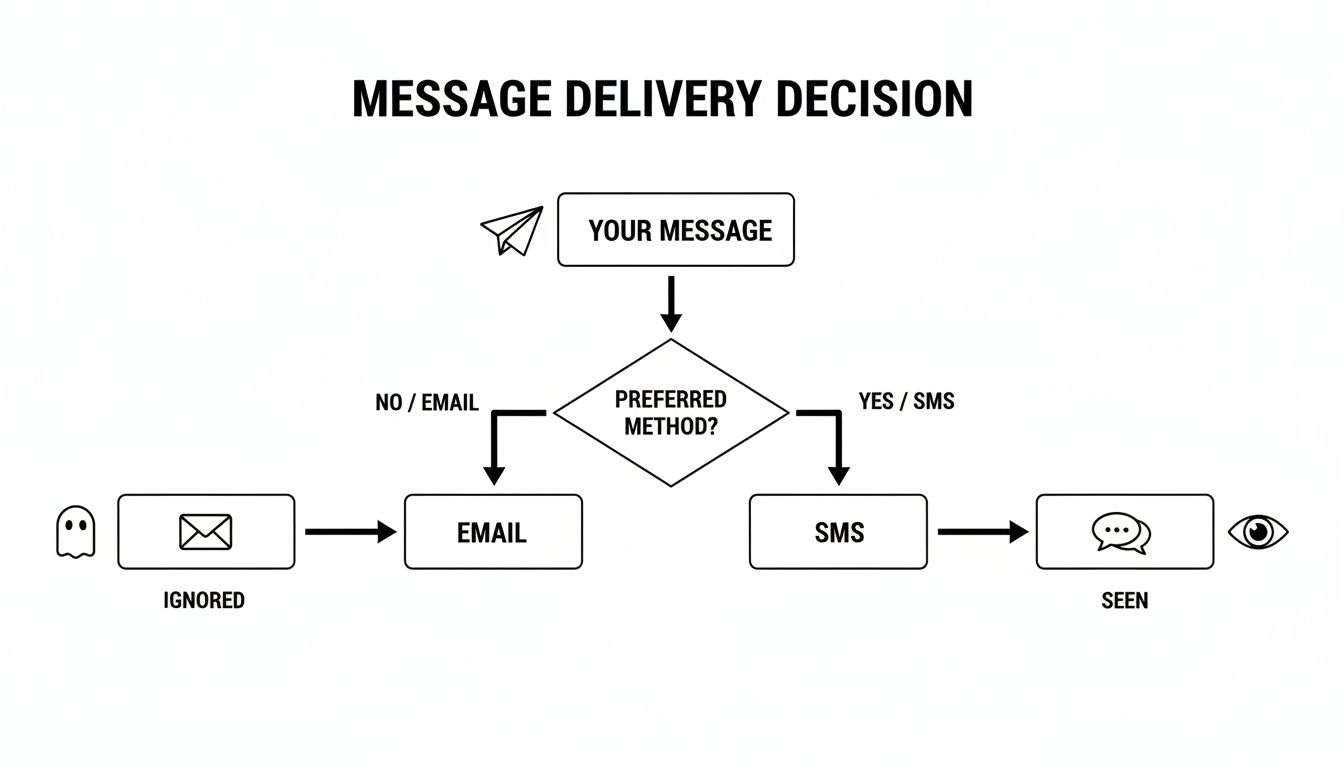
As you can see, emails often sit unread. But a text message? That gets seen. Every time. This puts a lot of power in your hands, so let's make sure you're using it correctly.
The classic SMS message is all about its 160-character limit. Some people see that as a restriction, but I see it as a feature. It forces you to be brutally efficient with your words. There’s no room for fluff, just the core message.
This makes SMS the undisputed champion for a few key jobs:
Use SMS when your message is urgent, your call to action is simple, and your primary goal is immediate attention. That character limit isn't a bug; it's a feature that demands clarity.
But what happens when 160 characters and plain text just won’t cut it? That’s where MMS shines. Standing for Multimedia Messaging Service, MMS lets you break free and send images, GIFs, short videos, and even longer blocks of text.
Suddenly, a simple notification becomes an experience. MMS is what you use when you want to tell a story, grab attention with stunning visuals, or make an emotional connection. It’s about showing, not just telling. To really get a feel for the nuts and bolts, you can learn more about the difference between SMS and MMS messages and how to apply them.
A picture is worth a thousand words, right? Sometimes, it's also worth a thousand clicks. Here’s when you should absolutely go visual with MMS:
Yes, MMS messages cost a little more to send and need a data connection to be viewed, but the impact can be huge. The visual appeal often translates directly to higher engagement and a stronger brand connection.
To make the decision even clearer, here’s a quick-glance table to help you decide which format best aligns with your goals.
Use this table to decide which messaging format best aligns with your campaign goals, budget, and desired customer experience. See the strategic trade-offs at a glance.
| Feature | SMS (Short Message Service) | MMS (Multimedia Messaging Service) |
|---|---|---|
| Best For | Urgent alerts, reminders, simple CTAs, confirmations | Brand storytelling, product showcases, promotions, visual impact |
| Content | Text-only, up to 160 characters, links | Images, GIFs, short videos, audio, longer text |
| Primary Goal | Immediacy, high deliverability, clear action | Engagement, emotional connection, brand building |
| Cost | Lower cost per message | Higher cost per message |
| Reach | Universal; works on all phones | Requires a smartphone and data/Wi-Fi |
| Example Use | "Your table is ready." or "24-hr flash sale! Code: SAVE50" | Sending a vibrant photo of a new product or a GIF for a holiday |
Ultimately, choosing between SMS and MMS isn't about picking a "better" option—it's about picking the right option for the message you want to send and the action you want to drive. Get this first step right, and you're well on your way to building a powerful SMS and MMS messaging strategy.
Sending a text feels instant, right? But behind that simple tap of a button, a whole lot has to go right to make sure your message actually lands in your customer's inbox—legally and reliably.
Just hitting "send" on a marketing text isn't the full picture. You've got to build your entire program on two solid pillars: compliance and deliverability. Getting this right is non-negotiable. It protects your business and makes sure all your hard work doesn’t just vanish into thin air.
Think of it like this: compliance is the solid foundation of your house, and your deliverability strategy is the blueprint. Without both, the whole thing is at risk of falling apart before you even get started.
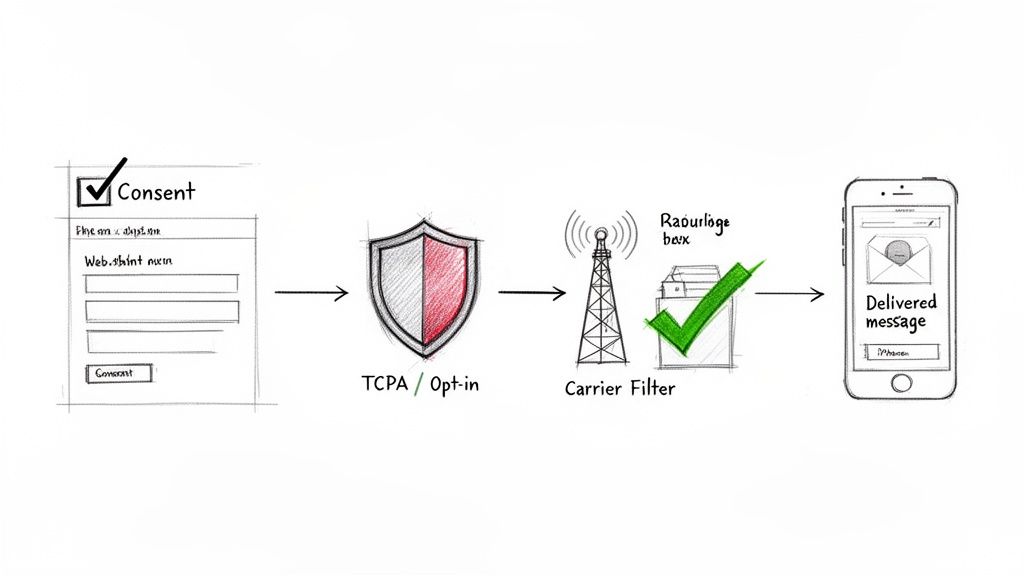
The number one rule in the world of business texting is the Telephone Consumer Protection Act (TCPA). This law is simple: you absolutely must get express written consent before you send marketing texts. It's there to protect people from spam, and the fines for ignoring it are no joke.
So, what does "express written consent" actually mean? It doesn't mean you need a pen-and-paper signature. It just means you need a clear, documented record of someone giving you the thumbs-up to text them.
Here are a few proven ways to get that consent:
The key is to be completely transparent. Your request can't be buried in the fine print. It needs to be crystal clear about what kinds of messages they're signing up for. Never, ever assume you have permission.
Getting consent is step one. Step two is making sure your messages actually arrive. Mobile carriers have smart filters that are constantly on the lookout for spam. If your messages raise any red flags, they get blocked.
This is where things like carrier filtering and A2P 10DLC registration become critical.
A2P 10DLC (Application-to-Person 10-Digit Long Code) is now the industry standard for business texting. When you register your brand and your campaigns, you're essentially telling the carriers, "Hey, I'm a legitimate business sending messages people asked for." This one step can dramatically boost your deliverability and how many messages you can send per second. If you really want to get into the weeds, understanding the essentials of 10DLC compliance is a must.
If you're in the healthcare space, the rules get even tighter. The Health Insurance Portability and Accountability Act (HIPAA) has strict guidelines for handling patient information.
While sending something like an appointment reminder is usually okay, you have to use a platform that offers HIPAA-compliant security. This protects sensitive patient data from being exposed.
These platforms are built with features like end-to-end encryption and secure data storage, making sure any Protected Health Information (PHI) stays private. It lets you communicate effectively with patients without risking a data breach or massive fines.
Trying to manage opt-ins, opt-outs, and all the compliance rules by hand is a recipe for a headache—or worse, a lawsuit. A modern messaging platform like Call Loop automates all of this for you.
While SMS and MMS are your workhorses, it’s smart to see how other channels can fit into your strategy. For example, you might explore creating a WhatsApp link to instantly connect with your audience. You could even layer in ringless voicemail to drop a personal audio message without making their phone ring. It’s all about building a well-rounded outreach plan that respects both customer preferences and the rules of the road.
Alright, knowing the difference between SMS and MMS is a great start. But the real magic happens when you put that knowledge to work. The best sms and mms messaging campaigns aren’t generic; they’re built for a specific industry with a clear goal in mind.
Let's move from theory to action. This is where we break down proven campaign ideas you can steal and adapt for your own business, whether you're in retail, services, or healthcare. I’ll show you exactly when to use SMS and when an MMS will get you better results.
For anyone selling products online or in a store, text messaging is your direct line to driving sales and keeping customers coming back. It completely bypasses the chaos of email inboxes and noisy social media feeds, putting your message right where your most loyal customers will see it.
Here are two campaigns that just flat-out work:
The Abandoned Cart Nudge (SMS): This one is a classic for a reason. A customer loads up their cart and then…poof. They’re gone. A simple, automated text a few hours later can be the gentle nudge they need. The key is to be helpful, not pushy.
The VIP Product Drop (MMS): Got a hot new product line coming? Give your best customers the first shot at it. A plain text is good, but an MMS turns a simple announcement into an exclusive event.
If you run a service-based business—think gyms, salons, or consulting—sms and mms messaging is your secret weapon for cutting down on admin work and keeping your clients happy. This is less about flash sales and more about creating smooth, personal communication.
Here are a few essential campaigns to set up:
Appointment Reminders (SMS): No-shows are a killer for service businesses. An automated SMS reminder sent 24-48 hours before an appointment is one of the single best ways to make sure your clients show up.
"We Miss You" Campaigns (MMS): Haven't seen a client in a few months? A friendly MMS can be the perfect way to win them back. Send a picture of your smiling team or that shiny new piece of equipment you just got. Show them what they're missing!
The Personal Follow-Up (Ringless Voicemail): After a new client's first visit or a big consultation, dropping a ringless voicemail makes a huge impact. It’s personal, but it doesn't interrupt their day. A simple, "Hey [FirstName], it's [YourName] from [YourBusiness]. It was great meeting you today! Just wanted to follow up and see if you had any questions," builds incredible rapport.
Pro Tip: Don't just pick one. Combine them! Send an SMS reminder two days before the appointment. A week after they visit, drop a ringless voicemail asking how things went. This kind of thoughtful follow-up keeps you top of mind.
In healthcare, communication has to walk a fine line: it needs to be effective, but it absolutely must be secure. Using a HIPAA-compliant messaging platform is non-negotiable for sending things like appointment reminders or follow-up care without risking patient privacy.
Here are two safe and powerful ways to use it:
Post-Visit Instructions (SMS): It's easy for patients to get overwhelmed and forget important instructions after an appointment. A secure, simple SMS that links them to their patient portal for the details is a lifesaver.
Proactive Wellness Tips (MMS): Help your patients stay healthy with periodic wellness tips. An MMS with a clean, simple graphic about the benefits of hydration or daily stretching is far more engaging than a wall of text.
What if you could leave a personal, heartfelt message for someone without ever making their phone ring? It sounds a little like magic, but it's a real and powerful tool.
While sms and mms messaging are fantastic for quick, text-based updates, there’s another channel that brings a distinctly human touch to the table: ringless voicemail. It’s the perfect partner to your texting strategy, letting you speak directly to your audience in a way that’s personal but never pushy.
The tech is simple. It delivers a pre-recorded audio message straight into a contact's voicemail inbox. Their phone never buzzes or rings, so you aren't interrupting a meeting, family dinner, or deep-focus work session. They find your message when they check their voicemail, on their own time.
A cold call puts someone on the spot and demands an immediate answer. A ringless voicemail drop, on the other hand, feels more like a friendly heads-up.
It’s far less confrontational, which is why listen-through rates are often so much higher. You get the personal warmth of your own voice combined with the convenience of a text message. It's the best of both worlds. This is the go-to method for any message that needs a dose of genuine excitement, empathy, or simple gratitude. Sometimes, just hearing a real voice makes a connection that plain text can't.
Ringless voicemail allows you to be heard without being disruptive. It’s the perfect middle ground between an impersonal text and a potentially inconvenient phone call, making it a valuable part of any outreach sequence.
Once you start layering ringless voicemail into your campaigns, you’ll find all sorts of new ways to connect with people. It works especially well when you mix it with your SMS and MMS efforts to create a complete communication experience. You can dive deeper in our complete guide on what ringless voicemail is and how to use it.
Here are a few powerful ways to put it to work:
This is where the real power comes alive. When you automate it.
Using a platform like Call Loop, you can drag and drop ringless voicemail drops right into your automated sequences. Imagine a new contact gets a welcome SMS, then an MMS with a cool graphic two days later, and finally, a personal voicemail from you the day after that.
This multi-channel approach makes sure your message gets through by hitting people on different platforms with different formats. By adding the human element of your voice to your sms and mms messaging strategy, you’ll build much stronger relationships and drive way more action.
Sending messages one by one is a surefire way to burn out. It just doesn't scale. The real magic happens when you build an automated system that engages customers around the clock, so you’re not chained to your phone.
This is about moving beyond manual sends and creating smart workflows. By connecting your messaging platform to the other tools you already use, you can build a powerful outreach machine that responds to customer actions instantly.
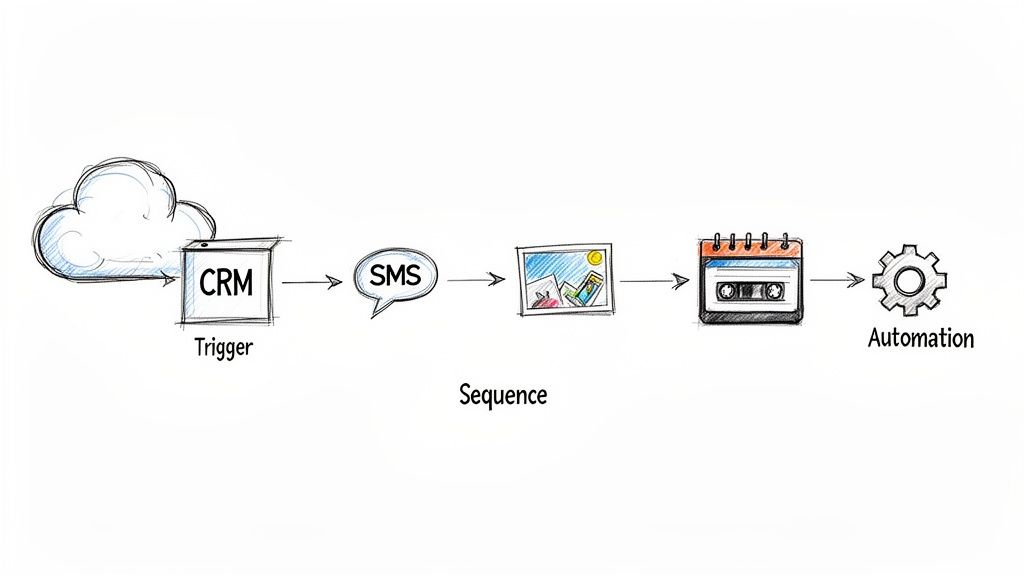
A drip campaign is simply a series of pre-written messages sent out automatically. But the best ones don't just stick to SMS. They layer in different channels to create a much richer experience that really grabs attention.
Think about what this could look like for a brand-new lead:
This multi-channel approach keeps your brand top-of-mind without becoming annoying. Each message uses a different format, making your follow-up feel dynamic, not robotic. And the engagement numbers back this up.
Looking ahead, SMS marketing's projected 98% open rate in 2026 solidifies its role as the premier channel for immediate engagement. With average click-through rates of 19-28% and response rates of 45%, its effectiveness is clear.
The real key to automation is hooking your messaging platform directly into your Customer Relationship Management (CRM) system. Platforms like Call Loop are built to integrate with tools like HubSpot, Keap, and ActiveCampaign, letting you fire off messages based on what your customers are actually doing.
Once your systems are talking to each other, you can automate outreach based on all sorts of triggers:
This creates a responsive system that sends exactly the right message at the perfect time. Going beyond just text, integrating your messaging with broader sales automation software can streamline your entire process, from that first touchpoint all the way through to the final follow-up.
Just because it’s automated doesn’t mean it has to sound like a robot wrote it. By using merge tags or custom fields, you can pull data straight from your CRM and pop it right into your messages.
Think about including a customer's first name, the product they were looking at, or their last appointment date. You can insert these details directly into your SMS, MMS, or even your ringless voicemail scripts.
This is how you send thousands of messages that each feel like a one-on-one conversation. It's the perfect blend of efficiency and personal connection, letting you build real relationships with your audience as your business grows.
As you get started with SMS and MMS, you’re bound to have a few questions. It happens to everyone. Here are the answers to the most common ones we hear, giving you the clarity to build your next campaign with confidence.
Imagine sending a voicemail directly to someone's inbox, but their phone never actually rings. That's ringless voicemail in a nutshell. It’s a way to deliver a pre-recorded audio message without interrupting someone's day.
Think of it as a powerful companion to your texting strategy. You might send an SMS for a quick alert, but a ringless voicemail drop adds a human touch that text can't always match. It's perfect for a personal thank you, a special announcement, or any message where the warmth of your voice makes a real difference.
You can, but it's not what you think. When you text a landline, most carriers have a "text-to-landline" service that converts your SMS into a computerized voice message and reads it out loud.
Frankly, the experience is clunky and often confusing for the person on the other end. Your best bet is to use a number validation service before sending. This ensures you're only texting actual mobile numbers that can receive your message the way you intended.
Key Takeaway: While you can technically send a text to a landline, it won't land as a text. Stick to verified mobile numbers for your SMS and MMS campaigns to get the best results and not waste your sends.
The cost for SMS and MMS messaging will always depend on your platform and the type of message you're sending. As a general rule, SMS messages are the cheaper option. They're just text, so they use very little data.
MMS messages, on the other hand, cost a bit more because they carry media like images, videos, or GIFs. These files are larger and require more network muscle to get delivered. Most platforms will charge you on a per-message basis, so it's a good idea to account for this difference when you're planning your campaign budget.
Ready to automate and scale your outreach with SMS, MMS, and ringless voicemail? Call Loop gives you all the tools you need to build powerful, compliant, and personalized campaigns that drive results. Get started with Call Loop today!
Chris Brisson
Chris is the co-founder and CEO at Call Loop. He is focused on marketing automation, growth hacker strategies, and creating duplicatable systems for growing a remote and bootstrapped company. Chat with him on X at @chrisbrisson


Trusted by over 45,000 people, organizations, and businesses like


