
See a Demo
You're just one step away from seeing Call Loop in action.
Enter your information below to watch a demo right now.

You're just one step away from seeing Call Loop in action.
Enter your information below to watch a demo right now.

An SMS auto respond is a pre-written text message that automatically fires off when a specific trigger happens—think a missed call or someone filling out your lead form. It’s a simple piece of tech that guarantees every single customer gets an immediate acknowledgment, which is huge for keeping them engaged and making sure you don't lose opportunities, 24/7. Frankly, it's a foundational tool for any business trying to keep up with today's need for speed.
In a world where speed is the name of the game, making a customer wait is a massive business risk. An SMS auto respond system has gone from a "nice-to-have" to a must-have part of communicating with customers. It’s the digital version of a friendly hello when someone walks into your shop—it lets them know you see them and you value their time.
This isn't just about being polite; it's about seizing the moment.
Picture this: a potential customer fills out your contact form at 10 PM. Without an auto-responder, they're met with silence until your team clocks in the next morning. By then, they’ve likely already moved on to a competitor who got back to them faster.
Every missed call or unanswered form submission is a lead slipping through your fingers. A simple, automated text that says, "Hi [Name], we got your message and will call you back shortly!" instantly closes that gap. It confirms you received their inquiry, sets expectations, and keeps that lead from going cold.
This one small action does more than just save a single lead. It starts building a reputation for being responsive and on top of your game from the very first touchpoint.
Automated SMS workflows are a total game-changer, boosting efficiency by a whopping 25% for businesses that use them. With 5.5 billion people sending and receiving texts daily, trying to handle it all manually is just not an option. Auto-responders jump in right away, which lines up perfectly with how people behave—after all, 82% of us read texts within five minutes.
Beyond the customer-facing wins, a smart SMS auto respond strategy gives your team back their most valuable resource: time. Instead of getting bogged down with manually replying to the same old questions—like appointment confirmations or business hours—automation handles the grunt work.
This frees up your people to focus on solving complex problems and building real relationships with customers.
For example, an automated system can handle things like:
Let's take a look at the core benefits you can expect when you put SMS autoresponders to work.
Ultimately, implementing SMS autoresponders creates a more streamlined, responsive, and customer-focused operation.
And it doesn't have to stop with just SMS. When you start integrating other forms of automation, like AI receptionist solutions, you can really scale your ability to provide instant support. By automating those first crucial touchpoints, you build a business that runs on speed and reliability.
A great SMS autoresponder starts long before you ever type out a message. To build a system that works, you first need to understand the key moments—or triggers—in your customer's journey where an instant, automated text can make the biggest impact.
Think about all the different ways people connect with your business. A new lead from your website, a missed call after hours, or a customer texting a keyword like "PRICING" are all unique triggers. Each one is a chance to engage, and each needs a specific response to feel genuinely helpful, not robotic.
The whole idea is to automate the right moments. Start by sketching out your customer touchpoints. If you run an e-commerce store, a huge trigger is an abandoned cart. For a local plumber, it’s almost always a missed call, which usually means someone has an urgent problem.
Here are a few common scenarios to get you started:
This simple flow shows how an initial inquiry gets an immediate acknowledgment, leading directly to a happy customer.
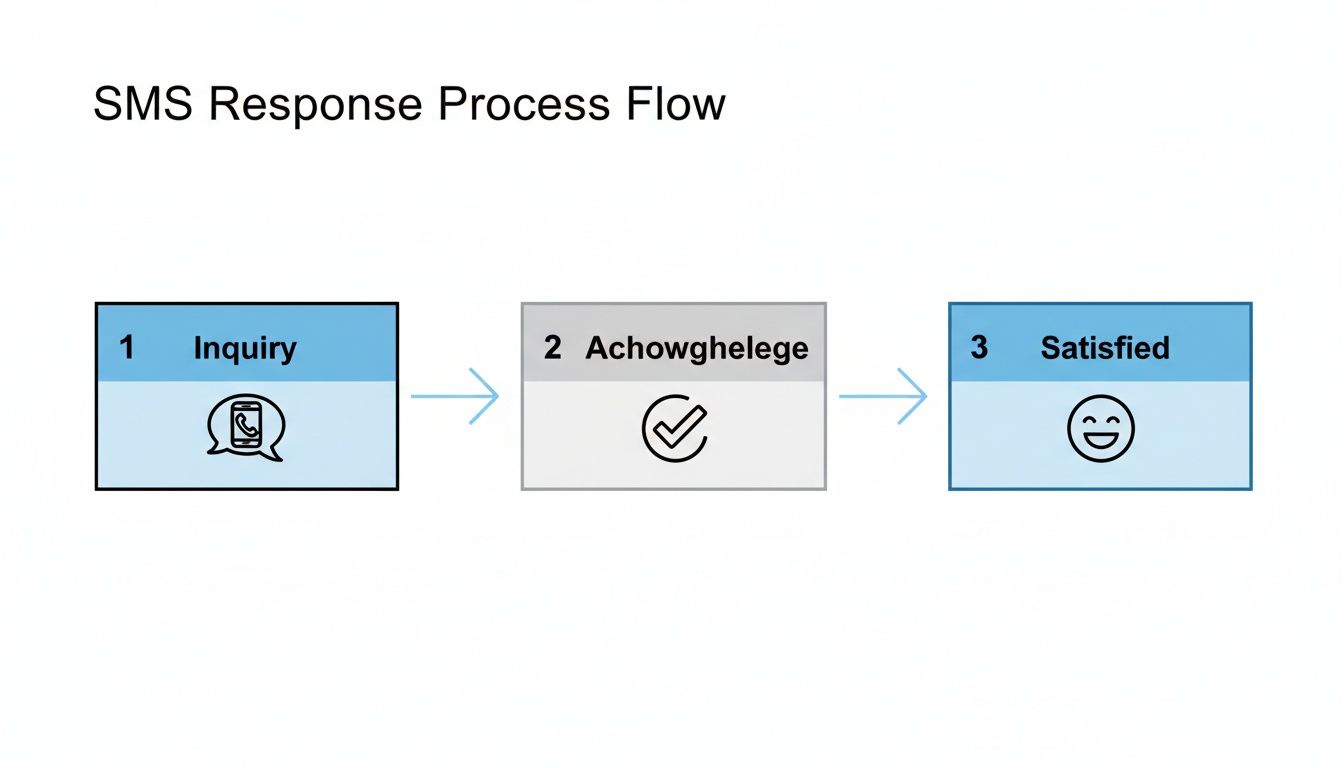
What this visual really drives home is that the speed of your first response sets the tone for the entire interaction.
Once you've locked down your triggers, it’s time to plan the conversation. A single auto-response is good, but a well-thought-out sequence is way better. This is how you take a contact from their very first interaction all the way to becoming a loyal customer.
For instance, a new lead for a real estate agent might get a sequence like this:
An effective SMS auto respond strategy isn't just about sending one message. It's about designing a conversation that guides the user, answers their immediate needs, and gently moves them to the next step in your process.
Building these sequences means thinking one step ahead. If a customer texts "INFO," your auto-response shouldn't just be a wall of text. It should give a short answer and then ask a clarifying question to keep the conversation moving. Getting familiar with the wider concept of content automation can give you a solid framework for thinking through these automated interactions.
By carefully planning your triggers and mapping out these multi-step flows, you’re creating an automated system that actually feels personal and attentive. To really dive deep into building these sequences, you can learn more about creating effective marketing automation workflows.
Let's be honest, a generic "We've received your message" is a dead end. It’s the digital equivalent of a shrug. An effective autoresponder doesn’t just confirm receipt; it opens a door, makes the customer feel seen, and tells them what's coming next.
The real secret is to blend professionalism with a genuinely human touch. Your goal is to make your automated texts feel less like a robot and more like a helpful first point of contact. This starts with nailing the tone. Your message should echo your brand's voice—whether that's fun and casual or straightforward and direct—while always being helpful. You want to build immediate trust, not sound like some sketchy spam message that puts people on guard.
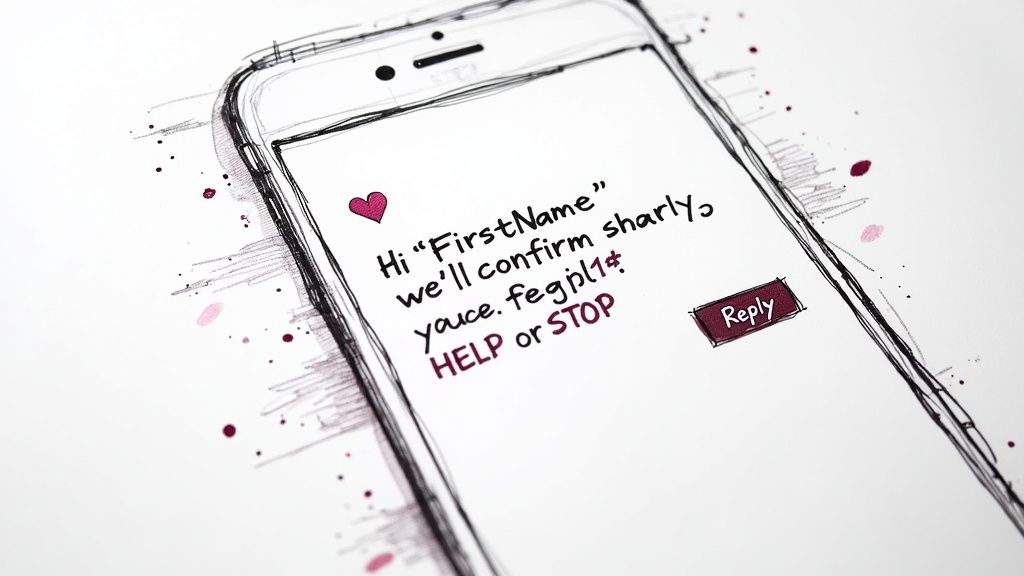
The single easiest win to make an automated text feel personal? Use their name. A simple "Hi [Name], thanks for reaching out!" instantly elevates the message from a generic blast to a one-on-one conversation. It's a small detail that acknowledges them as an individual, not just a number in your system.
After that, every single auto-response needs a clear call-to-action (CTA). Seriously, don't leave them hanging. Tell them exactly what to do or what to expect. A vague message just creates confusion, but a sharp CTA provides direction and keeps the conversation moving.
Here are a few CTA examples I've seen work well:
Each one sets a clear expectation and gives the person a simple next step. You're turning a passive wait into an active engagement.
The most successful automated messages are concise, personal, and purposeful. They answer the user's immediate, unspoken question: "What happens next?"
Having a playbook of proven templates saves you from reinventing the wheel every time. You can grab these, tweak them for your own business, and know your messaging will be consistent and effective right out of the gate.
To give you a head start, I've put together a quick comparison of common triggers and the message templates that just plain work for them.
By crafting messages that are personal, direct, and genuinely helpful, your SMS auto respond system stops being a simple notification tool. It becomes a powerful engine for building customer relationships from the very first text.
An instant SMS auto-response is a fantastic first touchpoint, but let's be real—what happens next is what truly counts. If you want to stand out from the digital noise, you need a follow-up game that feels personal and memorable. This is exactly where combining text with other channels can make a huge difference.
By pairing your automated texts with ringless voicemail drops, you add a genuinely human element to your follow-up. Think about it: a new lead fills out your form. They get an immediate text confirming you received their info. Then, maybe a day later, a perfectly timed, personal-sounding voicemail lands in their inbox without their phone ever ringing. It’s not intrusive, but it's incredibly effective.
The whole point is to create a seamless flow that feels attentive, not robotic. This multi-channel approach helps you connect with people where they're most comfortable. Some folks are all about text, while others are more compelled by a voice message. Using both simply covers your bases.
Here’s what that looks like in the real world for a high-value lead:
This one-two punch is powerful because it gives the lead multiple, easy ways to respond. It also makes your follow-up feel much more dedicated and personal.
By layering ringless voicemail on top of your SMS auto respond sequence, you create a richer, more persistent follow-up strategy. This shows leads you’re serious about connecting without being pushy.
Now, this strategy isn't for every single situation. It’s most effective when the stakes are high and a personal touch can be the deciding factor. Think about using it for high-value leads who have shown strong intent, like someone asking for a quote on a significant purchase.
It's also fantastic for critical customer updates, like confirming a major service appointment or following up on an important support ticket. The combination of a quick text for instant info and a voicemail for a more detailed, personal touch builds confidence and shows you’re on top of things.
To get started, you can check out our complete ringless voicemail for business guide, which walks you through the entire setup and best practices. This approach turns a simple automated response into a dynamic, multi-step engagement that actually drives action.
Automation is an incredible tool, but when you're setting up an sms auto respond system, using it responsibly is everything. The bedrock of a solid texting strategy isn't just about sending the perfect message; it's about sending it to the right people, the right way.
Getting this part wrong is more than just annoying for your customers. It can lead to some seriously hefty fines and do real damage to your brand’s reputation.
The whole game begins and ends with consent. You absolutely, positively must have explicit, provable permission from someone before you send them automated marketing texts. This is a core requirement of the Telephone Consumer Protection Act (TCPA), and frankly, it’s the golden rule of communicating with respect.
Now, "express written consent" doesn't mean you need an actual pen-and-paper signature. This can be as simple as a digital form, a clearly labeled checkbox on your website, or even when someone texts in a specific keyword.
The important thing is that the person knowingly and clearly agrees to get automated messages from you.
Just because a customer's phone number is sitting in your database doesn't give you a green light. They need to take a clear, affirmative action to opt-in. A well-documented consent process is your best defense against complaints and ensures you're building a list of people who actually want to hear from you. For a deeper dive, our guide on how to properly handle a text message opt-in text is a fantastic resource.
Trust is the currency of modern marketing. Every compliant action you take—from securing clear consent to honoring opt-outs instantly—is an investment in that trust. It shows customers you respect their inbox and their choices.
Getting permission to start the conversation is one half of the equation. The other half is providing a clear, easy way to end it.
Every single automated message you send out must include simple instructions for opting out. The industry standard is universally understood: "Reply STOP to unsubscribe."
This isn't a friendly suggestion; it's a hard requirement. Your system has to be set up to automatically recognize keywords like "STOP," "END," or "UNSUBSCRIBE" and immediately pull that contact from your messaging list. Failing to honor an opt-out request is a serious violation, so don't mess around with this one.
Here’s what a compliant message footer looks like in the wild:
Making sure your system is fully compliant isn't just about dodging legal trouble. It's about building a foundation of trust. When your customers know they’re in the driver's seat, they are far more likely to welcome your messages instead of immediately seeing them as spam. This approach elevates your SMS auto respond strategy from a simple tool into a highly effective—and respected—communication channel.
Getting an SMS autoresponder set up is a solid start, but the real growth happens when you start digging into the numbers. To figure out if your strategy is actually working, you have to look beyond basic metrics and zero in on the data that truly impacts your business. It's about moving past "Did they open it?" and asking the more important question: "Did they take the action I wanted them to?"
This is how you turn a simple automation into a powerful engine for your business. By keeping a close eye on what's working and what's falling flat, you can make small, data-driven tweaks that add up to massive improvements in how people engage and convert.
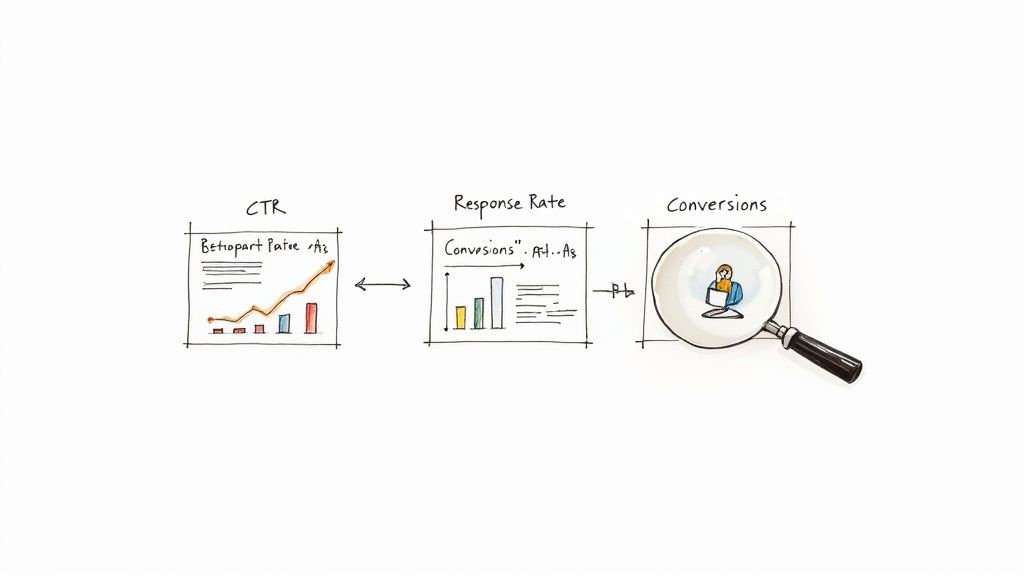
While every business has its own unique goals, a few core metrics will always give you a clear snapshot of how your automated texts are performing. I always recommend starting with these three to get a solid baseline of user behavior and spot your first opportunities to optimize.
Click-Through Rate (CTR): If your message has a link, this is your north star. A high CTR is a dead giveaway that your copy is compelling enough to get someone to take that next step, whether it's checking out a product or booking a demo.
Response Rate: This one’s simple—how many people are actually replying to your automated message? A healthy response rate means your message feels conversational and successfully invites a two-way dialogue, which is exactly what you want.
Conversion Rate: This is the bottom line. It tracks how many people completed the ultimate goal, like making a purchase, scheduling an appointment, or signing up.
The absolute best way to improve these numbers is through relentless testing. A/B testing, or split testing, is just sending two slightly different versions of a message to see which one gets better results. It’s a straightforward way to take all the guesswork out of your strategy.
The golden rule is to change only one thing at a time. This is critical. If you change both the opening line and the call-to-action, you’ll never know which change actually made the difference.
Here are a few elements I always test first:
A great SMS autoresponder strategy isn’t something you set and forget. It’s a living system that you constantly refine. Regular, disciplined testing is how you unlock its true potential and make sure your messages always land perfectly.
By regularly diving into your campaign analytics and running these simple tests, you can start making informed decisions that directly grow your business. You’ll learn what really connects with your audience, letting you fine-tune your messaging, timing, and offers for maximum impact. This ongoing cycle of measuring and improving is what ensures your automated system evolves right alongside your business and your customers.
Ready to build, measure, and optimize your own multi-channel outreach? Call Loop provides the tools you need to automate SMS, ringless voicemail, and voice broadcasts, all while tracking the metrics that matter. Start your free trial today and turn your communications into conversions.
Chris Brisson
Chris is the co-founder and CEO at Call Loop. He is focused on marketing automation, growth hacker strategies, and creating duplicatable systems for growing a remote and bootstrapped company. Chat with him on X at @chrisbrisson


Trusted by over 45,000 people, organizations, and businesses like


