
See a Demo
You're just one step away from seeing Call Loop in action.
Enter your information below to watch a demo right now.

You're just one step away from seeing Call Loop in action.
Enter your information below to watch a demo right now.

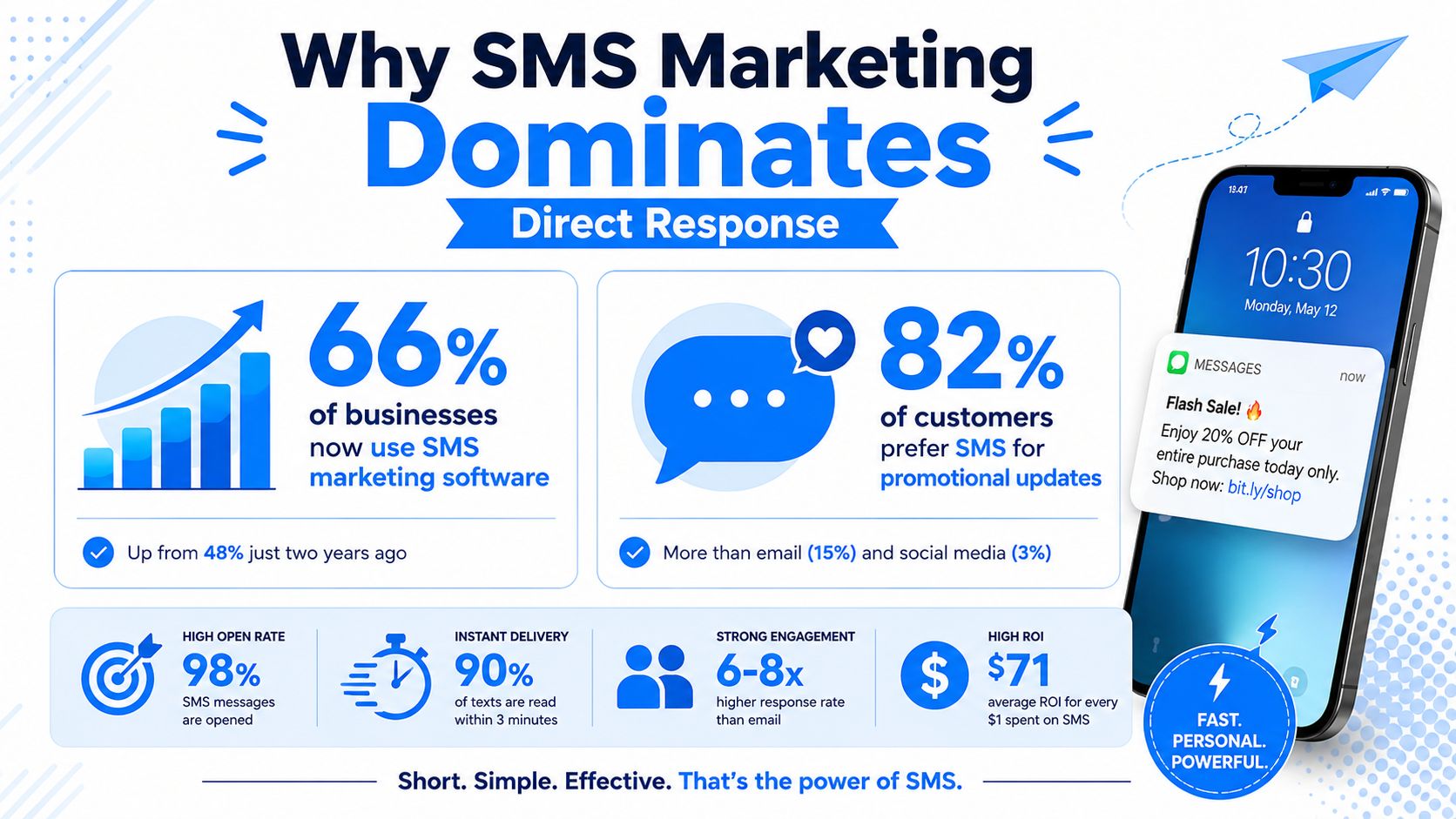
SMS marketing stopped being a side channel the moment it became a mainstream habit. By 2025, 66% of businesses were using SMS marketing software, 67% were increasing their SMS budgets, and 84% of consumers had opted in to receive texts from at least one business, which tells you this isn't experimental anymore, it's operational infrastructure SimpleTexting statistics. The catch is that scale doesn't guarantee delivery, and delivery doesn't guarantee revenue. Many organizations still lose money because they treat texting like a louder email blast instead of a channel governed by consent, timing, and carrier rules.
The reason SMS works so well is straightforward. Messages land in a place people check quickly, and the response window is short. That immediacy is why SMS outperforms channels that rely on delayed attention. When a customer needs an order update, an appointment reminder, or a time-sensitive offer, text is often the fastest path to action.
That speed is useful because the channel can drive response fast, but the mechanics still matter. Short messages perform better because they fit the way people read on a phone, and the strongest campaigns send to a narrow audience that expects the text. If the message is long, vague, or misaligned with the recipient's consent, the channel loses the advantage it should have.
Practical rule: If a text would feel crowded on a lock screen, it is probably too long for SMS.
Carrier filtering is the part many teams miss. A message can be well written and still underperform if the sender reputation is weak, the opt-in trail is unclear, or the cadence looks promotional enough to trigger complaints. The channel's direct-response strength depends on more than copy, it depends on whether the message clears the checks that carriers and users apply before they trust it.
Generic promotions are where many SMS programs go wrong. Broad blasts tend to create opt-outs faster than revenue, especially when the sender has not documented consent or matched the offer to a real customer need. The better use case is narrower: send the right message to the right segment, at the right moment, with a clear reason to act.
That is also why SMS works best as part of a broader communication system rather than as a standalone push channel. Teams that use email, SMS, and other messaging workflows together can control timing, reduce fatigue, and keep the channel from being overused. If you need to compare those options, browse customer communication software and look at how different platforms handle consent, routing, and message orchestration.
SMS keeps growing because it still solves a direct problem. When the message has permission, timing, and a clear path to response, it reaches people faster than most other channels and gets them to act without making them hunt for the next step. That is why it dominates direct response.
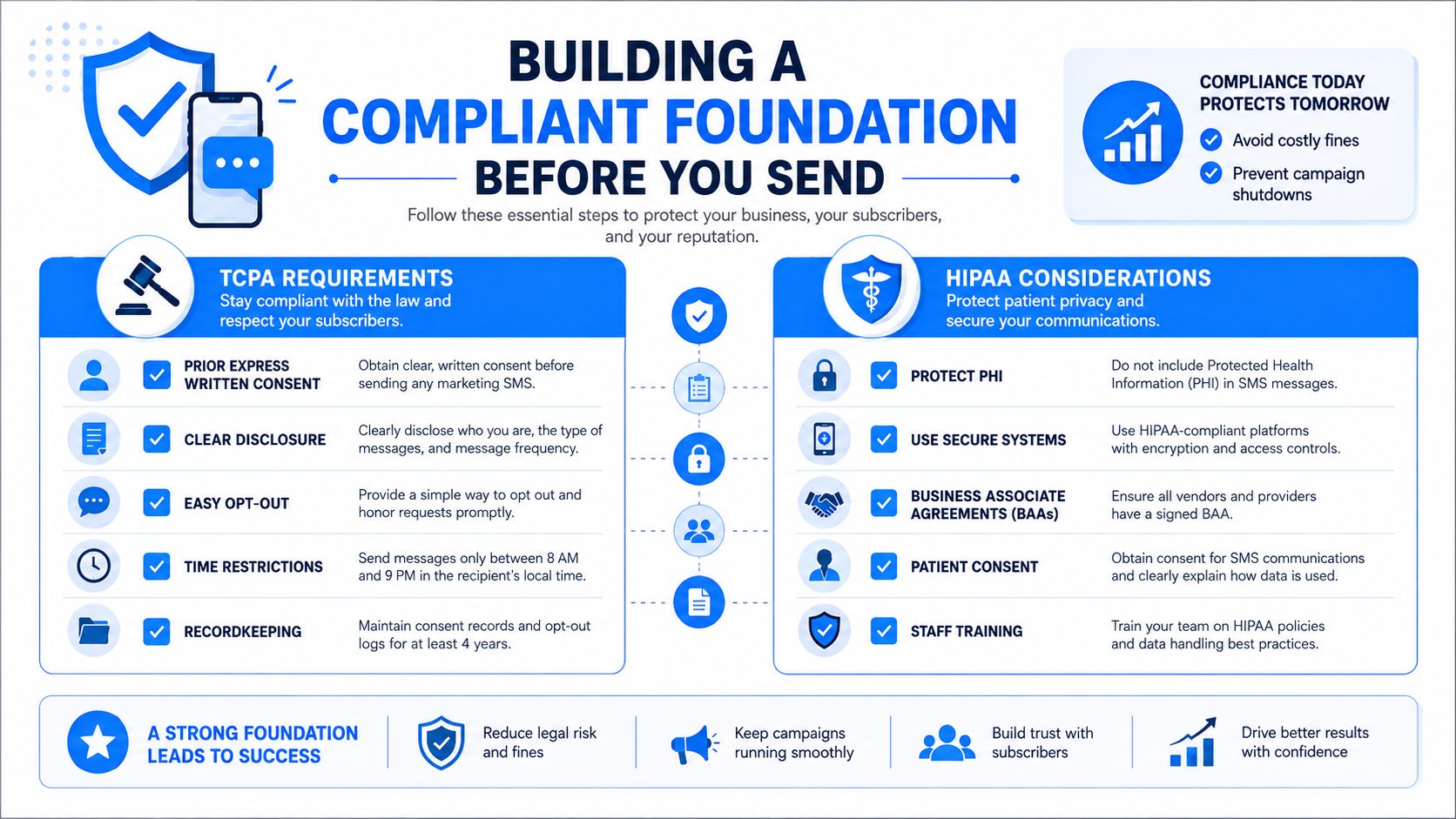
Compliance is the operating system for SMS. If you cannot prove consent, identify the sender, and give people a clear opt-out, the campaign can fail before performance even enters the conversation. For a practical checklist format, keep this SMS compliance checklist open while you build your flow. For another perspective on how to structure the basics, see CartBoss on SMS marketing rules.
The cleanest opt-in flows rely on a clear affirmative action, such as checking a box or texting a keyword, and they preserve evidence of that consent. That matters because consent is not a vague marketing preference, it is the proof that the recipient agreed to receive messages from you TrueDialog compliance guide. At sign-up, disclose what kind of messages people will receive and how often, then store that record in a place your team can retrieve later.
If you work in healthcare, build HIPAA caution into the workflow from the start. Call Loop is one platform that supports HIPAA-compliant communications for providers, which matters when patient messages and sensitive data are part of the workflow. For any business, especially regulated ones, the goal stays the same, make the permission trail obvious and auditable.
Recipients should be able to tell who texted them, what the message is about, and how to stop future texts. Several guidance sources recommend including the business name, clear opt-out instructions such as STOP, and contact or support details, with some also recommending terms and privacy links plus the phrase “Msg & Data rates apply” Constant Contact SMS best practices. That is not decorative legal language. It reduces confusion, complaint risk, and support friction.
A consent log that includes timestamp, source, and disclosure text saves far more pain later than any apology email.
Promotional texts should also respect local quiet hours. Guidance commonly recommends sending during daytime business hours, often around 8 AM to 9 PM local time, and avoiding before 9 AM or after 8 PM in the recipient's local time in some cases Attentive strategy guide. That scheduling discipline helps both with compliance and with list quality, because nobody wants promotional texts waking them up.
Channel orchestration matters here too. SMS, email, and other outbound workflows should share consent records, suppression rules, and timing logic, or you end up sending the same person too many messages from too many systems. Carrier filtering also punishes sloppy identity and poor consent documentation, so clean records are not just a legal safeguard, they are part of deliverability. The same mechanics show up in other channels as well, and the compliance patterns are explained well in CartBoss on SMS marketing rules.
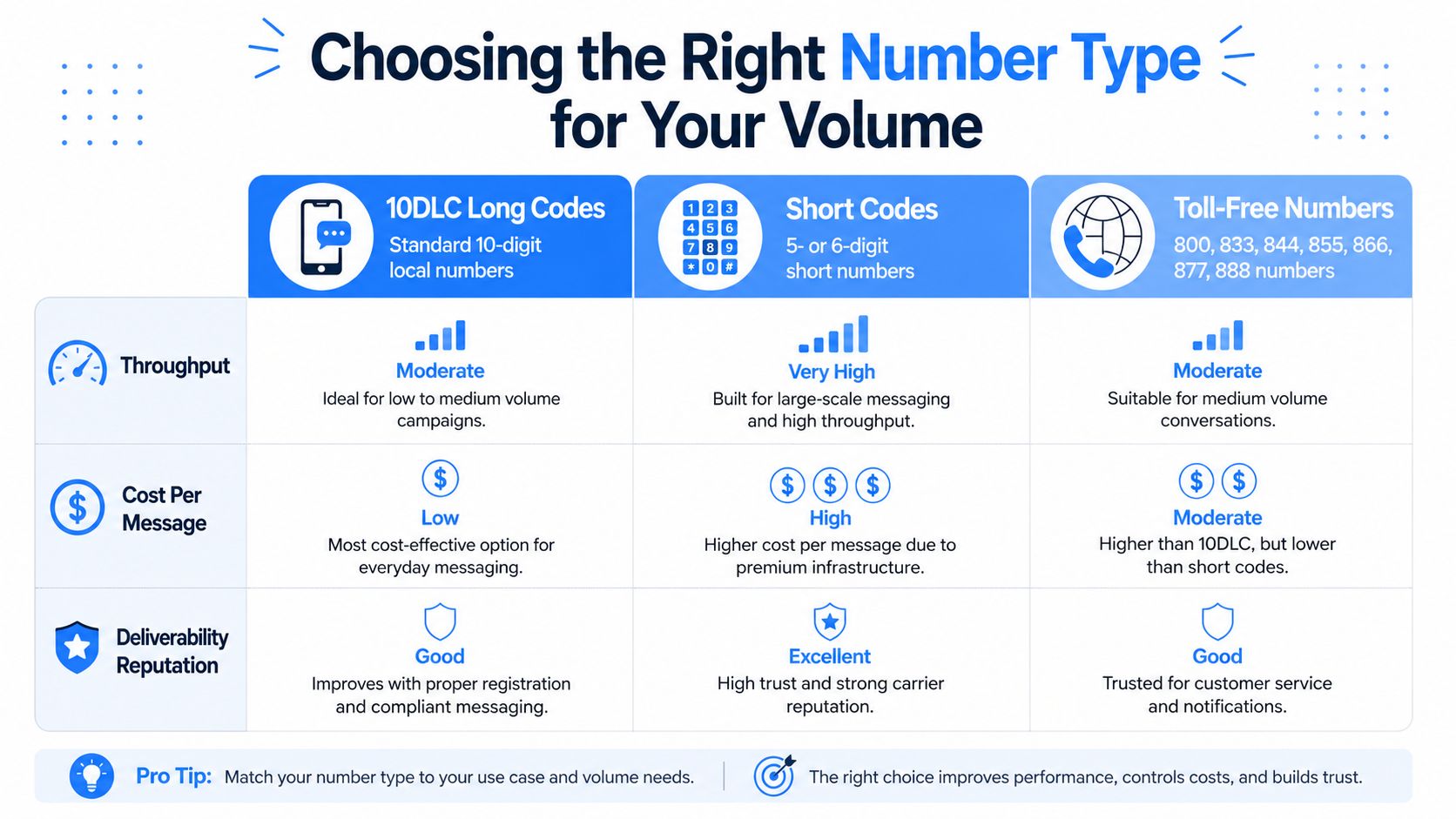
The number you send from affects throughput, compliance friction, and how carriers classify your traffic. Business SMS now runs through A2P 10DLC registration for long-code sending in major U.S. markets, while high-throughput campaigns often use short codes, with the trade-off sitting between cost and speed. If the number type does not match the send pattern, filtering problems usually show up later as a deliverability issue, not a channel issue.
10DLC long codes are the default for compliant business messaging when you want ordinary-looking numbers and lower-cost sending. They require carrier vetting, but they are built for application-to-person traffic, which is where most marketing and lifecycle texts live.
Short codes fit high-volume broadcast work and the kind of throughput that regular long codes cannot support for sustained campaigns. They carry a higher setup burden, but that cost buys capacity and a cleaner path for heavy sends. If you want a closer look at how short codes work in SMS, the mechanics are straightforward once you separate them from everyday long-code use.
Toll-free numbers sit in a different lane. They can work well for service messaging and some marketing use cases, but they are not usually the first choice for brands that need the strongest broadcast infrastructure. The right answer depends on send volume, operational tolerance, and how much vetting you are prepared to maintain.
| Number type | Best fit | Main trade-off |
|---|---|---|
| 10DLC long code | Everyday business messaging, segmented campaigns, drip sequences | Lower-cost structure, but vetting and registration matter |
| Short code | Large-volume campaigns and fast broadcasts | Higher setup burden, but built for throughput |
| Toll-free number | Service-oriented messaging and mixed use cases | Familiar format, but not always ideal for heavy promotions |
If your team is sending triggered campaigns, appointment reminders, or segmented promotional texts, 10DLC usually fits the workflow better. It gives you an ordinary local or national sending identity without forcing the campaign into a bulk-broadcast setup that does not match the message. If you are running broad product launches or large-scale event alerts, short code infrastructure starts to make more sense.
The point is not to chase the flashiest number type. It is to align the route with the volume, compliance posture, and send pattern you use.
Generic blasts don't just underperform, they can train carrier systems and subscribers to ignore you. Modern filtering looks at more than copy, it also reflects sender behavior, link reputation, complaint patterns, and how consistently you send to the same audience. That's why segmentation and timing are deliverability tools, not just engagement tools.
The strongest text campaigns use audience segments that map to action. Recent buyers should get different messages from dormant subscribers, and people who clicked a product category should not get the same promotion as first-time opt-ins. That keeps the message relevant enough to reduce opt-out pressure and complaint risk, which matters when carrier systems are evaluating sender quality.
If a subscriber can't see why they got the message, your segmentation is too broad.
Quiet hours also matter beyond the legal side. Sending during the recipient's local daytime is a simple way to avoid unnecessary friction, especially when you're texting across time zones. For practical send-window planning, use send-time optimization guidance as a starting point, then layer your own response data on top.
Trigger-based automation usually beats scheduled blasts because the message lands in context. A cart reminder after a real abandonment, a booking confirmation after a real appointment, or a renewal prompt near a real deadline feels useful instead of intrusive. Scheduled broadcasts still have a place, but they work best when the audience is already segmented and the offer has a clear reason to exist.
A useful cadence rule is to pause when a customer has just converted, then re-enter them through a different workflow later. That cooldown protects the relationship and stops SMS from cannibalizing other channels. It also keeps your audience from seeing the same offer in text, email, and voice all at once.
A second point that gets missed is local consistency. If one segment gets texts at lunch and another gets them late evening, response quality can swing in ways the creative team won't catch. Deliverability is not only about whether the message leaves your platform, it's about whether the recipient sees it as timely and welcome.
The best SMS campaigns feel like the right nudge at the right time, not a brand shouting into a phone. In practice, that usually means the channel does its best work as a high-intent layer, while email handles depth and detail. SMS adds incremental lift when timing matters more than explanation.
Abandoned cart reminders are one of the clearest fits. The shopper already showed purchase intent, and the text just helps them resume the action without digging through a crowded inbox. That's why short reminders with one obvious link usually outperform longer promotional messages, especially when the language feels personal and useful.
Ecommerce teams often make the mistake of pairing the cart text with a second promotion too soon. That creates overlap with email and can make the sequence feel pushy. A tighter approach is to let SMS handle the immediate reminder, then let email carry product detail or objection handling if the shopper still needs it.
Healthcare appointment reminders work for a different reason. They aren't trying to sell, they're trying to reduce missed appointments and make the patient experience smoother. Because the message has a clear utility, it can live alongside email and front-desk reminders without creating the same fatigue risk.
Event organizers use the same logic for attendance boosts and day-of logistics. A short text with a time, location, or final instruction can save an entire event from no-shows or confusion. The key is relevance, not volume.
Post-purchase upsells are where teams often overreach. If the customer just bought, a rushed second offer can feel like pressure instead of service. The better play is to wait for a natural follow-up point, then send something that matches the original purchase, a reorder prompt, a usage tip, or a complementary item.
SMS is strongest when the buyer already raised a hand. If you're inventing urgency, you're usually paying for fatigue.
Ringless voicemail can play a supporting role in some outreach workflows, especially where voice follow-up makes sense after a missed call or a high-value lead. But the same principle applies, use it as a timed, intent-based touchpoint, not as a bulk substitute for thoughtful sequencing. The campaigns that hold up over time are the ones that respect channel differences instead of flattening everything into one broadcast calendar.
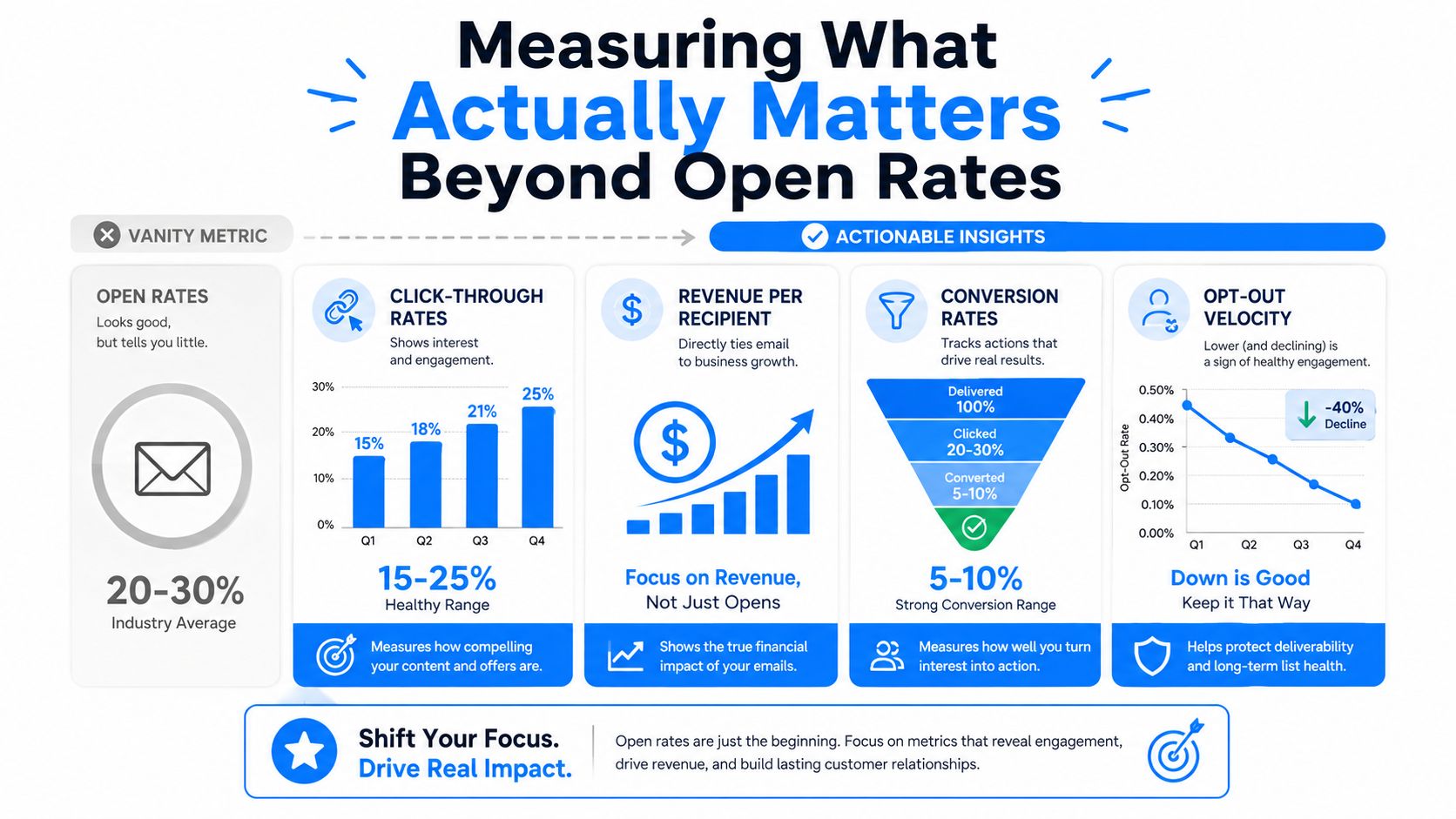
Open rates can make SMS look healthier than it is. A text can be delivered and opened, yet still miss the click, the reply, or the sale. Carrier filtering, consent records, and the way you route messages all shape whether a campaign reaches the inbox cleanly or gets suppressed before it ever has a chance to perform.
Average SMS click-through rates are often strong enough to make the channel look healthy on the surface, but clicks alone still do not prove profit. Focus on clicks, revenue, and opt-outs to understand the true story. Revenue per recipient, conversion rate, and opt-out velocity show whether a campaign drove action or just got attention.
That matters because deliverability problems do not always show up as obvious failures. A message can be technically delivered and still underperform if the offer is weak, the audience is tired, or the content does not match the consent that was collected. A better dashboard measures message-level outcomes, not just send totals.
Use UTM parameters and shortened URLs on every campaign link if you want attribution you can trust. That gives you a clean way to separate traffic by campaign, segment, and send time instead of guessing which message did the work. The same discipline that sits behind how to do performance marketing applies here, and SMS punishes sloppy tracking faster than many other channels.
A simple reporting stack should show delivered messages, unique clicks, conversions, opt-outs, and revenue by audience slice. With that view, you can tell whether a campaign worked because the offer matched the moment, the timing was right, or the list was segmented well enough to avoid waste. It also helps you spot when a sender issue or routing change is hurting performance before the losses spread.
A rising opt-out rate usually points to one of three problems, the audience is too broad, the message has gone stale, or the send cadence is too aggressive. That is a deliverability warning as much as a content warning, because repeated complaints can drag down future inbox placement and make later campaigns harder to trust. Lifecycle value still matters, since a campaign that looks costly on a single send can pay back over repeat purchases if it does not wear the list down.
The best operators keep a scorecard that ties each send to business impact and list health. They do not chase vanity metrics, they use performance, complaint behavior, and revenue together to decide whether a message earned its place in the sequence.
The first month should be about proving the system, not flooding the list. Start with consent, routing, and one or two campaign types that map to a clear business outcome. Once the mechanics are stable, scale the volume.
Build your opt-in flow, define the disclosure language, and decide how you'll store proof of consent. Register the sending path you plan to use, whether that's 10DLC or another approved number type, and make sure your unsubscribe handling is wired before launch. If you're in healthcare or another regulated space, review the message content with the right internal approver before anything goes out.
Set up text-to-join keywords for list growth, then segment the audience by intent, purchase status, or lifecycle stage. Write one welcome text and one transactional or reminder sequence first, because those are the easiest messages to validate. Keep the copy short, include the sender name, and make the opt-out path obvious.
Send a message that has one purpose and one CTA. If you're running a promotion, don't stack it with three competing offers or a paragraph of explanation. Check the response window, reply handling, and any support questions that come in during the first send, because that feedback usually tells you more than a dashboard snapshot.
Look at click behavior, opt-outs, and conversion timing by segment. Tighten the send windows, drop audiences that aren't responding, and keep the sequence focused on triggers that produce real action. If you need a platform that handles text-to-join keywords, scheduling, segmentation, and coordinated messaging workflows, Call Loop is one option built for that kind of outbound setup.
Call Loop gives teams a way to run SMS, voice, and ringless voicemail from one workflow, with text-to-join keywords, segmentation, scheduling, and link tracking built in. If you're ready to send compliant messages that reach customers instead of disappearing into carrier filters, visit Call Loop and see how the platform fits your outreach stack.
Chris Brisson
Chris is the co-founder and CEO at Call Loop. He is focused on marketing automation, growth hacker strategies, and creating duplicatable systems for growing a remote and bootstrapped company. Chat with him on X at @chrisbrisson


Trusted by over 45,000 people, organizations, and businesses like


