
See a Demo
You're just one step away from seeing Call Loop in action.
Enter your information below to watch a demo right now.

You're just one step away from seeing Call Loop in action.
Enter your information below to watch a demo right now.

You're probably here because texts still get opened and email still gets ignored. A campaign stalled, a reminder got missed, or a follow-up sat in an inbox while your team waited for action that never came. At that point, the question isn't whether you need a texting channel, it's whether you need an sms marketing platform that can carry your workflow without turning compliance, deliverability, and timing into a mess.
The problem is that most buying advice is shallow. It stops at bulk send, automation, and analytics, which sounds fine until you run healthcare reminders, manage multiple agency clients, or try to push event attendance without annoying people. The decision is about operational fit and deliverability economics, because the cheapest tool on paper can become the most expensive one once messages get filtered, consent records are weak, or the workflow doesn't fit your team.
A clinic coordinator doesn't usually start shopping for software because everything is working. It starts with no-shows, unanswered emails, and front-desk staff manually calling patients who already forgot the appointment. A retailer sees a promotion go out, watches the inbox stay quiet, and realizes the audience is acting faster on text than on email.
That's why SMS has moved from experiment to baseline. One industry recap says 66% of businesses use SMS marketing to text customers, and 66% are increasing their SMS marketing budgets. The same source reports a 98% open rate, a 45% response rate versus 6% for email, and an average 21% to 35% click-through rate (TxtImpact recap). Those numbers explain the shift. Teams aren't buying text tools for novelty, they're buying attention.
The search often starts when one channel can't carry the load. An agency needs to segment clients cleanly. An event organizer needs a reminder that lands before the doors open. An SMB needs a repeatable way to send promotions without building a custom stack from scratch. The platform is the answer, but only if it fits the job.
Market demand backs that up. Industry coverage of Grand View Research projections puts the U.S. SMS marketing market at about $9.99 billion in 2025 and forecasts growth to $28.19 billion by 2030, implying a 23.05% CAGR from 2025 to 2030 (industry coverage of the forecast). Another report cited in the same coverage projects $12.6 billion by 2025 with roughly 20.3% to 20.8% CAGR. That's not a fad market.
Practical rule: if you're choosing a platform only by feature count, you're probably choosing wrong. Start with the use case, then test deliverability, compliance, and workflow fit.
The smartest teams stop asking, “Can it send texts?” and start asking, “Can it handle my reminders, opt-ins, follow-ups, and reporting without creating more work?” That's the question this guide answers.
An SMS marketing platform is not just a bulk texting app. It's a system for sending messages, receiving replies, triggering actions, and measuring what happened after delivery. It serves as a switchboard operator for customer outreach, sending, receiving, routing, and recording every message instead of just blasting text into the void.
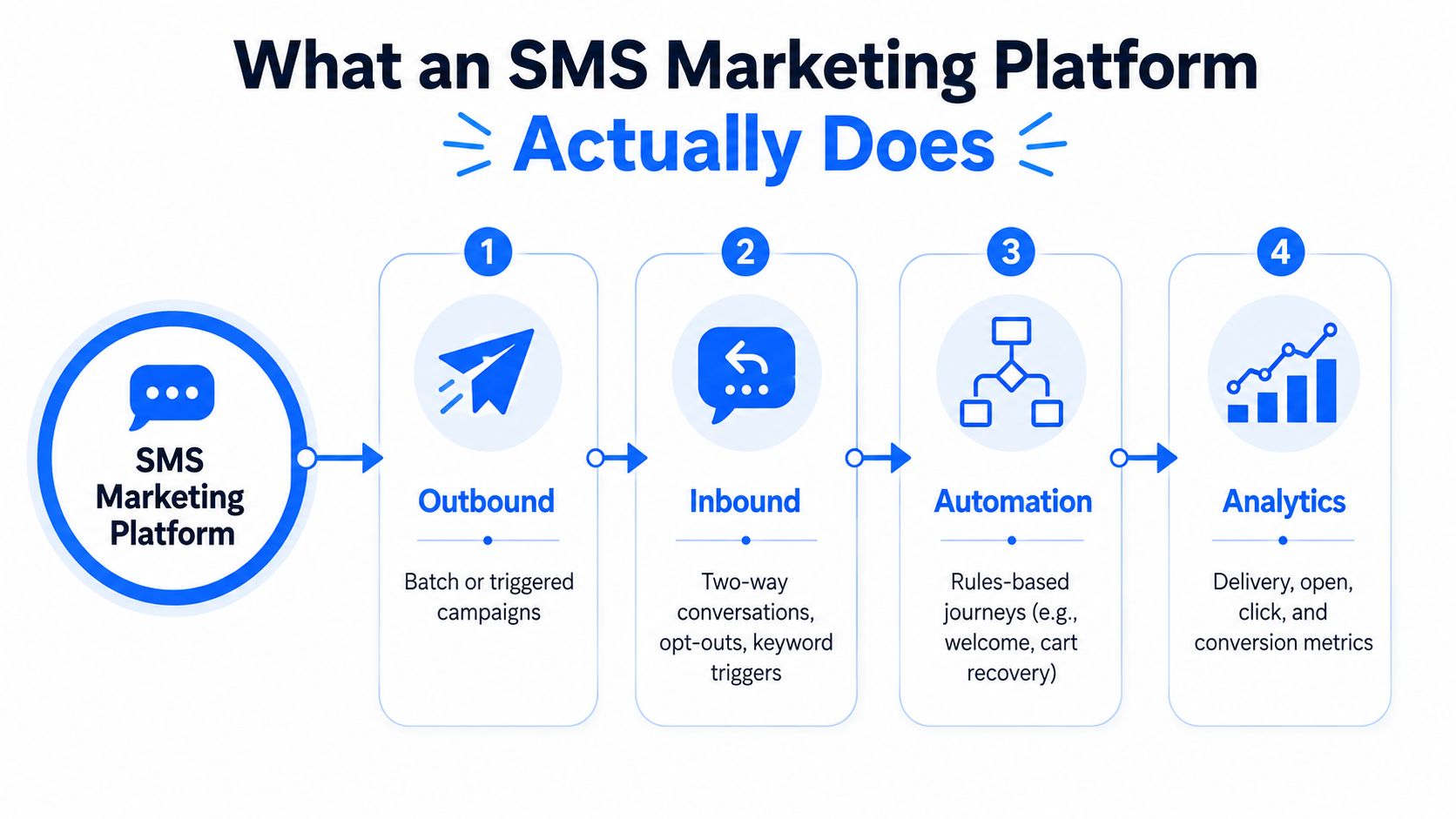
Outbound is the obvious part. That covers campaign sends, scheduled broadcasts, and triggered messages like reminders or promos. A real platform handles batch or triggered campaigns, not just one-off texts from a phone number.
Inbound is where weak tools break. A serious platform manages two-way conversations, opt-outs, and keyword triggers. If someone replies with a question, the system should capture it, route it, or automate the next step. That's where replies become revenue or service recovery instead of dead ends.
Automation is the difference between busywork and a workflow engine. You want rules-based journeys such as welcome sequences, cart recovery, appointment reminders, and follow-up paths that change based on timing or response. The platform should connect with CRM tools and automation layers, including Zapier-style workflows, so your text program plugs into the rest of the stack instead of living alone.
Analytics closes the loop. Delivery, open, click, and conversion data tell you whether the campaign worked or just left the building. A platform without useful reporting is just a sending utility with a prettier dashboard.
A good venue or event team resource for this style of workflow is automated text alerts for venues, because it shows how operational reminders and audience messaging can live in the same system without making the process messy.
If you're comparing products, use this filter: if the tool only sends outbound messages, it's a texting app. If it also handles replies, workflows, and reporting, it's a platform. That distinction saves time, money, and a lot of frustration later.
A platform can look polished and still fail under load. Throughput, routing redundancy, inbound handling, and compliance controls are the parts that decide whether your messages leave the queue and stay legally sendable. Spotler says its SMS outbound service can send up to 250 SMS/sec and uses triple backup routes, while also supporting real-time inbound SMS through shortcodes and mobile numbers, plus interfaces such as HTTP, SMTP, and SMPP (Spotler SMS marketing). That's the kind of architecture that matters when a campaign needs to clear quickly or a route degrades during a spike.
Practical rule: ask vendors how they handle carrier friction, not just uptime. Uptime sounds good on a slide. Carrier behavior is what decides whether messages get through.
The first question is throughput. If your campaigns are time-sensitive, queue speed matters. The second is redundancy. Multi-route failover lowers the chance that one bad route interrupts delivery when volume rises. The third is inbound handling, because replies, confirmations, and keyword automation are operational tools, not nice-to-haves.
Compliance is the other half of the conversation. Rework recommends asking for a registered deliverability rate for A2P 10DLC traffic on specific U.S. carriers like T-Mobile and AT&T, and it highlights timestamped consent records, double opt-in, and automatic STOP handling as core requirements (Rework SMS software checklist). Airship also emphasizes explicit, documented opt-in consent and the need to choose the right sending number type, such as short code, 10DLC, or toll-free, based on volume (Airship SMS compliance guidance). The point is simple. If consent records are weak or registration is sloppy, deliverability drops and compliance risk rises.
For a practical checklist, the internal SMS compliance checklist is worth keeping nearby when you compare vendors and draft internal requirements.
The best platforms don't just “support compliance.” They give you the audit trail, registration support, opt-out automation, and number-type options to keep campaigns scalable. If a vendor can't explain those pieces clearly, they're not ready for real volume.
SMS is the fastest way to get attention, but it's not always the best way to deliver every message. Ringless voicemail is different. It drops a message directly into the voicemail inbox without ringing the phone, which makes it useful when you want to send a more detailed reminder without interrupting someone's day. It also fits naturally with voice broadcasting and SMS when the workflow needs more than one touchpoint.
SMS wins when the message is short, urgent, and interactive. Appointment confirmations, flash promos, and reply-based follow-up all belong here. Voice broadcasting wins when you need a broad alert or press-1 transfer path, especially for live routing or urgent operational notices. Ringless voicemail wins when the message needs a little more room, but you don't want the friction of a live call.
That's why bundle matters. A platform that supports SMS, voice, and voicemail lets you build a drip sequence across channels with shared timers and triggers. For example, a reminder can start as a text, follow with a voicemail drop if there's no response, and then route to a live call path only for the people who still haven't acted. That's not theory. It's workflow design.
The economics matter too. If your follow-up stack is split across separate tools, timing gets sloppy and reporting gets fragmented. A single system gives you a cleaner view of what touched the contact, which channel got the reply, and where the conversion likely came from. That's especially useful for appointment reminders, sales follow-up, and event attendance pushes.
For a broader view of coordinated messaging, the internal multi-channel communication platform is a useful companion read.
Ringless voicemail isn't a replacement for SMS. It's the channel you use when you need detail, non-intrusive delivery, and another shot at attention without forcing an immediate interruption. If your platform treats it as an afterthought, your follow-up sequence is weaker than it should be.
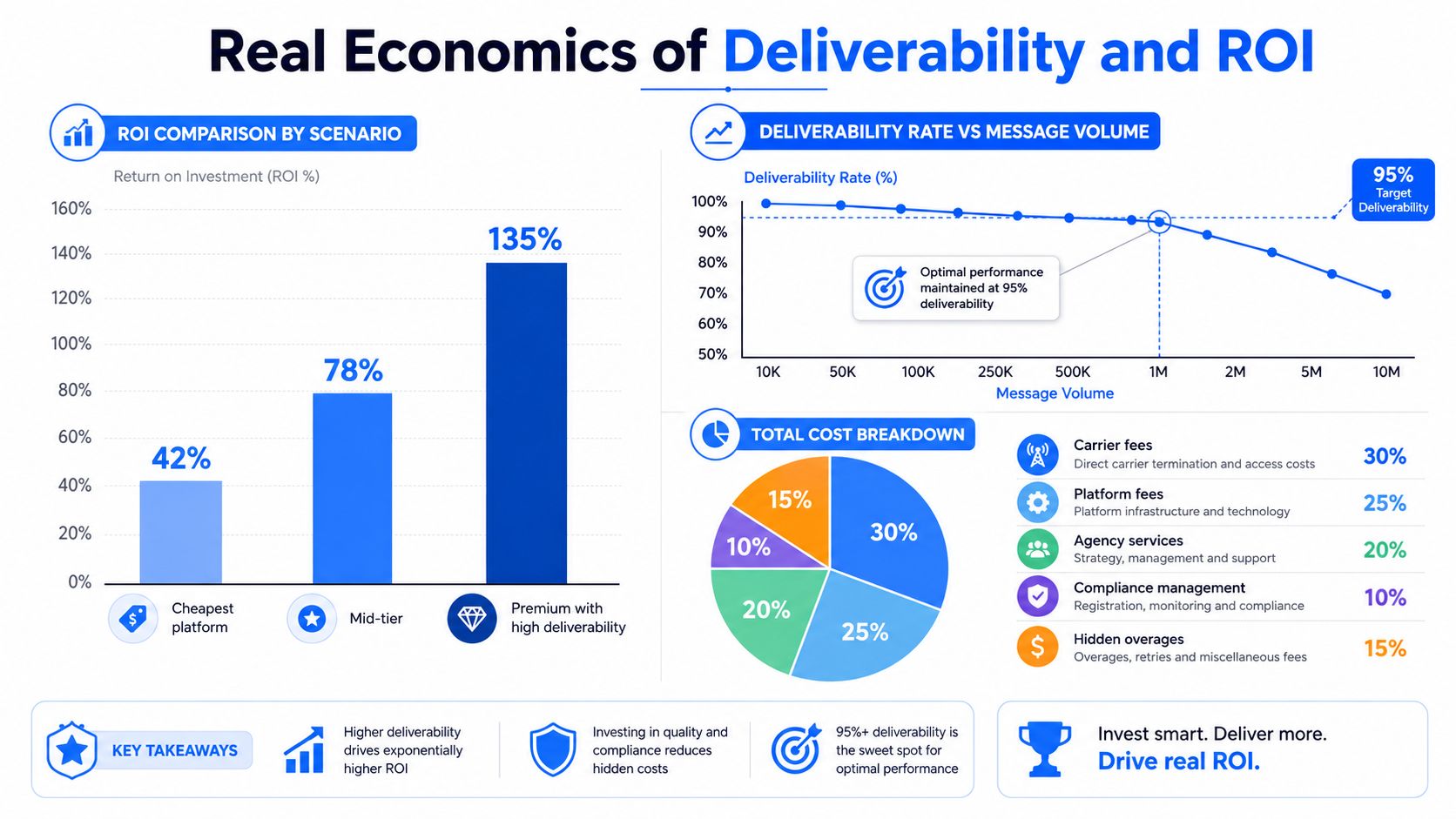
Cheap SMS looks attractive until the hidden costs show up. Carrier filtering, bad list hygiene, weak consent management, and vague fee structures can erase margin even when the per-message price looks low. A platform that appears cheap on paper can become expensive the moment messages don't land, replies go missing, or opt-outs create cleanup work.
The right evaluation lens is delivered messages and actions, not raw sends. Double opt-in reduces sloppy list growth. Link shortening and click tracking make it easier to see what happened after the text. Number validation helps protect list quality before bad data turns into wasted spend. Real-time deliverability reporting tells you where the campaign is getting held up.
For a structured way to think about measurement, the measure marketing ROI guide is a good companion resource because it pushes the conversation beyond vanity metrics and into actual return. That's the right mindset here. If a platform can't show what got delivered, clicked, and converted, then its pricing is only half the story.
Click performance benchmarks also show why this matters. One source says 43% of surveyed business owners and digital marketers report SMS click-through rates of 20% to 35%, while another reports average SMS CTRs around 19% to 20% and e-commerce SMS CTRs can reach 36% (Drips SMS statistics). Those are strong numbers, but only if your messages make it through carrier filters and reach subscribers who consented.
Practical rule: buy on delivered-message economics, not headline pricing. If lower fees come with lower reach, your real cost per result can go up fast.
Pricing transparency matters because hidden overages and compliance friction are real budget items. The platform should make it easy to understand carrier fees, platform fees, validation costs, and any added services. If the vendor won't explain the total economic picture, assume the low sticker price is doing a lot of hiding.
A good platform looks different depending on who's using it. SMBs want repeatable promotions. Healthcare teams want patient communication that respects consent and privacy. Agencies want multi-client control. Event organizers want reminders that hit before attendance drops.
An SMB retailer should care about text-to-join keywords, segmentation, and merge tags. That setup lets the store collect subscribers and send targeted offers without building custom logic every time. The winning move isn't fancy automation, it's making repeat purchase outreach easy enough that the team uses it.
A healthcare clinic needs consent discipline, appointment reminders, and dependable follow-up. If you're handling patient communication, the internal SMS for healthcare article is the better fit for the details that matter in that environment. In practice, the platform has to support double opt-in, documented records, and reminder flows that reduce front-desk pressure rather than adding to it.
A marketing agency needs clean separation between clients and enough flexibility to manage workflows from one workspace. The useful reference point here is MapLeads agency use cases, especially if you're thinking about segmented campaigns and repeatable execution. Agencies usually care less about flashy templates and more about control, handoff clarity, and how quickly they can launch without rebuilding the process for every account.
An event organizer should use SMS for same-day reminders and ringless voicemail for pre-event detail when the message needs more context. That mix keeps attendance nudges visible without making every message feel like an interruption. The best workflow here combines scheduling, list segmentation, and a simple sequence that matches the event timeline.
Practical rule: if your platform can't adapt to the segment, it's not a platform, it's a send button with extras.
One option in this category is Call Loop, which supports bulk SMS/MMS, voice broadcasting, ringless voicemail, segmentation, scheduling, merge tags, and compliance-oriented deliverability tools. It's the kind of stack that makes sense when your team needs SMS plus voice without stitching together separate tools.
Start with a checklist, not a demo hype reel. You want to compare vendors in four buckets, deliverability and compliance, channel mix, automation and integrations, and pricing transparency. If a platform misses in one of those areas, it usually creates pain later.
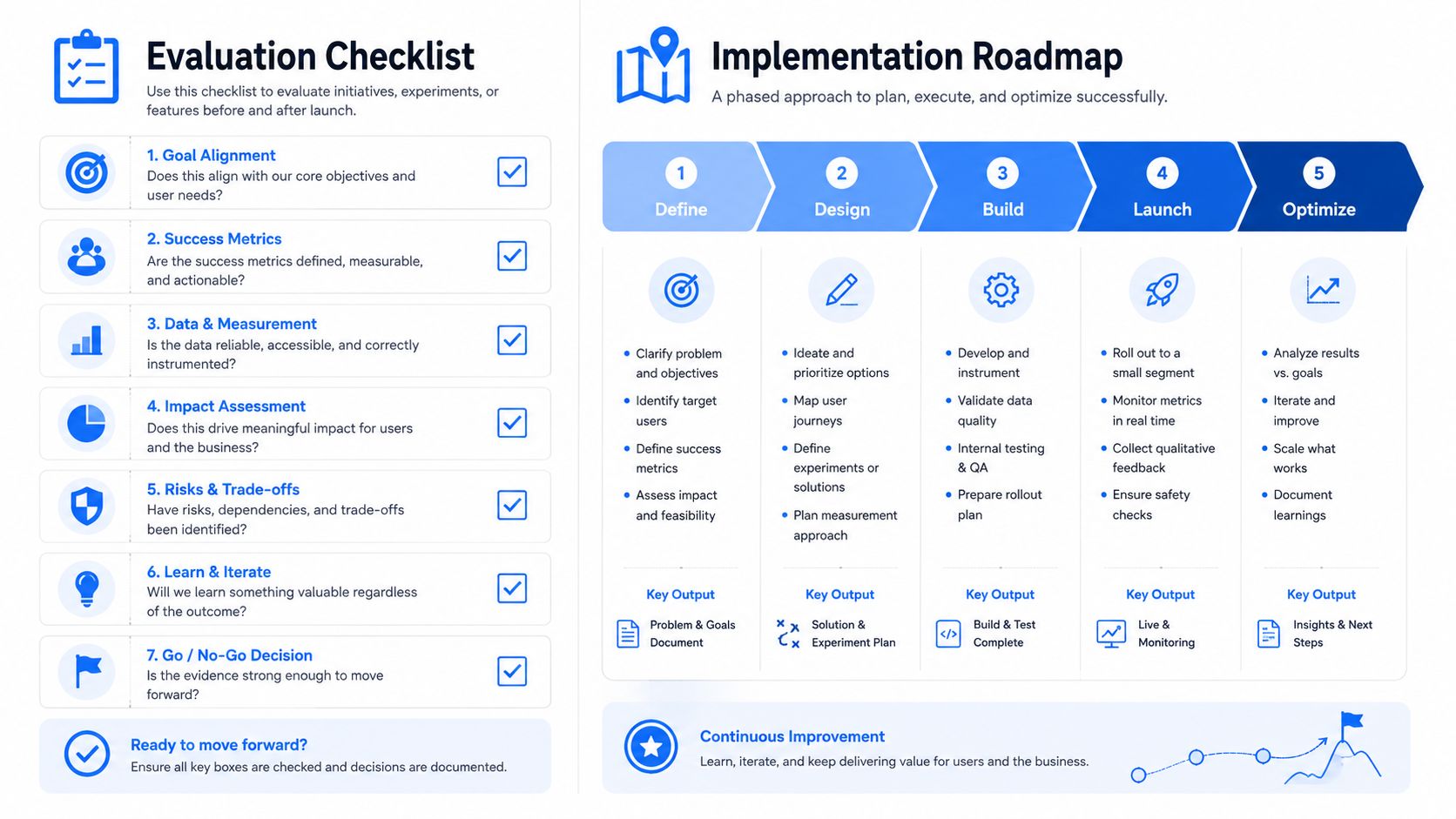
The rollout should be staged. Week one is compliance posture and consent capture. Week two is keyword setup, segmentation, and CRM integration. Week four is the first multi-channel drip campaign. By day 90, you should be reviewing deliverability, reply quality, and ROI data so you can cut waste and scale what's working.
That timing keeps the launch from collapsing into a rushed blast followed by confusion. It also gives you a clean way to prove whether the platform is helping or just adding another tab to manage.
Choose the platform that matches your primary use case, your compliance burden, and the deliverability economics you can sustain. An SMB needs speed and simplicity. Healthcare needs consent discipline and secure handling. Agencies need multi-client control. Events need reminders that arrive on time, with ringless voicemail as a useful companion when detail matters.
The next move is practical. Audit your consent records, validate your list, and sit through a demo that proves throughput, registration support, and reply handling instead of showing polished slides. If the vendor can't explain how the stack behaves under real load, keep looking.
Call Loop gives teams a way to run SMS, voice broadcasting, and ringless voicemail from one platform, with tools for merge tags, segmentation, scheduling, link tracking, number validation, and compliance-focused delivery. If you're ready to replace fragmented outreach with a system built for real campaigns, visit Call Loop and see how it fits your workflow.
Chris Brisson
Chris is the co-founder and CEO at Call Loop. He is focused on marketing automation, growth hacker strategies, and creating duplicatable systems for growing a remote and bootstrapped company. Chat with him on X at @chrisbrisson


Trusted by over 45,000 people, organizations, and businesses like


