
See a Demo
You're just one step away from seeing Call Loop in action.
Enter your information below to watch a demo right now.

You're just one step away from seeing Call Loop in action.
Enter your information below to watch a demo right now.


If you're researching subscribe text message tactics right now, you're probably in one of two spots. Either you want to grow a list fast without creating a compliance mess, or you already have people texting in and you're not happy with what happens after they subscribe.
Most SMS programs break for boring reasons. The keyword is forgettable. The opt-in language is vague. The confirmation feels robotic. Everyone gets the same blast. Then unsubscribes climb, replies get messy, and the team blames the channel instead of the setup. A strong SMS list isn't built by sending more messages. It's built by collecting consent cleanly, matching messages to intent, and using follow-up channels carefully, including ringless voicemail when a voice touch makes sense.
The first mistake I see is treating setup like admin work. It isn't. Your keyword, your consent language, and your sender configuration determine whether your list becomes an asset or a liability.
Health plans and Medicaid contractors in the U.S. have been limited by TCPA-style consent rules for years, which can block routine patient texting unless prior consent exists, and best-practice guidance now emphasizes double opt-in to confirm the recipient wants messages, which improves list quality and reduces later opt-outs, as noted by the Center for Health Journalism report on patient texting consent.
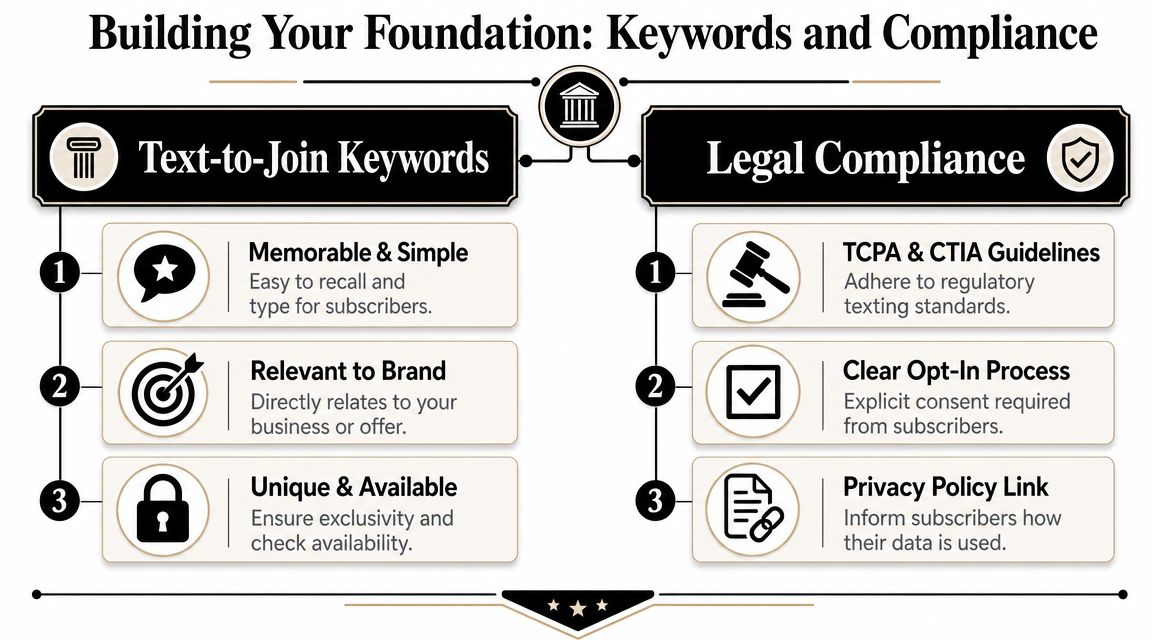
If a person didn't clearly ask for texts, don't text them. That's the baseline.
A compliant subscribe text message flow needs a visible call to action that tells people what they're signing up for. That means the message type is clear, the brand is identified, and the user takes a direct action to opt in. In healthcare, this gets even tighter because consent and privacy aren't separate conversations. If protected health information could be involved, the communication process has to be designed with secure handling in mind from day one.
Practical rule: If your opt-in language would confuse a customer standing at the counter for five seconds, it isn't clear enough.
Double opt-in is worth the extra step. Some teams worry it adds friction. In practice, it filters out bad captures, mistyped numbers, and casual sign-ups that were never going to engage anyway.
Bad keywords fail when put into practice. They may look fine in a campaign deck, but they fall apart on a flyer, in a radio read, or when a front-desk rep says them out loud.
Use this filter:
For businesses that want more than one messaging lane, keywords can become the first layer of segmentation. "DEALS" and "EVENTS" shouldn't enter the same path. If you're planning cross-channel enrollment, the same logic applies to channels like SMS and WhatsApp. A useful reference on that side is this guide to optimizing mass whatsapp messages, especially if you're coordinating opt-ins across different messaging environments.
A keyword by itself isn't a system. It needs routing.
A clean setup usually includes:
If you need a practical walkthrough of keyword-based list building, keyword text messaging examples and setup tips are a good reference for how to structure text-to-join campaigns without making the keyword do all the work.
The teams that avoid headaches later are the ones that treat compliance as part of conversion. That mindset changes everything. Your forms are clearer. Your staff gives better opt-in instructions. Your messages feel expected instead of intrusive.
A compliant request gets permission. A compelling request gets action.
The difference is usually one sentence. Weak opt-ins ask people to subscribe because the brand wants a list. Strong opt-ins tell people exactly why joining is worth it now.
Klaviyo reports that 72% of people have made a purchase after receiving a text from a brand, while 91% of consumers are interested in signing up for texts and 81.2% are already opted in to at least one brand's program, according to its SMS subscriber behavior data. That tells you the audience isn't the problem. The offer and wording usually are.
These are the kinds of calls to action that underperform:
None of those answers the subscriber's first question, which is simple: why should I hand over access to my lock screen?
Better calls to action tie the keyword to a benefit and a rhythm the customer can understand.
| Weak version | Better version |
|---|---|
| Text JOIN to subscribe | Text VIP to get launch alerts and subscriber-only offers |
| Sign up for texts | Text CLASS to get schedule updates and registration reminders |
| Get updates by SMS | Text CARE to receive appointment reminders and follow-up instructions |
The confirmation message matters just as much. Often, many brands squander their best moment. Someone has just taken an action. They're paying attention. Don't send a lifeless "You are subscribed" if you can set expectations and deliver value at the same time.
A good confirmation message removes uncertainty fast. It tells the subscriber they reached the right brand, confirms what happens next, and starts the relationship cleanly.
Before
Thanks for subscribing.
After
You're in. This number will receive product drop alerts and limited-time offers from [Brand]. Reply STOP to opt out. First perk: watch for our next text with this week's featured release.
The second version does three things the first one doesn't. It confirms success, identifies the program, and gives the subscriber a reason to stay attentive.
If you want a deeper look at compliant language and examples, this guide on opt-in text message wording and flows is a solid reference point.
One more practical note. Don't promise one thing and then send another. If the opt-in pitch says "appointment reminders," don't start with promotions. If the pitch says "flash sale alerts," don't begin with a survey. The fastest way to damage trust is to break the promise made at the moment of enrollment.
A subscriber joins at the exact moment their attention is highest. The next few minutes decide whether this becomes an active contact or a dead name on the list.
Strong automation gives that attention a direction. It should confirm the signup, deliver the promised value fast, and move the person into the right channel for the next step. That matters even more if your program goes beyond basic promos and includes reminders, ringless voicemail follow-up, or regulated communication paths such as HIPAA-conscious patient messaging.

Start simple. A clean three-message flow beats an overbuilt automation that nobody maintains.
Message one, immediately after opt-in
Confirm the signup and restate what the person will receive. If you promised a coupon, link, checklist, or booking page, send it now.
Message two, after a short delay
Build on the reason they joined. Send a useful next step such as a product guide, intake form, appointment link, class schedule, or answers to a common question.
Message three, later in the welcome window
Ask for one small action. Reply with a preference. Book a slot. View a collection. Save an event date. The goal is to create engagement early without stuffing the phone with messages.
Timing matters as much as copy. If the delay is too short, the sequence feels pushy. If it is too long, interest cools off and response rates drop.
Ringless voicemail belongs in a drip when voice adds clarity that text cannot carry well. I use it selectively for time-sensitive reminders, explanation-heavy updates, and warm follow-up after an inquiry has gone quiet.
It works especially well in service businesses and healthcare workflows where tone matters. A clinic can send an SMS reminder, then follow with a short voicemail that explains prep instructions in plain language. A home services company can text a scheduling update, then drop a voicemail from the local manager so the message feels specific and credible. For healthcare, keep privacy rules front and center. The U.S. Department of Health and Human Services explains what counts as HIPAA-compliant patient communication, and that should shape both the content and the channel.
Use ringless voicemail when it reduces friction for the subscriber. Skip it when a short text already does the job.
Each channel should carry its own weight:
That sequence works because it respects how people consume messages. SMS gets seen fast. Email handles detail better. Voicemail adds a human voice without forcing a live call.
A practical example looks like this. A med spa subscriber texts a keyword for a skincare offer. They get an immediate SMS with the offer and booking link, an email with treatment details and FAQs, a ringless voicemail the next day if they started booking but did not finish, then a final text with available appointment times. The same structure also works for gyms, clinics, real estate teams, and local retailers. Only the content changes.
If you are building this inside an automation tool, drip campaign best practices for sequencing and timing can help you set trigger logic, delays, and channel order. One platform that supports this kind of mix is Call Loop, which handles SMS, voice broadcasting, ringless voicemail, drip scheduling, segmentation, and text-to-join workflows in one system.
A subscriber joins your list for one reason. If the first few texts ignore that reason, the relationship starts sliding before the campaign has a chance to work.

Segmentation should start the moment someone opts in. The keyword they text, the location they choose, the form they came through, and the service line they request all tell you what they want next. Use that information early, because it should control more than the text copy. It should also decide whether the next touch is SMS, email, ringless voicemail, or a compliant patient communication flow.
That matters even more in businesses with multiple journeys running at once. A retail subscriber who wants flash sales can handle a faster cadence and stronger promotional language. A clinic patient may need appointment prep, billing reminders, or follow-up instructions sent with tighter privacy controls and clearer consent handling. Personalization is not just about sounding friendly. It is about sending the right message through the right channel under the right rules.
The cleanest segments usually come from simple intake signals:
These fields are enough to build useful paths without overcomplicating setup. If someone texts CARE, route them into service and reminder content. If they text VIP, send early access offers and limited drops. If they abandon a booking, trigger a short follow-up sequence that may include a text first and ringless voicemail later if the action is high value.
Generic messaging creates three problems fast. The wrong people ignore it. Interested subscribers stop paying attention because every text feels interchangeable. Some opt out because the list no longer matches what they signed up for.
A segmented campaign fixes that by making each message feel expected. That is the standard to aim for. Expected messages get better response because they match subscriber intent instead of interrupting it.
Here is what that looks like in practice:
| Subscriber type | Weak message | Better segmented message |
|---|---|---|
| New karate lead | This week's studio promo | Your intro class times for Thursday and Saturday. Reply with the best fit |
| Repeat ecommerce buyer | New arrivals are here | Your usual supplement category is back in stock. Tap to reorder |
| Dental patient | Monthly office update | Your cleaning is tomorrow at 2 PM. Reply C to confirm |
| Med spa lead | General discount blast | You asked about injectables. Here is the consultation link and this week's openings |
Useful personalization is usually simple:
Use those fields to improve clarity. "Hi Sarah, your Thursday appointment is confirmed" works because it reduces confusion. Listing too many details can feel forced, and in healthcare it can create privacy risk if the content goes beyond what should be sent over text.
For regulated businesses, segmentation also protects compliance. Keep promotional subscribers separate from patient communication lists. Build different templates, consent language, and follow-up rules for each. If your team handles protected health information, review the U.S. Department of Health and Human Services guidance on HIPAA and texting patient information before deciding what belongs in SMS, what belongs in email, and when a secure workflow is the better choice.
The practical rule is simple. If a field helps the subscriber take the next step, use it. If it only proves you collected data, leave it out.
A growing list can still be underperforming. That's why list size is one of the least useful metrics to stare at in isolation.
SMS gets attention by default. Infobip reports that text message marketing delivers an open rate of around 98%, that businesses earn around $71 for every $1 spent on SMS marketing, a 7100% ROI, and that 97% of mobile phones are capable of receiving texts, which is why the channel is so accessible, according to its SMS marketing statistics roundup. The takeaway isn't that every campaign will print money. It's that visibility is high enough that weak performance usually points to message strategy, offer quality, list hygiene, or deliverability issues.
Once messages are going out, watch the metrics that reveal behavior:
A campaign with decent clicks and poor conversions usually has a landing page or offer problem. A campaign with weak clicks usually has a message problem. A campaign with rising opt-outs often has a targeting or frequency problem.
When deliverability drops, teams often look for a trick. Usually the fix is disciplined execution.
Focus on these basics:
Deliverability also connects to trust. If your messages look unfamiliar, come from changing numbers, or reference offers the user never requested, they may be filtered by the recipient's attention before the carrier ever becomes the issue.
A healthy SMS program isn't the one that sends the most. It's the one that stays recognizable, expected, and easy to act on.
A strong subscribe text message program starts to feel obvious once you map it to the customer journey. The keyword, confirmation, first message, and follow-up channel should fit the business model. Teams that get this right stop treating SMS as a one-off opt-in tool and use it as part of a broader contact strategy that can include email, ringless voicemail, and, where required, HIPAA-ready workflows.
One trust rule applies everywhere. A legitimate business text usually matches a recent action the customer took, comes from a consistent sender, and continues in a way the customer expects, as explained in this guide to recognizing legitimate business texts.

A karate studio, salon, or home service company needs quick sign-up, clear reminders, and a simple path to booking.
Call to action
Text CLASS to [your number] for class updates, trial reminders, and enrollment notices.
Confirmation
You're subscribed to [Studio Name] class texts. Reply YES to confirm. Reply STOP to opt out.
Welcome message
Thanks for joining. New student trial times are available this week. Reply TRIAL for details or tap here: [link]
This setup works because the promise stays tight. You are not asking for broad consent and then sending unrelated promos two days later. If no response comes after the welcome text, a ringless voicemail reminder can help recover interest without stuffing more copy into the SMS thread.
Retail subscribers join for timing. They want early access, restock alerts, limited drops, and offers worth paying attention to.
Call to action
Text VIP to [your number] for early access to product drops and subscriber-only deals.
Confirmation
Reply YES to confirm you want recurring texts from [Brand]. Msg frequency varies. Reply STOP to opt out.
Welcome message
You're in. VIP subscribers get first access to limited releases and flash offers. Watch for your next alert.
For longer buying cycles, SMS should not carry the whole load. Brands selling homes, property services, or agent-led offers usually need coordinated follow-up across text, email, and CRM tasks. RealEstateCRM marketing is a useful example of how that broader automation can be structured when one text rarely closes the deal.
Healthcare requires tighter controls than standard promotional SMS. Consent needs to be explicit, message scope needs to stay narrow, and teams need to protect patient information at every step.
Call to action
Text CARE to [your number] to receive appointment reminders and office updates.
Confirmation
Reply YES to confirm you want text reminders from [Clinic Name]. Reply STOP to stop.
Welcome message
You're subscribed for appointment reminders from [Clinic Name]. We'll text you before upcoming visits and if scheduling changes affect your appointment.
This is also where channel choice matters. SMS works well for reminders and confirmations. Ringless voicemail can support missed-appointment outreach. Any workflow that touches protected health information needs to be set up for HIPAA-compliant communication instead of repurposing a standard retail drip.
The best examples stay clear from start to finish:
If a program feels noisy, the issue is usually poor alignment between message, audience, timing, and channel.
If you want to put this into practice, Call Loop gives you the building blocks in one place: text-to-join keywords, double opt-in, segmentation, drip campaigns, SMS, voice broadcasting, and ringless voicemail, with HIPAA-ready support for teams that need secure communication workflows.
Chris Brisson
Chris is the co-founder and CEO at Call Loop. He is focused on marketing automation, growth hacker strategies, and creating duplicatable systems for growing a remote and bootstrapped company. Chat with him on X at @chrisbrisson


Trusted by over 45,000 people, organizations, and businesses like


