
See a Demo
You're just one step away from seeing Call Loop in action.
Enter your information below to watch a demo right now.

You're just one step away from seeing Call Loop in action.
Enter your information below to watch a demo right now.

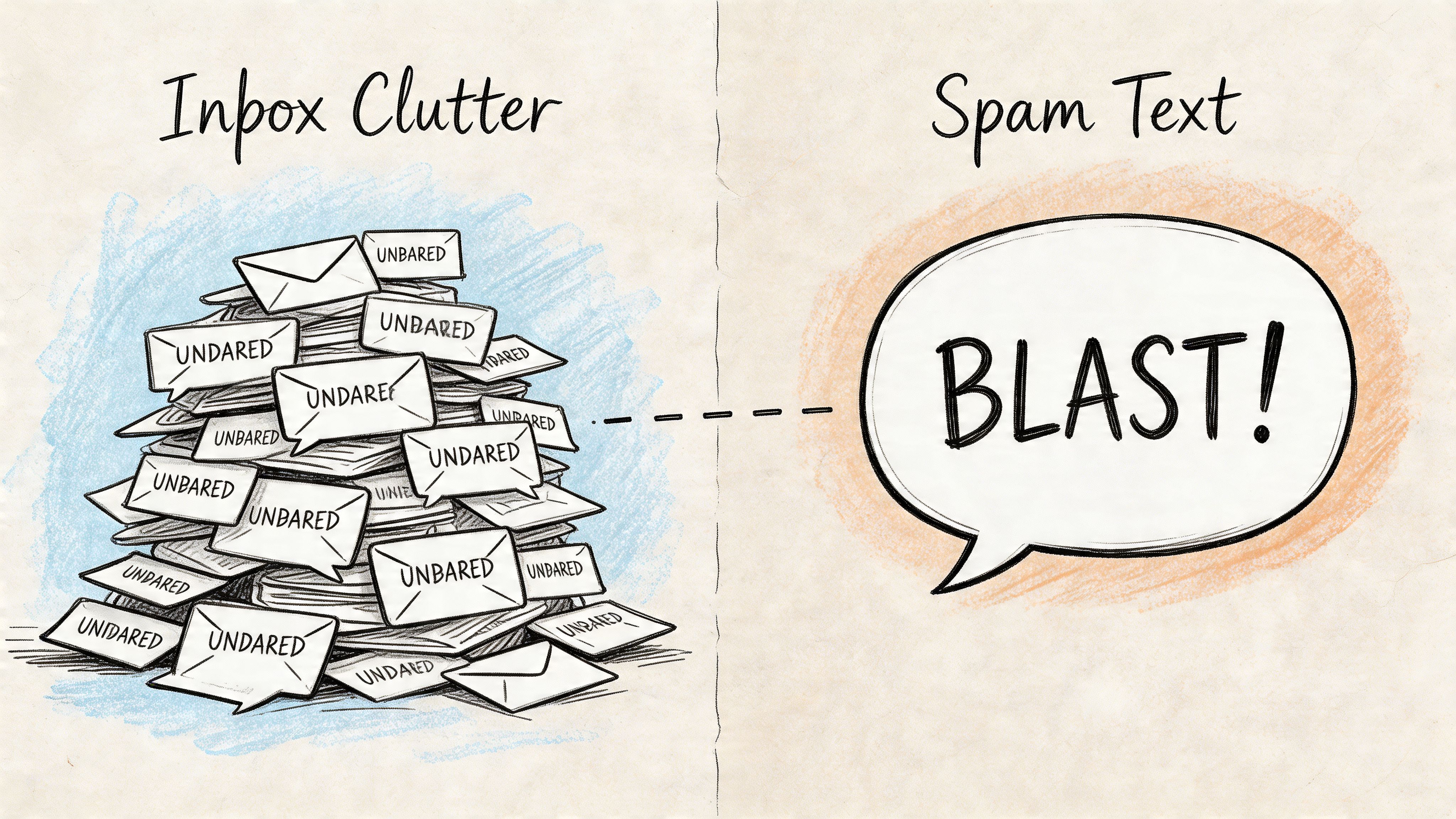
Your team is probably doing this already. You send a solid email campaign, then watch it sink into a crowded inbox. A day later, someone sends a text blast to the same audience with no context, no segmentation, and no connection to the email that came before it.
That’s not a channel problem. It’s an orchestration problem.
Text and email work best when they support each other. Add ringless voicemail for the moments that need a human-sounding nudge, and you stop treating outreach like isolated sends. You start building sequences that match urgency, detail, and attention span to the right channel at the right time.
For sales teams, that means faster follow-up without sounding chaotic. For healthcare teams, it means reminders and patient communication that stay timely and compliant. For ecommerce, it means fewer abandoned carts and fewer dead-end automations.
Most businesses don’t need more sends. They need better coordination.
Email still does the heavy lifting when you need room to explain an offer, confirm details, educate a lead, or document next steps. Text does something different. It gets seen fast and pushes action when timing matters. Used alone, each has limits. Used together, they cover each other’s weak spots.
The gap is obvious in engagement. 98% of text messages are opened, with an average 45% response rate, while email, with 347.3 billion messages sent daily, remains the backbone of professional communication (Intradyn). That’s why text and email shouldn’t compete inside your marketing plan. They should play separate roles.
If you’re working outbound, it also helps to understand when private inbox channels outperform social outreach. This breakdown of Cold DM vs Cold Email is useful if your team is deciding where prospecting should start and where email should stay central.
A good system doesn’t blast the same message everywhere. It sequences intent.
For example, you might send an email with the full offer, follow it with a short text to people who didn’t click, then use ringless voicemail for warm leads who still haven’t acted. That’s a real multi-touch approach, not channel duplication.
Practical rule: If the message needs explanation, start with email. If it needs attention now, use text. If it needs a more personal touch without forcing a live conversation, use ringless voicemail.
If you want a broader framework for planning that kind of journey, this guide to a multi-channel communication strategy is a useful starting point.
Multi-channel campaigns break down when contact data lives in five places.
One list sits in your CRM. Another lives in Shopify or WooCommerce. Appointment data stays in a scheduling tool. Opt-ins come through landing pages. Then someone exports CSV files, uploads them by hand, and hopes the tags still make sense. That’s how duplicate sends, broken personalization, and compliance mistakes happen.
Your first job is simple. Build one contact hub where records can be synced, cleaned, segmented, and permissioned.
That hub should hold at least these fields:
If your stack already runs through HubSpot, Keap, ActiveCampaign, a scheduling app, or an ecommerce platform, use native integrations or Zapier to sync records automatically instead of relying on manual imports. Manual list handling always fails at scale.
For teams that need a built-in database for lists, tags, and grouped outreach, a contact manager like Call Loop’s contact manager is one option for keeping SMS, voice, and ringless voicemail audiences aligned in one place.
A messy list is annoying. A noncompliant list is expensive.
Violations of the Telephone Consumer Protection Act can lead to fines up to $1,500 per violation. Failing to implement a double opt-in for SMS can increase bounce rates above 5% and drag deliverability below 90% (Hustler Marketing).
That changes how you should think about list growth. Bigger isn’t better if the permissions are weak.
Clean data and documented consent beat a large list every time.
For healthcare providers, the bar is even higher. You’re not just managing marketing preferences. You’re managing protected communication flows. That means your messaging platform, workflows, and user permissions need to reflect HIPAA requirements before any appointment reminders or patient outreach go live.
Don’t wait until later to segment. You already have enough information to create useful groups.
Try starting with:
Channel permission groups
Separate SMS-consented contacts from email-only contacts and voice-eligible contacts.
Lifecycle stage groups
New lead, active customer, lapsed customer, no-show, upcoming renewal, abandoned cart.
Intent groups
Requested demo, attended webinar, viewed pricing, booked consult, asked for a quote.
A karate studio, for example, shouldn’t send the same sequence to trial-class signups, active members, and parents who asked about schedules months ago. A clinic shouldn’t treat new patient intake the same as recall reminders. The contact hub should reflect those differences before automation starts.
| Setup area | What to do | Why it matters |
|---|---|---|
| Contact sync | Connect CRM, forms, store, or scheduler | Prevents list drift |
| Consent tracking | Store opt-in source and status | Protects compliance |
| Deduplication | Merge records by email and mobile | Avoids repeated sends |
| Field mapping | Standardize tags and custom fields | Keeps personalization usable |
| Suppression rules | Exclude opted-out and inactive contacts | Reduces complaints |
When teams skip this work, every later tactic gets weaker. Sequencing, personalization, reporting, and deliverability all depend on the same thing. A clean contact foundation.
The common error made is sending all channels at once.
That feels efficient inside a dashboard, but it feels disjointed to the person receiving it. Good sequencing respects attention. Email gives context first. Text follows when speed matters. Ringless voicemail adds a more human layer when you want presence without forcing someone to answer the phone.
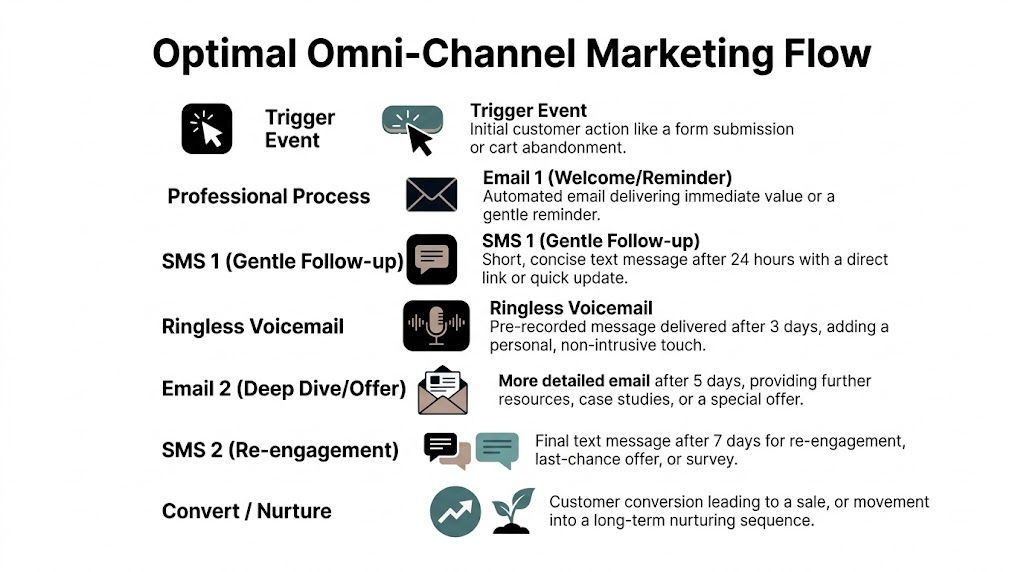
A shopper adds products to cart, leaves, and doesn’t return.
Email should go first because it can show the product, remind them what they left behind, and answer objections with shipping, returns, or product details. If they still don’t act, text becomes the reminder layer. If the order value is high enough, ringless voicemail can add a personal prompt that sounds less automated than another message.
Here’s a clean sequence:
| Time Delay | Channel | Message Purpose |
|---|---|---|
| Immediately | Remind the shopper what was left in cart and include the return link | |
| 24 hours | SMS | Short follow-up with direct cart link |
| 3 days | Ringless voicemail | Personal reminder with light urgency |
| 5 days | Expanded offer, FAQ, or product reassurance | |
| 7 days | SMS | Final re-engagement or last-chance reminder |
That flow works because each step has a different job. None of the messages should repeat the exact same wording.
Take a karate studio lead. A parent fills out a form asking about trial classes.
The first email should confirm the inquiry and answer the practical questions most parents care about. Schedule, age groups, what to wear, and how the trial works. If there’s no response, a text can ask a simple question that invites a reply, such as whether they want a weekday or weekend class. If the lead stays warm but inactive, ringless voicemail works well because it sounds local and personal without creating the pressure of a live sales call.
Ringless voicemail secures its position. It’s not a replacement for calling. It’s a middle option between a text and a conversation.
A ringless voicemail should never sound like an ad read. It should sound like a real staff member leaving a short, helpful update.
Healthcare communication needs a different rhythm.
Email can carry pre-visit instructions, intake details, or follow-up education. Text is better for reminders, confirmations, and quick prompts. Ringless voicemail is useful for patients who haven’t responded to earlier reminders, especially when the message needs warmth and clarity.
A practical healthcare flow might look like this:
That approach keeps the urgent parts short and the detailed parts documented.
The exact delay should depend on your sales cycle, urgency, and audience behavior, but the logic should stay consistent.
If you’re building longer nurture journeys, these multi-channel nurturing strategies are worth reviewing because they map well to longer sales cycles where no single touch gets the conversion.
For more campaign inspiration, a library of drip marketing examples can help you model different follow-up paths across lead generation, reminders, and customer reactivation.
Most personalization is lazy.
Adding someone’s first name to the top of a message doesn’t make it relevant. If the timing is wrong, the offer is generic, or the tone is off, the message still feels automated. People notice that fast.
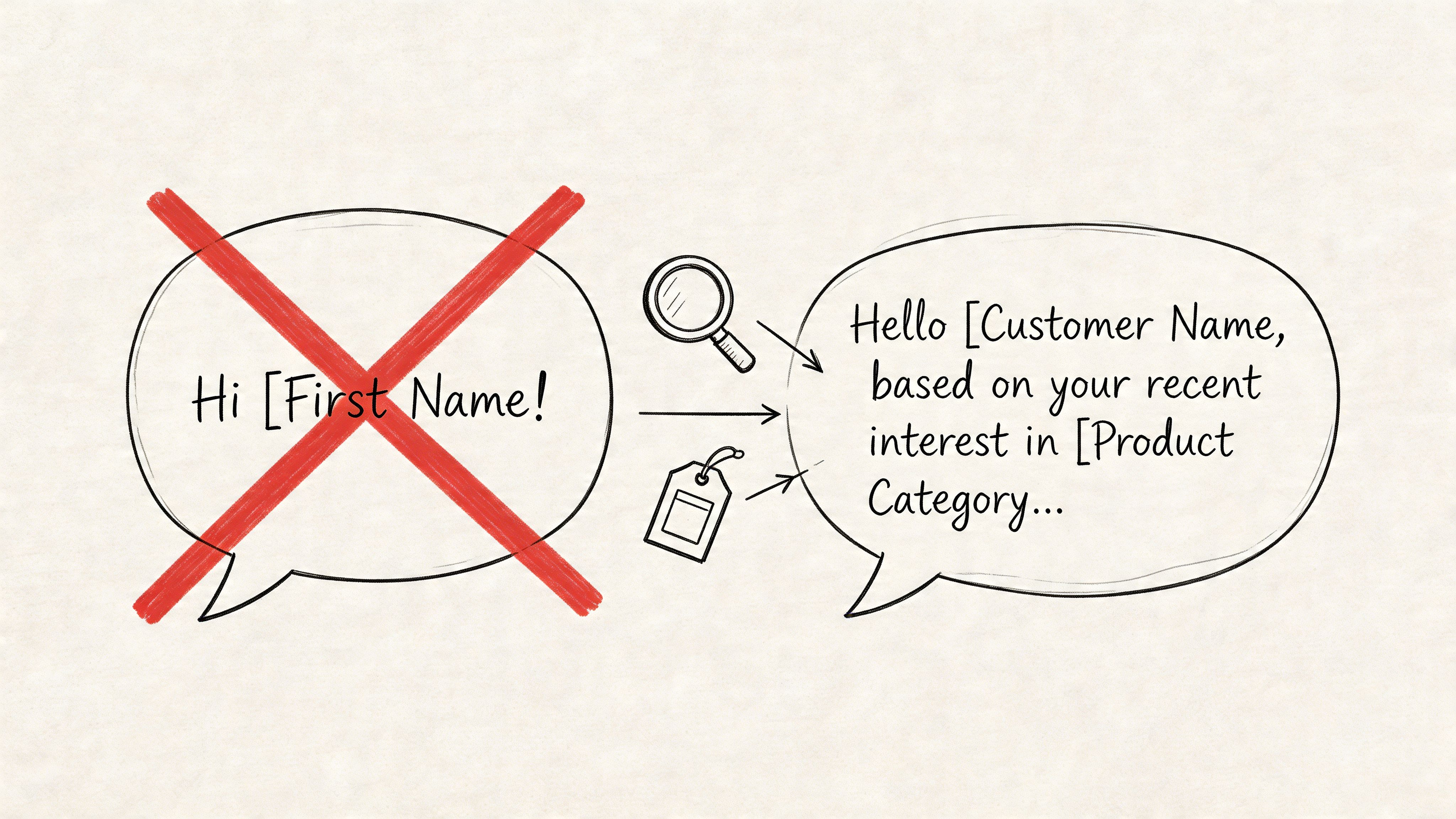
Good personalization uses context, not decoration.
That means referencing what the contact did, asked for, booked, bought, or ignored. A message to a repeat ecommerce buyer should reflect prior purchase behavior. A message to a patient should reflect appointment stage. A message to a sales lead should reflect the service they requested, not just their name in the greeting.
Useful fields include:
A text that says, “Your estimate is ready” is stronger than “Hi Sarah.” An email that references the product category someone viewed is better than a generic monthly newsletter. A ringless voicemail that mentions the local office or upcoming appointment sounds grounded in reality.
At this point, many automated campaigns go wrong.
While 90% of senders believe their text and email messages are understood as intended, recipients only comprehend the intended emotion 50% of the time (SyncLX). That gap creates avoidable friction, especially when teams copy the same wording into email, SMS, and voicemail.
What works better:
Email should sound clear and calm
Use full sentences. Remove sarcasm. Keep structure easy to scan.
SMS should sound direct and useful
Cut filler. State the action. Make the link or reply path obvious.
Ringless voicemail should sound human
Use a real voice, conversational pacing, and one purpose per recording.
If a message could be read as pushy, cold, or passive-aggressive, it probably will be.
Instead of copying one message across channels, write a message family.
Start with the core event. Then adapt the tone and length for the channel.
For example, if someone missed an appointment:
That keeps the message consistent without making it robotic.
The same principle applies to promotions. Your email can handle the fuller story. Your text can carry the decision prompt. Your voicemail can reinforce urgency or trust if the offer matters enough to deserve that touch.
If you only look at channel metrics in isolation, you miss the full story.
An email might look average on its own but still drive conversions once a text follow-up pushes people back into the funnel. A text campaign might seem quiet until you realize it worked as a recovery touch after the original email did the education. Cross-channel reporting matters because customer action often comes from the sequence, not a single send.
For email, an excellent Click-to-Open Rate is 20% to 30%, which tells you the content resonated with the people who opened it. Adding SMS for re-engagement can improve overall campaign ROI by 15% to 30% by catching people who missed the first email (Robly).
That tells you two useful things.
First, don’t judge email only by opens. Opens tell you whether the subject line and inbox placement did their jobs. CTOR tells you whether the body copy and offer worked. Second, SMS is often strongest as a recovery mechanism, not just a primary send.
Keep your tracking practical. You don’t need a complicated attribution model to improve performance.
Watch these together:
| Channel | Metric to watch | What it tells you |
|---|---|---|
| CTOR | Whether the content matched the click intent | |
| Clicks by segment | Which audience actually cared | |
| SMS | Link clicks | Whether the prompt was strong enough to drive action |
| SMS | Replies | Whether the message invited a response |
| Ringless voicemail | Callback or follow-up action | Whether the message created enough trust or urgency |
| Sequence level | Conversion after touch order | Which combinations are actually working |
Teams often test too many things at once and learn nothing.
Run small, clear tests:
Subject line tests in email
Keep the body constant so you can isolate the effect of the subject line.
CTA tests in SMS
Compare direct prompts against softer reminder language.
Timing tests across the sequence
See whether the text works better shortly after the email or with more delay.
Voicemail script tests
Compare a more formal office tone with a shorter conversational recording.
The best optimization work usually comes from removing friction, not adding cleverness.
Don’t chase vanity metrics. A high open rate on an email with weak click behavior doesn’t help much. A text campaign with lots of reads but poor downstream action may be too vague. A ringless voicemail that sounds polished but produces no callbacks is still underperforming.
The useful question is simple. Did the sequence move the contact to the next meaningful step?
That step might be a booked demo, completed purchase, confirmed appointment, form submission, callback, or payment. Once you define that goal, the testing gets much cleaner.
You don’t need a massive martech stack to make text and email work better together. You need clean data, clear channel roles, and sequences that respect how people respond.
Start with one workflow. Don’t rebuild your whole operation in a week. Pick a single use case such as lead follow-up, appointment reminders, abandoned carts, or reactivation. Connect the contact data, set the permissions correctly, write the sequence, and measure the outcome.
Ringless voicemail belongs in that mix when the message needs more presence than a text but less friction than a live call. That’s especially useful for local service businesses, healthcare reminders, event attendance pushes, and warm lead follow-up.
The opportunity is already there. Americans send approximately 6 billion texts daily, and 81% of the population uses SMS frequently. Integrated with email, that reach helps you meet people where they already pay attention, as noted earlier in the article.
The teams that get the best results from text and email aren’t sending more noise. They’re sending better-timed messages through the right channel for the job.
If you’re ready to put this into practice, Call Loop gives you one place to run coordinated SMS, voice broadcasting, and ringless voicemail campaigns with contact management, drip automation, tracking, integrations, and HIPAA-ready workflows for teams that need compliant outreach.
Chris Brisson
Chris is the co-founder and CEO at Call Loop. He is focused on marketing automation, growth hacker strategies, and creating duplicatable systems for growing a remote and bootstrapped company. Chat with him on X at @chrisbrisson


Trusted by over 45,000 people, organizations, and businesses like


