
See a Demo
You're just one step away from seeing Call Loop in action.
Enter your information below to watch a demo right now.

You're just one step away from seeing Call Loop in action.
Enter your information below to watch a demo right now.

The most common advice about an unsubscribe text message is also the most incomplete: “Tell people to reply STOP.” STOP still matters, but it's no longer a complete operating model. A compliant program must recognize broader language, capture opt-outs from other channels, suppress the contact across connected campaigns, and preserve a clear record of what happened.
That change matters in production. A subscriber might reply with a standard keyword, email customer support, call an employee, submit a website form, or say they no longer want messages during a conversation. If your team only watches inbound SMS replies, your system can keep marketing to someone who has already revoked consent.
The single-keyword mindset creates a dangerous blind spot. A customer doesn't need to use one approved word to make their intent clear, and a business can't make STOP the only door through which revocation is accepted.
On April 11, 2025, FCC revocation-of-consent rules took effect in the U.S. Businesses must honor opt-out requests made by any reasonable method within 10 business days, including requests delivered through text, email, phone, web forms, and other reasonable channels. The updated approach recognizes standard keywords such as STOP, QUIT, END, CANCEL, UNSUBSCRIBE, REVOKE, and OPT OUT, but it also reaches plain-language requests that clearly communicate a desire to stop.
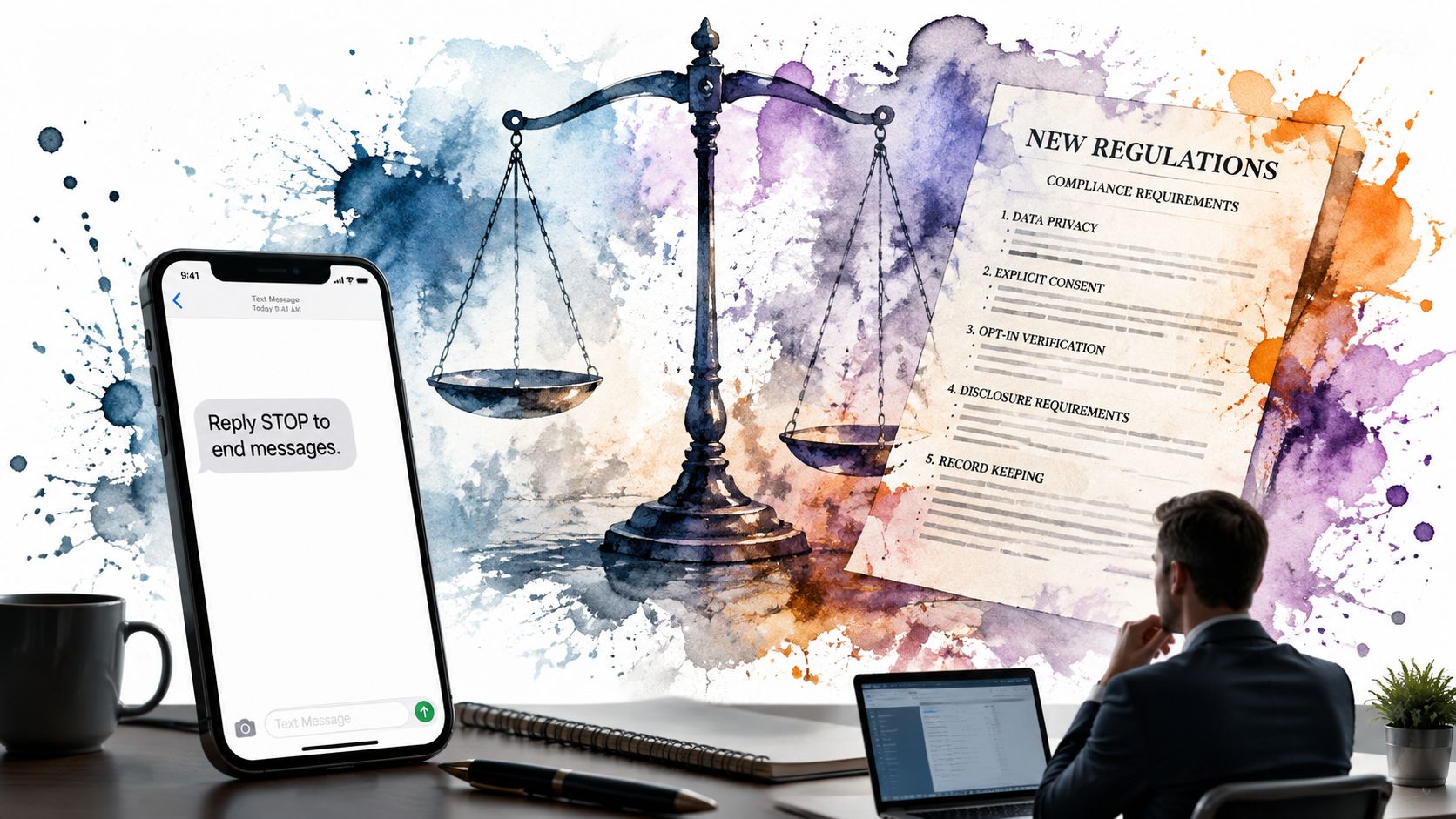
The FCC rule changes the question your team should ask. Instead of asking, “Did the customer text STOP?” ask, “Did this person communicate that they no longer consent to these marketing messages?”
That distinction affects intake, automation, staff training, and reporting. A support agent who receives “Please remove me from your texts” needs a reliable way to trigger suppression. An email reply saying “I don't want promotional messages anymore” shouldn't sit in a shared inbox while another campaign continues sending. A verbal request needs documentation, not dismissal because it didn't arrive through the messaging platform.
The FCC revocation guidance summarized by Klaviyo also allows only one non-promotional confirmation text within 5 minutes of the request. That confirmation doesn't reopen the conversation, create an upsell opportunity, or justify another campaign message.
Production rule: Treat “STOP” as one detection signal, not as the definition of an opt-out.
Carrier filtering responds to complaint patterns and unwanted traffic signals. A workflow that misses natural-language requests can generate continued messages after a customer has clearly objected. That creates avoidable complaints, damages trust, and can contribute to carrier limitations or blocking.
The CTIA Messaging Principles and Best Practices support letting consumers opt out at any time, offering multiple mechanisms, sending one final confirmation per campaign, and sending nothing further after that confirmation. A system built around a single keyword may pass a basic demo while failing in the channels where real customers ask for help.
A dependable unsubscribe workflow has to perform several jobs in sequence. It must identify the request, stop promotional delivery, send a narrowly written confirmation when appropriate, update the central record, and prevent every connected campaign from reactivating the number.
Your inbound parser should recognize STOP, QUIT, END, CANCEL, UNSUBSCRIBE, REVOKE, and OPT OUT. It should handle capitalization differences and reasonable spacing, so “stop,” “STOP,” and “opt out” don't reach different outcomes.
Standard keywords are the easy part. Add plain-language detection for messages such as “please stop texting me” or “remove me from this list.” Route ambiguous messages to a trained reviewer, but don't design the system so that every non-keyword request waits for manual handling.
The safest sequence is to apply the suppression event immediately, then generate the confirmation. The FCC framework allows one non-promotional confirmation text within 5 minutes, and CTIA guidance says no further messages should follow that confirmation.
A suitable confirmation is brief and factual. It should acknowledge the request and state that the recipient won't receive further marketing texts from the relevant program. Don't add a coupon, product link, survey, or invitation to re-engage. Promotional language turns a compliance message into another marketing touch.
The Call Loop SMS compliance checklist can help teams review consent capture, sender identification, opt-out handling, and audit controls in one workflow. For property managers, the same discipline applies to text message apartment notifications, where residents may need to stop promotional alerts without losing clarity about service communications.
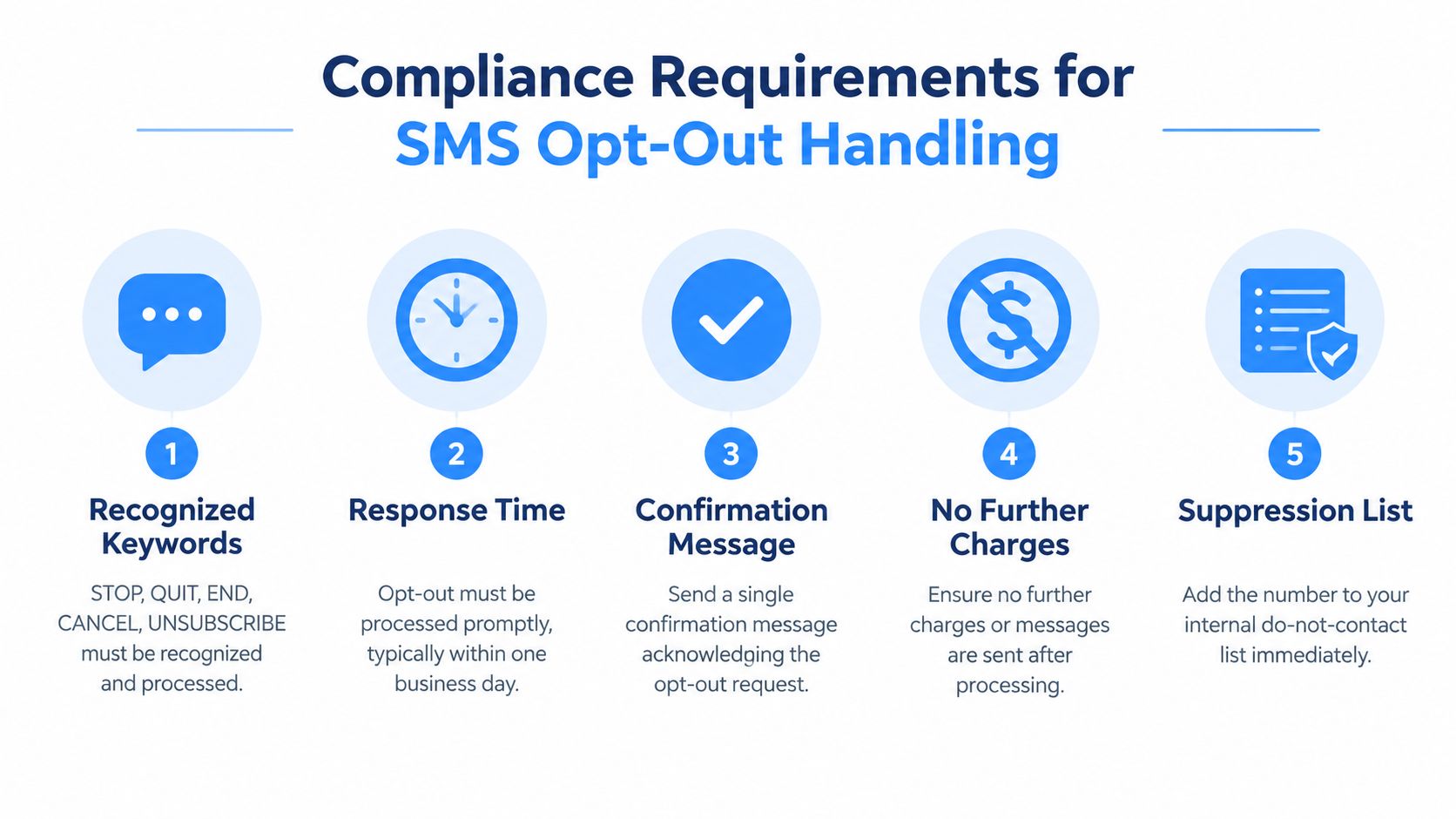
Record the originating number, message or request text, timestamp, source channel, sender identity, and suppression status. Store enough information to show when the business received the request and when downstream systems stopped promotional sends.
Long-code opt-outs are handled at the carrier level, while short codes require maintained STOP and HELP procedures. Regardless of sender type, identify the business clearly in recurring messages and keep consent records connected to the contact record.
Use this audit checklist:
The 10-business-day rule is a maximum processing window, not a target for your automation. In a high-volume program, immediate suppression is the practical standard because queued sends, vendor delays, and list exports can otherwise create messages after the request.
Opt-out rates tell you more than whether a campaign underperformed. They reveal whether subscribers understand the value of the program, whether your team sends too often, and whether timing fits the audience.
A 2021 cohort study of 428,242 adults in an integrated health care system found that 2.5% opted out of future automated text messages. The result demonstrates that unsubscribe behavior can be measured across a large population and can materially reduce reachable contacts, even when the percentage looks modest in isolation. The study is available through the published cohort research.
A practical operating threshold is to keep opt-out rates below 2%. Benchmark frameworks commonly treat 0.6% to 1.4% as good, while 2.0% or higher is critical, according to Klaviyo's SMS opt-out benchmark guidance.
| Opt-Out Rate Range | Performance Level | Recommended Action |
|---|---|---|
| 0.6% to 1.4% | Good | Maintain the program, while reviewing campaign-level variation. |
| Below 2% | Practical operating range | Monitor every send and investigate unusual movement. |
| 2.0% or higher | Critical | Pause the affected pattern, inspect cadence and content, and check for carrier impact. |
Don't average away the problem. A healthy monthly result can hide one campaign with a sharp spike. Break reporting down by audience, message type, send time, acquisition source, and campaign owner. The useful question isn't merely whether the list is shrinking. It's which behavior caused people to leave.
Independent 2024 research found that 56% of U.S. consumers would unsubscribe after receiving four or more texts or emails from the same company in 30 days. That finding, reported by GetApp's consumer unsubscribe research, points to cadence as a direct retention factor. A subscriber may like your offer and still leave because the program consumes too much attention.
Timing creates another risk. A 2025 benchmark report found the highest unsubscribe rate, 22.5%, when brands started conversations in the evening, while 87% of recipients did not opt out during a 7-day window. Those figures don't justify a universal send-time rule. They do justify testing time-of-day by audience and treating evening outreach as a specific risk pattern rather than an assumption.
Reduce unnecessary sends before rewriting the opt-out copy. Segment audiences, suppress people who have already converted, coordinate promotional and reminder campaigns, and reserve urgent timing for messages that genuinely need it. A clear STOP instruction protects the customer's exit. Better cadence reduces the number of customers who feel forced to use it.
Manual processing fails at exactly the wrong moment, usually after a campaign has already entered a queue or a customer service request has been routed to the wrong team. Automation should make the suppression event faster than the next outbound send.
Start with one canonical opt-out event in your customer data model. Every channel should write to that event, whether the request arrives by SMS, email, phone, web form, chatbot, or an employee's note.
A production workflow should follow this path:
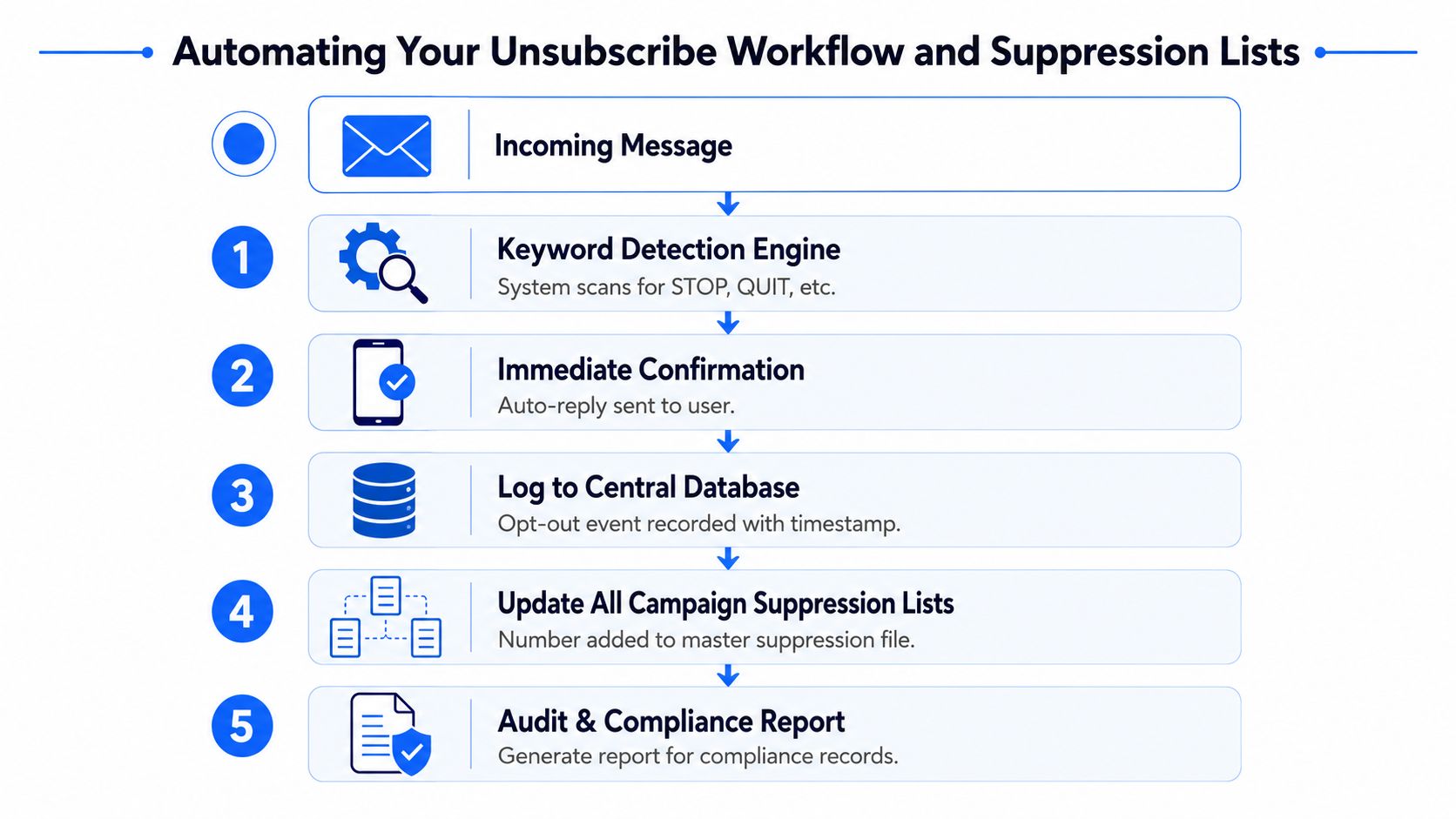
A daily spreadsheet export is too slow for a busy program and too easy to overwrite. Use webhooks or API calls to publish the suppression event to the systems that can send on the contact's behalf. If a platform can't receive real-time updates, create a controlled fallback that blocks the number at send time against the master suppression file.
A contact can belong to several segments, workflows, and vendor accounts. Your send logic must check suppression immediately before dispatch, not only when the campaign audience is first created. That second check catches numbers opted out after scheduling.
A tool such as an autoresponder for text messages can support automated replies, but the reply is only one part of the design. The suppression database and send-time enforcement determine whether the workflow stops future outreach.
Test lowercase, mixed-case, misspelled-but-clear requests, multi-word phrases, and messages that include extra text. Then test an email or phone request and follow the event through every connected system.
Audit test: Schedule a message, trigger an opt-out, and verify that the scheduled send is blocked. A system that only removes the contact from the next campaign hasn't been tested far enough.
Test confirmation delivery failures separately. The customer's suppression should remain active even if the confirmation can't be delivered. Finally, review logs for duplicate confirmations, delayed timestamps, and vendor systems that continue to accept suppressed recipients.
SMS, voice broadcasting, and ringless voicemail often sit in different tools, but customers experience them as one brand. If someone revokes consent through a text message and then receives a voicemail drop from the same business, the internal system has failed even if each channel has its own local opt-out feature.
The FCC has treated ringless voicemail to wireless phones as covered by the TCPA because it's considered a call made using an artificial or prerecorded voice. The FCC ruling on ringless voicemail ties delivery to consent requirements, so marketers shouldn't treat ringless voicemail as an unregulated workaround for SMS consent or suppression.
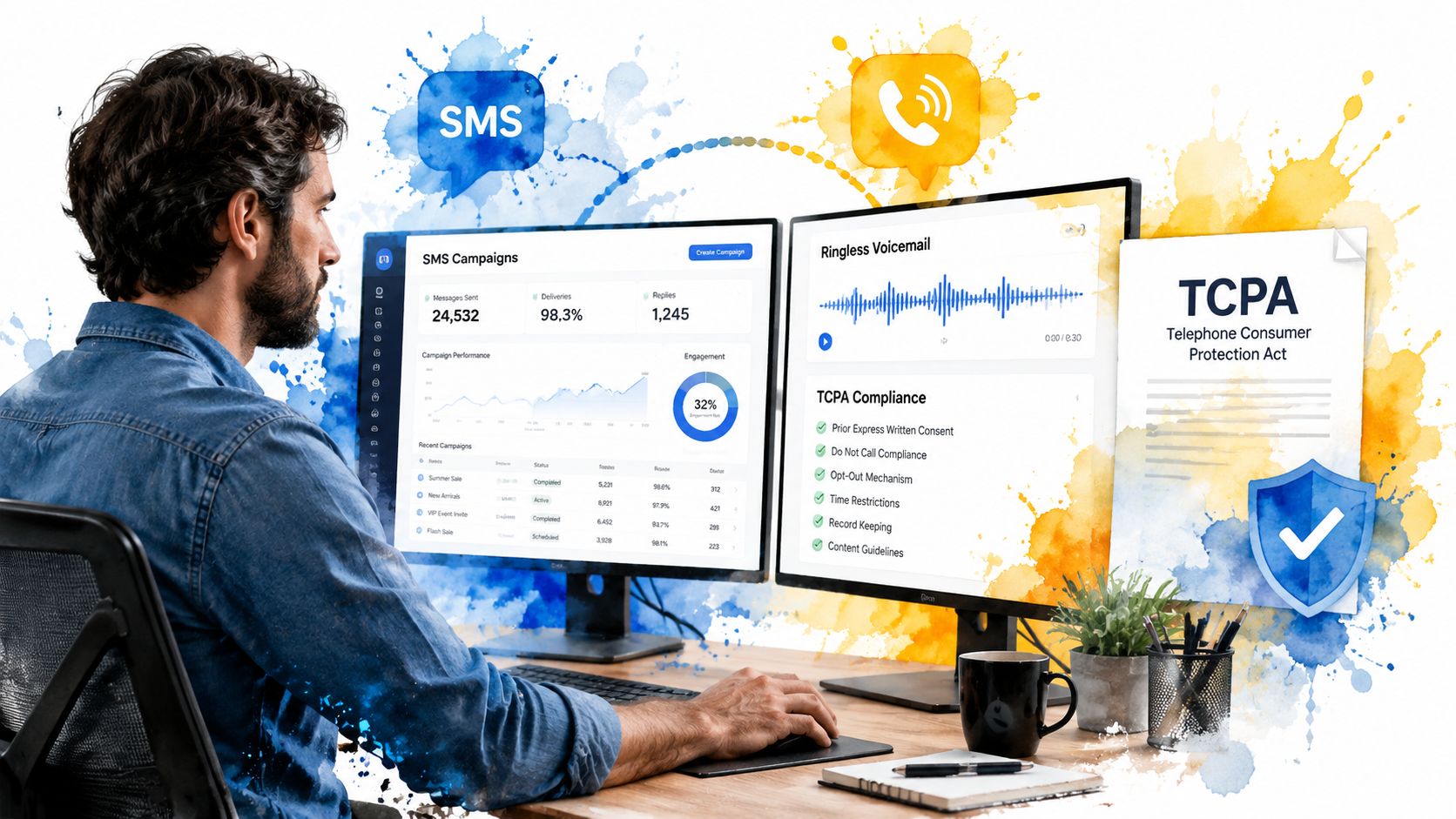
A centralized consent record should answer three operational questions:
The exact scope can depend on the request and the communication relationship, so train reviewers to distinguish a request about one alert type from a clear request to stop the brand's marketing outreach. If the language is broad, don't narrow it artificially because a campaign database is organized by channel.
A unified suppression layer also improves operational clarity. Teams can see the original request, the channel that captured it, the systems updated, and any failed downstream synchronization. That record is more useful than separate “SMS unsubscribed” and “voice unsubscribed” flags that disagree.
For practical planning around this adjacent channel, ringless voicemail marketing should be evaluated alongside SMS rather than as a separate compliance project. Consent, sender identity, suppression, and campaign timing belong in the same outbound governance model.
A customer texts “stop” in lowercase, then sends “StOp” in a follow-up. Both should enter the same keyword path. Normalize case before matching, and strip harmless punctuation so the parser doesn't depend on how neatly someone types.
A clearer test is “Please stop texting me about promotions.” That message may not equal a standard keyword, but the intent is unambiguous. Suppress the marketing audience, log the original text, and avoid asking the customer to repeat the request using STOP.
Email and phone requests need the same treatment. The employee who receives the request should update the central record or submit it to a queue with an owner and timestamp. Don't rely on a note that lives only in a support ticket.
Short codes and toll-free numbers can have different carrier-level handling, so test each sender type independently. If the confirmation fails to deliver, keep suppression active and record the delivery failure. Never retry the confirmation as a promotional message.
A customer who later wants to re-subscribe should provide fresh consent through your approved opt-in path. Don't assume that a message such as “I changed my mind” automatically restores marketing permission. Also distinguish a request to stop one campaign from a broad request to stop the brand, then document the interpretation so another team doesn't reverse it accidentally.
Call Loop provides automated SMS, voice broadcasting, ringless voicemail, suppression management, scheduling, and integrations that help teams coordinate outbound communication across channels. Review your current keyword, natural-language, confirmation, and suppression tests, then visit Call Loop to evaluate how its tools fit your unsubscribe and consent workflow.
Chris Brisson
Chris is the co-founder and CEO at Call Loop. He is focused on marketing automation, growth hacker strategies, and creating duplicatable systems for growing a remote and bootstrapped company. Chat with him on X at @chrisbrisson


Trusted by over 45,000 people, organizations, and businesses like


