
See a Demo
You're just one step away from seeing Call Loop in action.
Enter your information below to watch a demo right now.

You're just one step away from seeing Call Loop in action.
Enter your information below to watch a demo right now.

Let's get straight to it. A short code is a special 5 to 6-digit phone number built specifically for high-volume business texting.
Think of it as a dedicated express lane on the SMS highway. It’s designed to send thousands of messages at once without hitting traffic.
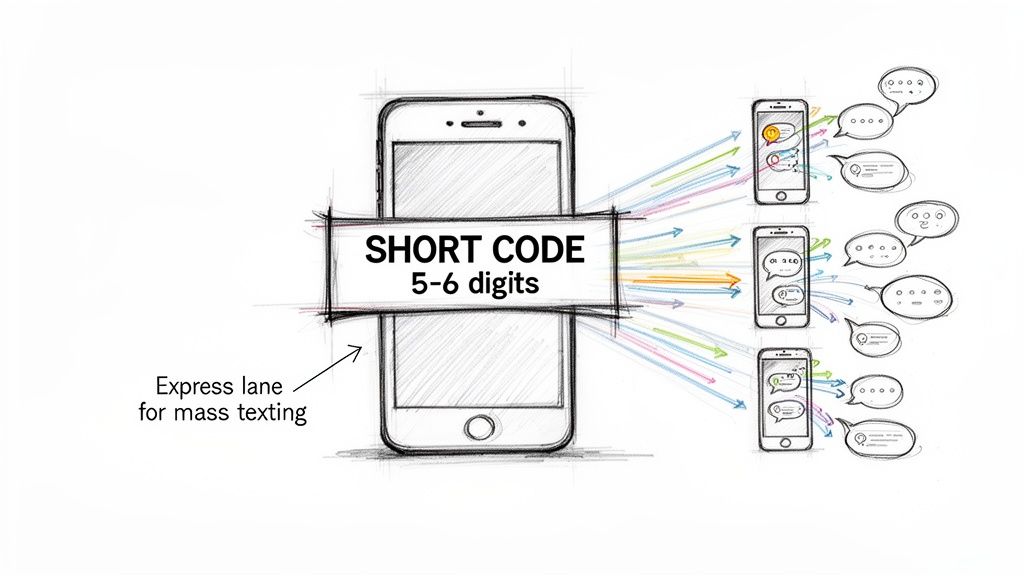
Unlike the standard 10-digit number on your personal phone, a short code is purpose-built for one-to-many communication. It’s the go-to tool for everything from flash sale alerts and appointment reminders to two-factor authentication codes and interactive marketing campaigns.
The whole point of a short code is speed and reliability. Mobile carriers pre-approve these numbers, which lets your messages bypass the aggressive spam filters that often catch texts from regular phone numbers. This "trusted sender" status is exactly why they're the gold standard for mass texting.
Short codes really changed the game for customer outreach when they took off in the early 2000s. They fueled a massive explosion in SMS volume; at its peak in 2010, the world was sending around 200,000 SMS messages every second, with a huge chunk of that driven by businesses using short codes.
Their simple structure is perfect for campaigns where customers text a keyword to opt-in. You've seen it before: "Text ‘JOIN’ to 12345 to get exclusive deals!" That simple action is a powerful way to build subscriber lists for e-commerce stores, local businesses, and even healthcare providers. If you want to dive deeper into how that works, you might find our guide on how to text a 5-digit number helpful.
A short code’s real value isn't just its length—it’s the carrier-approved infrastructure behind it. This is what ensures your message actually lands in the inbox, not a spam folder, right when you need it to.
To quickly get a handle on their role, it helps to see their core attributes laid out. This table breaks down the key features of a short code, giving you a quick snapshot before we get into the more advanced stuff.
| Attribute | Description |
|---|---|
| Number Length | A memorable 5 or 6-digit number (e.g., 12345). |
| Messaging Speed | Extremely high throughput, sending hundreds of messages per second. |
| Primary Use Case | Mass marketing, alerts, promotions, and two-factor authentication. |
| Carrier Approval | Pre-vetted by mobile carriers, ensuring high deliverability rates. |
| Memorability | Easy for customers to remember and type for keyword campaigns. |
These characteristics are what make short codes such a powerful tool for businesses wanting to connect directly with their audience through text.
Not all short codes are built the same. When you’re ready to get one, you’ll run into two main options that serve very different purposes: dedicated and shared. The one you choose has a big say in your branding, budget, and how you’ll run your campaigns down the road.
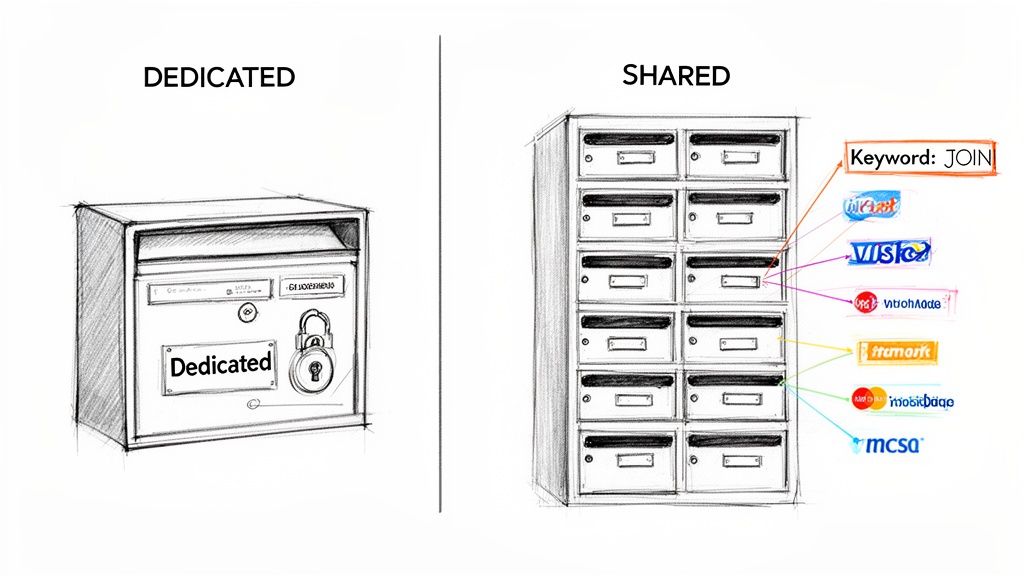
Think of a dedicated short code like getting a private, custom mailbox with your brand’s name plastered right on the front. It's yours and yours alone, giving you total control over your brand and every single keyword you want to use.
A shared short code, on the other hand, is more like having a cubby in a massive mailroom next to other businesses. It's a much more affordable way to get in the game, but you have to use a specific keyword just to make sure your messages end up in the right place.
A dedicated code is the top-shelf choice for businesses that want an iron grip on their branding and instant recognition. Since the number belongs only to you, every keyword imaginable is up for grabs for your campaigns.
This is what makes those simple, memorable calls to action possible, like "Text JOIN to 25252." You don't have to worry about another company snagging your keyword, which gives you complete creative freedom.
Owning a dedicated short code screams professionalism. It ensures your brand is the only one your audience thinks of with that number, cutting out all confusion and building a solid foundation of trust.
Of course, that exclusivity comes with a higher price tag and a longer carrier approval process. It’s a strategic move for established brands or businesses ready for serious growth and high-volume messaging, where owning the number is a core part of the marketing strategy.
Shared short codes are the most accessible on-ramp to high-volume texting. Because a bunch of businesses are using the same number, the costs get split, making it a fantastic option if you're working with a tighter budget.
The main tradeoff here is keyword management. With other businesses on the same number, you have to find and claim a unique keyword that isn’t already taken. For instance, if you’re a local gym, you might have to use "GYMFIT" instead of just "JOIN," because someone else already called dibs. It’s a simple system that makes sure everyone’s messages get routed correctly.
So, which one should you pick? It really all comes down to your goals:
Ultimately, a shared code is perfect for getting started quickly and affordably. As your brand grows and your messaging needs get more sophisticated, investing in a dedicated short code is the logical next step to really solidify your brand’s presence.
Ever wonder why the biggest brands still rely on something as simple as a text message for their most important campaigns? It's not just about reaching people—it's about guaranteed reach. That’s the power of a short code.
Their secret weapon is achieving "trusted sender" status with mobile carriers. Think of it like a VIP pass for your messages. Before a short code sends its first text, it goes through a strict vetting process. This pre-approval tells carriers your messages are legitimate, letting them bypass the aggressive spam filters that can swallow up texts from regular numbers.
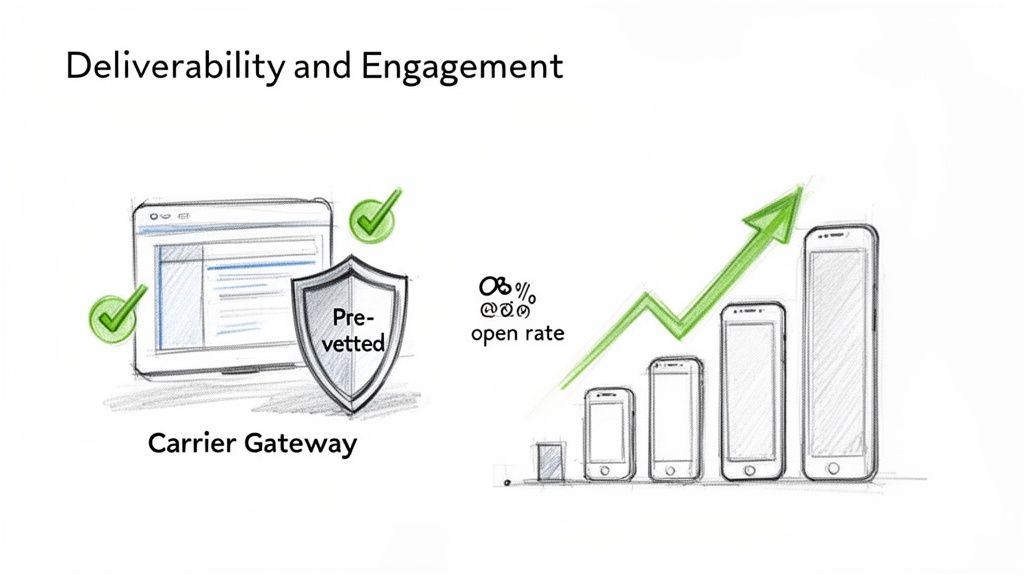
This direct, unfiltered line to your customer's inbox is what drives the incredible results you hear about. When your message absolutely has to get through, nothing else comes close to the reliability of a short code.
The numbers don't lie. Short codes dominate because they command attention in a way other channels can't. The global SMS market is on track to hit $18.6 billion by 2030, which makes sense when you consider that people check their phones around 58 times a day.
With an estimated 6.25 trillion SMS messages expected to be sent worldwide by 2026, it's clear this is where your audience is. You can read more about these projections and explore the data on global SMS trends for a deeper dive.
In a world flooded with digital noise, short code SMS cuts right through with a staggering 98% open rate. People don't just get your texts; they read them—almost instantly.
This isn't just about getting eyes on your message. That high visibility is your launchpad for real action. You can use it to build entire customer journeys, guiding people from an initial text alert to other touchpoints, like a personalized follow-up call or email.
A great communication plan rarely relies on just one channel. When you integrate your short code campaigns with tools like ringless voicemail, you create a much richer, more personal experience for your customers.
You might use an SMS for a quick, urgent alert and then follow up with a non-intrusive ringless voicemail to add a personal touch or share more detail. It's about meeting your audience where they are, in the way that works best for the message.
By weaving these methods together, you build a seamless flow. Imagine sending a text about an upcoming webinar, followed by a personal ringless voicemail from the host the day before. This thoughtful sequencing turns a simple notification into a powerful relationship-builder, proving that when reliability matters most, short codes deliver.
Getting a short code isn't just about picking a 5 or 6-digit number. Think of it as a serious investment in your marketing—one that comes with its own set of costs, timelines, and rules. Knowing what to expect upfront will save you a lot of headaches and help you launch your high-volume messaging campaigns without a hitch.
The price tag for a short code is split into two parts. You’ll have a one-time setup fee to get things rolling, followed by a recurring lease cost (usually monthly or quarterly) to keep the number yours.
If you want a really memorable "vanity" short code—something easy to recall like 25252—it's going to cost more than a randomly assigned one. It makes sense, right? While the initial investment is higher, the branding boost from a catchy number can pay for itself many times over.
No matter which type you go for, the biggest hurdle is carrier provisioning. This is the non-negotiable waiting period where all the mobile carriers (think Verizon, AT&T, T-Mobile) review and approve how you plan to use the number.
This whole provisioning process usually takes 6-12 weeks. I know, it sounds like a long time. But that’s because this is the very process that gets your short code "pre-approved" by the carriers. It’s what gives you that trusted status, ensuring your texts actually hit the inbox instead of getting blocked as spam.
That upfront investment of time and money is what leads to incredible campaign performance and builds real trust with your audience. If you're ready to dive deeper, our guide on short code registration walks you through the entire process from start to finish.
Getting the number is just step one; staying compliant is the whole game. Rules like the Telephone Consumer Protection Act (TCPA) are incredibly strict about how you can message people. The golden rule? You must have explicit, provable consent before you send a single text.
On top of that, every single short code campaign has to give people a clear and easy way to opt out. This is where a few standard keywords become mandatory:
These aren't just "nice-to-haves." They're strict requirements. Any good messaging platform will have these compliance features baked right in to protect you and your customers. Getting this right from day one is what keeps your SMS program healthy, legal, and effective.
Short codes are absolute powerhouses for mass texting, but they're not the only tool in the shed. To really get your messaging strategy right, you need to know how they stack up against toll-free numbers and 10-digit long codes (10DLC).
Think of it like this: you wouldn't drive a moving truck to the grocery store, and you wouldn't try to haul a couch in a sports car. Each vehicle has its job. It’s the same with business phone numbers—the right choice depends entirely on what you’re trying to do, whether that’s a massive marketing blast or a one-on-one customer chat.
This quick decision tree can help you see which path makes the most sense for your campaign.
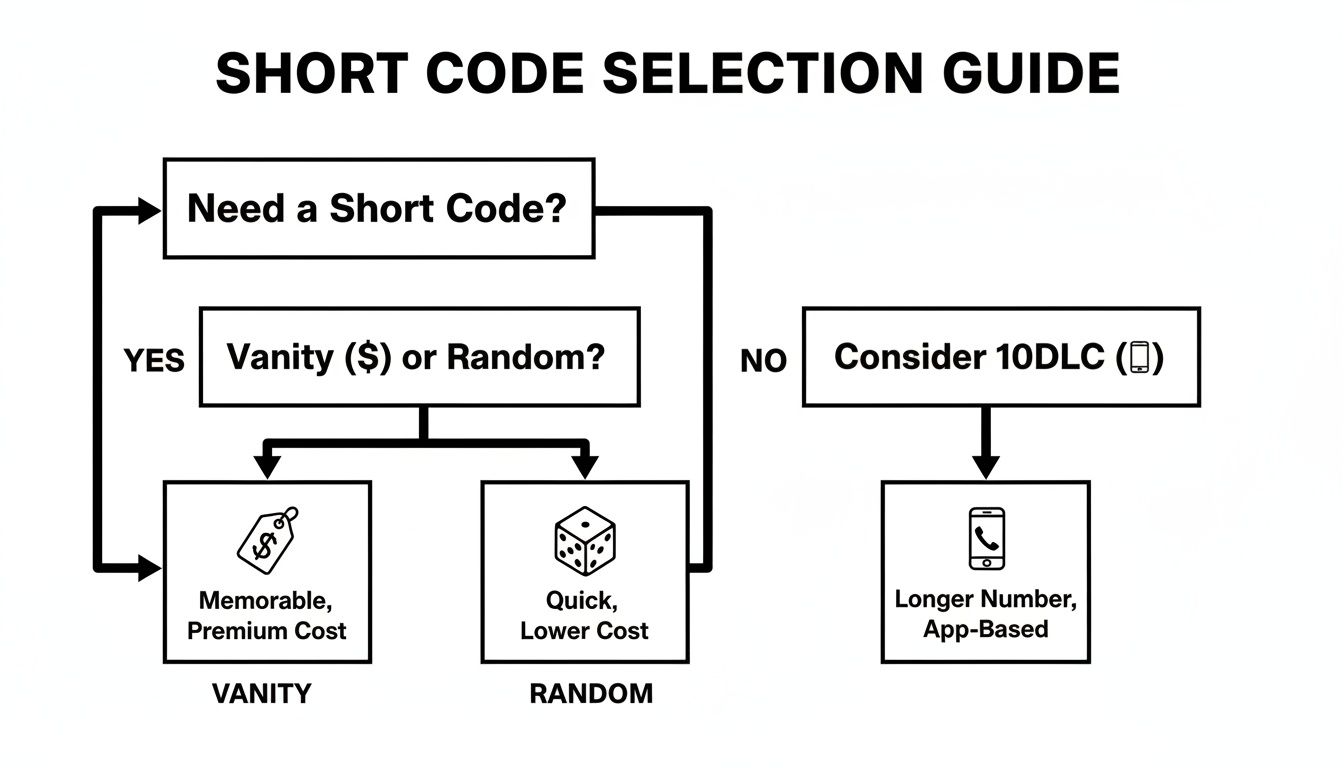
As you can see, if high-volume messaging is your goal, you're in short code territory. From there, you just need to decide between a memorable vanity code or a more budget-friendly random one. If not, something like a 10DLC might be a much better fit.
Let's dive into the specifics. Short codes were created to handle the limitations of old-school SMS, which started with that first 160-character message back on December 3, 1992. Today, their biggest advantage is their unmatched deliverability. They can reach a huge pool of mobile users worldwide—even when data networks are down.
This rock-solid reliability is why industries that require HIPAA compliance use them for secure patient reminders, hitting an incredible 98% open rate. And for sales teams? With 90% of consumers texting daily and 80% open to receiving business texts, they're the go-to for boosting webinar attendance and filling up studio classes. You can see the full research on the global popularity of SMS to dig into these numbers yourself.
Getting a handle on the unique strengths of each number type is the key. When you match the number to the campaign goal, you get the biggest bang for your buck on every single message you send.
To help you make the right call, we’ve put together a simple table that breaks down the key differences between your options.
This table compares Short Codes, Toll-Free Numbers, and 10DLC across the features that matter most, helping you pick the perfect number for your campaign's needs.
| Feature | Short Code | Toll-Free Number | 10DLC |
|---|---|---|---|
| Messaging Speed | Highest (100+ MPS) | High (around 15-25 MPS) | Lowest (1-5 MPS) |
| Best For | Mass marketing & alerts | Customer service & support | Personalized conversations |
| Setup Time | Long (6-12 weeks) | Moderate (days to weeks) | Fast (minutes to hours) |
| Cost | Highest (lease fees) | Moderate | Lowest (per number cost) |
By weighing these factors—speed, cost, setup time, and what you’re actually trying to accomplish—you can make a smart choice. This ensures you’re not overpaying for power you don’t need or, worse, underpowering a campaign that needs to reach thousands of people at once.
A great marketing strategy rarely relies on just one channel. It's a mix.
While short codes are the heavy lifters for high-volume SMS, you can build a much stronger connection with customers by pairing them with other tools like ringless voicemail and voice broadcasting.
This isn't about just sending more messages. It's about layering your communication to make each point of contact feel intentional and personal. It's delivering the right message, through the right channel, at the perfect time.
Imagine you want to send a personal follow-up message, but you don't want to interrupt someone's day with a phone call.
This is exactly where ringless voicemail comes in. It’s a slick way to deliver a pre-recorded audio message straight to someone's voicemail without their phone ever ringing. It's personal, but not disruptive. This powerful technique, also known as a voicemail drop, is perfect for adding that human element back into your marketing. A short code text is great for a quick alert, but a ringless voicemail can deliver a warmer, more detailed message like a personal thank-you from the CEO.
If this is new to you, we've got a full guide on what is ringless voicemail that breaks it all down.
The real magic happens when you get these tools working together in a coordinated flow. Instead of just blasting a single text, you build a complete experience that guides your customers toward taking action.
Here’s what a simple but powerful sequence could look like:
By combining the instant punch of an SMS short code with the personal feel of ringless voicemail, you create a well-rounded and respectful outreach strategy. The result? Much higher engagement and way better results.
Alright, let's clear up some of the most common questions that pop up when people start looking into short codes. We'll wrap things up by tackling these head-on to make sure you have all the info you need.
Getting a dedicated short code isn't an overnight thing. The whole process, especially the carrier provisioning stage, typically takes about 6-12 weeks. This is where the mobile networks review and approve your specific campaign.
I know, that sounds like a while. But this thorough vetting process is exactly what gives short codes their power. It guarantees your messages get delivered and don't end up flagged as spam by the carriers, making the wait a smart investment for your campaign's success.
Nope, short codes are strictly a one-country-at-a-time deal. A short code you lease in the United States will only work for sending messages to US-based mobile numbers.
If you want to reach customers in other countries, like Canada or the UK, you'll have to lease a separate short code in each one. You'll also need to play by that country's local telecom rules.
This is where having a dedicated short code really shines—you're in complete control. You can create a custom default auto-response for any keyword you haven't set up.
For example, you could set your reply to something like: "Sorry, we didn't catch that. Text HELP for options or STOP to unsubscribe." This keeps the conversation going and makes sure your brand looks professional.
With a shared short code, on the other hand, the system is only set up to recognize the specific keywords you've been assigned. Any other reply will likely get ignored.
It’s not a question of which one is "better." Think of it more like having a toolbox—you use the right tool for the right job. They serve different, but often complementary, purposes.
The most effective strategies we see actually combine these channels. You might send an SMS for an initial heads-up and then follow up with a ringless voicemail to add a personal touch that really drives people to act.
Ready to see how a multi-channel messaging strategy can transform your customer outreach? Call Loop combines SMS, voice broadcasting, and ringless voicemail into one powerful platform. Start connecting with your audience today.
Chris Brisson
Chris is the co-founder and CEO at Call Loop. He is focused on marketing automation, growth hacker strategies, and creating duplicatable systems for growing a remote and bootstrapped company. Chat with him on X at @chrisbrisson


Trusted by over 45,000 people, organizations, and businesses like


