
See a Demo
You're just one step away from seeing Call Loop in action.
Enter your information below to watch a demo right now.

You're just one step away from seeing Call Loop in action.
Enter your information below to watch a demo right now.

SMDH means shaking my damn head. In text, it's a stronger, more frustrated version of SMH, used when someone wants to show sharper disapproval, disbelief, or annoyance.
If you handle customer texts, support replies, or SMS promotions, that distinction matters more than it looks. A reply like “code didn't work smdh” isn't just slang. It's a tone signal, and if you read it wrong, you can easily send back the kind of response that makes the customer even more irritated.
You send a promo by SMS. Replies start coming in. Most are normal. Then one customer writes: “Tried twice. Still not working. SMDH.”
At that moment, the question isn't only what does SMDH mean in text. The core question is what the sender is trying to communicate to your business.
SMDH stands for shaking my damn head. It signals frustration, disappointment, disbelief, or disapproval, and the term is consistently described as a stronger variation of SMH in guides that define it, including this explanation of SMDH as a stronger variant of SMH.
That makes it useful as a customer-service clue. It tells you the customer probably feels let down already. They may not be furious yet, but they're no longer neutral.
When a customer uses slang with emotional weight, your response should do three things fast:
Practical rule: Treat SMDH as a sign of negative sentiment, not as an invitation to sound casual back.
A weak response is “Sorry about that.” That sounds scripted. A better response is: “Sorry the code didn't apply. Send me the code you used and I'll check it right away.”
Businesses that text customers need this skill now because customers don't separate “formal” and “informal” language the way brands often do. They text the way they talk online. If your team can decode the tone without overreacting, you protect the relationship and keep the conversation moving.
SMDH means shaking my damn head. Merriam-Webster defines it as expressing disapproval, dismay, or disbelief, and the term works as an intensifier built on SMH, or “shaking my head,” by adding an expletive for stronger force in conversation, as shown in Merriam-Webster's SMDH entry.
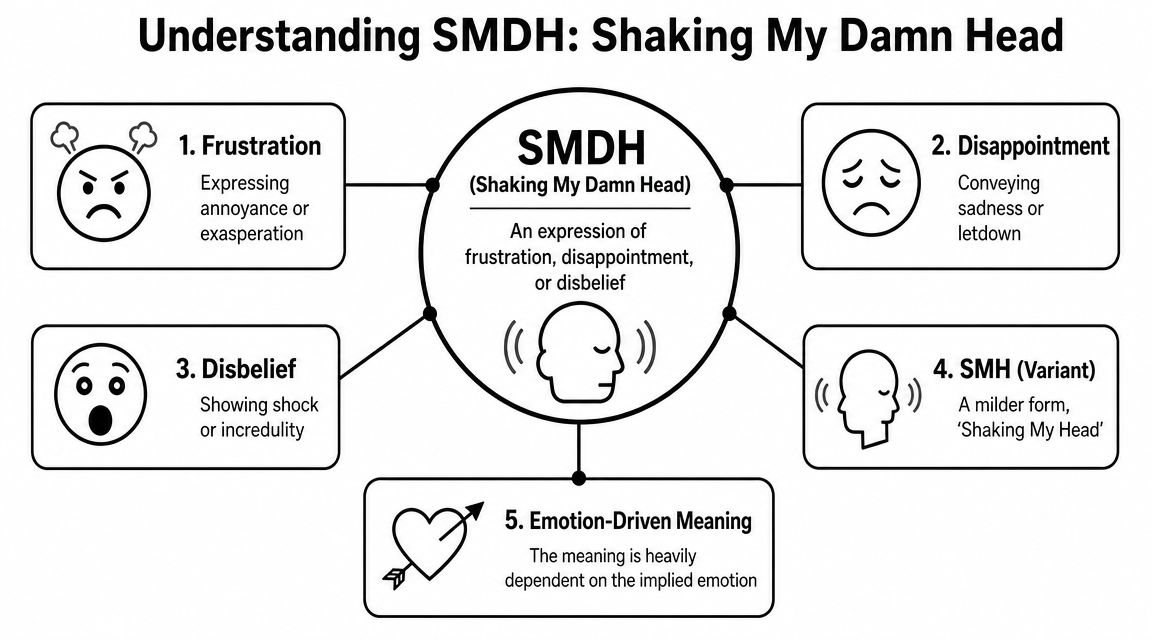
A lot of marketers and support teams see SMDH and mentally file it under “same as SMH.” That's too simplistic.
The extra D changes the emotional temperature. SMH can read like eye-rolling disappointment. SMDH carries more bite. It often suggests the sender thinks the situation is especially frustrating, ridiculous, or avoidable.
Here's a practical way to understand it:
| Term | Plain meaning | Typical tone |
|---|---|---|
| SMH | Shaking my head | Mild disappointment, confusion, disbelief |
| SMDH | Shaking my damn head | Stronger frustration, sharper disapproval |
That difference matters when you're triaging inbound replies from a campaign, support queue, or review-recovery workflow.
SMDH belongs to the broader world of abbreviations people use in texts, group chats, and social posts. If your team handles modern messaging, it helps to keep a working reference for instant messaging abbreviations used in digital conversations.
A short acronym can carry more emotion than a long sentence. That's why customer context matters more than word count.
For business use, the takeaway is simple. Don't overanalyze the slang itself. Recognize that SMDH is a negative reaction marker, then focus on the complaint, failure point, or friction behind it.
A definition won't save you if you ignore context. The same acronym can signal anything from mild disappointment to stronger disbelief or disapproval, and Merriam-Webster also notes that SMH itself can mean “scratching my head,” which is exactly why context cues matter when reading messages, as explained in Merriam-Webster's discussion of SMH meaning and context.
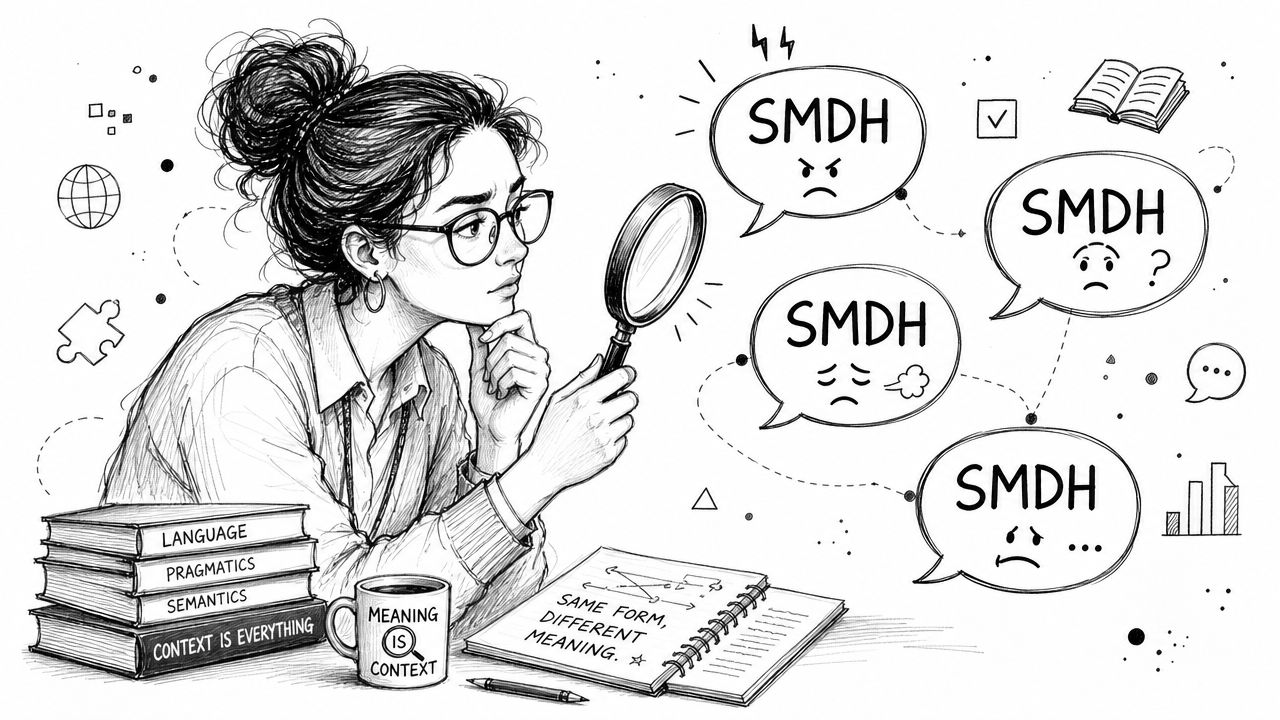
If a customer says, “Package late again smdh,” the issue is probably real frustration. If they say, “You guys sent me another reminder and I still forgot lol smdh,” the tone may be lighter.
Three context clues usually tell you what you need to know:
Not every SMDH message is a crisis. Some are venting. Some are sarcasm. Some are shorthand for “this is annoying, please fix it.”
Use this quick interpretation grid:
| Signal in the message | Likely reading | Best response style |
|---|---|---|
| Short complaint with problem details | Genuine frustration | Fast, direct, solution-first |
| Includes “lol,” emojis, or friendly phrasing | Light sarcasm or joking annoyance | Warm, still professional |
| Repeated issue, all-lowercase or clipped wording | Fatigue or irritation | Acknowledge friction and take ownership |
If your team also reads emoji-heavy replies, it helps to understand how smiley faces and related emoji can shift text tone.
What works is responding to the customer's intent.
If the customer sounds annoyed, reduce effort for them. Ask for one useful detail, not five.
One more trade-off matters here. If you read every SMDH as severe anger, your team becomes stiff and defensive. If you dismiss it as casual internet talk, you miss warning signs. The right approach is calibrated reading. Look at the complaint, the relationship, and the rest of the thread before deciding how serious the message is.
The fastest way to understand SMDH is to see how it shows up in realistic conversations. These examples are fictional, but they reflect common business situations.
Customer: My order was supposed to arrive today. Tracking still hasn't updated. SMDH.
Business: Sorry about the delay. Send your order number and I'll check the latest status now.
This reads as genuine frustration. The customer gave a concrete issue. The right move is immediate troubleshooting, not a brand-personality response.
Client: You fixed the checkout bug but now the banner says “Fre Shipping.” SMDH 😂
Agency: Good catch. We're updating it now. Thanks for spotting it.
The emoji changes the tone. This isn't a meltdown. It's mild mockery from someone comfortable enough to tease. The business still stays clean and professional.
Marketing lead: The reminder text went out, but the landing page had the old headline. SMDH
Ops manager: Got it. We'll swap the page copy and test the link path before the next send.
Inside a team, SMDH often acts like compressed frustration. Nobody needs to decode etiquette. They need to solve the operational miss.
When you see SMDH in the wild, ask:
That framework keeps your team from getting distracted by slang. The acronym gives emotional color. The actual business task still drives the response.
For most businesses, the answer is no.
SMDH is more forceful than SMH and is typically used to communicate strong frustration or contempt. Usage guides also caution that it can be inappropriate in professional contexts and that it's mainly common in casual texting and social media, as noted in this usage guide on why SMDH is stronger and often unsuitable for professional settings.
Some teams want to sound current, relaxed, and human. That instinct is fine. The mistake is assuming that borrowing customer slang will make the brand feel relatable.
Usually it does the opposite.
A slang term like SMDH can make your message sound:
You don't need slang to sound natural. You need specificity.
Compare these:
The second version in each pair sounds more human because it does real work.
There are some places where using SMDH is a hard no:
| Situation | Why it's risky |
|---|---|
| Customer support replies | It can sound dismissive or mocking |
| Payment or billing messages | It undercuts trust |
| Ringless voicemail scripts | Tone is harder to soften without live back-and-forth |
| Compliance-heavy communication | Informality can create confusion |
Brand test: If a message needs to be clear, searchable, reusable, or defensible, skip slang.
That applies to SMS, voice broadcasts, and ringless voicemail alike. In outbound communication, clarity beats trendiness. You can be warm without sounding online. You can be modern without writing like a comment thread.
Understanding slang is only useful if it changes what you do next. Terms like SMDH sit inside a fast-changing slang environment, and businesses need moderation or customer-service workflows that classify them correctly to reduce false positives when reading emotional intent, as discussed in QuillBot's overview of SMDH in a changing slang ecosystem.

A customer who texts “promo code didn't work smdh” usually needs a quick one-to-one text reply. Keep it short, own the issue, and remove friction.
A broader service update may fit a voice broadcast better, especially when many customers need the same information. And if the message should be delivered without interrupting the recipient in real time, ringless voicemail can be a practical option for reminders, updates, and follow-up notices.
If a contact has gone quiet after a problem or quote, a structured follow-up text after no response strategy helps keep the conversation moving without sounding pushy.
Use a simple ladder for emotionally charged customer messages:
The strongest teams don't just decode slang. They translate it into channel choice, response speed, and tone control.
If your team needs a better way to manage customer follow-up across SMS, voice, and ringless voicemail, Call Loop gives you one place to send timely messages, automate outreach, and respond more appropriately when customer tone shifts from casual to frustrated.
Chris Brisson
Chris is the co-founder and CEO at Call Loop. He is focused on marketing automation, growth hacker strategies, and creating duplicatable systems for growing a remote and bootstrapped company. Chat with him on X at @chrisbrisson


Trusted by over 45,000 people, organizations, and businesses like


