
See a Demo
You're just one step away from seeing Call Loop in action.
Enter your information below to watch a demo right now.

You're just one step away from seeing Call Loop in action.
Enter your information below to watch a demo right now.

A virtual phone number is a cloud-based business phone line that routes calls and texts over the internet using VoIP, freeing you from physical hardware. The global virtual phone number market was valued at $8.2 billion in 2025 and is projected to reach $16.8 billion by 2034, which shows how quickly businesses are moving to software-based communication.
If you're running a business from your cell phone, you already know the pain points. A customer calls during dinner. A lead texts your personal number. A missed voicemail sits next to family messages, and now your business communications are mixed into everything else.
That mess is usually the moment people start asking what is a virtual phone number, and whether it's a real replacement for a business line. In practice, it is, if you choose the right kind. A modern virtual number doesn't just handle calls. It can sit at the center of a multi-channel system for voice, SMS, MMS, and ringless voicemail, with routing and automation layered on top.
The catch is that not every "virtual number" works the same way. Some older services still act more like basic call forwarding. If you need privacy, outbound calling, messaging, or compliant outreach workflows, that difference matters a lot.
A business owner usually starts with one phone and one number. That works for a while. Then the business grows, more people need access, and suddenly the same personal line is handling sales calls, appointment reminders, support texts, and after-hours messages.
A virtual phone number gives you a separate business identity without adding a second physical phone. Because it uses VoIP, your number lives in software, not in a desk phone or a single SIM card. You can answer from a mobile app, a laptop, a browser, or send calls to a teammate based on the rules you set.
That shift isn't niche anymore. The virtual phone number market analysis from Dataintelo says the market was valued at $8.2 billion in 2025 and is projected to reach $16.8 billion by 2034. The same analysis notes that businesses use virtual numbers to create a local presence in over 80 countries without opening physical offices.
Small teams usually adopt this tool for three simple reasons:
If you're still sorting out the terminology, this guide on what a VoIP number means is a useful companion to the broader concept.
A professional phone presence isn't about sounding bigger than you are. It's about making it easy for customers to reach the right person without creating chaos behind the scenes.
For many owners, that's the real upgrade. You're not just buying a number. You're creating a stable communication layer your business can build on.
It's often expected that there's some kind of mystery here. There isn't much mystery once you strip away the telecom language.
A virtual number works like a digital switchboard. Someone dials your business number. Instead of the call going to one fixed line on one device, software checks your routing rules and sends the call where it should go.
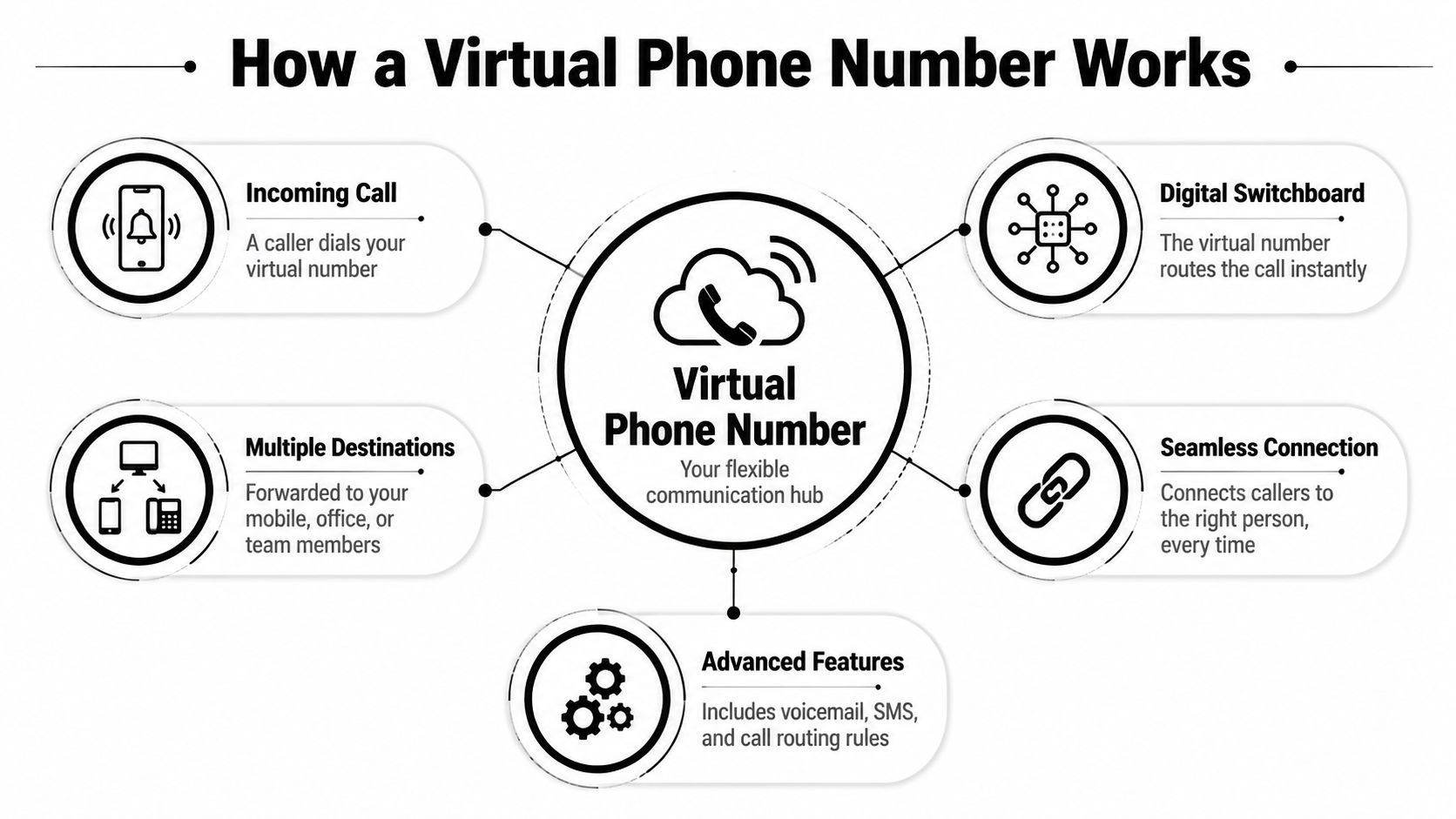
The technical definition matters because it explains why these systems are flexible. Did Logic's explanation of how virtual numbers work describes a virtual phone number as a globally regulated identifier that terminates into software-defined routing logic rather than a physical line, following the E.164 international numbering standard. It uses VoIP to convert audio into digital signals so calls can be rerouted without physical wiring.
That means the number itself is stable, but the destination can change.
A practical example:
Traditional lines are tied to a place. Virtual numbers are tied to software. That's what lets you do things like:
Practical rule: The value isn't in owning a digital number. The value is in controlling what happens after someone dials it.
From the outside, it still behaves like a normal phone number. People can dial it from a landline or cell phone. They don't need a special app. The difference is on your side, where voice and messaging are managed in the cloud instead of on dedicated phone hardware.
That's also why modern systems can attach features that old phone setups handled poorly or not at all. Voicemail, SMS, device switching, call routing rules, and integrations all sit on the same software layer.
The trade-off is simple. Your call quality and reliability depend more on internet stability and provider quality than a traditional copper line ever did. If your internet is weak, your phone experience usually shows it first.
The right virtual number depends less on technology and more on how customers are supposed to reach you. Most businesses choose from three categories: local, toll-free, and DID numbers.
| Type | What it signals | Best for |
|---|---|---|
| Local number | A presence in a specific city or region | Service businesses, clinics, local agencies, franchises |
| Toll-free number | Broad availability and a more centralized brand presence | National sales, support teams, multi-state brands |
| DID number | A direct path to a specific person or department | Larger teams, distributed staff, segmented call handling |
A local number uses a geographic area code. If your business serves a specific city, this is often the easiest option because it feels familiar to the caller.
Local numbers work well when trust is tied to proximity. A contractor, law office, tutoring service, or regional medical practice usually benefits from sounding local. The same is true for agencies running campaigns in specific metro areas.
Toll-free numbers create a different impression. They suggest a business that serves customers across a wider area and wants one central contact point.
They're often useful when marketing is national, when multiple offices share one front door, or when you want a cleaner brand presentation across campaigns.
Toll-free works well when your audience isn't choosing you because you're nearby. It works less well when local familiarity is part of the sale.
A Direct Inward Dialing number gives a distinct number to a person, team, or function while still operating inside the same phone environment. This matters when you want direct reach without giving out personal numbers.
A sales rep can have one DID. Billing can have another. A campaign can use a separate DID for attribution. If you're comparing setups, this overview of what a DID number is helps clarify where it fits.
Here's the practical takeaway. If you're a solo operator, start with local or toll-free based on how you sell. If you have multiple departments, contractors, or campaigns, add DID numbers where direct routing and cleaner tracking matter.
A lot of business owners still think of a phone number as a voice-only tool. That's outdated. A modern virtual number can anchor outbound and inbound communication across channels, which is where it becomes far more useful than a simple forwarding line.
The same number can often support voice calls, text conversations, image-based messages, and voicemail workflows. That gives customers one contact point while your team uses the channel that fits the moment.
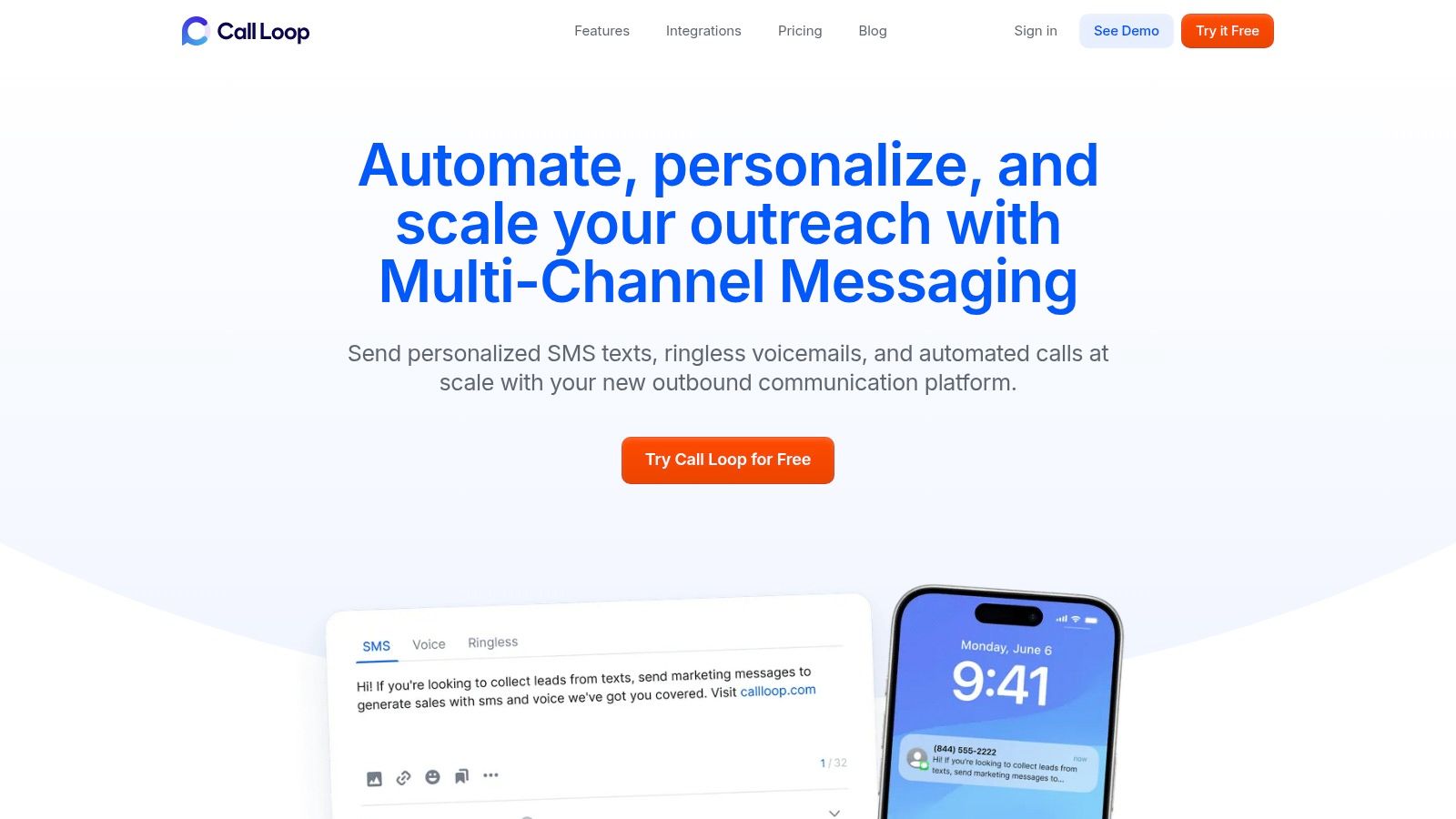
Texting is usually the first add-on businesses care about, for good reason. Customers answer texts faster than they return voicemails, especially for reminders, scheduling, order updates, and quick sales follow-up.
A good virtual number setup lets you:
If messaging is part of your workflow, here's a practical look at sending SMS from a virtual number.
Ringless voicemail is different from standard outbound calling. It delivers a prerecorded audio message directly to a recipient's voicemail inbox without the phone ringing.
That makes it useful for reminders, follow-ups, and campaigns where a live interruption isn't the goal. It can support the same outreach sequence as SMS and voice, but it is not a loophole around compliance.
According to PhoneBurner's explanation of ringless voicemail and the FCC ruling, ringless voicemail delivers an audio message directly to voicemail without the phone ringing, and the FCC ruled in 2022 that these are legally "calls" under the TCPA. That means prior express written consent is required.
If you use ringless voicemail without proper consent, the fact that the phone didn't ring won't protect you.
The smart use of a virtual number isn't blasting every channel at once. It's sequencing them with intent.
A typical outreach pattern might look like this:
What doesn't work is bolting ringless voicemail onto an old forwarding number and assuming you now have a modern outreach stack. The number has to support the channels you plan to use, and the workflow has to respect consent, routing, and recordkeeping.
A virtual number earns its keep when it solves an operational problem. That might be missed leads, scattered support requests, weak follow-up, or expensive phone infrastructure. The businesses that get the most value from it usually treat the number as a working asset, not just a line item on a phone bill.
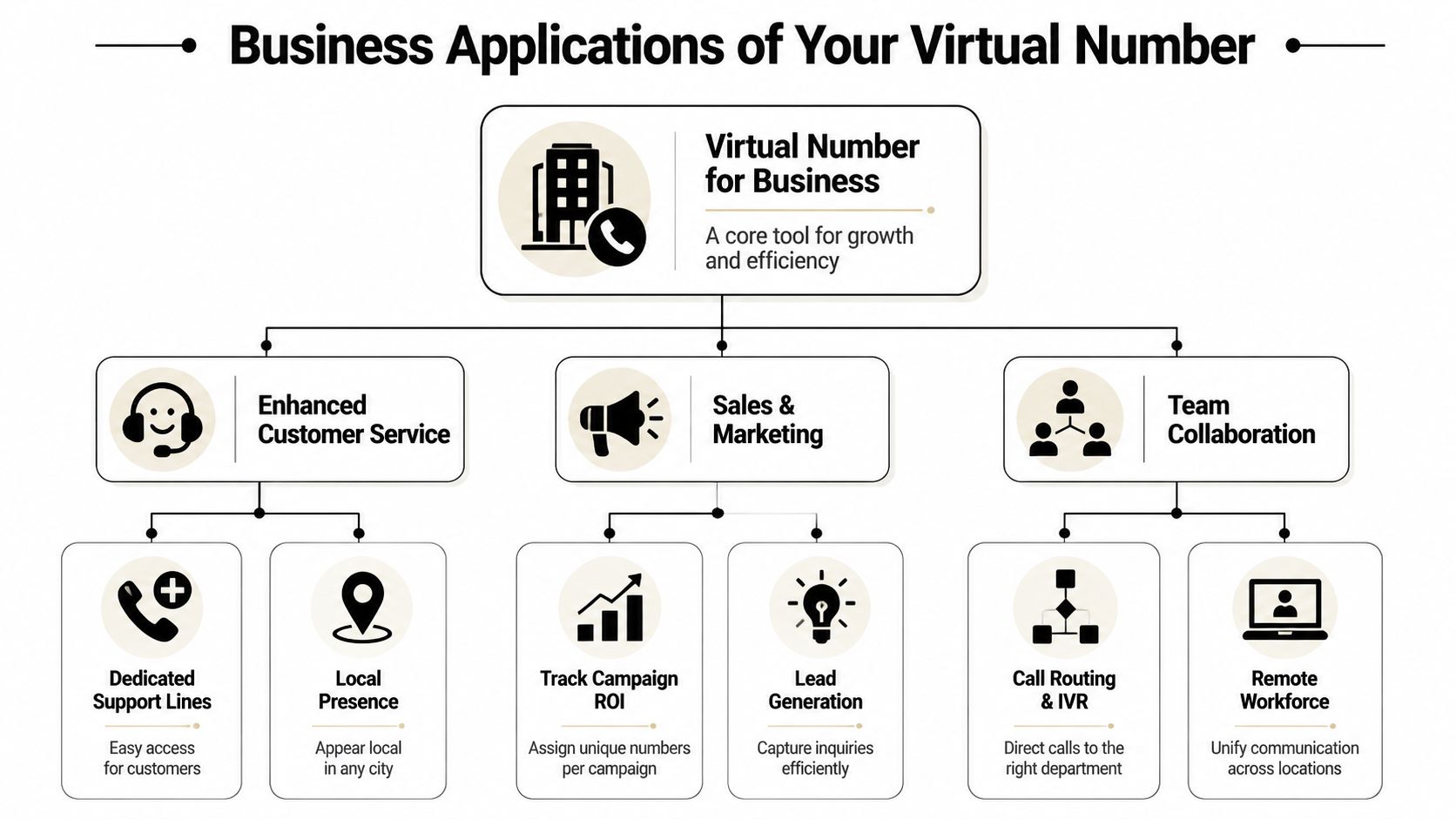
A local service business can promote one number on signs, landing pages, and social profiles, then connect that number to text-based lead capture. A prospect texts a keyword, joins a list, and gets follow-up messages without the owner replying manually every time.
An agency can also assign separate numbers to different campaigns so inbound calls and text replies stay organized. That isn't just cleaner. It also gives a better sense of which campaign is creating conversations.
A clinic, salon, or repair business usually needs consistency more than complexity. One virtual number can handle inbound calls, route after-hours traffic to voicemail, and send reminders by text instead of relying on staff to call every customer one by one.
For healthcare providers and other sensitive use cases, the setup matters even more. A dedicated business number keeps communication separate from personal devices, and a platform with HIPAA-focused workflows can support patient outreach more safely than ad hoc texting from staff phones.
The fastest way to lose trust is to make customers guess whether they're calling a real business line or someone's personal cell.
Remote teams benefit because nobody has to sit next to a desk phone. Sales calls can ring a rep's mobile app. Support can answer from a laptop. Managers can change routing rules without calling a telecom technician.
That flexibility also changes the cost equation. The Global Call Forwarding provider overview notes that on-premises PBX systems can cost up to $1,000 per user, while virtual subscriptions typically range from $15 to $50 per user per month. For many businesses, that means virtual numbers can save thousands compared with older phone infrastructure.
This is where a virtual number becomes more than telecom. Once connected to your operating tools, it can trigger reminders, route replies, log conversations, and support multi-step outreach.
For example, a business might connect its number to a platform such as Call Loop to run SMS campaigns, voice broadcasts, and ringless voicemail from one place, then tie those actions into CRM follow-up and appointment workflows. The number stays the front door. The software turns that front door into a process.
Virtual numbers are useful because they separate identity from hardware. Your business keeps one number while your team changes devices, locations, schedules, and routing rules behind the scenes.
That creates a few immediate benefits:
Not every service marketed as a virtual number gives you a fully modern setup. Some legacy options are still in-bound only or fail to mask your real number on outbound calls.
That distinction matters more than most buyers realize. According to PhonePower's explanation of virtual phone number limitations, a critical limitation of some legacy virtual numbers is that they are "in-bound only" and don't mask the user's real number on outbound calls, creating caller ID mismatches that erode customer trust. Modern VoIP numbers, by contrast, can offer true bidirectional privacy.
A useful way to understand it:
Buy for the workflow you need next year, not just the forwarding feature you need today.
There's one more trade-off. Because the system depends on internet-based delivery, call quality is tied to connection stability and provider quality. If your team works from weak networks, test before you roll it out widely.
Picking a provider gets easier when you ignore the marketing language and use a checklist. Most businesses don't need every phone feature. They do need the right combination of routing, messaging, privacy, and compliance support.
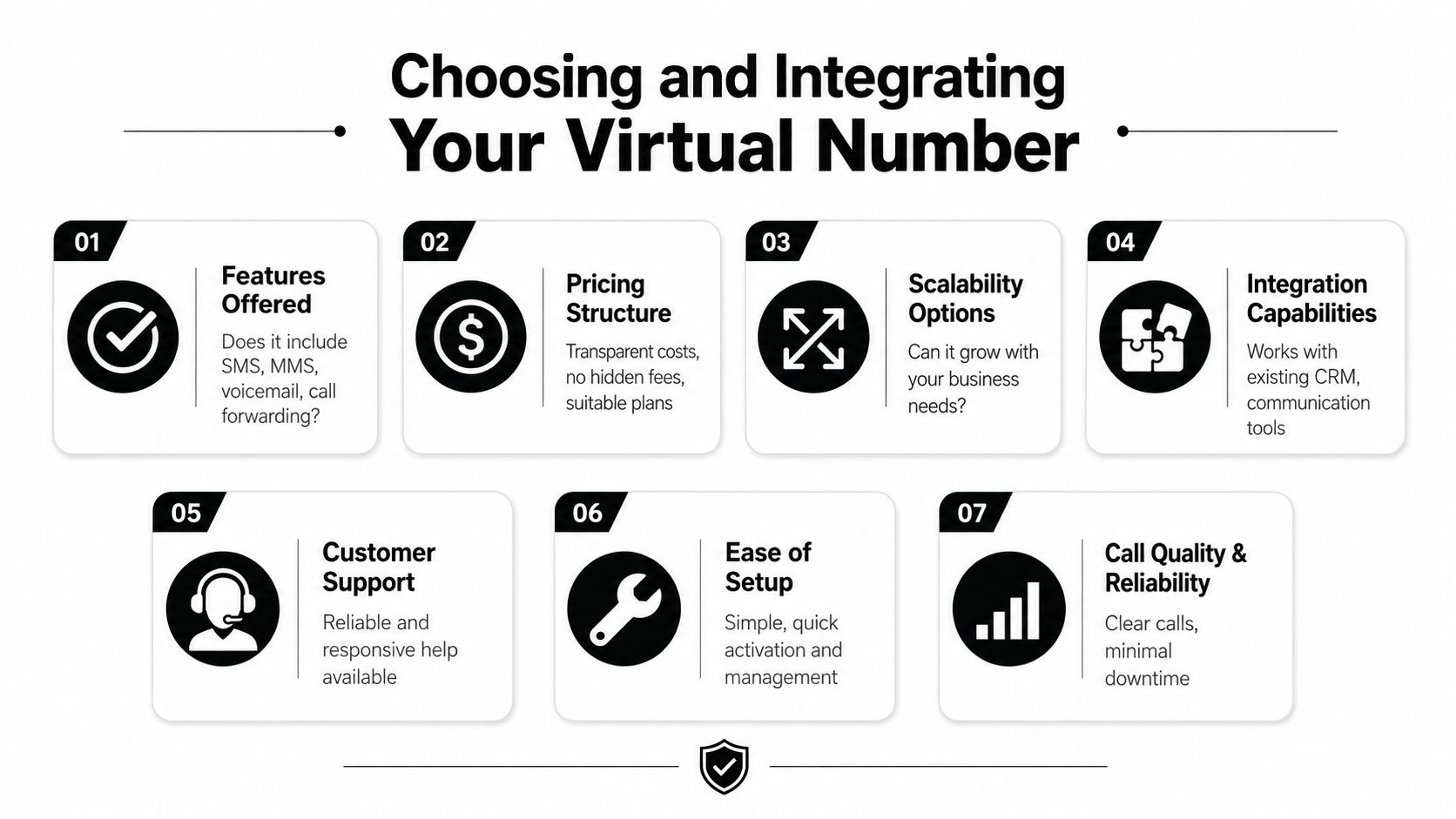
A standalone number is fine for basic separation. Integration is what turns it into a system. When your number connects to your contact database, campaign logic, and follow-up workflows, you can build communication paths that don't rely on memory or manual effort.
That might mean a text when a lead opts in, a voicemail drop after a missed call if consent is in place, or a reminder sequence before an appointment. The number is the identifier customers know. The integration layer decides what happens next.
If you're still asking what is a virtual phone number in practical terms, that's the clearest answer. It's not just a digital phone line. It's the communication identity that lets a small business run calls, texting, and outreach through software instead of scattered devices.
If you want to put that into practice, Call Loop gives businesses a way to use a virtual number inside a multi-channel outreach system for SMS, voice broadcasting, and ringless voicemail, with automation, integrations, and HIPAA-focused support for teams that need more than basic call forwarding.
Chris Brisson
Chris is the co-founder and CEO at Call Loop. He is focused on marketing automation, growth hacker strategies, and creating duplicatable systems for growing a remote and bootstrapped company. Chat with him on X at @chrisbrisson


Trusted by over 45,000 people, organizations, and businesses like


