
See a Demo
You're just one step away from seeing Call Loop in action.
Enter your information below to watch a demo right now.

You're just one step away from seeing Call Loop in action.
Enter your information below to watch a demo right now.

Text still gets treated like old tech by people who haven't had to fill seats fast, confirm appointments, or push out a time-sensitive alert. That misses the point. Bulk SMS reaches people where they already pay attention, and the channel's speed is hard to ignore when 90% of people read a text within three minutes and SMS campaigns have been reported to achieve a 98% average open rate, compared with email's 20% average open rate according to SlickText's SMS statistics roundup.
In practice, that means bulk SMS isn't just a way to send lots of messages. It's a fast, direct business communication channel for reminders, promotions, service updates, internal alerts, and follow-up. It also works well alongside voice broadcasting and ringless voicemail when one channel alone isn't enough.
A lot of articles stop at the definition. That doesn't help much when you're deciding whether to use SMS for a clinic, a local service business, an event list, or agency clients. What matters is how bulk SMS works, where it fits, what breaks deliverability, and how to build campaigns people respond to instead of ignoring.
Bulk SMS means sending one message to a large group of recipients at the same time through a business messaging platform. Each recipient gets the message privately. They don't see the other people on the list, and replies don't turn into a group chat.
That sounds simple, but the business value comes from the combination of reach, timing, and operational control. You can segment contacts, personalize fields like first name or appointment time, schedule sends, and trigger messages from forms, CRMs, or booking systems. That's why companies use bulk SMS for much more than promotions.
Three common examples:
Bulk SMS works best when the message is useful, expected, and easy to act on.
Used well, it feels timely. Used badly, it feels like spam. That's the dividing line. Businesses that get results treat SMS as permission-based communication with clear intent, not as a shortcut for blasting everyone in the database.
Answering "what is bulk SMS" with a basic definition is incomplete. In business, bulk SMS is usually A2P messaging, short for application-to-person messaging. A software platform sends the message to an individual recipient. That is different from personal texting between two people.
Personal texting is like calling a friend from your phone. Bulk SMS is closer to using a managed communication system that can send structured messages to many people at once, while still delivering each one as a private text.
That distinction matters because business messaging needs things your phone's default messaging app doesn't handle well:
This isn't a niche setup. Around 39% of businesses and organizations use SMS text messages to communicate, with usage split between 21% of B2B organizations and 42% of B2C organizations, according to CM.com's overview of bulk SMS.
That usage pattern tells you something important. Bulk SMS isn't reserved for retail marketing teams. It shows up in healthcare reminders, recruiting follow-up, customer support updates, event attendance nudges, nonprofit alerts, and local business promotions.
If you want a clear primer on the business messaging model behind it, this explanation of A2P texting is useful because it separates person-to-person texting from software-driven messaging at scale.
A lot of confusion comes from mixing bulk SMS with group texting.
Bulk SMS is not:
Practical rule: If the message is being triggered, scheduled, segmented, logged, or sent to a managed list, you're dealing with business messaging infrastructure, not everyday texting.
That's why platform choice matters. You're not just buying send capacity. You're choosing how your business handles consent, routing, personalization, reporting, and follow-up.
When you click send in a messaging platform, the text doesn't go straight from your browser to a customer's phone. It moves through a chain of systems that decide whether the message gets accepted, routed, and delivered.
According to SMSala's explanation of bulk SMS routing, bulk SMS is an A2P workflow that starts in an SMS platform, passes through an SMS gateway, then is routed by aggregators and mobile network operators before the carrier validates sender identity, spam or blacklist status, and regulatory compliance.
The SMS platform
On the SMS platform, your team writes the message, chooses the audience, sets timing, and inserts personalization. Good platforms also manage opt-outs, templates, tags, and reporting.
The SMS gateway
The gateway connects the platform to telecom routes. It's the handoff point from software into carrier-connected infrastructure.
Aggregators and network operators
These intermediaries help route the message toward the destination carrier. The exact path affects speed and consistency.
Carrier validation
Before delivery, the carrier checks the sender setup, filtering rules, and compliance signals. At this stage, poor list hygiene and risky content start hurting you.
The recipient's device
If the message clears those checks, it lands on the phone and can generate delivery events, clicks, and replies back into your platform.
Businesses usually send from one of several number types. The right choice depends on your use case, region, and traffic pattern.
| Number type | Best fit |
|---|---|
| 10DLC or long code | Day-to-day business texting, follow-up, local presence |
| Toll-free number | Support, alerts, and broader business messaging |
| Short code | High-volume programs and established branded messaging |
The practical question isn't which label sounds better. It's which option matches your approval process, expected volume, and conversation style.
The same operational mindset applies to voice broadcasting and ringless voicemail. They don't travel through the exact same technical path, but they serve a similar business purpose. You define an audience, automate delivery, track outcomes, and build repeatable outreach.
That's useful when one message isn't enough. A missed appointment reminder might start with SMS, then fall back to a voice call or a ringless voicemail drop for non-responders. A sales follow-up might use text first, then a voicemail message for leads who never click.
What works is coordination. What doesn't work is dumping the same message into every channel without timing, segmentation, or consent controls.
Bulk SMS earns its place when speed and clarity matter. The channel is immediate, flexible, and easy to pair with actions people can take right away, such as replying, confirming, clicking, or showing up.
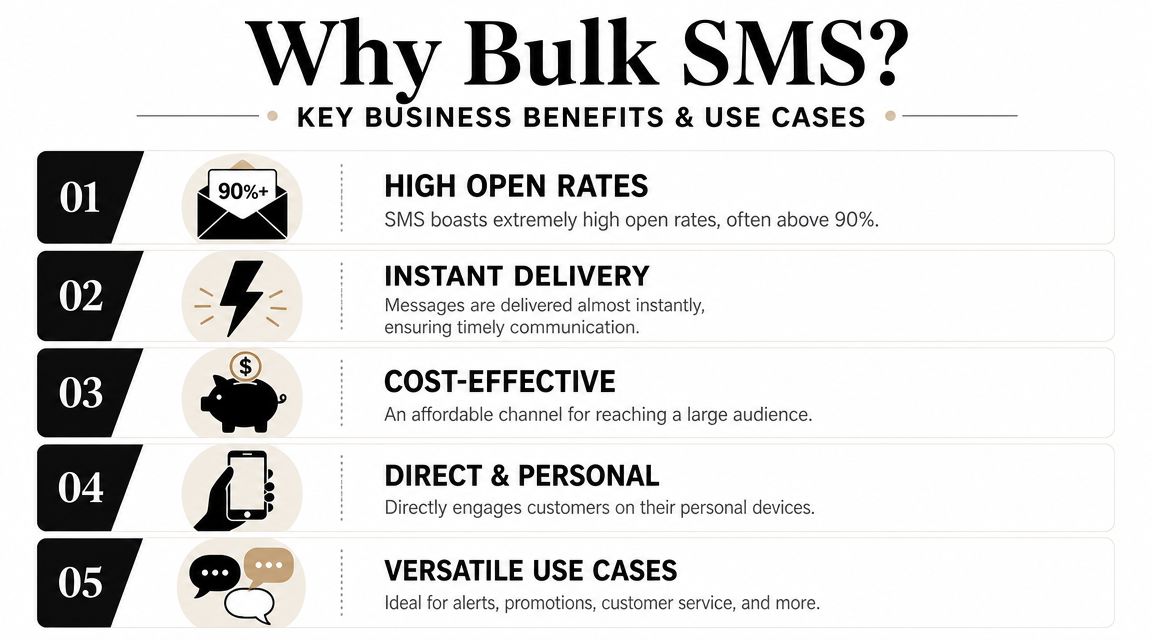
The biggest mistake I see is treating SMS like a mini email campaign. The better approach is to use it where short, direct communication is an advantage.
SMS works well for offers that have a clear time window or a simple next step.
Short messages usually outperform clever ones. If the offer needs too much explanation, it's probably better handled by email or a landing page.
In such contexts, bulk SMS often becomes indispensable.
For appointment-based businesses, confirmation texts matter because they reduce confusion before the customer ever needs support. If you're refining that workflow, Twizzlo's tips for confirmation texts are a practical reference for wording and timing.
Event organizers, webinar hosts, studios, and educators use SMS to keep people moving toward attendance.
A clean sequence might look like this:
The best SMS campaigns remove friction. They don't try to say everything. They tell the recipient what matters now.
A few examples where bulk SMS tends to fit well:
| Use case | Why SMS fits |
|---|---|
| Healthcare reminders | Patients need clear, timely notices and simple confirmations |
| Agencies | Teams can run segmented campaigns for multiple clients from one process |
| Home services | Field updates and arrival windows are easier to see in text than email |
| Karate studios and classes | Parents respond well to schedule changes, enrollment nudges, and closure alerts |
| Events and webinars | Attendance improves when reminders are short and well-timed |
What doesn't work is sending the same generic promotion to every contact every week. Bulk SMS is strong because it's direct. That same directness makes irrelevant messages feel intrusive fast.
Compliance isn't a legal footnote. It's part of deliverability. If you don't have permission, your campaign has problems before the first message goes out.
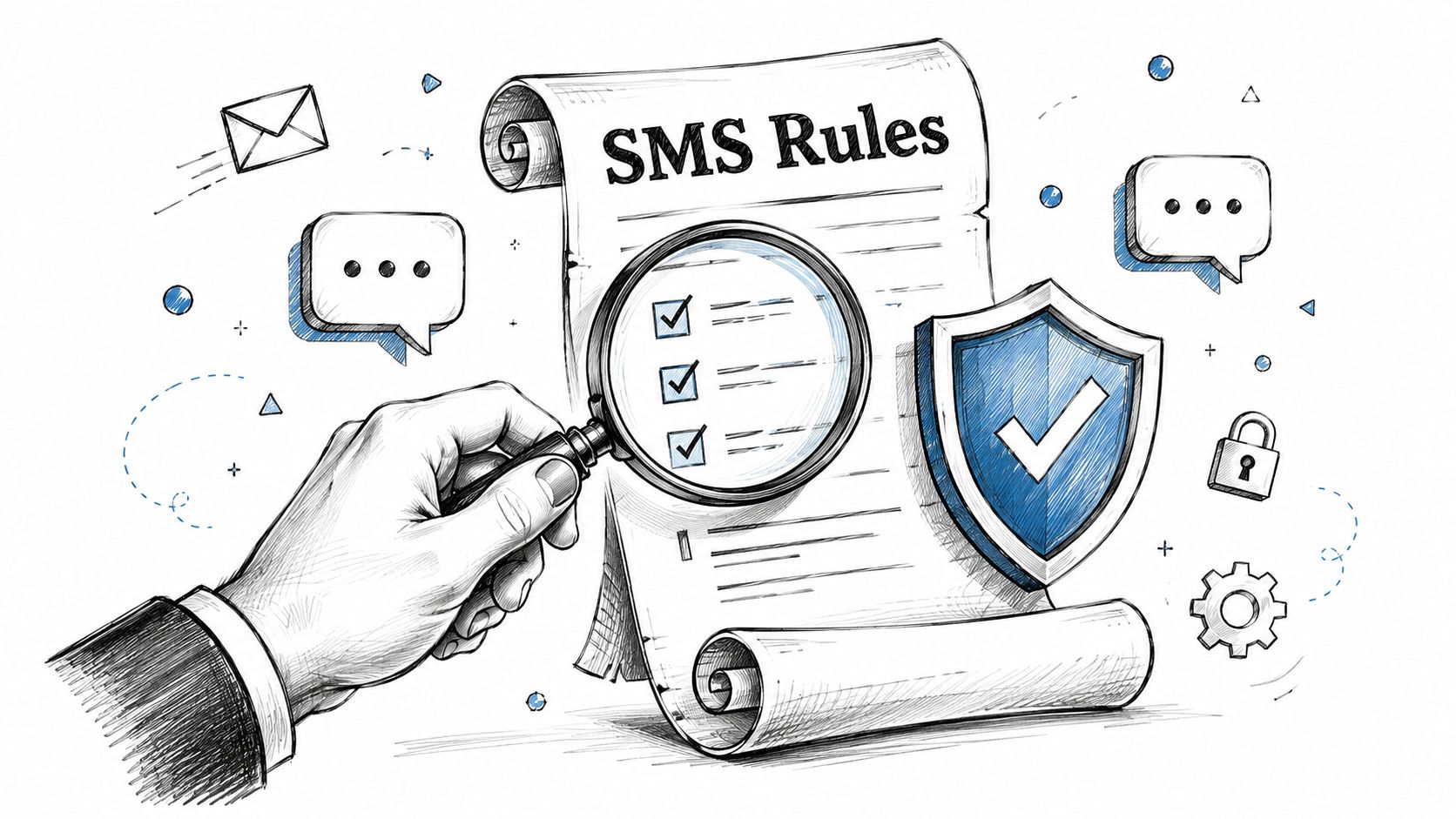
Twilio's guide to bulk SMS marketing states that marketing texts require prior consent under the TCPA, and senders must comply with country-specific regulations. It also notes that weak permission management and regional rule issues are a major reason messages fail to reach inboxes or create legal exposure.
Carriers and messaging partners look for signs that a sender is behaving responsibly. If your list quality is poor, your opt-out handling is messy, or your content pattern looks suspicious, messages are more likely to be filtered or blocked.
That means compliance has two jobs:
Every serious sender needs a repeatable process for these basics.
If you're sending in the U.S., this 10DLC compliance guide is a useful operational reference because registration and approved use cases affect how carriers treat business traffic.
The usual failures are boring, which is why teams underestimate them.
| Risk area | What goes wrong |
|---|---|
| Imported lists | Contacts were never properly opted in |
| Shared databases | Sales, support, and marketing use the same list with no permission controls |
| Vague forms | A signup collected data, but didn't clearly authorize texting |
| One-size-fits-all messaging | Content doesn't match the reason the person subscribed |
| International sends | Teams assume one country's rules apply everywhere |
Operational advice: Keep proof of consent, keep your opt-out logic clean, and keep your messaging aligned with why the contact subscribed in the first place.
This matters even more in healthcare and other sensitive sectors. A reminder system that isn't permission-aware can create compliance headaches fast. The safest path is to treat consent, message purpose, and auditability as product requirements, not campaign details.
Once bulk SMS is running, the next question isn't whether messages were sent. It's whether the workflow moved someone to act. That usually means looking beyond delivery and asking what happened next.
Open rate tells you the channel gets attention. It doesn't tell you whether the campaign produced anything useful. In practice, the more valuable measures are tied to your goal.
A few examples:
The strongest teams tag links, segment lists, and compare outcomes by audience, send time, and message type. That's how you learn whether the reminder copy worked better than the promotional copy, or whether a short message beat a longer one.
Manual campaigns work for occasional broadcasts. Automation is what turns texting into a system.
A practical workflow might look like this:
That kind of sequence lets each channel do a different job. SMS gets attention fast. Ringless voicemail adds a more personal touch without requiring a live pickup. Voice works when urgency or explanation matters more.
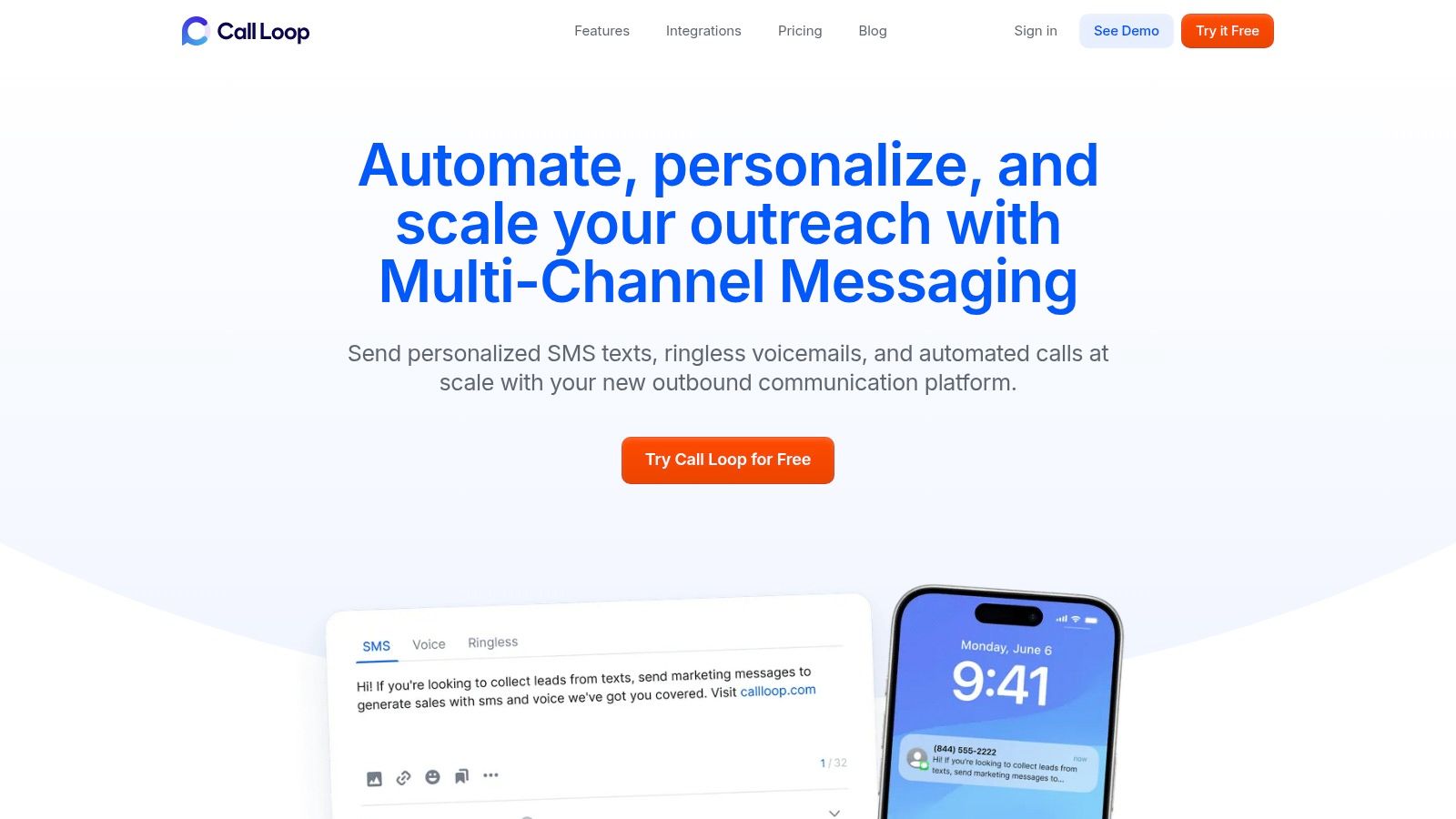
One platform that supports that multi-channel model is Call Loop, which combines bulk SMS, voice broadcasting, ringless voicemail, drip campaigns, and integrations with tools like HubSpot, ActiveCampaign, Keap, and Zapier.
Usually works
Usually fails
Automation should feel timely, not relentless. Good sequences stop when the person has already done what you asked.
Choosing a provider isn't about finding the longest feature list. It's about matching the tool to the way your business communicates. A local service business, a clinic, an agency, and an event organizer don't need the exact same setup.
Use this as a quick filter before you start demos.
| Business Type | Top Priority Features |
|---|---|
| SMBs | Easy setup, list segmentation, scheduling, simple analytics, opt-out handling |
| Healthcare providers | HIPAA-aware workflows, secure reminders, consent controls, auditability |
| Marketing agencies | Multi-client organization, reusable templates, reporting, permission management |
| Event organizers | Scheduling, segmented reminders, keyword opt-ins, rapid broadcast capability |
Keep it simple. You need a platform your team will use. Look for clean contact imports, personalization fields, scheduling, and basic automation without a steep setup burden.
Don't treat healthcare texting like retail texting. Prioritize privacy-aware workflows, permission controls, and clear separation between reminder logic and promotional messaging.
Agencies need structure more than novelty. Account separation, client-level reporting, approval workflows, and reusable campaign assets matter more than flashy dashboards.
Speed matters here. You need fast list updates, timed reminders, segmentation by registrant status, and a way to follow up across channels when attendance is important.
A broader comparison can help narrow the field. This guide to bulk texting services is useful if you're evaluating the differences between common provider setups and feature priorities.
The final test is practical. Can the platform support consent properly, route messages reliably, measure responses, and fit the systems you already use? If not, the rest of the feature list won't save it.
If you want a platform that supports SMS, voice broadcasting, and ringless voicemail in one workflow, take a look at Call Loop. It's built for teams that need to automate outreach, manage compliance, and coordinate follow-up across channels without stitching together separate tools.
Chris Brisson
Chris is the co-founder and CEO at Call Loop. He is focused on marketing automation, growth hacker strategies, and creating duplicatable systems for growing a remote and bootstrapped company. Chat with him on X at @chrisbrisson


Trusted by over 45,000 people, organizations, and businesses like


