
See a Demo
You're just one step away from seeing Call Loop in action.
Enter your information below to watch a demo right now.

You're just one step away from seeing Call Loop in action.
Enter your information below to watch a demo right now.

Narrowcasting is the targeted delivery of messages to a small, defined audience instead of a mass one. The term began appearing in the 1920s, and J.C.R. Licklider was credited with coining it in the 1960s as specialized programming for specific audiences, according to historical background on narrowcasting and an overview of its development.
A local karate studio makes the idea easy to see. Its owner opens a spreadsheet and notices that only 23 students have paid dues this semester. She needs to fill a make-up belt test next Saturday, so she sends an invitation to those active students, not to an old 800-person email list. The message includes the date, time, what to wear, and a one-tap RSVP. Within an hour, 14 students have confirmed.
That decision is small-business narrowcasting. She chose a defined audience, matched the message to its immediate need, and used a direct channel instead of sending the same announcement to everyone. The same thinking applies to a clinic reminding overdue patients, an ecommerce shop reaching repeat buyers, or an event organizer re-engaging past attendees.
Teams looking for practical youth sports team communication tips will recognize the pattern. Good communication depends on knowing who needs the message and what action they should take. The formal definition gives that instinct a repeatable shape.
The studio owner doesn't need maximum reach. She needs the right people in the room for one specific event. A general announcement to every former student, prospect, parent, and purchased contact would create noise, while an invitation to currently enrolled students feels useful because it matches their relationship with the studio.
Her text might read:
Make-up belt test next Saturday at 10 a.m. Wear your current belt and uniform. Reply YES to reserve your spot.
The message works because it answers the questions recipients have. It says what the event is, when it happens, what to bring, and how to respond. It doesn't ask readers to browse a newsletter or remember a detail from an old email.
The owner has made three choices:
That combination is more important than the channel alone. A text message can still be a broadcast if it goes to an unfiltered list with a generic offer. A small audience can still receive poor communication if the content doesn't fit its situation.
Narrowcasting often begins with a simple question: Who has a shared reason to care about this message right now? For a studio, that might be active students. For a pediatric dental office, it might be families whose children are due for appointments. For a local retailer, it might be customers who bought a related product.
The rest of the method builds on that instinct. First, define the audience clearly. Then choose the relevant location, timing, and message. The studio owner wasn't broadcasting a flyer. She was sending a focused invitation to people who shared one meaningful trait, active enrollment.
A clinic sending an appointment reminder to patients due for a checkup is narrowcasting. The message reaches a defined, specialized audience, rather than the general public. It is often described as broadcasting's counterpart, using one-to-few communication instead of one-to-many mass communication, as explained by the Television Encyclopedia definition of narrowcasting.
The idea began in older media. The term referred to radio or television transmission for a narrowly defined audience, and cable television later made focused programming practical. Sports, news, music, and religious channels served distinct interests. Digital media extended the same principle through segmentation, subscriptions, niche channels, and targeted delivery.
Broadcasting remains useful for broad awareness and public announcements. A small business often needs a particular group to book, reply, attend, renew, or purchase. Sending one message to everyone spends attention on people who lack the context or need to act. A clinic reminder for patients due for care has a clearer purpose than a general promotion sent to every contact.
| Dimension | Broadcasting | Narrowcasting |
|---|---|---|
| Audience | Broad and largely undifferentiated | Small and defined by shared traits |
| Message personalization | General message for a mass audience | Content adapted to audience context |
| Channel fit | Mass email, radio, television, broad social posts | Segmented SMS, voice, niche media, targeted digital systems |
| Typical cost | Pays for broad exposure, including irrelevant reach | Concentrates effort on relevant contacts |
| Best use case | General awareness and public announcements | Specific actions, reminders, conversions, and behavior change |
The practical distinction is relevance per recipient, not audience size. A smaller group can receive a more useful message when its members share a reason to care.
A message can be narrow in geography, too. A retailer might contact customers near one branch about a local event, while a healthcare organization may limit outreach to patients served by a particular location. Teams planning location-based promotions can review compliance-friendly geo targeting strategies. For mobile outreach across SMS and related channels, this mobile marketing strategy guide offers useful context.
Narrowcasting is therefore a matching exercise: identify a shared audience need, then align the message and next action with it. The channel matters, but fit determines whether the communication feels helpful or irrelevant.
A narrowcast campaign usually relies on three control layers, audience, location, and time. Digital-signage systems commonly use these same layers to show different content by audience, place, hour, season, or event trigger, as described in this overview of narrowcasting controls.
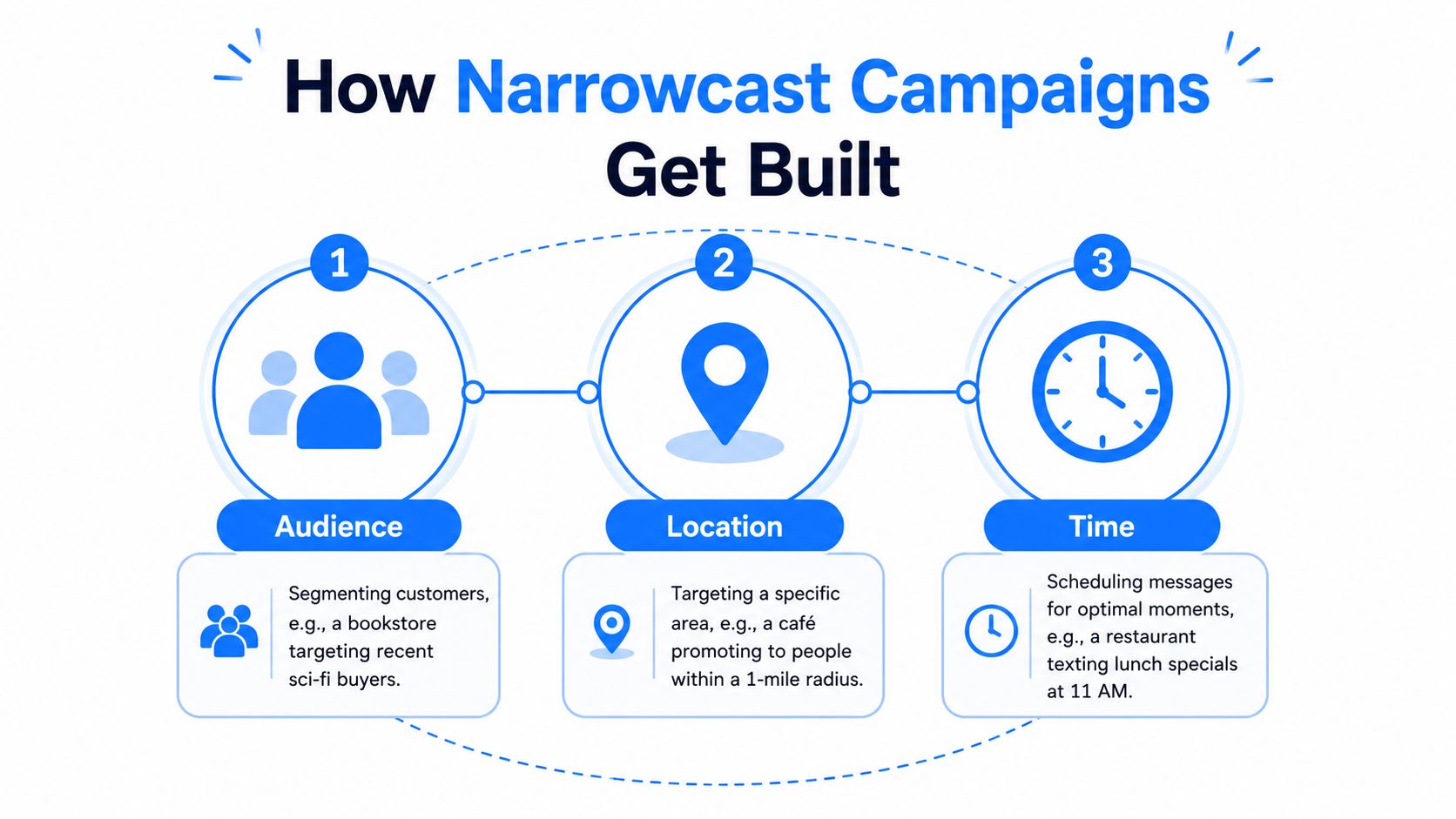
Start with a shared trait that predicts interest or action. The karate studio can filter for active students. A dental clinic can identify patients overdue for cleanings. An online store can separate repeat buyers from first-time customers.
Useful audience filters include:
A segment should be based on a real business reason, not a label that merely sounds precise.
Location targeting matters when the offer depends on service area, branch, neighborhood, or event venue. A multi-location clinic might promote appointments at one office to patients assigned to that location. A regional retailer can send store-specific information instead of making customers guess which branch applies.
Location can describe a region, store, room, or service zone. It shouldn't be added automatically. Small teams generally get more value by starting with a meaningful audience and relevant timing, then adding geographic precision once their data supports the extra complexity.
Timing turns a relevant message into an actionable one. An appointment reminder might arrive before a visit. A flash offer can run during a quiet afternoon. A belt test notice can go out far enough in advance for families to prepare.
Cloud content management systems and scheduled playback rules make these controls manageable, including through marketing automation for small business. The campaign becomes more useful when the recipient, place, and moment all align.
Narrowcasting earns its place in a small-business workflow when it improves decisions, not merely when it creates more messages. The owner should be able to connect each campaign to a number visible in a weekly report.
| Benefit | What It Means in Practice | ROI Signal to Track | Realistic SMB Benchmark |
|---|---|---|---|
| Higher relevance | Recipients see an offer or reminder that matches their situation | Replies, clicks, bookings, or RSVPs | Establish a baseline from comparable segmented sends |
| Lower waste | Fewer messages go to people who can't use the offer | Cost per qualified response | Compare filtered campaigns with broad sends |
| Faster response cycles | Recipients can act while the need is current | Same-day confirmations or recovered appointments | Track time from delivery to response |
| Richer first-party data | Each interaction improves the contact record | Opt-ins, stated preferences, and list churn | Look for useful list growth without rising opt-outs |
A clinic manager might review delivered reminders, replies, booked appointments, and no-shows. An ecommerce owner may compare clicks and completed purchases by product segment. A studio operator may look at confirmations, attendance, and the number of contacts who opted out.
The important comparison is between relevant responses and total delivery. A large delivery count can conceal weak audience fit. A smaller campaign may produce better operational value if the recipients are prepared to act.
Practical rule: Track the action that pays the bills, not just the activity that looks busy.
Cost per response is especially useful for small teams because it combines list quality, channel expense, and message effectiveness. If a campaign reaches fewer people but creates more qualified conversations, the owner can judge the tradeoff directly.
List churn also deserves attention. A campaign that generates replies while causing avoidable opt-outs may be overused, mistimed, or poorly targeted. Narrowcasting should make communication feel more useful, not merely more frequent.
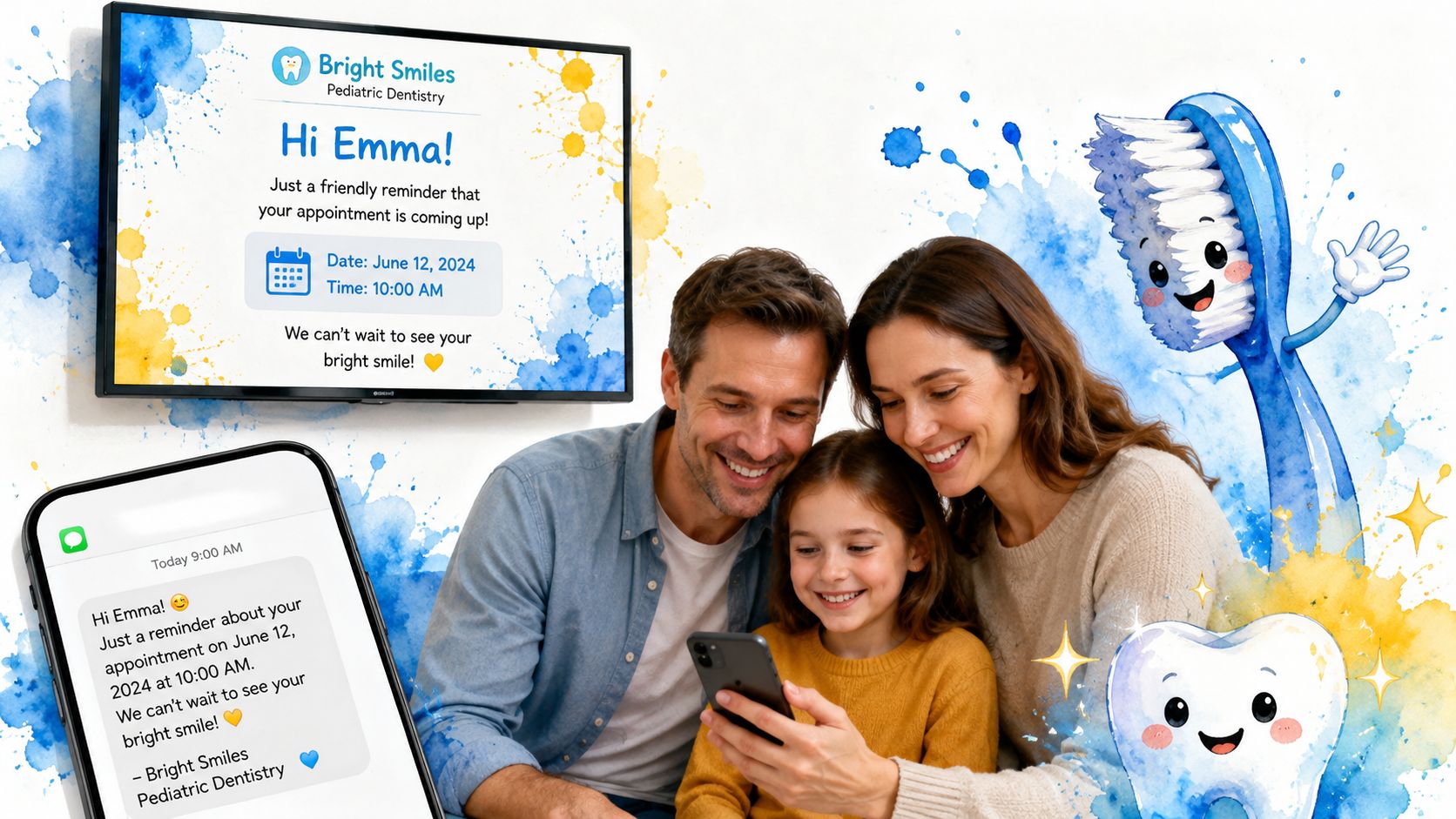
A pediatric dental clinic might begin with its appointment system. The manager filters for families whose children are due for a cleaning within the next two weeks, then sends a reminder with available scheduling options. The audience filter is appointment timing, the channel is SMS, and the visible result is a clearer path to filling slow afternoon slots without disturbing families who aren't due yet.
A regional music festival uses a different combination. Its team identifies past attendees in three specific zip codes and uses ringless voicemail to remind them that early-bird tickets close Friday. The message reaches a defined geographic and behavioral audience, while the voice format gives the announcement a more personal feel than a generic public post.
A boutique skincare brand can narrow by product relevance. Customers who bought products for a particular skin type receive replenishment reminders based on their buying pattern. The message doesn't need to explain the entire catalog. It can point to the product family the customer already knows and give one clear route to reorder.
A dance studio follows the karate studio's logic. It notifies only students enrolled in the current session about a make-up class, leaving former members and general prospects out of the operational notice. The audience is current enrollment, the channel might be SMS, and the result is a cleaner attendance response.
Each campaign answers the same questions:
Healthcare requires additional care with privacy and consent. Events may benefit from geographic and attendance history. Ecommerce can use purchase behavior. Studios often have clear enrollment records. The mechanics differ, but the narrowcasting principle stays constant, match the message to a defined need.
Small teams can operate three practical execution lanes: SMS, voice, and ringless voicemail. Each lane has a different level of immediacy and participation from the recipient.
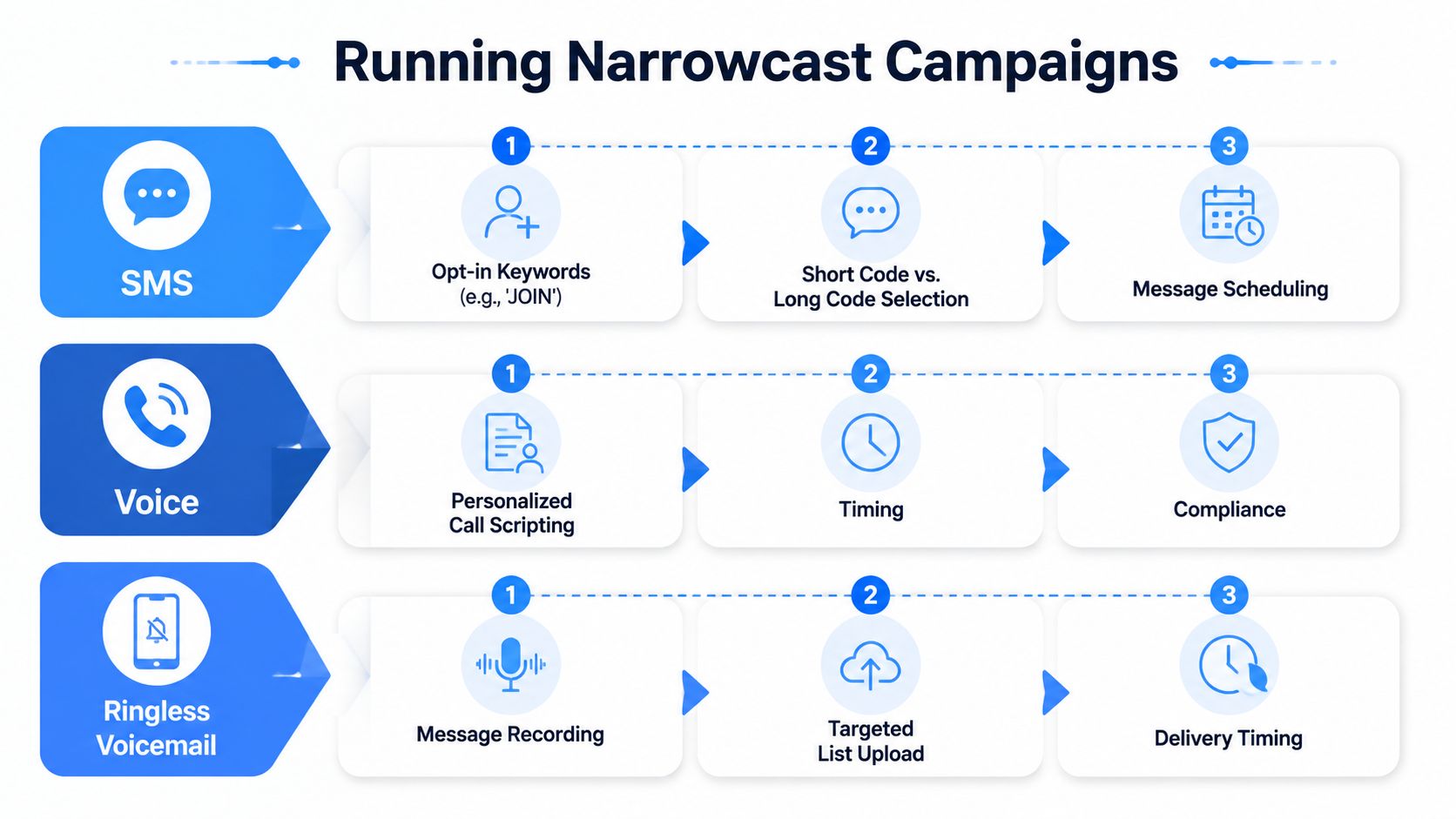
SMS works well when the recipient needs a short instruction, link, confirmation, or reply. Build consent through an opt-in keyword such as JOIN, and decide whether a short code or long code fits the campaign's sending pattern and operating model. Schedule within applicable quiet hours, identify the sender clearly, and make opt-out instructions easy to understand.
Use SMS for appointment reminders, RSVP requests, limited updates, and urgent but non-emergency notices. Its strength is quick, visible action.
Voice campaigns can use recorded messages, automated calls, or a live transfer. A recorded message suits a consistent reminder sent to a defined group. A live handoff matters when the recipient has high intent and needs a person to answer questions, qualify a lead, or complete a booking.
Keep the script conversational. State the reason for the call early, identify the organization, and provide a clear next step.
Ringless voicemail delivers an audio message directly to a voicemail inbox without ringing the phone. It can sit between SMS and a conventional call, especially when a small team wants a human-sounding message without interrupting the recipient's day. A campaign might use it for event reminders, re-engagement, or a personal update that needs more warmth than a short text.
Before using ringless voicemail for marketing, review the FCC ruling on ringless voicemail and TCPA treatment. The FCC ruled in 2022 that ringless voicemail sent to wireless phones is a call using an artificial or prerecorded voice, so the TCPA robocall prohibition applies and consumer consent is required for marketing.
Guardrails include express written consent, state-specific quiet hours, DNC list scrubbing, clear identification, and toll-free number registration through the RespOrg. For an operational overview of the channel, see ringless voicemail marketing.
A segment is too narrow when it can't support one meaningful action window. If the audience can't fill a class, appointment block, product release, or event response opportunity, the added targeting work may cost more than the relevance it creates.
The economics matter because a smaller audience must compensate for lost reach through stronger performance. Research on targeting makes this tradeoff explicit, noting that very narrow segments can become unprofitable when the performance gain doesn't offset the reduced audience, as discussed in research on broad and narrow targeting.
The right question isn't “How precise can we be?” It's “Can this segment produce enough action to justify the work?”
Narrow channels reward one clear ask. Lead with the recipient's context, explain why the message applies, and end with one verb-driven call to action. SMS should stay concise, while voice can add warmth or explanation without turning into a general announcement.
A useful message pattern is:
The same studio should avoid a vague blast such as “Check out our latest studio news.” A focused invitation gives the recipient a reason to respond immediately.
Research on message design also indicates that cognitive messaging tends to perform better on broadcasting platforms, while affective framing can be more persuasive on narrowcasting platforms. In practice, that means a targeted channel can benefit from language that recognizes the recipient's situation, progress, concern, or motivation rather than presenting information without personal context.
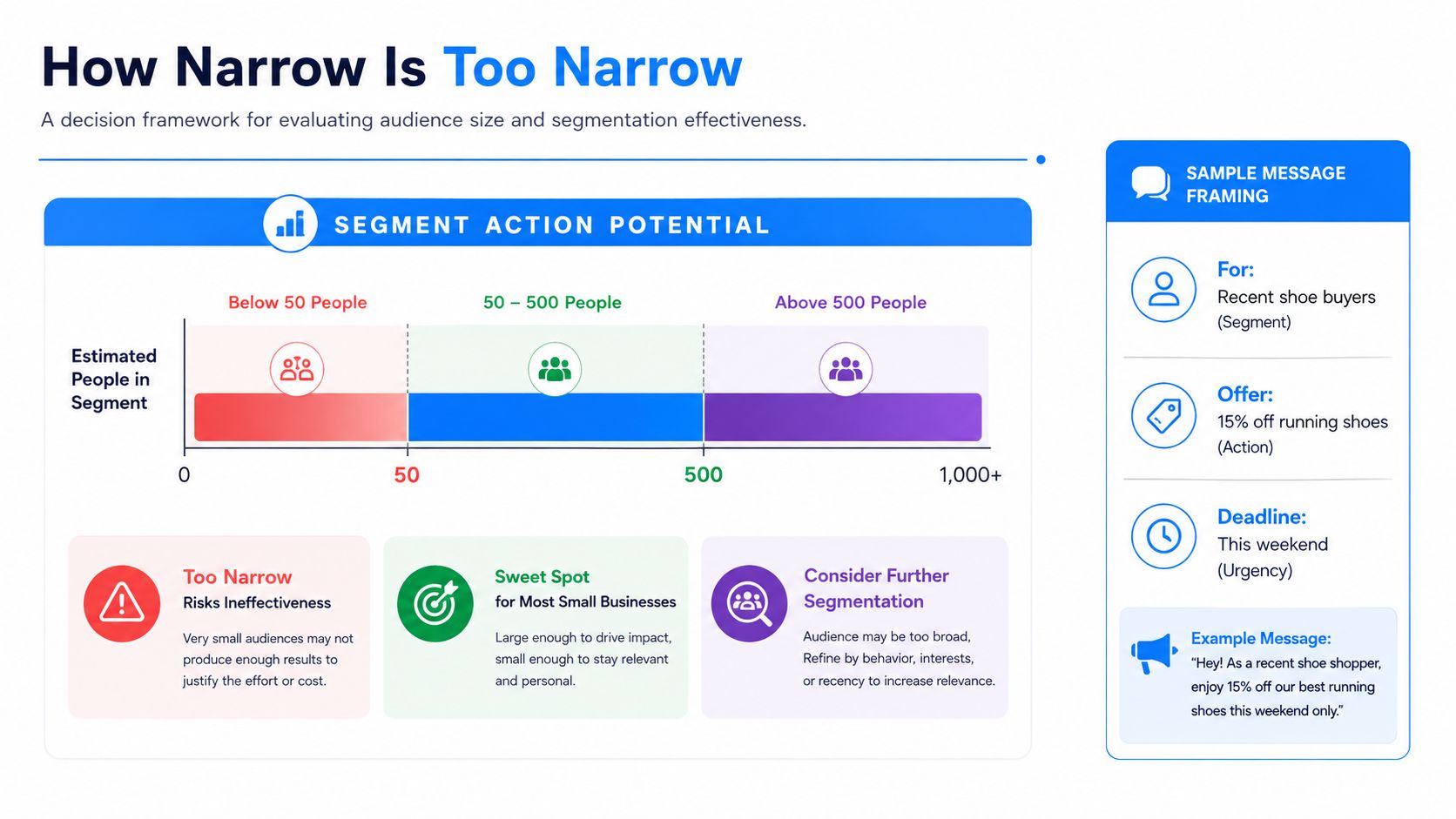
A narrowcast campaign needs a short review routine. Before launch, define what success means for the specific action, then record the same measures after delivery.
A healthcare reminder series may prioritize booked appointments and recovered openings. An event campaign may focus on RSVPs and ticket purchases. A studio notification may measure confirmations and attendance. The metric should follow the campaign's purpose.
Compliance must be designed before scheduling. Keep documented opt-in consent, identify the sender, include clear opt-out language, respect voice quiet hours, scrub applicable DNC lists, and review TCPA plus state-level requirements. Healthcare and financial audiences may require additional privacy and communications controls, so involve the appropriate compliance owner before launch.
For page design, responsive-image guidance recommends making images scale with their container, typically using a maximum width of 100% and automatic height so they fill available space without creating extra whitespace, as outlined in responsive digital-signage image guidance.
Call Loop helps small teams coordinate targeted SMS, voice broadcasting, and ringless voicemail campaigns with segmentation, scheduling, opt-in tools, tracking, and healthcare-oriented controls. If you're ready to test one defined audience and one clear action, visit Call Loop and build your first narrowcast workflow.
Chris Brisson
Chris is the co-founder and CEO at Call Loop. He is focused on marketing automation, growth hacker strategies, and creating duplicatable systems for growing a remote and bootstrapped company. Chat with him on X at @chrisbrisson


Trusted by over 45,000 people, organizations, and businesses like


