
See a Demo
You're just one step away from seeing Call Loop in action.
Enter your information below to watch a demo right now.

You're just one step away from seeing Call Loop in action.
Enter your information below to watch a demo right now.

You already have an SMS strategy. The list is built, the reminders are automated, and the campaign calendar is full. But some of those messages never turn into conversations because the number you texted wasn’t a mobile line.
That’s the blind spot with landline text messaging. Most businesses think about texting as a mobile-only channel, then wonder why replies are uneven, alerts don’t reach everyone, or a familiar business number still creates friction. The issue usually isn’t the message. It’s the path the message took, and whether the recipient’s number could handle it at all.
For businesses that depend on reminders, promotions, follow-up, and attendance, landline messaging isn’t a novelty. It’s a practical way to close a reach gap, protect deliverability, and coordinate SMS with voice and ringless voicemail instead of treating them like separate systems.
A common pattern looks like this. A business sends appointment reminders, event alerts, pickup notices, or promotional texts to its full contact list. Mobile users get them. Some recipients respond fast. Others never react, and there’s no obvious reason why.
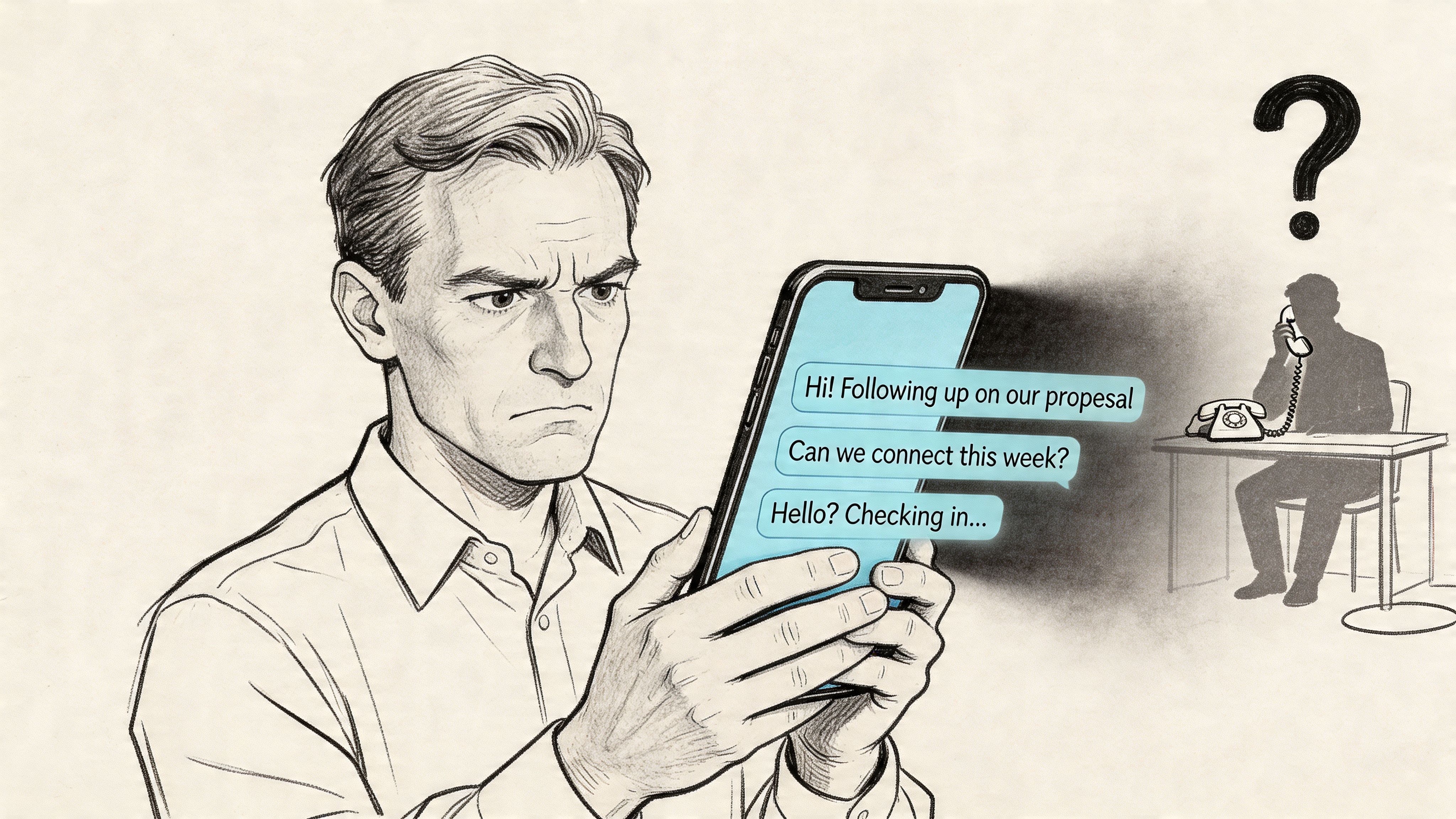
Part of the answer is simple. Inbound texting to non-enabled landlines can fail undetected, which matters because 25% of US households, or 40M+, still use landlines according to 2025 FCC data, and businesses can miss 10-15% of their audience if they rely only on SMS instead of a hybrid voice-SMS approach, as explained in this overview of text-to-landline delivery gaps.
That gap shows up in real operations:
Many owners spend time improving copy, timing, and offers. That matters. But list hygiene comes first.
If you don’t know which numbers are mobile, landline, or VoIP, you can’t choose the right channel for each contact. A useful first step is to run your database through a number identification tool such as PhoneCheckr phone lookup, then segment by line type before you launch anything.
Practical rule: Don’t treat every phone number like it behaves the same. It doesn’t.
Businesses that understand the broader potential of SMS marketing usually improve results faster when they stop viewing SMS as a single lane. Success comes from matching the message to the number type and using voice or ringless voicemail when SMS alone won’t do the job.
Landline text messaging is the bridge between standard SMS campaigns and recipients tied to non-mobile numbers. Sometimes that means enabling a business number for texting. Sometimes it means converting outbound text content into a voice experience for landline recipients. The important point is strategic, not technical.
You’re not just adding a feature. You’re reducing silent non-delivery and making sure your outreach strategy reflects the contact data you already have.
There’s nothing mysterious about it. A landline doesn’t suddenly become a smartphone. The message has to be translated into a format the landline network can handle.
The cleanest analogy is a live interpreter.
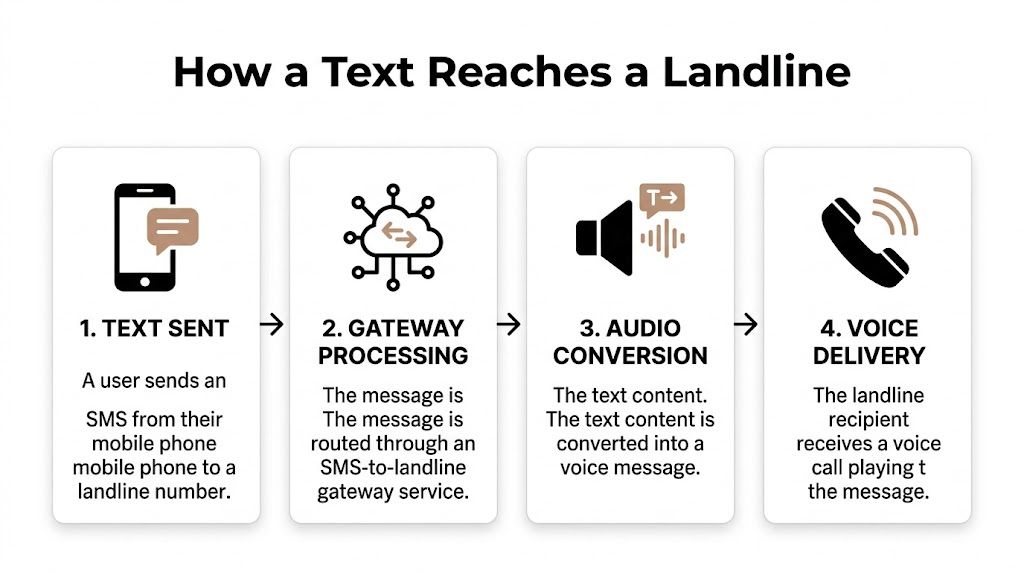
A sender writes a text message. A cloud service receives that message and interprets it. Instead of handing text to a device that can’t display SMS natively, the system converts the content into speech and places a voice call to the landline.
According to Call Loop’s explanation of how a text can reach a landline, landline text messaging works through a three-layer infrastructure. A cloud-based provider intercepts the SMS, uses text-to-speech software to convert the message into audio in seconds, and then dials the number through the Public Switched Telephone Network, or PSTN.
Traditional landlines weren’t built for native SMS. They were built for voice.
That’s why the PSTN remains central to this process. The cloud layer handles the digital message, and the phone network handles the voice delivery. In practical terms, that means a business can keep its current voice setup while adding a messaging layer on top of it.
Here’s the sequence in plain English:
Once you understand the conversion step, your writing changes.
A message that looks fine as SMS can sound clumsy when read aloud. Long URLs, stacked abbreviations, emojis, and dense promo copy don’t translate well. Short sentences do. Clear business identification does. A single action step works better than three choices read in one breath.
When a text may be converted to voice, write it so it sounds natural out loud, not just clean on a screen.
This same routing logic also explains why landline delivery fits naturally with voice broadcasting and ringless voicemail. All three use telephony infrastructure to reach people beyond standard handset texting. The difference is the delivery experience. Text-to-voice plays a converted message as a call. Voice broadcasting delivers a voice call campaign directly. Ringless voicemail deposits audio into voicemail without the phone ringing in the usual way.
For a business owner, the takeaway is straightforward. Landline text messaging isn’t replacing SMS. It’s extending your outbound system so one campaign can account for recipients who live outside the mobile-only path.
Most landline messaging failures aren’t technical. They’re operational. A business sends to the wrong number type, skips consent review, or assumes that if a platform accepts the upload, the campaign is safe.
It isn’t.
If you send business texts without identifying landlines first, you create two problems at once. The first is delivery confusion. The second is legal exposure.
As noted in this guide on landline texting compliance risks, unscrubbed campaigns can violate TCPA, with fines of $500-$1500 per text, and stricter carrier flagging from AT&T and T-Mobile post-2025 increases the risk that unprovisioned landline messaging will be filtered or blocked.
That should change how you think about list prep. Number scrubbing isn’t a cleanup step after a campaign underperforms. It belongs before upload, before segmentation, and before creative approval.
A lot of teams think in silos. They ask whether they have permission to send a text. Then they forget that a landline workflow may result in a voice delivery, or that a ringless voicemail campaign still needs consent discipline and careful targeting.
The safer standard is simple. If you’re using automated outreach to a person’s phone number for business messaging, document consent clearly and keep your opt-out records current. For marketing use cases, the benchmark to understand is express written consent, and this explanation of express written consent requirements is worth reviewing before any campaign goes live.
Even when a campaign is lawful, carriers can still interfere with delivery if the setup looks suspicious or incomplete. That’s where many businesses get caught off guard.
Carrier behavior tends to penalize sloppy operations:
Compliance shortcut to avoid: “We’ve texted this list before and nothing happened.” That’s not a compliance standard. It’s luck.
For small and mid-sized businesses, the process doesn’t need to be complicated. It needs to be documented.
The hidden cost of getting this wrong isn’t just a fine or a blocked campaign. It’s the erosion of trust in your business number. Once customers start seeing your outreach as spammy, every channel gets harder to use well.
There isn’t one universal setup for landline text messaging. The right option depends on whether you need conversation, broadcast reach, or passive audio follow-up.
Some businesses need customers to text their main number and get a reply from staff. Others need outbound reminders at scale. Others want a voicemail touch that doesn’t interrupt the recipient with a ringing phone.
Those are different jobs, so they need different tools.
| Strategy | Communication Type | Best For | Implementation |
|---|---|---|---|
| Text-enabled landline | Two-way business texting | Customer support, scheduling, lead response | Provision the business number through a messaging platform so staff can send and receive texts in software |
| Outbound SMS to landline workflow | Broadcast text with landline handling | Alerts, reminders, promotions, attendance pushes | Use a platform that identifies destination type and routes landline recipients through voice-compatible delivery |
| Ringless voicemail | Pre-recorded audio delivered to voicemail | Follow-up, reminders, reactivation, after-hours outreach | Record audio, segment the audience carefully, and schedule drops with consent and suppression controls |
This is the choice for businesses that want their main published number to support real conversation. It’s useful for front desks, service teams, clinics, and offices that get “Can I reschedule?” or “Are you open?” messages all day.
The main advantage is continuity. Customers use the number they already know. Your team responds from a dashboard instead of passing around one employee’s mobile phone.
The trade-off is operational. Two-way messaging creates inbox work. If no one owns replies, the channel turns into a customer service problem fast.
Broadcast workflows are different. You aren’t trying to hold a conversation with every recipient. You’re trying to send a reminder, announcement, or promotion reliably across a mixed list.
That’s where a platform with segmentation, validation, and multi-channel routing matters. One example is Call Loop’s ringless voicemail overview, which sits alongside SMS and voice workflows for businesses that need coordinated outbound campaigns rather than just one-off texting.
This model works well for:
Ringless voicemail isn’t the same as landline text messaging, but it belongs in the same strategy discussion because it solves a related problem. You need to deliver an audio message without demanding an immediate live answer.
That makes it useful for reminders, follow-ups after missed calls, payment nudges, event attendance pushes, and reactivation campaigns. It can feel less intrusive than a live call, especially when the message is short and specific.
Use ringless voicemail when hearing the message matters more than replying in real time.
The downside is obvious. Audio has to be written for the ear, and poor targeting makes it feel like spam quickly. If you send generic recordings to broad lists, you’ll get ignored or complained about.
If your business priority is support, use a text-enabled landline.
If your priority is notifications and promotions across mixed number types, use an outbound messaging platform with landline handling.
If your priority is a non-ringing audio touchpoint, use ringless voicemail as a dedicated channel or as a follow-up inside a broader sequence.
The strongest setups usually don’t pick one forever. They assign each channel a job.
The best use cases are the boring ones. Messages people need. Reminders, schedule changes, confirmations, pickups, and follow-up that reduces friction instead of adding noise.
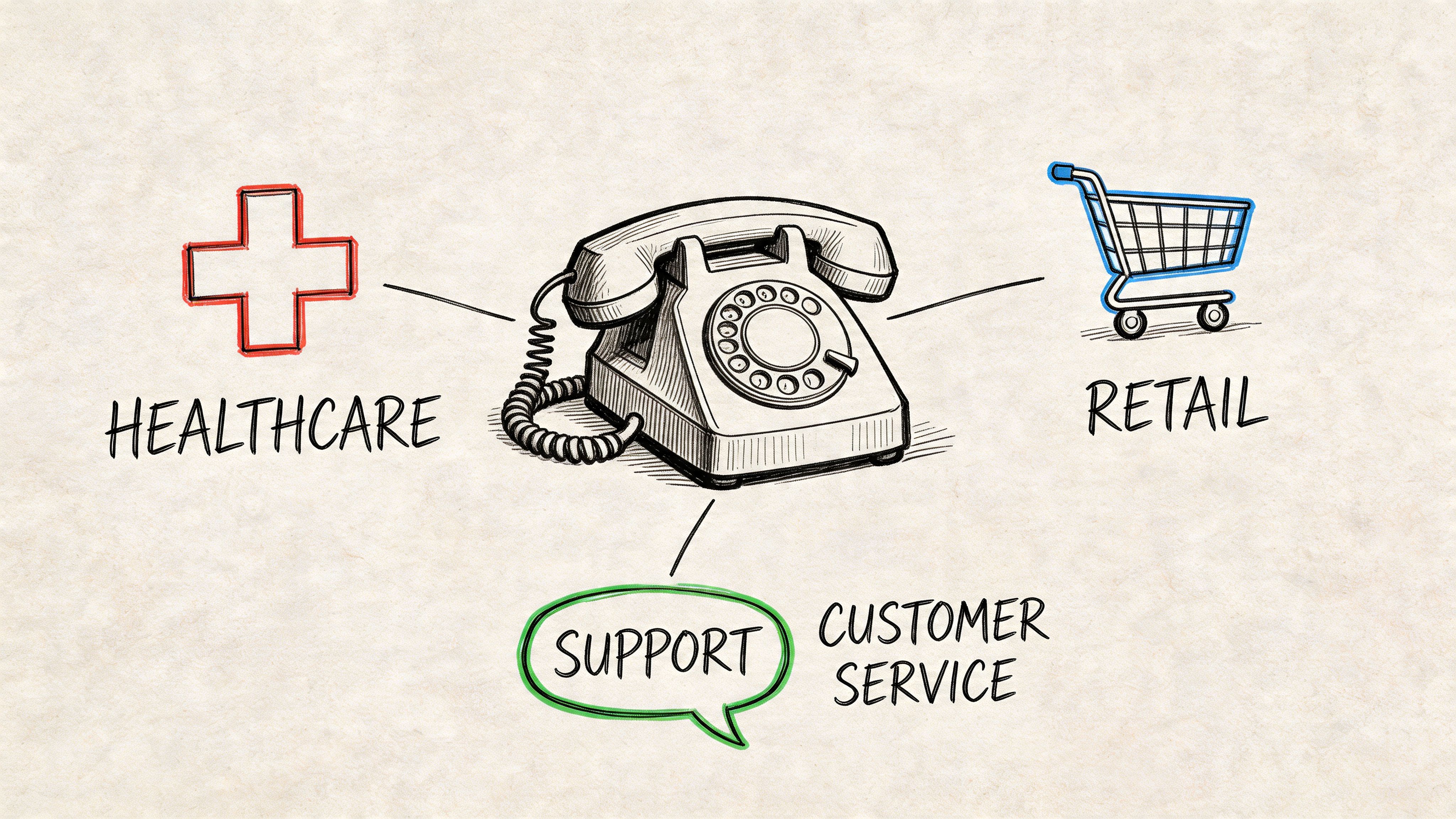
A clinic with mixed patient contact data can’t assume every reminder should go out as standard SMS. If a household number is a landline, the better move is to route that contact into a compliant voice-compatible workflow.
The message should identify the practice immediately, state the appointment purpose, and give one next step. For example, confirm by calling back, or listen for office hours. In healthcare, concise messaging also reduces the chance that a text-to-speech conversion becomes confusing.
A store can use landline-aware outreach for delivery windows, curbside pickup notices, or limited promotions tied to a real business number customers already recognize.
Channel discipline matters. Promotional language that sounds acceptable in text may sound awkward when spoken. Keep the offer simple, avoid stuffed wording, and don’t rely on visual cues the recipient can’t see if the content is converted to audio.
Karate studios, dance schools, tutors, and youth programs often need to notify parents quickly. Weather closures, room changes, and class reminders don’t need long copy. They need certainty.
A short message works best:
Short operational messages usually outperform clever ones because they survive every delivery format better.
A few habits improve landline text messaging, voice broadcasting, and ringless voicemail at the same time:
The businesses that get this right don’t chase novelty. They build a communication system where each contact gets the message in a format that reaches them.
Messaging usually grows in layers. First voice. Then SMS. Then a patchwork of reminders, follow-ups, and one-off fixes. Landline text messaging works best when you clean that up and decide which channel should handle which job.
History gives a useful clue here. In the early SMS era, messaging was cramped by network limits. In 1995, users sent only 0.4 messages per GSM customer per month, and by 2000, after cross-network messaging was enabled, that rose to 35 messages per month, a pattern described in the history of text messaging and interoperability. Better connection between networks changed behavior.
The same principle applies now. When you connect mobile, landline, voice, and voicemail workflows properly, more of your list becomes reachable in a practical way.
Audit your list
Start by identifying line type. Don’t build campaigns on assumptions. Separate mobile, landline, and VoIP records so you can route messages correctly.
Pick the job for each channel
Use SMS for fast readable messages to mobile users. Use landline-compatible delivery for contacts tied to fixed lines. Use ringless voicemail when audio is the better follow-up and an immediate live answer isn’t necessary.
Check consent and suppression
Before any launch, verify that your permission records are current and that opt-outs are excluded across every relevant channel.
Rewrite your message for delivery reality
If a message could be converted to speech, trim it. Use natural wording. Remove clutter. State your business name first and give one clear next step.
Run a pilot before scaling
Start small. Watch delivery behavior, response patterns, and any customer confusion. Then refine list rules and message templates before expanding to broader campaigns.
Don’t overcomplicate the first review. Look for operational signals:
A good pilot doesn’t prove every possible ROI outcome. It proves that your routing, consent, and message format are sound.
The goal isn’t to replace what already works. It’s to stop losing reachable contacts because your messaging strategy only speaks one network’s language.
Not natively. A standard landline needs a service layer that either text-enables the number for business messaging or converts the text into a voice-style delivery.
That depends on the setup. A text-enabled landline can support two-way business texting through software. A text-to-voice delivery to a non-enabled landline usually doesn’t create a normal text conversation.
No. Landline text messaging adapts text for numbers that can’t handle native SMS. Ringless voicemail delivers a pre-recorded audio message directly to voicemail. They’re related tools, but they serve different communication jobs.
Usually, no. Many businesses use their existing published number, then add the right messaging capability around it.
If you want one platform for SMS, voice broadcasting, and ringless voicemail with list validation, segmentation, scheduling, and HIPAA-ready workflows, Call Loop is built for that kind of outbound communication setup. It’s a practical option for businesses that need to reach mixed mobile and landline audiences without treating every phone number the same.
Chris Brisson
Chris is the co-founder and CEO at Call Loop. He is focused on marketing automation, growth hacker strategies, and creating duplicatable systems for growing a remote and bootstrapped company. Chat with him on X at @chrisbrisson


Trusted by over 45,000 people, organizations, and businesses like


